
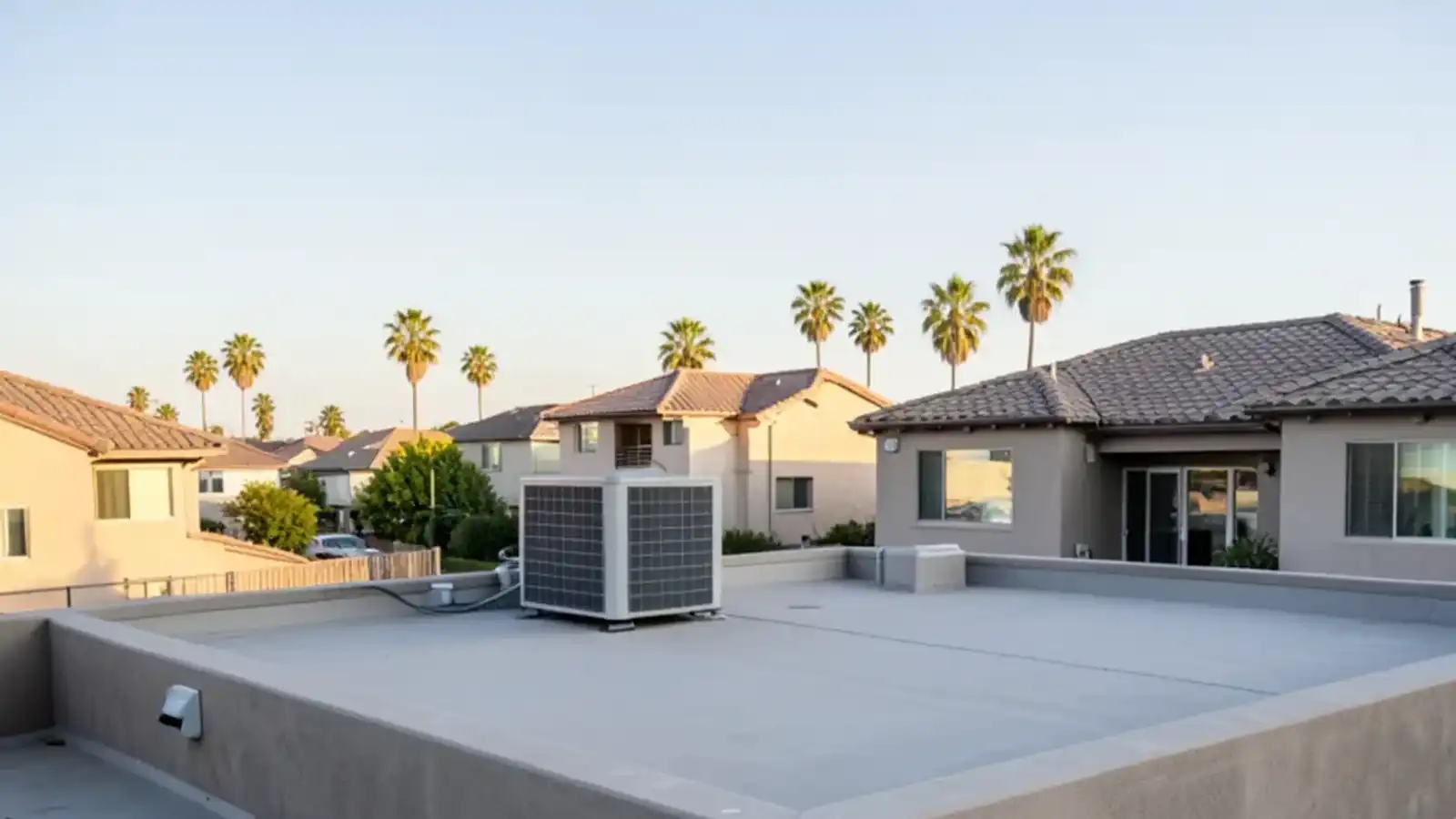
Commercial Roofing in Los Angeles, CA
Commercial roofing in Los Angeles is mostly low-slope work, with drains, parapets and rooftop equipment that all have to stay watertight. We repair, replace and maintain these roofs for shop owners, landlords and property managers, and plan around the tenants below. Same-day or next-day bookings, as the schedule allows.
- ★ 4.9 on Google · 69 reviews
- Same-day or next-day bookings
- Based in Van Nuys, CA
On this page
- What commercial roofing in Los Angeles covers
- Which systems suit low-slope commercial roofs?
- Signs a commercial roof needs attention
- How an occupied-building roof job runs, step by step
- What changes the price of a commercial roof?
- Permits, cool roof rules and inspections on commercial roofs
- Why Clear Shield for commercial roofing in Los Angeles
- Common questions
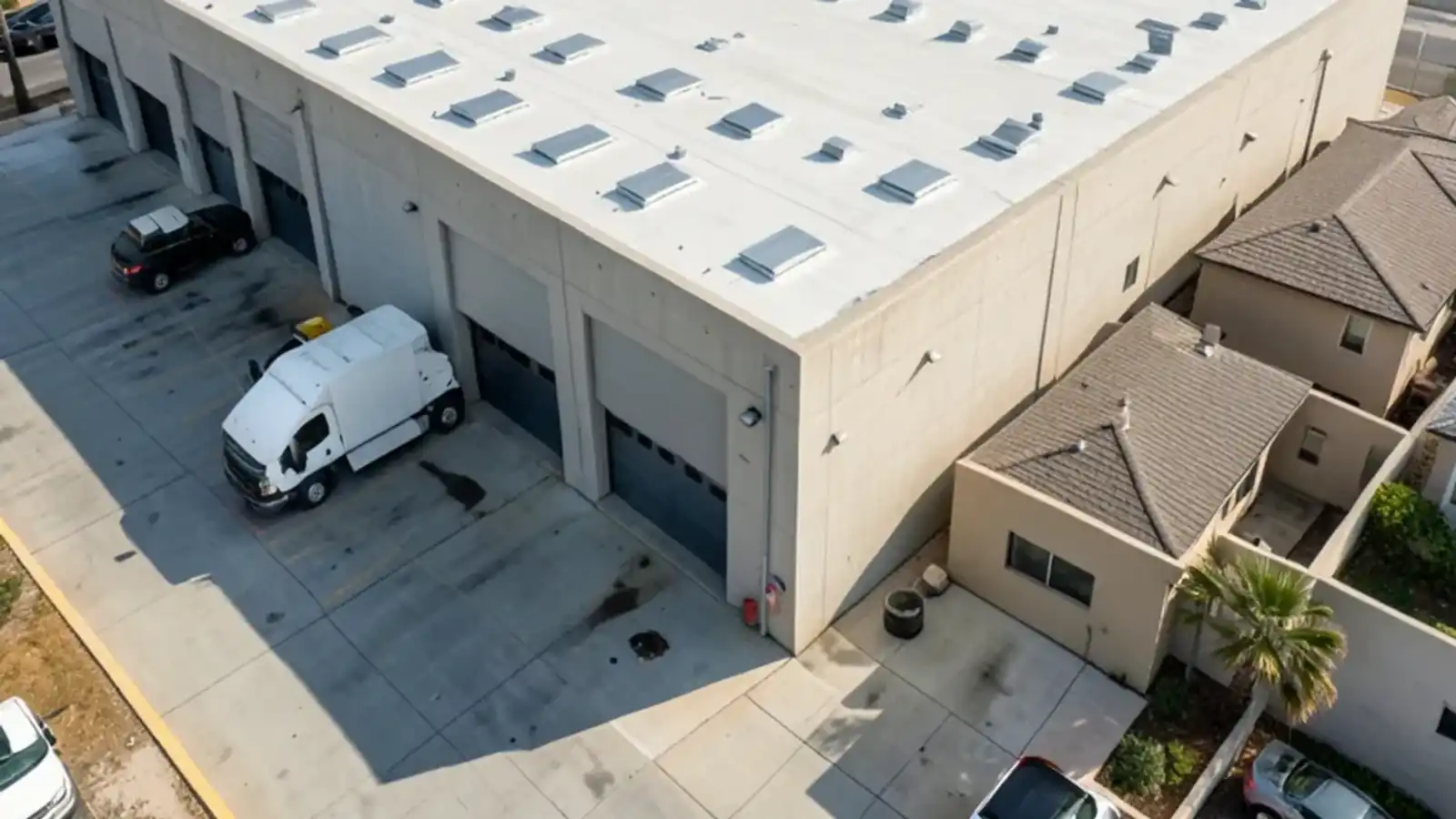
Commercial roofing in Los Angeles is mostly low-slope work. The roofs are flat or close to it, water leaves through drains and scuppers, and the surface carries air conditioning units, vents and conduit that each need a watertight detail. We repair, replace and maintain these roofs for shop owners, landlords and property managers, and we plan the work around the people underneath.
What commercial roofing in Los Angeles covers
Each kind of job has its own page. Start with the one that matches your building.
- Commercial roof repair: leaks at drains, parapets, seams and equipment curbs
- Commercial roof replacement: tear-off or recover, phased around tenants and rooftop trades
- Commercial roof maintenance: scheduled inspections and drain cleaning before the rains
- Industrial roofing: tilt-up and metal buildings, which we assess case by case
- Multi-family roofing: apartment buildings, dingbats and walk-ups
- HOA roofing: townhome and condo associations that need approvals and phasing
Smaller buildings such as a corner shop or a two-unit office sit between these pages. If yours does not fit one cleanly, call and describe it.
Which systems suit low-slope commercial roofs?
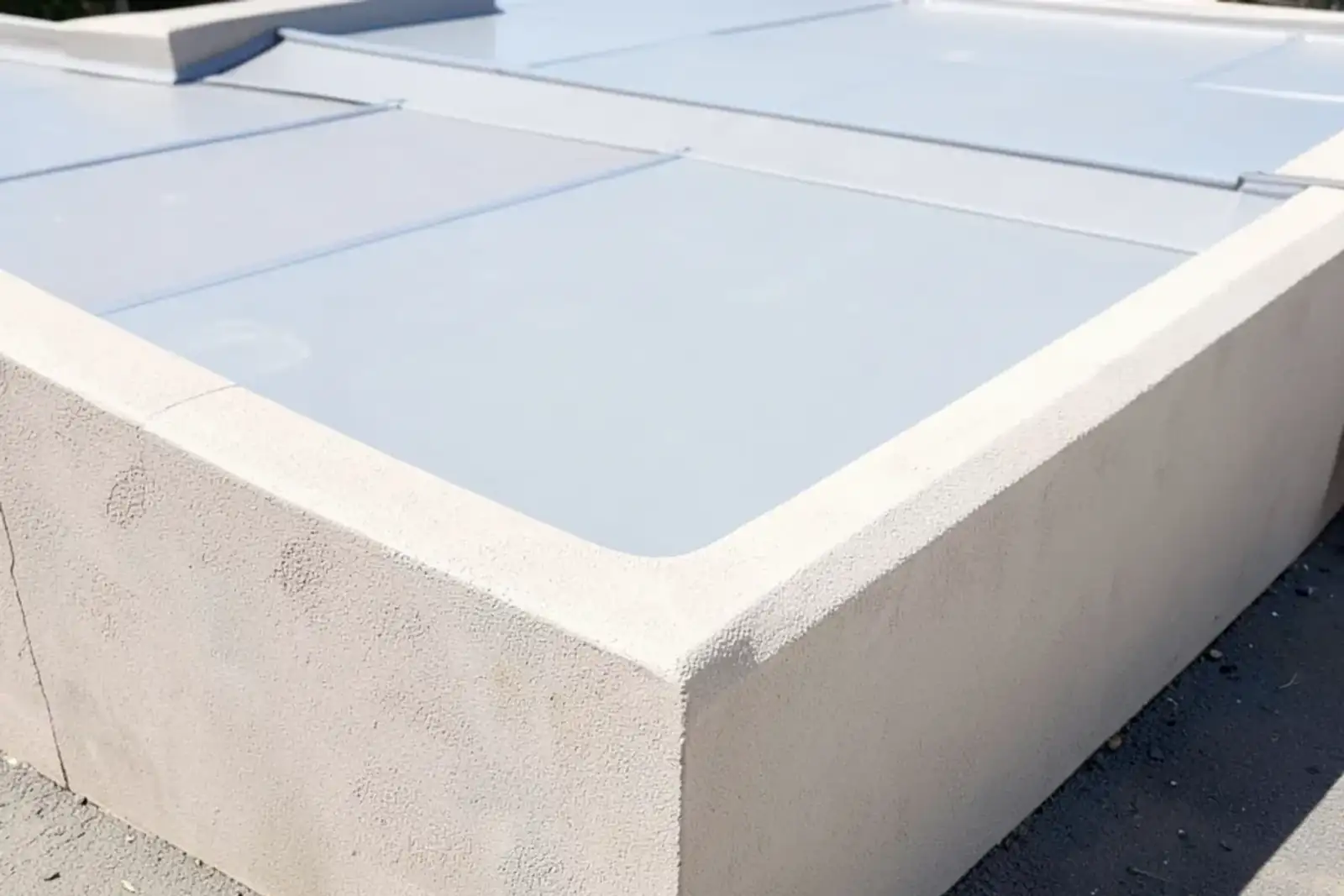
The existing roof decides more than the catalog does. A new membrane over wet insulation fails early, and a coating over a split seam hides the split. We look at what is up there before we talk product.
| System | How it is built | Where it tends to fit | Watch for |
|---|---|---|---|
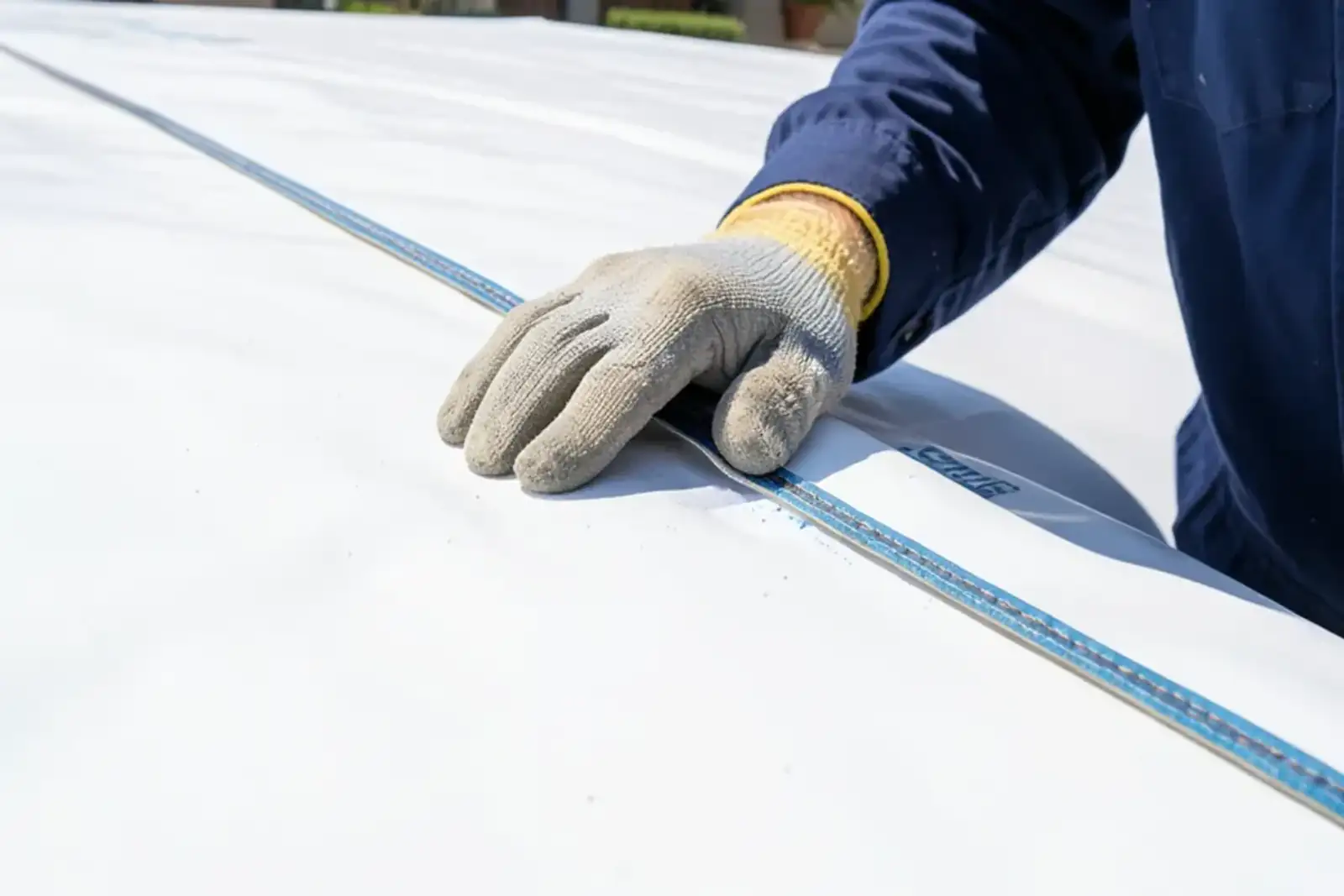
| Single-ply (TPO, PVC) | Sheets heat-welded at the seams over insulation | Large flat roofs with a light, reflective surface | Seam failures and punctures from foot traffic |
| Modified bitumen | Layered asphalt sheets, torch-applied or self-adhered | Roofs that see regular service visits | Torch work is hot work and needs fire controls |
| Built-up | Alternating felt and asphalt, topped with gravel or a cap sheet | Older low-slope buildings | Heavy, and leaks travel far from the source |
| Sprayed foam with coating | Seamless foam layer sealed by a topcoat | Roofs with many curbs and odd shapes | Coating needs upkeep |
| Fluid-applied coating | Liquid membrane over a dry, sound roof | Extending a roof that still has life | Cannot fix wet insulation |
Our pages on TPO roofing, torch-down roofing, foam roofing and roof coating go deeper on each.
Signs a commercial roof needs attention
Tenants often see the problem before the owner does. Call when you notice any of these:
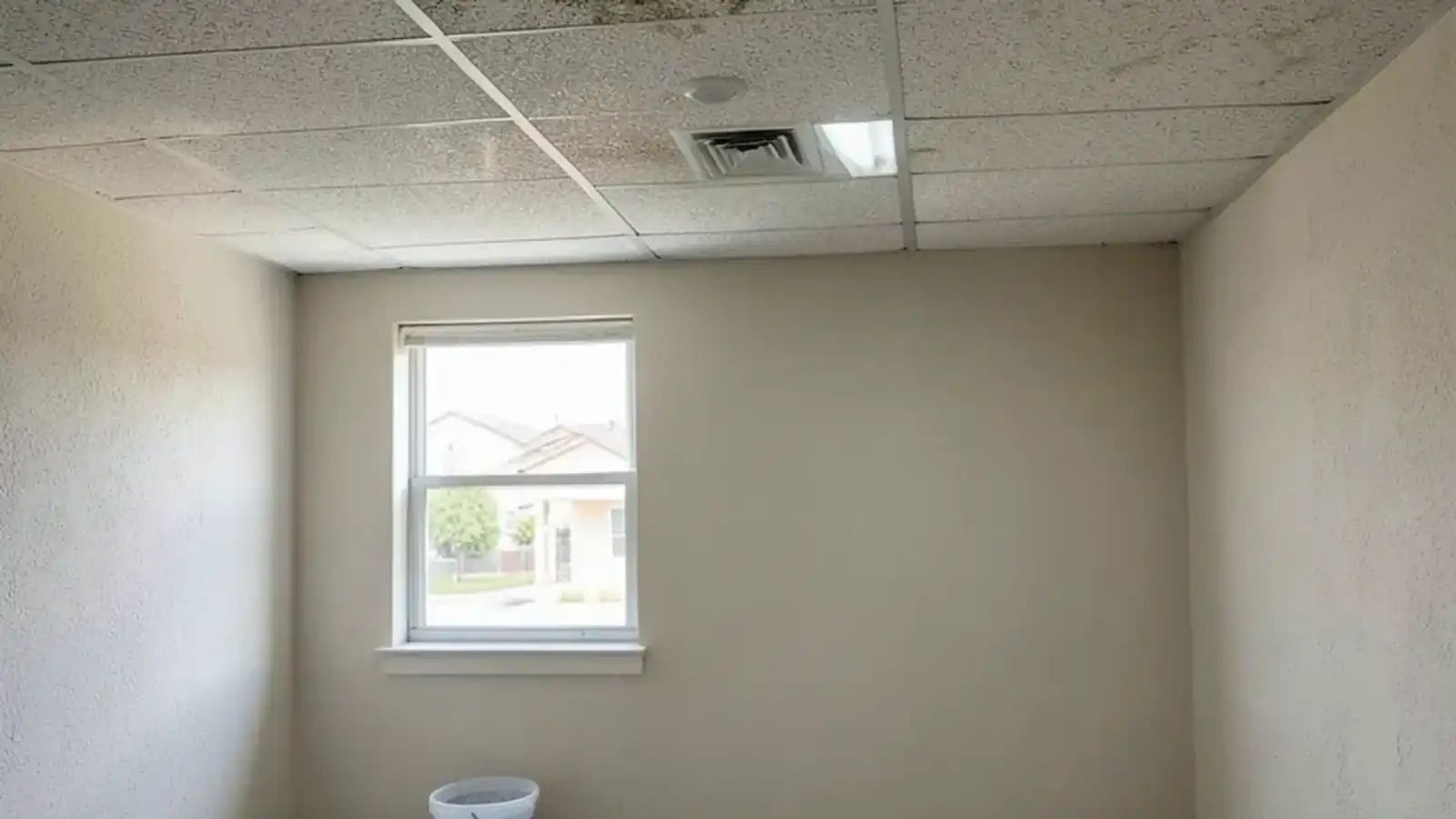
- Stained ceiling tiles or a damp smell after rain
- Standing water that is still there two days after a storm
- Blistered or split membrane, or gravel washed into the drains
- Soft spots underfoot, which can mean wet insulation
- Daylight or drips around rooftop units and vent pipes
Do not climb up in the wet to look. Take photos from inside and from the ground, note the date, and send them to us.
How an occupied-building roof job runs, step by step
- Walk the roof and the rooms below. We take photos and measurements, and tell you what the roof is made of.
- Test the roof where we can. Cores or a moisture survey show whether the insulation is wet.
- Write the scope. You get the system, the area, the sequence and how rooftop equipment is handled.
- Set the schedule with the manager. Noisy work, staging and tenant notices are agreed before day one.
- Work in sections. The crew closes up every section it opens, which keeps the building protected.
- Clean up and review. We check the site for debris and fasteners, then go over the finished roof with you.
What changes the price of a commercial roof?
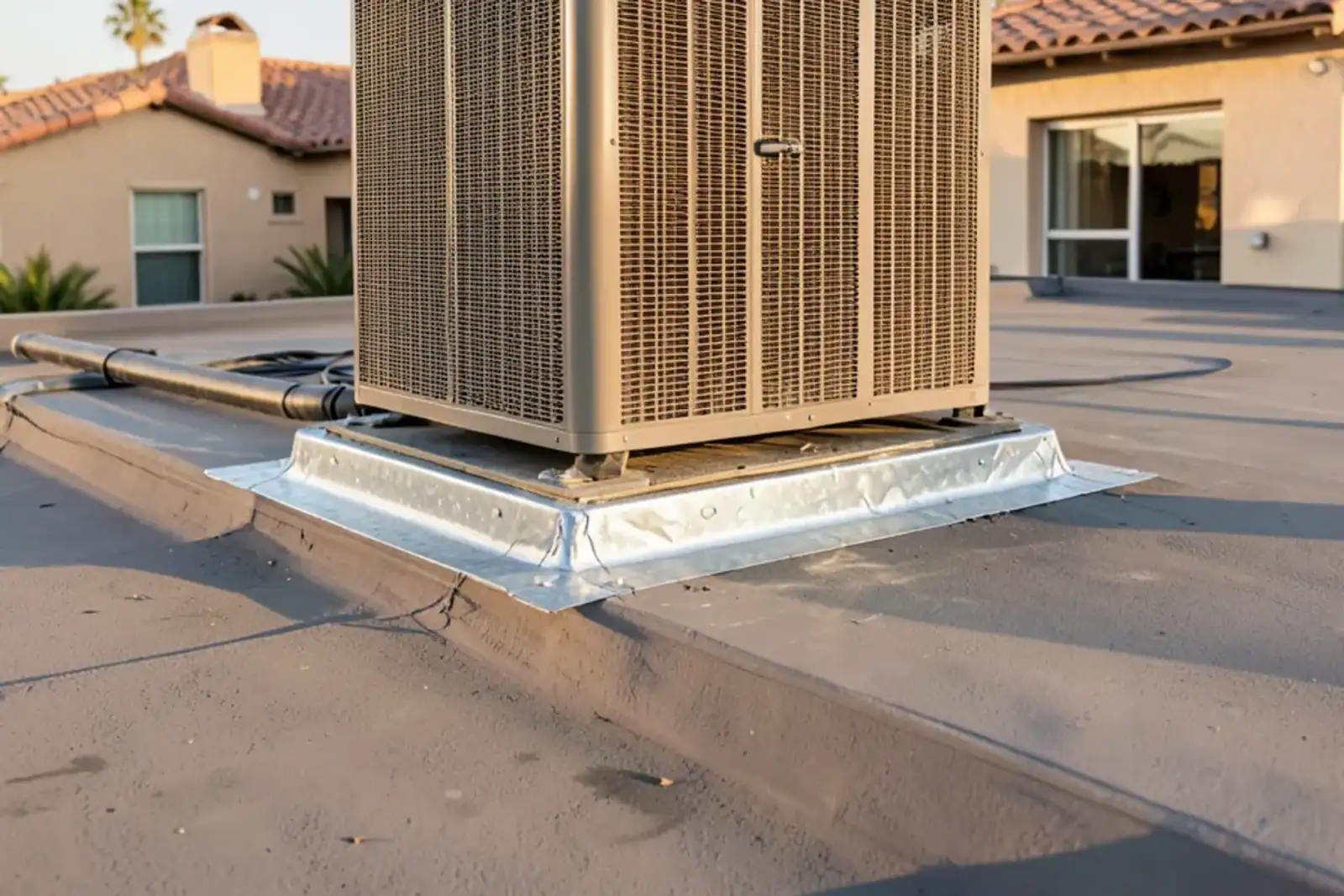
Size and access come first, then the system, then what is hidden. A roof that needs a crane lift for materials costs more to stage than one reached by a stair. Wet insulation, soft deck and many rooftop penetrations all add labor. Occupied buildings add their own costs: phasing the work in sections, protecting air intakes, and scheduling noisy tear-off at times the property manager agrees to. A roof with many curbs, vents and conduit runs takes longer to flash than an open field of membrane, whatever its area.
We do not publish a price per square foot because the same area can swing widely with those factors. We put the price in writing once we have seen the roof. Ask every contractor to price wet insulation and damaged decking as separate lines, so the totals can be compared fairly.
Permits, cool roof rules and inspections on commercial roofs
Permit rules depend on the building and the jurisdiction. Within the City of Los Angeles, re-roofing goes through LADBS, and other cities run their own building departments. Unincorporated areas follow the county. Settle in the contract who applies for the permit and who calls in the inspection. One customer says the permit process was taken care of for them.
Cool roof rules matter on larger jobs. For a nonresidential building, the California Energy Commission sets the trigger at re-roofing over half the roof area, or over 2,000 sq ft if that is the smaller number. Exceptions exist, the City of Los Angeles adds rules of its own, and your building department can confirm what applies at your address. Our cool roofing page explains rated products.
Asbestos can turn up in older roofing. When signs show, lab testing before removal is the sensible step, and SCAQMD Rule 1403 may call for a survey.
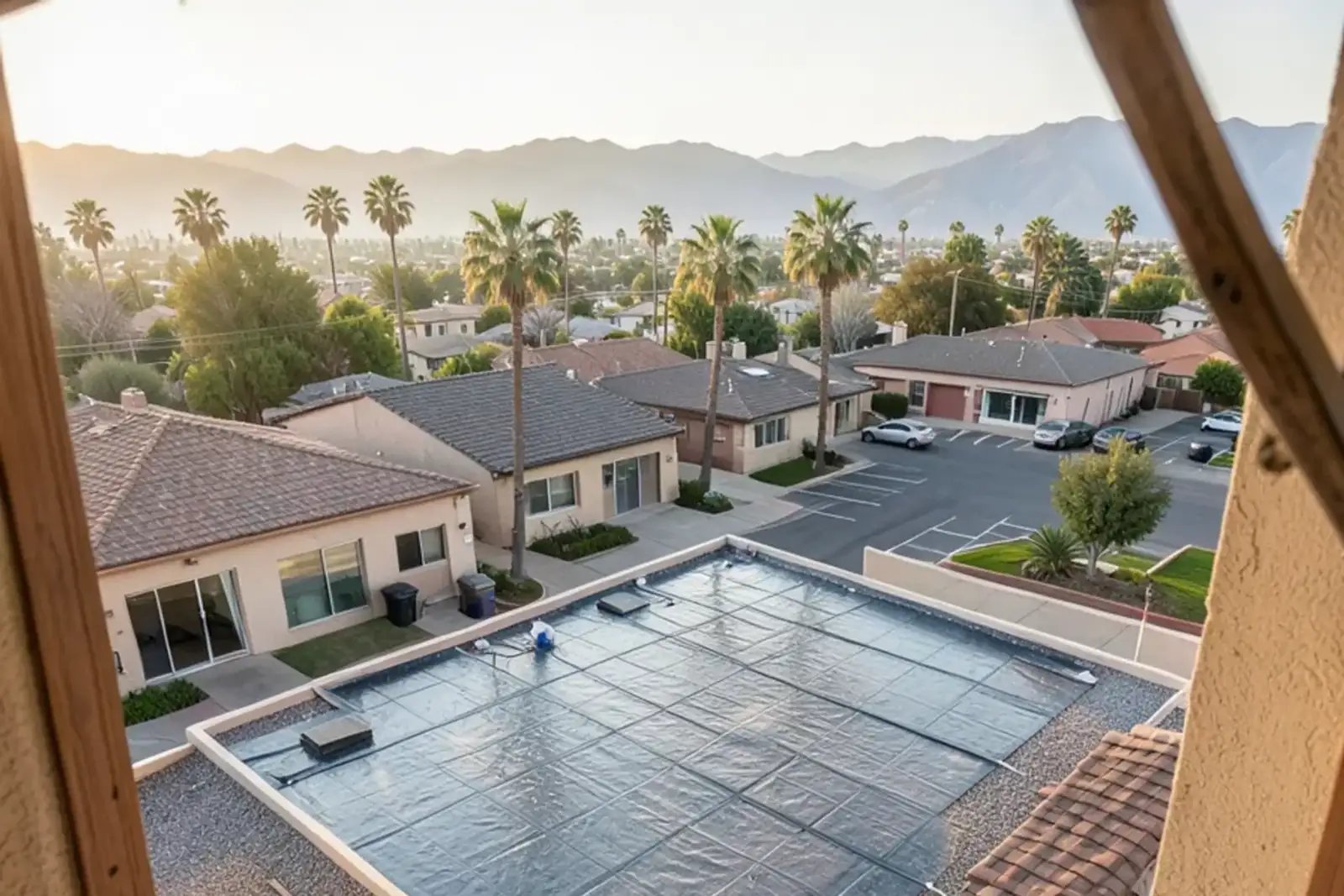
Why Clear Shield for commercial roofing in Los Angeles
Clear Shield Roofers is on Sherman Cir in Van Nuys, and Google shows 4.9 from 69 reviews as of November 2026. Most of those reviews describe homes, and we say so plainly. One customer's jobs included a commercial building and a home for the same owner, another received drone photos during the work, and reviewers mention pictures and measurements before quoting.
Those are habits we bring to a commercial roof: look first, document, then price. We treat each building as a new job and scope it that way.
What Van Nuys customers say about their roof work
“They also took care of the permit process, which made everything much easier for me.”
“The crew’s workmanship looked top-notch, and they kept me updated by sending drone photos of the roof work as it happened, which was really helpful since I wasn’t about to climb up there myself!”
“They also found hidden roof problems we had no idea about, including a poorly placed roof vent, fascia damage, and the need for bird-blocking protection.”
4.9 on Google · 69 reviews as of November 2026. Read all reviews
We work across the Valley and the basin, including Burbank, Glendale, Santa Monica and Culver City. For leak sources, read our guide to why commercial roofs leak at parapets and drains, and for upkeep see the commercial roof maintenance plan post.
Commercial Roofing: common questions
Do you work on occupied commercial buildings?
Yes, and most commercial re-roofs are done that way. We plan the work around the tenants: a staging area away from entrances, walkways kept clear, noisy tear-off agreed with the property manager in advance and dust kept out of air intakes. We walk the roof and the interior first, then put the sequence in the written estimate.
Which systems suit commercial roofs in Los Angeles?
Low-slope buildings usually get a single-ply membrane, a modified bitumen roof, a built-up roof, sprayed foam or a coating over a dry roof, and sloped metal buildings get metal panels. The right one depends on the deck, the insulation, foot traffic and budget. We assess the roof first, then explain two options and what each costs to keep up.
Can you work with a property manager on repairs?
Yes. Property managers usually need a written scope, dated photos for the owner file and a clear way to tell tenants when the crew is on the roof. Pictures and measurements come before the quote, and a Van Nuys customer reports drone photos sent as the roof work went on. Tell us who approves invoices before we start.
Do you handle small shop roofs as well as larger buildings?
Yes. A small shop roof still has a drain, a parapet, flashing and often a rooftop unit, so the same leak tracing applies. One customer had work done on a commercial building and a home for the same owner. For very large roofs we scope the job carefully and tell you early if it needs a different approach.
What should a commercial roofing proposal in Los Angeles spell out?
It should name the roof area, the system, the layers being removed, how wet or damaged insulation and decking will be priced, who pulls the permit and how rooftop equipment is handled. It should also give the schedule and say how cleanup is done. Get any warranty terms in writing, and compare scopes rather than totals.
Areas served for commercial roofing
- Paramount, CASmall-lot homes sit beside light-industrial buildings, so flat shop and warehouse roofs here need drain, seam and equipment-curb checks, with the city handling its own permits.
- Val Verde, CAA canyon community in brush-covered hills, in the unincorporated county, where fire rules and a long drive from Van Nuys shape how any commercial roof job is planned.
- Hesperia, CAHigh-desert wind, sun and cold nights stress membranes. It is about two hours from Van Nuys, so a roof visit has to be scheduled well ahead.
- Compton, CAOlder stucco homes share the city with commercial and multi-unit buildings, and Compton issues its own building permits, separate from LADBS.
- Commerce, CARail-yard industrial land and large warehouse roofs make roof area, crane access and phased work the main commercial questions here.
- Hawaiian Gardens, CAUnder one square mile of tightly packed buildings, so rooftop staging, parking and neighbor access are the first things to plan for a commercial roof.
- La Cañada Flintridge, CABuildings along Foothill Boulevard sit below mountains the 2009 Station Fire burned, and about 21 inches of rain a year puts drains and flashing to work.
- East San Gabriel, CAAn unincorporated community where roof permits go through LA County Public Works, with older shops and multi-unit buildings and mature trees that clog drains.
- La Habra, CAA North Orange County city on the LA County line with older commercial strips, so flat shop roofs and parapets are common, and it has its own building department.
- Santa Clarita, CA
- Glendale, CA
- Burbank, CA
- Santa Monica, CA
- Culver City, CA
- West Hollywood, CA
- Los Angeles County, CA
- Agoura Hills, CA
- Hermosa Beach, CA
- South El Monte, CA
- Santa Fe Springs, CA
- Castaic, CA
- El Segundo, CA
Need commercial roofing?
Call and tell us what you are seeing on the roof. We will take it from there.