
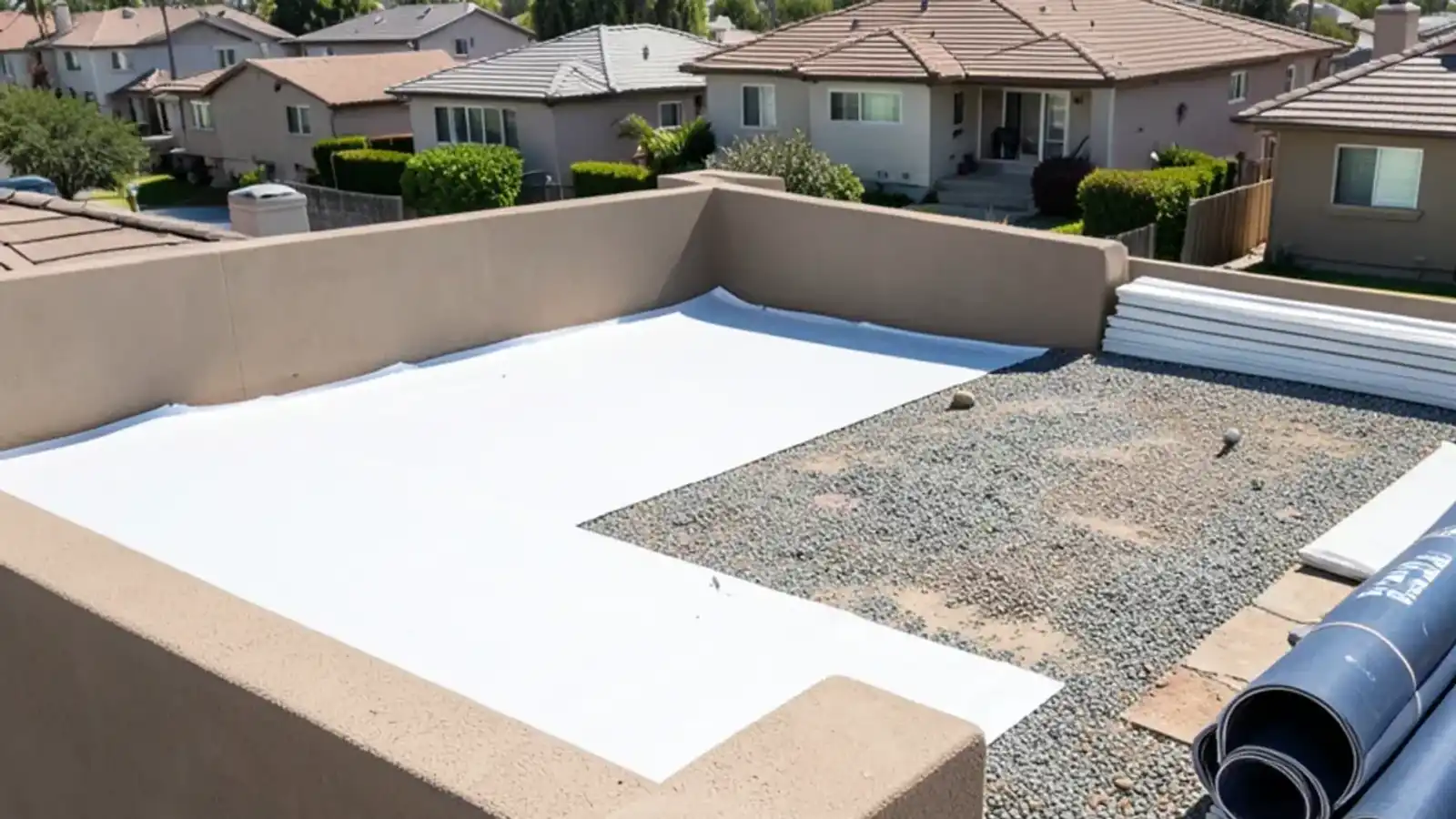
Commercial Roof Replacement in Los Angeles, CA
Commercial roof replacement in Los Angeles means choosing between a full tear-off and a recover, then sequencing the work so tenants stay open and the rooftop trades can finish their part. We assess the roof, write the scope and price it after we see the building. Same-day or next-day bookings, as the schedule allows.
- ★ 4.9 on Google · 69 reviews
- Same-day or next-day bookings
- Based in Van Nuys, CA
On this page
- What does a commercial roof replacement include?
- When does a commercial roof need replacement instead of repair?
- Recover or tear off: the two ways to reroof
- How a phased roof replacement works, step by step
- Rooftop units, curbs and the HVAC trades
- What shapes the cost of commercial roof replacement per square foot?
- Cool roof rules, permits and inspections for commercial re-roofs
- Why Clear Shield for commercial roof replacement in Los Angeles
- Common questions
A commercial roof that keeps leaking in new places, holds water after storms or has wet insulation has stopped being a repair job. Replacing it is a project with a schedule, trades to coordinate and rules to meet, and it deserves a written plan before anyone mobilizes. This page is part of our commercial roofing in Los Angeles work and covers how we scope a replacement.
What does a commercial roof replacement include?
A replacement is a full project with a written scope, not a patch. We assess the roof first, then the scope names every layer that goes in or comes out, so bids can be compared line for line:
- Moisture survey or core samples to find wet insulation
- Tear-off or recover, with the layer count confirmed
- Deck repair or replacement, priced per sheet or section
- Tapered or flat insulation laid to move water toward drains
- New membrane, flashing, edge metal and drain details
- Curb and penetration flashing, coordinated with the HVAC trades
- Final walk with photos, a debris and fastener sweep and the closing paperwork
Anything beyond that, such as a new drain line or structural framing, is quoted as a separate line.
When does a commercial roof need replacement instead of repair?
Replace when the roof as a whole is finished, not when one detail is. These signs usually point that way:
- Wet insulation across more than a corner, found by a moisture survey or core samples
- Repeated repairs at different points within a short stretch
- Membrane that is brittle, cracked or shrunken away from the edges
- Ponding that returns after the drains are cleared
- A soft or sagging deck under foot
Sound repairs on a roof with life left cost less over time. Our commercial roof repair page covers that side, and we are glad to price the repair next to the replacement so you see both.
Recover or tear off: the two ways to reroof
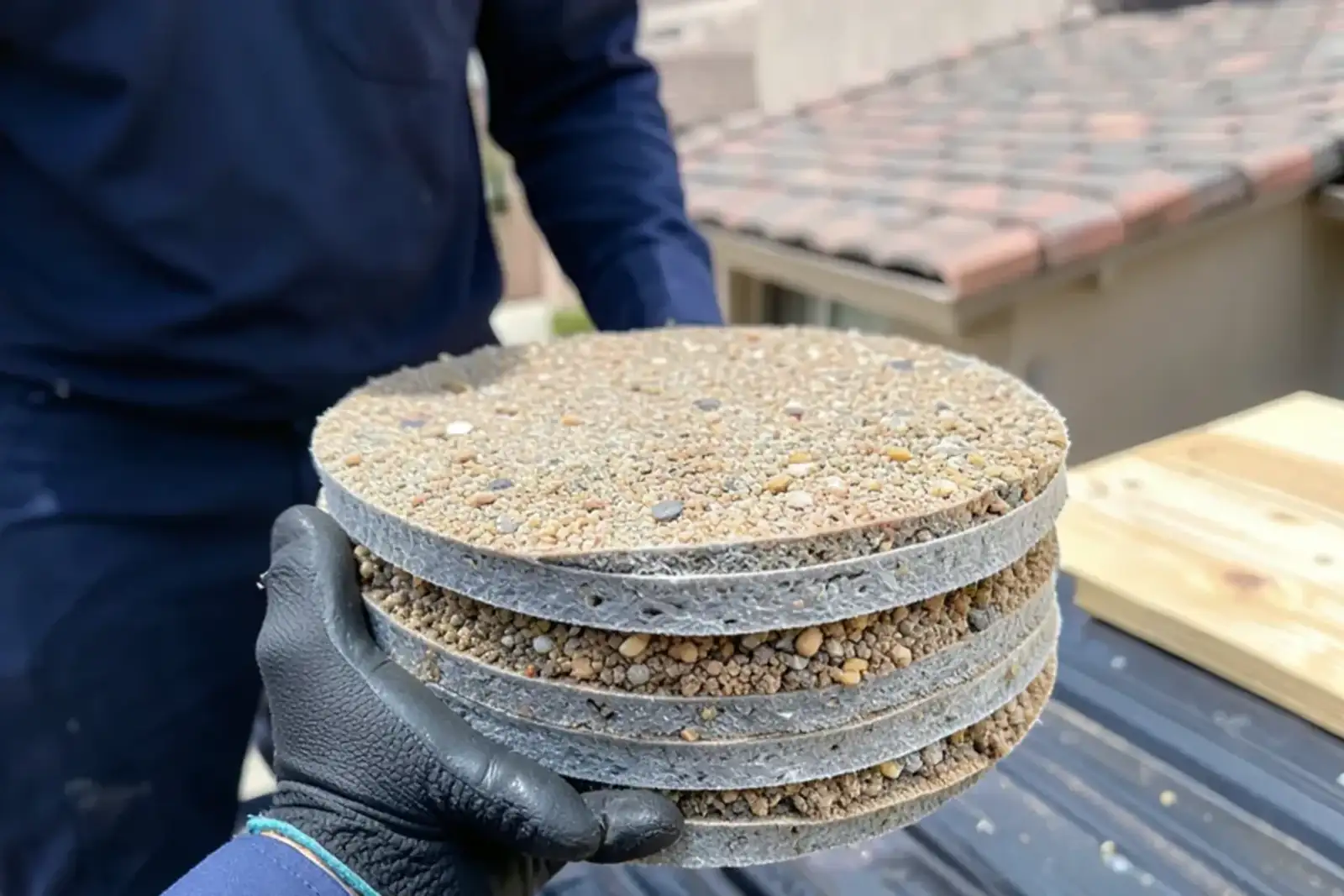
Commercial reroofing falls into two routes. A tear-off removes the old roof down to the deck, so the crew can inspect and fix what is under it. A recover leaves the old roof in place and adds a new system over it.
| Tear-off | Recover | |
|---|---|---|
| What happens | Old layers removed to the deck | New roofing over the existing roof |
| Best when | Insulation is wet or the deck is suspect | Existing roof is dry and sound |
| Upside | Full view of deck and insulation | Less debris, shorter disruption |
| Risk | More noise, dust and cost for disposal | Hidden wet insulation stays trapped |
California's building codes limit how many layers a roof can carry and generally do not allow a recover over a wet or deteriorated roof. For a commercial building, ask your building department what applies. A core sample from the roof tells us which route is open.
Asbestos may be present in older roofing. Signs on site lead us to recommend a lab test before removal, and SCAQMD Rule 1403 covers surveys and notices ahead of renovation.
How a phased roof replacement works, step by step
Phased roof replacement keeps part of the building usable while another part is open. A typical sequence looks like this:
- Survey and sample. We measure, photograph and take cores so the scope reflects what is actually there.
- Divide the roof. Sections follow drainage and tenant layout, so one section can be dried in at a time.
- Stage materials. Access lanes, crane or hoist placement and a dumpster location are agreed with the manager.
- Remove and repair deck. Each section is torn off, and soft deck is replaced and priced as a separate line.
- Install insulation and membrane. Edges, drains and curbs are detailed before the crew leaves the section.
- Walk the finished roof. We go over the work with you and check the site for debris and fasteners.
Rooftop units, curbs and the HVAC trades
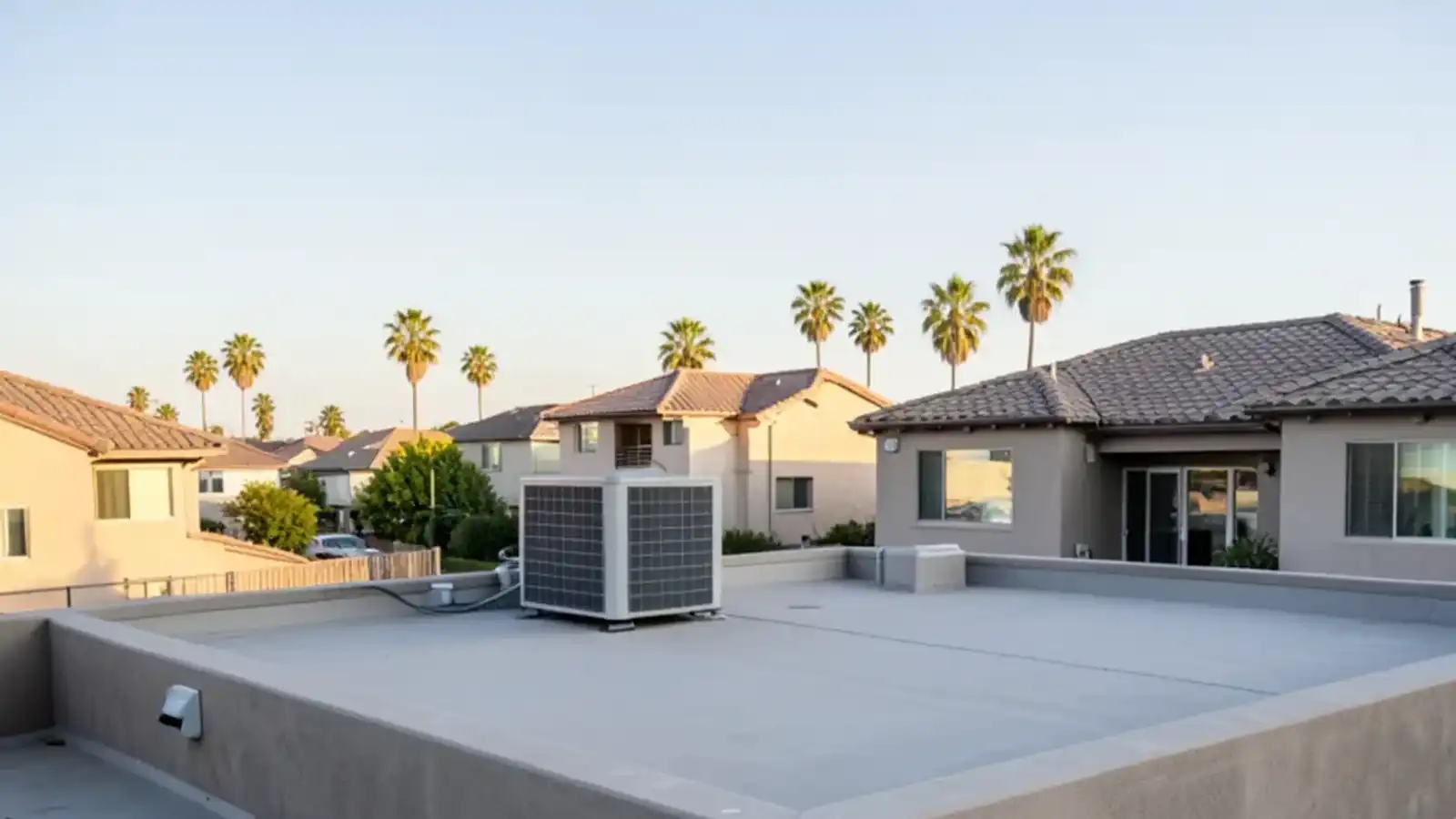
Most commercial roofs carry equipment, and the equipment decides the order of work. The air handler is often lifted, the curb is flashed into the new roof and the unit is set back after. If the curb is rusted or too low, that gets fixed at the same time.
We would sit down with your HVAC company, and any electrician or fire alarm contractor with roof-mounted gear, before the schedule is set. Their outages, crane days and permits belong in the same calendar as ours.
What shapes the cost of commercial roof replacement per square foot?
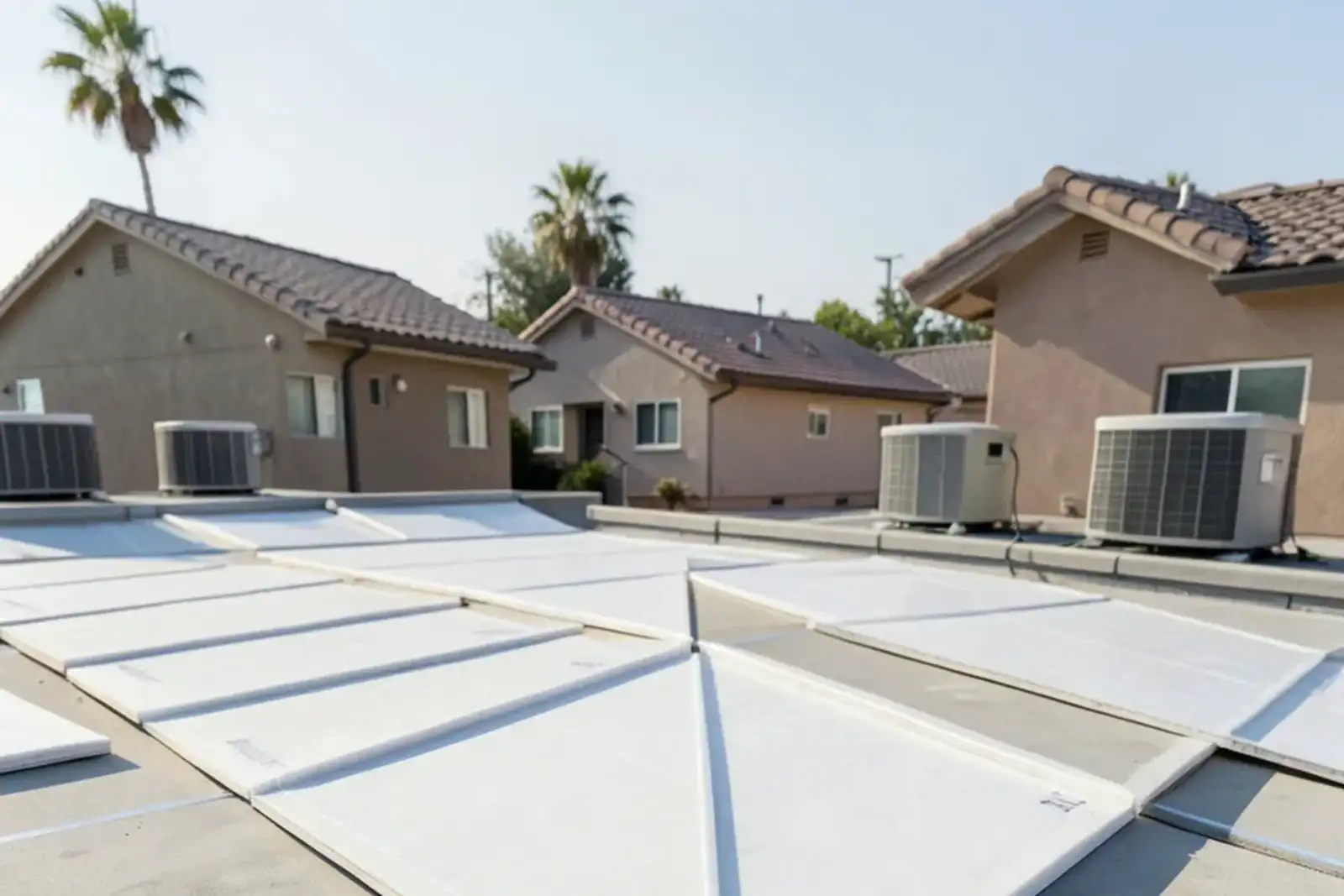
The price per square foot moves with the system, the tear-off, the insulation, the deck condition and the access to the roof. The one public figure we cite is Angi's estimate for homes: roughly $4 to $12 per square foot in Los Angeles, about $8.60 on average, as of November 2026. A commercial roof is a different job, so that range does not carry over.
Pricing arrives in writing after a site visit. Ask each bidder to price wet insulation and deck repair as separate items, to name the system layers and to say who pays for permits and equipment lifts.
Cool roof rules, permits and inspections for commercial re-roofs
The Energy Commission's nonresidential trigger is a re-roof of more than 50 percent of the roof area, or of more than 2,000 sq ft where that is the lower figure. Exceptions apply, and the City of Los Angeles layers its own rules on top. Choose products that appear in the Cool Roof Rating Council directory and ask the building department which rules govern your address. Our cool roofing page explains the basics.
Permits follow the jurisdiction. LADBS handles the City of Los Angeles. Santa Clarita and West Hollywood have city building departments of their own, while unincorporated Stevenson Ranch and Alondra Park go through the county. Put the permit applicant and the inspection booking in the contract, by name. Hot work rules from the California Fire Code cover torch-applied systems, and permit and fire-watch requirements differ from place to place.
Why Clear Shield for commercial roof replacement in Los Angeles
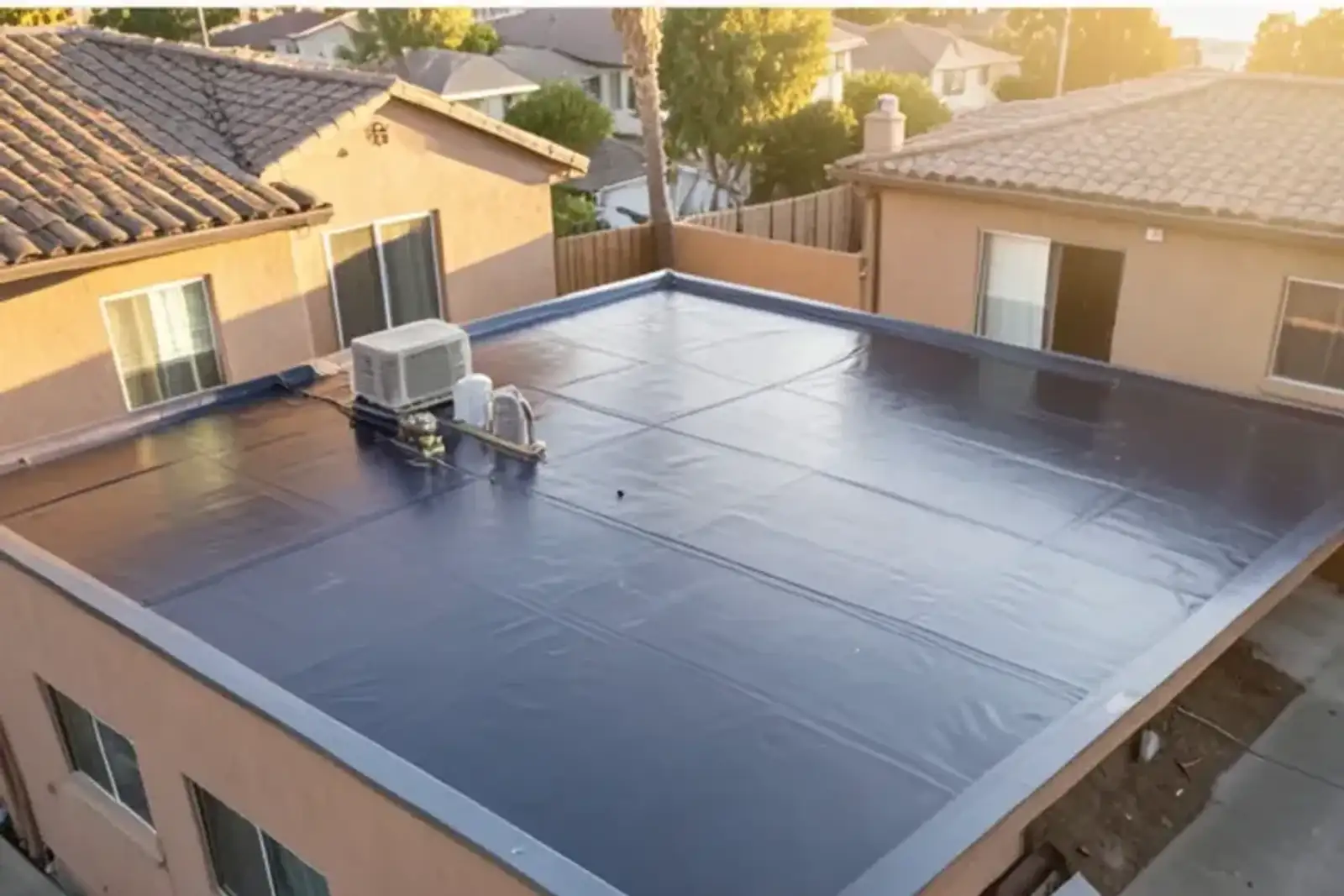
Our reviews are residential, from Van Nuys, so we keep the claim modest. Reviewers describe a low-slope roof replaced, plywood replaced after it was explained first and a thorough daily cleanup, and one reviewer had both a commercial building and a home done for one owner. Another had drone photos sent during the work.
For a commercial roof we put the same habits in writing: pictures and measurements before the quote, deck problems shown before they are priced and a cleanup plan. Get any warranty terms in writing from every contractor you compare.
What Van Nuys customers say about roof replacements
“I recently had my old shingle roof replaced with a new CertainTeed Pro line roofing system, and I am very happy with the results.”
“We were deciding between a standing seam metal roof and asphalt shingles, and frederick was a great guide who helped us understand the pros and cons so we could make the best choice for our home and budget.”
“They also took care of the permit process, which made everything much easier for me.”
4.9 on Google · 69 reviews as of November 2026. Read all reviews
We cover Santa Clarita, West Hollywood, Stevenson Ranch and Alondra Park, and the rest of the Los Angeles area. For upkeep after a new roof, see commercial roof maintenance, and for large buildings read about industrial roofing. For a longer look at phasing, read our post on keeping a warehouse running through a reroof.
Commercial Roof Replacement: common questions
Can you replace a commercial roof without closing the business?
Usually, yes. The roof is replaced in sections, and no section stays open overnight without protection. Customer entrances, loading and noisy tear-off are scheduled with the owner or manager in advance. Some interior work, such as ceiling tile removal or sensitive equipment, may need extra planning, and we cover those in the written scope.
Do you coordinate with HVAC contractors?
We plan for them, yes. Rooftop units sit on curbs that are flashed into the roof, so the unit usually has to be lifted or disconnected, then reset after the new roof is in. That takes the building owner, the HVAC company and the roofer on the same schedule. We put those handoffs in the sequence before work starts.
What cool roof rules apply to commercial re-roofs?
Expect a cool-roof-rated product to be required once a nonresidential re-roof passes the state trigger, which the California Energy Commission puts at half the roof or 2,000 sq ft, whichever is smaller. Exceptions exist, and the City of Los Angeles adds rules. Check your address with the building department and choose a CRRC-listed product.
How long does commercial roof replacement take in Los Angeles?
It depends on roof area, system, weather and how many sections are phased. A small shop roof may take days, while a larger building runs weeks. Rain stops tear-off, and winter storms, mostly December to March, are the usual cause of delay. We give a schedule in the proposal and tell you early if something under the roof changes it.
Is it cheaper to recover a commercial roof than to tear it off?
Recovering, which means installing new roofing over the old, can cost less up front because it skips removal. It only works when the existing roof is dry, sound and within what the building code allows for layers. If insulation is wet, the new roof will fail early. A core sample is the quickest way to know which path applies.
Areas served for commercial roof replacement
- Azusa, CAFoothill winds at the mouth of San Gabriel Canyon and hot dry summers wear membranes, and the median home dates to 1970 (Census ACS).
- Rolling Hills, CAA gated city with private roads and three entry gates, so crane access, dumpster staging and gate scheduling are settled before any reroof begins.
- Lake Forest, CAHOA-governed tracts in South Orange County, where approvals come before a reroof, and the drive from Van Nuys is about 115 minutes, so scheduling starts early.
- South Gate, CAA former industrial hub of over 35 factories by 1940, with about 14.8 inches of rain a year (mostly November to April) setting the tear-off window.
- Sierra Madre, CAFoothill streets next to the Eaton Fire area get about 24 inches of rain a year, so drainage and tear-off timing around the wet months matter.
- Sun Village, CAAn eastern Antelope Valley community at about 2,700 feet, with strong sun and wind on exposed roofs, about 75 minutes from Van Nuys under county permitting.
- La Crescenta-Montrose, CAAn unincorporated foothill community against the San Gabriel Mountains, where canyon gusts and debris test roof edges and drains on flat roofs.
- Duarte, CAHuntington Drive follows old Route 66 through the middle of the city, and the San Gabriel Mountains to the north bring wind and debris to flat roofs.
- Diamond Bar, CAA hillside city of master-planned developments (median home built 1980, Census ACS) where association rules and slope affect crane placement and material staging.
- Santa Clarita, CA
- West Hollywood, CA
- Stevenson Ranch, CA
- Ladera Heights, CA
- Orange County, CA
- Palos Verdes Estates, CA
- Avocado Heights, CA
- San Marino, CA
- Commerce, CA
- Signal Hill, CA
- Sierra Madre, CA
Need commercial roof replacement?
Call and tell us what you are seeing on the roof. We will take it from there.