Cool Roofing in Los Angeles, CA
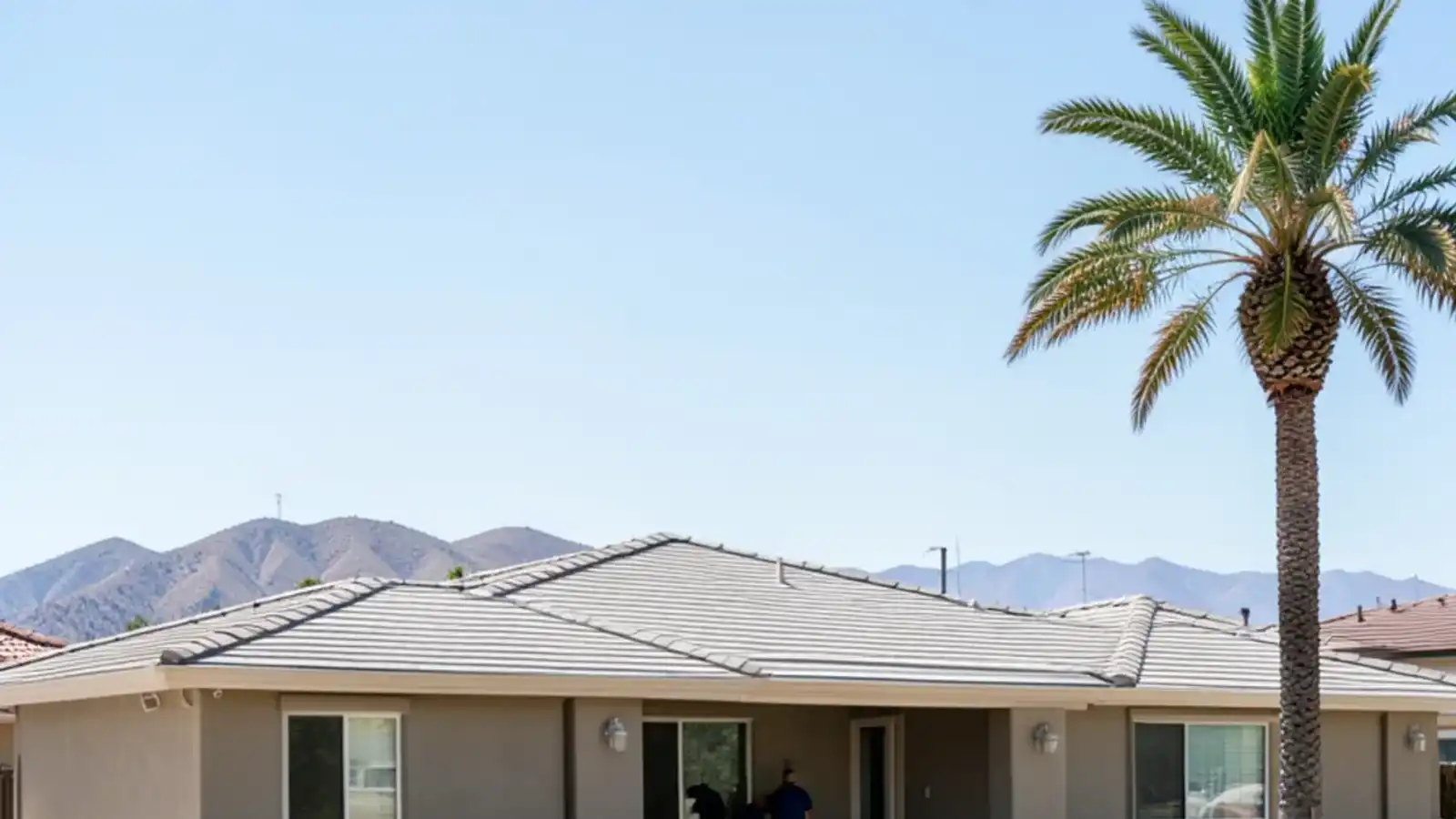
Cool roofing in Los Angeles means a roof covering rated to reflect sunlight and shed heat, and on many re-roofs it is a code requirement, not an option. Replacements covering more than half the roof must use a cool-rated product. We check the rules for your slope and address before the material is ordered.
- ★ 4.9 on Google · 69 reviews
- Same-day or next-day bookings
- Based in Van Nuys, CA
On this page
- Does Title 24 require a cool roof on a Los Angeles re-roof?
- What counts as a cool roof product?
- What does a cool roofing job include?
- Cool roof options by roofing material
- Can a cool roof lower your cooling bill, and when does it help most?
- Is there a cool roof rebate in Los Angeles?
- How we check the cool-roof rule on your estimate
- What affects cool roofing cost in Los Angeles?
- Why Clear Shield for cool roofing in Los Angeles
- Common questions
Most Los Angeles owners meet the cool roof rule at the estimate. The covering you thought you wanted may not qualify, or may qualify only in some colors. This page explains the rule, how to read the listings, and what a cool roof does and does not do for your energy bill. For other coverings, the roofing materials overview is the place to start.
Does Title 24 require a cool roof on a Los Angeles re-roof?
For most replacements, yes. Inside the City of Los Angeles, a replacement that covers more than half of the roof must use a cool-roof-rated product. Repairs are exempt, and so are replacements of half the roof or less.
Two layers of rules apply. California's Energy Code, Title 24, Part 6, 2025 edition, took effect January 1, 2026. It splits roofs at a 2:12 slope. Under the state rule, steep-slope roofs are covered in Climate Zones 4 and 8 to 15, and low-slope roofs in Zones 4 and 6 to 15. The City of Los Angeles adds its own rules on top.
Exceptions exist, such as certain insulation levels, a radiant barrier or building-integrated solar. Look up your zone with the California Energy Commission, because the zone of a neighborhood is not something to guess. Our post on Title 24 and cool roofs in Los Angeles walks through it.
What counts as a cool roof product?
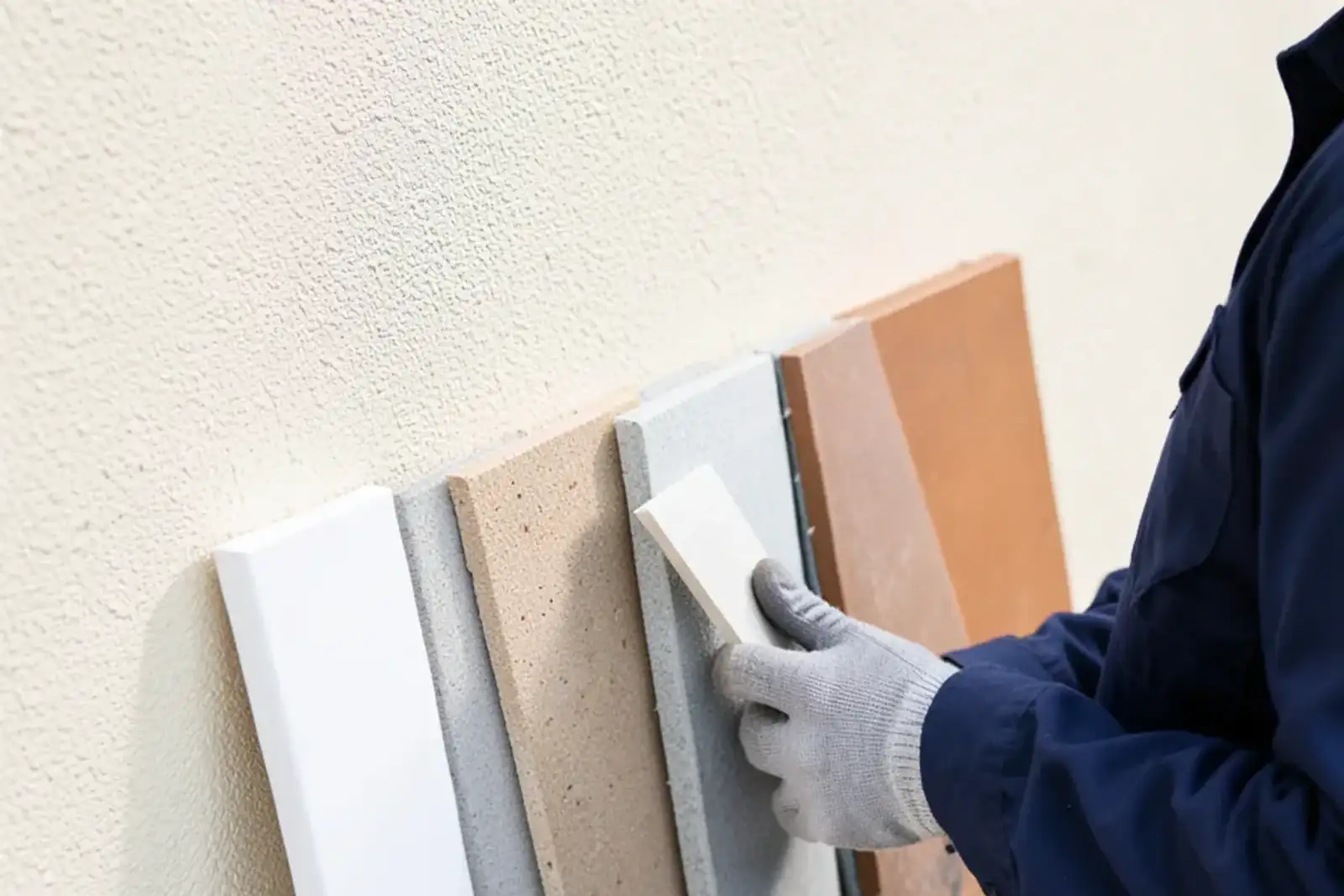
A cool roof is defined by a rating, not by color. Cool roof products are tested for how much sunlight they reflect and how much heat they give off, and the results are listed with the Cool Roof Rating Council (CRRC). The listing gives each product an ID number.
We do not quote reflectance numbers here, because the thresholds depend on slope and jurisdiction. The point is that the roofing product itself needs a CRRC listing. Without one, a product is judged on default values that are often low for a dark shingle. Always ask for the listing for the exact product and color.
What does a cool roofing job include?
A cool roofing job is a normal re-roof with one extra rule: the covering has to be a listed, rated product. Los Angeles has been ahead of most cities on this. The City Council approved its cool roof requirement in December 2013, as reported by Yale Environment 360, and the state energy code has tightened since. A cool roof also helps with the urban heat island effect, where dark roofs and pavement hold heat across a whole neighborhood.
On our estimates, the scope covers:
- Area and slope check: how much of the roof changes and which planes are low-slope
- Rated covering: a CRRC-listed shingle, tile, metal panel or coating, named by product and color
- Underlayment and flashing: sized to the covering, not left as an afterthought
- Attic airflow: a look at vents so the cooler roof is not undone by a trapped attic
- Paperwork: the product listing and rebate details kept with your invoice
Unincorporated parts of the county follow LA County's own cool roof ordinance, so the agency to ask depends on the address.
Cool roof options by roofing material
Every major covering has cool-rated versions. The way the rating is achieved differs:
| Covering | How it becomes cool | Notes |
|---|---|---|
| Asphalt shingle | Reflective granules in lighter or specially pigmented colors | Check the exact color on the listing |
| Clay and concrete tile | Light or cool-pigmented glazes and finishes | See tile roofing |
| Metal panels | Reflective paint finishes | See metal roofing |
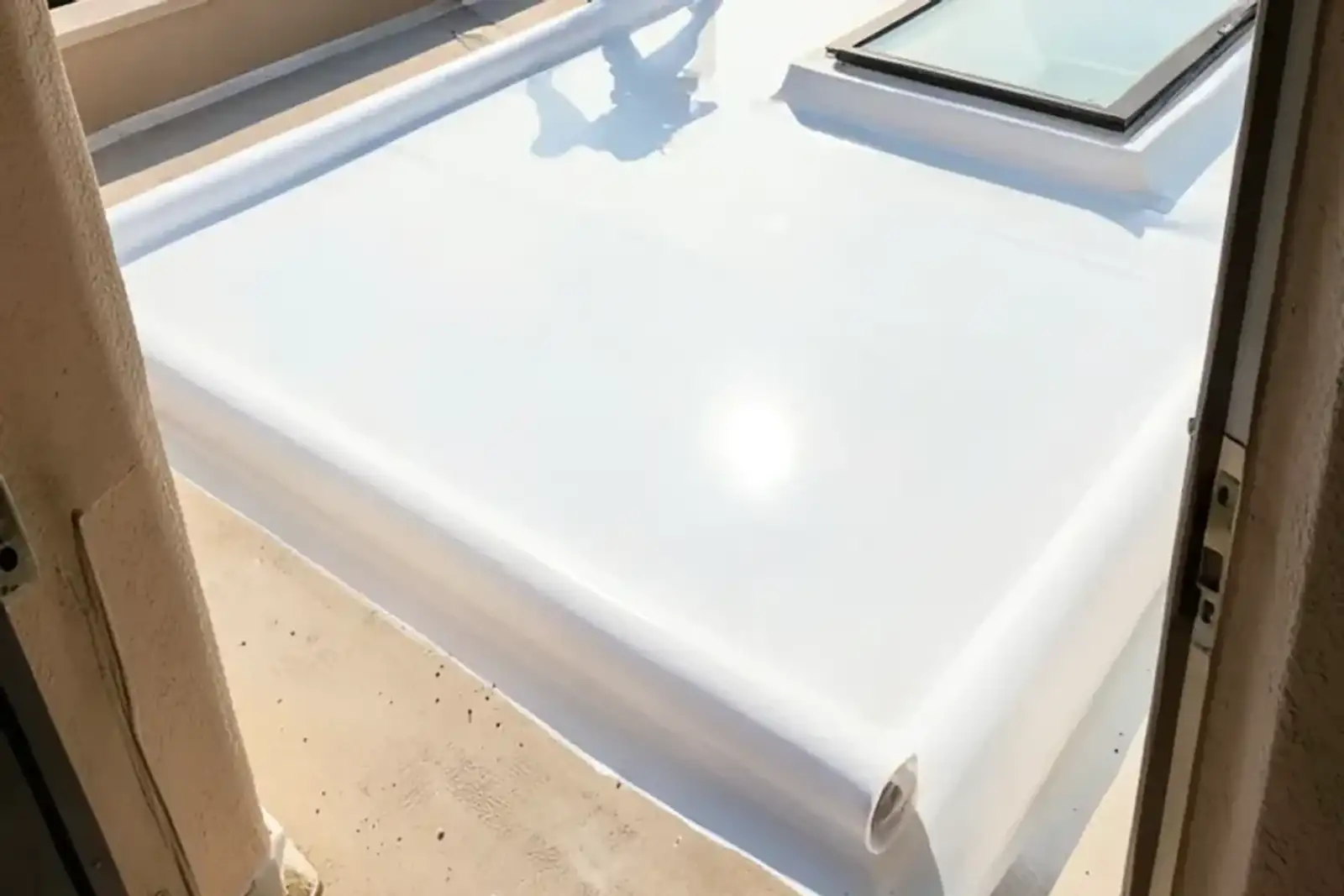
| Low-slope coatings | White or light elastomeric layers | See roof coating |
Wood shake is not on the list. Wood shake and shingle coverings are banned in the city, and any lookalike we discuss on the cedar shake roofing page also has to meet the cool and fire rules.
Can a cool roof lower your cooling bill, and when does it help most?
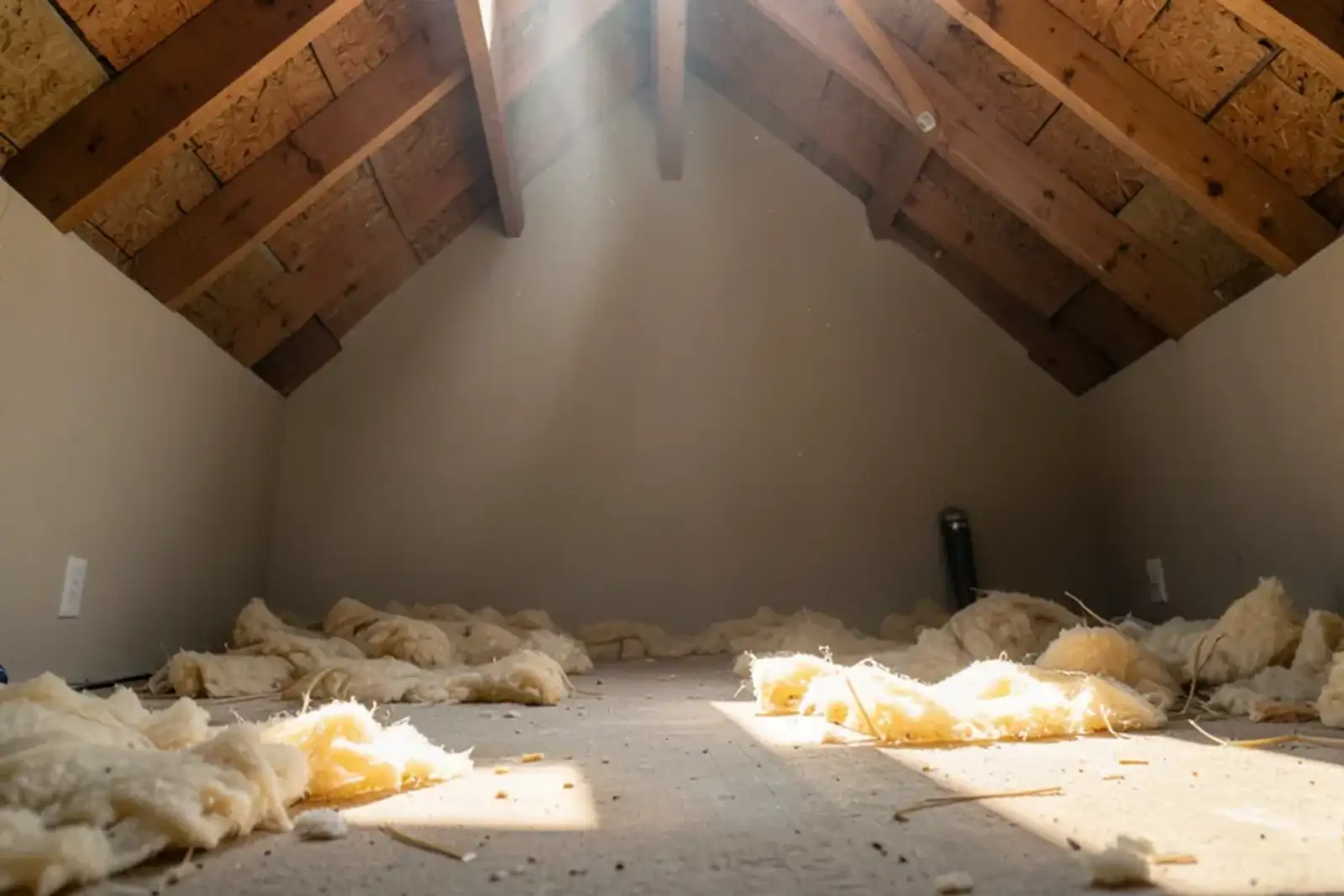
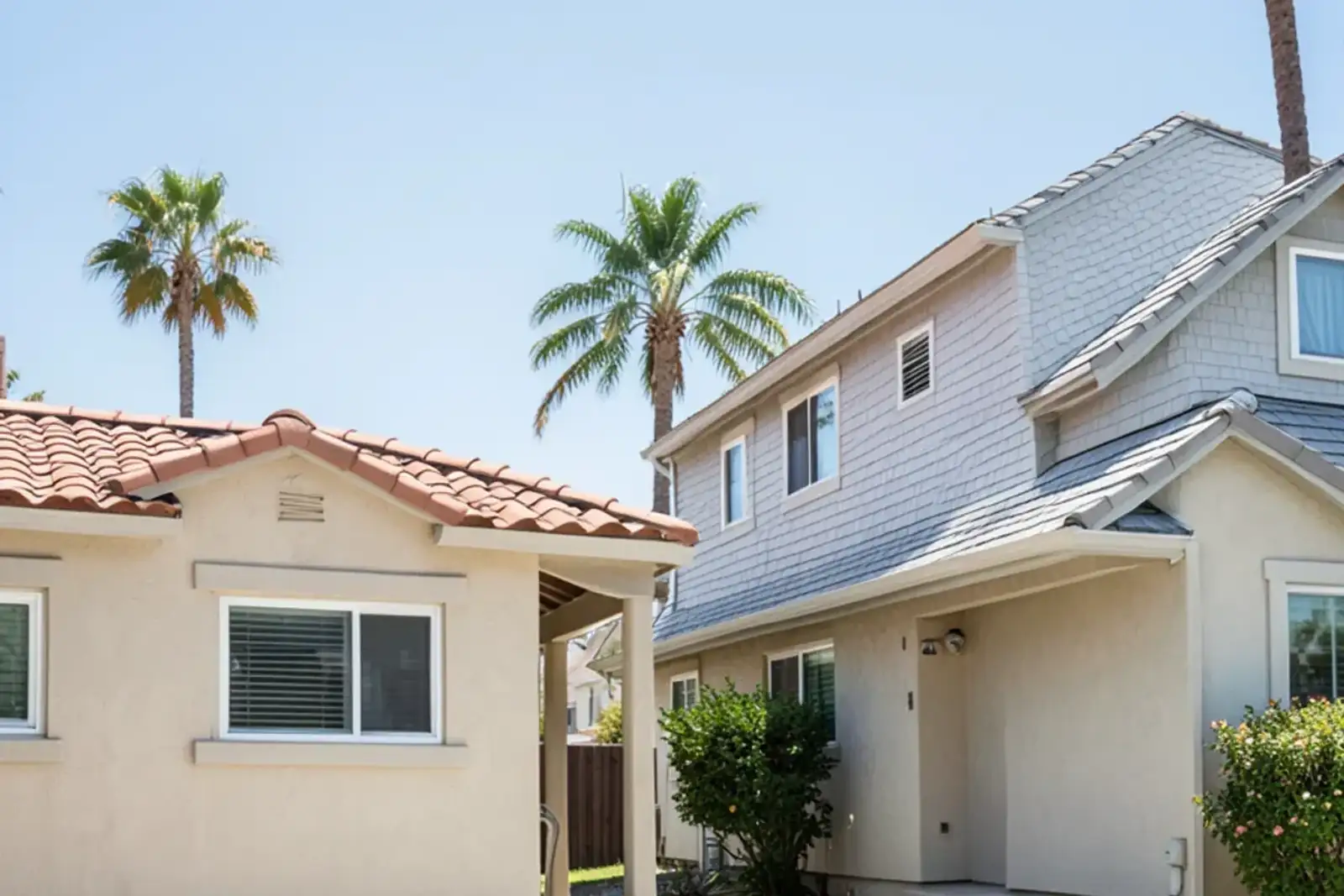
It helps most where the sun is strongest and the attic is least protected. A reflective roof sends more sun away, so the attic runs cooler and the ceiling radiates less heat into the house. NOAA's normals count roughly 77 days of 90°F-plus heat a year in Van Nuys, against about 5 near LAX, so a Valley house benefits more than a beach house.
No roof covering alone reduces attic heat the way the whole system does. Insulation depth, duct location and ventilation all matter, and the savings vary by house. If the attic runs hot, ask about attic ventilation as part of the same job.
Is there a cool roof rebate in Los Angeles?
LADWP residential customers may qualify for a Consumer Rebate Program cool roof rebate of $0.20 to $0.60 per square foot, depending on the product's rating tier. The product needs a CRRC product ID, and the application has to come within 12 months of purchase. Funding is limited and not guaranteed, so check ladwp.com/crp before you commit.
The rebate is for LADWP customers only. Homes served by other utilities need to ask their own provider. We do not advertise tax credits.
How we check the cool-roof rule on your estimate
- Confirm the area. We measure how much of the roof is being replaced, because the rule turns on half.
- Confirm the slope. Each plane is checked against the 2:12 split, since steep and low slopes carry different requirements.
- Look up the zone. We use the California Energy Commission's lookup for your address.
- Pick listed products. Only options with a CRRC listing go on the estimate.
- Match color and rules. HOA or historic limits are checked against the listed colors.
- Record it. The product, listing and rebate information go in your written estimate.
What affects cool roofing cost in Los Angeles?
A cool rating can add little or nothing to the price of a covering, or it can change the choice altogether. What moves the number:
- The covering you choose, and the rated version of it
- Roof size, slope and the number of penetrations
- Tear-off layers and deck repair
- Underlayment, which some fire-rated assemblies specify
- Coating versus full replacement on low-slope sections
We price after we see the roof and put it in writing. Ask whether the cool-rated option costs more than the same product in a non-rated color. Sometimes it costs the same.
Why Clear Shield for cool roofing in Los Angeles
Reviewers describe materials and colors explained with pros and cons, and a permit process handled for the customer. That is the habit a cool-roof job needs, because the rules turn on details. Keep the product listing with your permit paperwork, and compare estimates line by line.
What Van Nuys customers say about material advice
“I recently had my old shingle roof replaced with a new CertainTeed Pro line roofing system, and I am very happy with the results.”
“We were deciding between a standing seam metal roof and asphalt shingles, and frederick was a great guide who helped us understand the pros and cons so we could make the best choice for our home and budget.”
“They also took care of the permit process, which made everything much easier for me.”
4.9 on Google · 69 reviews as of November 2026. Read all reviews
We cover homes across the area, including Beverly Hills, La Crescenta-Montrose, Santa Monica and Monrovia. Each city runs its own building department, so ask which one handles your re-roof permit.
Cool Roofing: common questions
Does Title 24 require a cool roof on my re-roof?
Often, yes. Roof replacements in Los Angeles covering more than half the roof must use a cool-rated product, and the rules depend on slope and climate zone. The City of Los Angeles adds its own rules to California's Energy Code. Exceptions exist, so check your address with the California Energy Commission's zone lookup. We confirm the product at the estimate.
Does a cool roof have to be white?
No. Cool-rated products come in tan, grey, brown and other colors, though lighter shades reflect more. Rules look at the product's tested rating, not its paint chip. Check the CRRC listing for the exact product and color. We narrow the options to ones that fit your slope rules and the colors your HOA allows.
Can a cool roof lower my cooling bill?
It can, mostly by cutting heat that reaches the attic. How much depends on your attic insulation, duct location, roof color and how hot your area runs, and savings are not guaranteed. Hot Valley addresses gain more than cooler coastal ones. Insulation and ventilation matter as much.
What is CRRC, and why does my roofing product need a listing?
The Cool Roof Rating Council tests and lists roofing products, giving each a product ID. Los Angeles rules and the LADWP rebate both rely on that listing. An unlisted product can be treated as having default, low values, so a roof that looks light may still not qualify. Ask for the listing before you order materials.
Does a Los Angeles cool roof rebate still exist?
LADWP's Consumer Rebate Program has offered $0.20 to $0.60 per square foot, by rating tier, for residential customers. Funding is limited and not guaranteed. Apply within 12 months of purchase with the product's CRRC ID, and check ladwp.com/crp for current availability. The rebate applies to LADWP customers only.
Do I need a cool roof if I am only repairing a leak?
Generally no. Repairs are exempt from the cool-roof rule, and replacements covering half the roof or less are exempt under the City of Los Angeles rules. Once a replacement passes half the roof, the rule applies. If your repair keeps growing, ask what the cool-roof rule will mean before the scope changes.
Areas served for cool roofing
- Compton, CACompton is a city with its own building department. Older stucco homes here often carry dark shingle, so the cool-roof rule is worth checking at the estimate.
- Commerce, CACommerce is full of large warehouse roofs, where a reflective membrane or coating over a low slope is the usual cool roofing question.
- Hawaiian Gardens, CAHomes sit close together on small lots here, so a cool roof job needs a tight staging plan and a rated product that matches the neighboring rooflines.
- La Cañada Flintridge, CAFoothill addresses below the Angeles National Forest can face both Class A fire rules and the cool-roof rule, so one product has to satisfy both.
- East San Gabriel, CAThis unincorporated community answers to LA County for permits, so cool roof rules for a re-roof here come from the county, not a city.
- La Habra, CALa Habra sits in Orange County, so the building department is the city's own, though California's Energy Code still sets the cool-roof baseline.
- Muscoy, CAMuscoy is in San Bernardino County, where permits go through county Land Use Services and inland summer heat makes a reflective roof worth pricing.
- Altadena, CAAltadena is unincorporated, so LA County handles roof permits. Re-roofs after the 2025 Eaton Fire should check cool-roof and Class A rules together.
- City of Industry, CANearly all roofing here is commercial, so large low-slope roofs and reflective coatings or membranes are the cool-roof options to compare.
- Beverly Hills, CA
- La Crescenta-Montrose, CA
- Bell Canyon, CA
- Santa Monica, CA
- Ventura County, CA
- Rancho Cucamonga, CA
- Corona, CA
- Costa Mesa, CA
- Jurupa Valley, CA
- Rialto, CA
- Hesperia, CA
Need cool roofing?
Call and tell us what you are seeing on the roof. We will take it from there.