Roofing Materials
Title 24 Cool Roof Rules for LA Re-Roofs, Explained
Under Title 24, a Los Angeles re-roof that covers more than half the roof must use a cool-roof-rated product listed with the Cool Roof Rating Council. What applies to you depends on roof slope, climate zone and the City of Los Angeles' own rules on top of the state code. Confirm it before you order.
- ★ 4.9 on Google · 69 reviews
- Same-day or next-day bookings
- Based in Van Nuys, CA
Published and updated November 3, 2026 · By the Clear Shield Roofers team, Van Nuys, CA
On this page
- When a reroof triggers the cool roof rule
- Why slope splits the rules in two
- Climate zone, CRRC listing and product choice
- Which Los Angeles re-roofs are exempt?
- What working roofers say about cool-rated materials
- What changes the cost of a cool-roof-compliant re-roof
- What we confirm before ordering materials
- Rebates, permits and what to ask the building department
- Next step before you order a Los Angeles re-roof
- Common questions
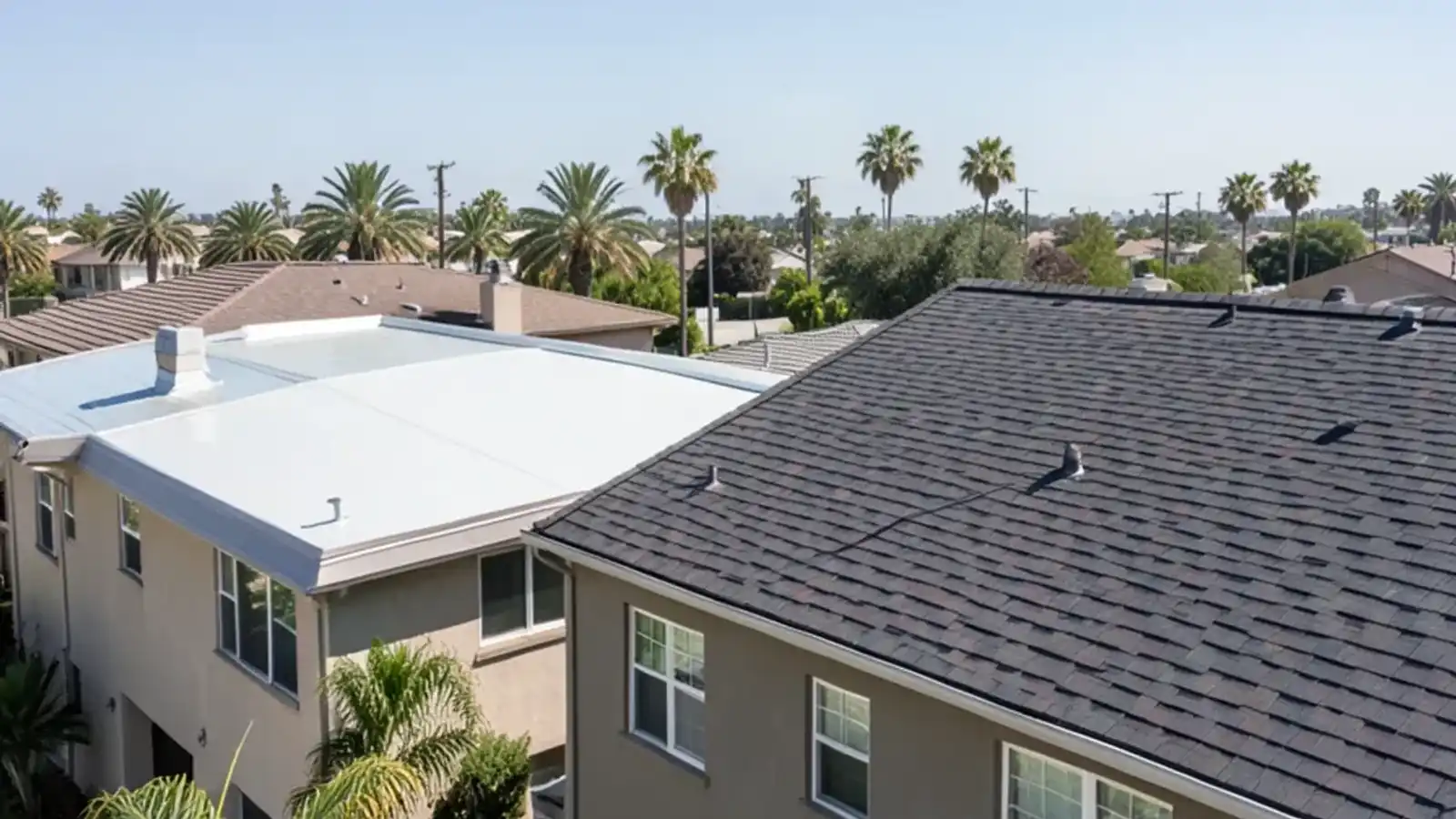
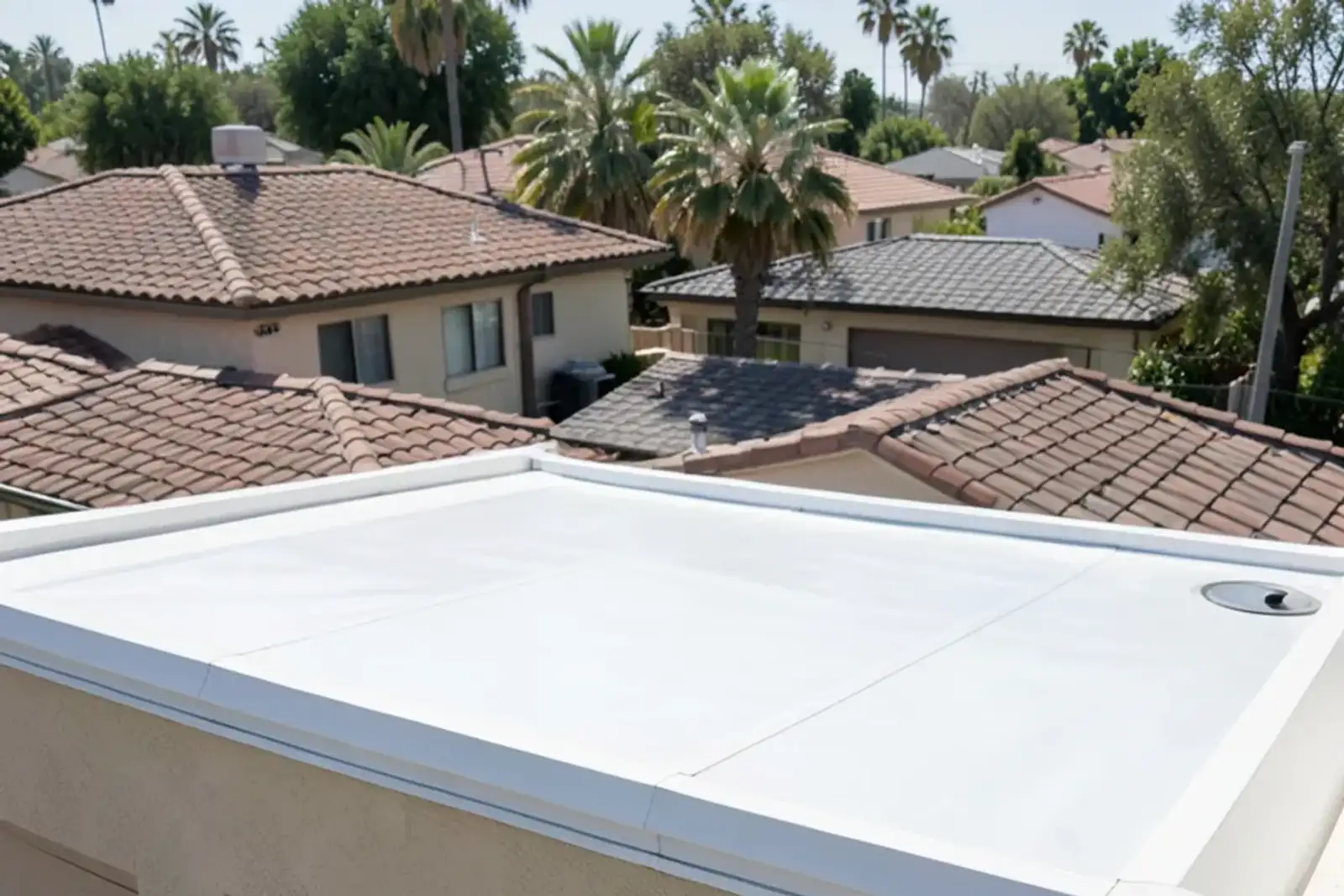
The rule is simple to state and easy to get wrong. If your Los Angeles re-roof covers more than half of the roof, the new covering has to be a cool-roof-rated product, meaning a roofing material tested, labeled and listed by the Cool Roof Rating Council, or CRRC. A cool roof reflects more sunlight and gives off more heat than a standard one, which lowers roof surface temperatures.
The harder question is whether the rule reaches your house, and that depends on slope, climate zone and which agency issues your permit. Our cool roofing page covers the materials, and the roofing materials hub covers the full range.
When a reroof triggers the cool roof rule
Think of three questions, asked in order. How much of the roof is changing, what is the slope and where is the property?
| Situation | Does the cool roof rule likely apply? |
|---|---|
| Spot repair of a leak or a few shingles | Generally no, since repairs are treated differently |
| Replacing half the roof or less | Generally no, but confirm with your building department |
| Replacing more than half the roof in Los Angeles | Yes, a cool-roof-rated product is required |
| Adding solar or other covered exceptions | Some exceptions exist, so ask before assuming |
| New roof on an addition | Depends on the area and the permit |
That third row is the one to remember. Replacements covering more than half the roof are where homeowners get caught, because a "partial" re-roof that crosses that line is a full compliance case.
Why slope splits the rules in two
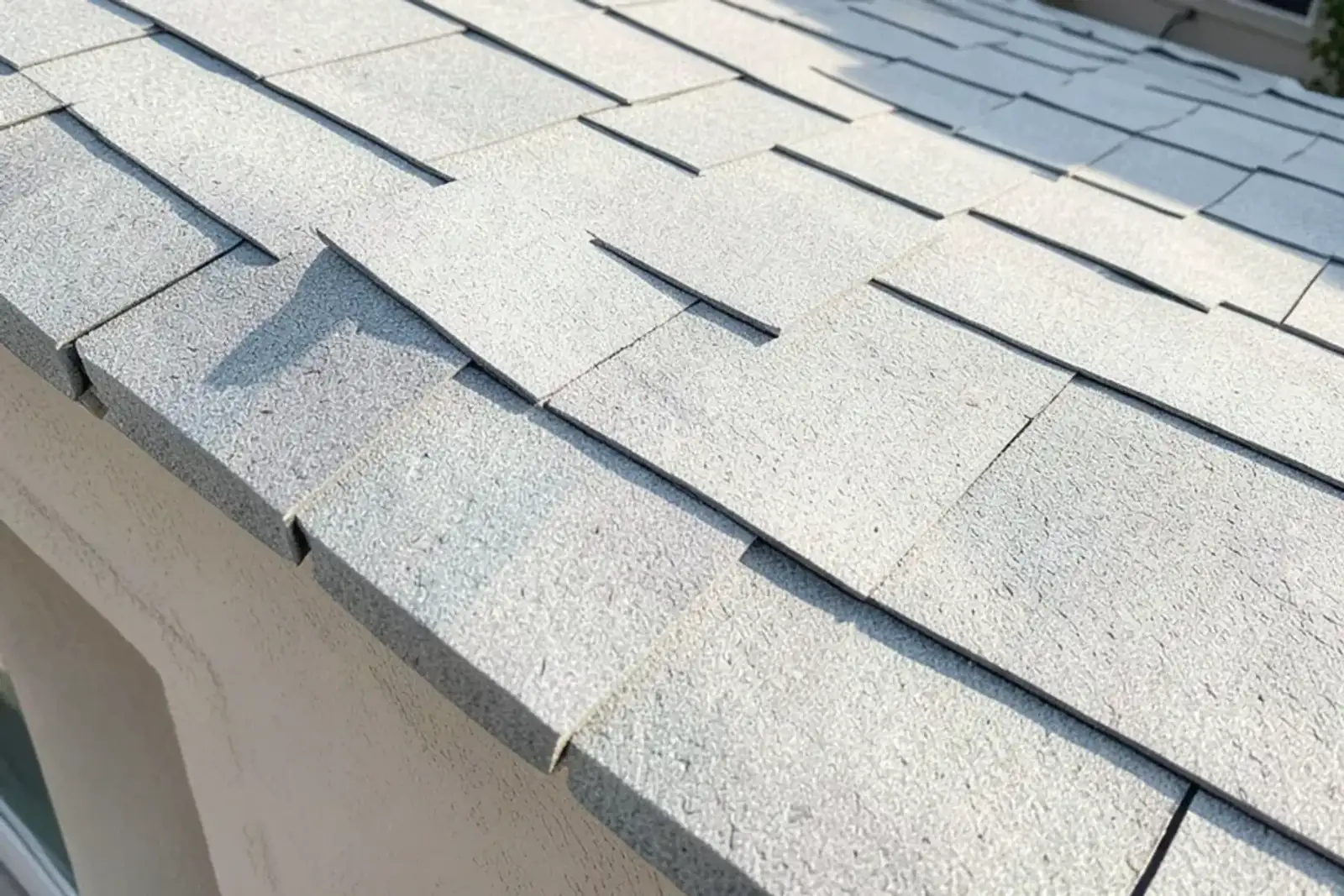
Title 24 treats steep and low-slope roofs separately. The dividing line is 2:12, which means 2 inches of rise for every 12 inches of run. A roof steeper than that is steep-slope, and one at or below it is low-slope.
The state rules also differ by climate zone. California's Energy Code, Title 24, Part 6, 2025 edition effective January 1, 2026, applies the steep-slope requirement in Climate Zones 4 and 8 through 15, and the low-slope requirement in Zones 4 and 6 through 15. The City of Los Angeles has its own cool roof rules on top of the state code, and a city roof falls under them whatever the zone.
So a pitched shingle roof and the flat roof over a back addition on the same house can be judged by different tests. If you are reroofing both, ask for both to be checked on the estimate.
Climate zone, CRRC listing and product choice
We do not assign a climate zone from a city name. The California Energy Commission has a lookup tool, and the zone follows your address. In a city like Burbank, which runs its own building division, the staff there can confirm what applies. See our Burbank service area for how we cover it.
Once the rule applies, the product has to carry a CRRC listing. Ask for the product's CRRC Product ID and keep the data sheet, since the building department and any rebate program may ask for it. Unlabeled products fall back on default values, so labeled and listed products are the safe route. Color alone is not the test. The listing is.
Which Los Angeles re-roofs are exempt?
The Cool Roof Rating Council summarizes the Los Angeles Green Building Code and lists several exemptions. These are worth knowing, but they are not a substitute for your building department's answer on your permit:
- Replacing 50 percent or less of the roof area
- Roof replacement where solar systems are being installed
- Roof repair, as the California Energy Code defines it
- Additions adding under 500 square feet of roof, or under half the total roof area, whichever is greater
- Roof assemblies with thermal mass over the membrane, such as qualifying green roofs
The same summary separates low-rise from high-rise residential projects and gives each its own values, so a duplex and a tower are not judged alike. The council also notes that it does not administer the code or the LADWP rebate, so those questions go to the agencies that do.
The practical lesson: measure the roof area first. Whether a job sits just over or just under the half-roof line often decides everything that follows.
What working roofers say about cool-rated materials
Choosing a listed product is rarely the hard part. The trade-offs are in the details. A lighter-colored product reflects more sunlight, but it may not suit an HOA palette or a historic-looking street, so ask what color options carry a CRRC listing before you fall for a sample. Reflective low-slope membranes keep the roof surface cooler, but dirt and ponded water dull them, so drainage and cleaning matter as much as the label.
Cool-rated does not mean maintenance-free. Roof age, slope and attic ventilation still decide how long a covering lasts, and the manufacturer's rated life governs, not a cool roof label. If your attic is hot, a cool roof helps, yet attic ventilation may do more. We would rather tell you that than sell a color.
What changes the cost of a cool-roof-compliant re-roof
We price in writing after we see the roof. These variables move the number:
- Roof area and slope: pitched and low-slope sections can need different products
- Product choice: listed products vary in price by type and color
- Tear-off and deck repair: found conditions are priced separately and shown to you first
- Permit and paperwork: the contract should name who pulls the permit and who signs the compliance forms
- Rebate timing: a CRRC Product ID on the invoice keeps an LADWP application possible
For the full picture of what a new roof costs, read our roof replacement cost guide, or see our roof replacement service.
What we confirm before ordering materials
Mistakes happen when the product is ordered before the compliance question is answered. This is what we would check at the estimate:
- Measure the area being replaced. We compare it to the whole roof to see which side of the half-roof line the job sits on.
- Note every slope. Pitched sections and low-slope sections each get checked.
- Confirm the permitting agency. City of Los Angeles, another city or the county.
- Look up the climate zone. We send you to the Energy Commission tool for your address.
- Pick listed products. The estimate names a product with a CRRC listing.
- Keep the paperwork. Data sheets go with the job file for the inspector.
Reviewers in Van Nuys mention materials, colors and pros and cons explained with shingle samples brought to the home. We take the same approach with cool-rated choices, so you see what meets the rule and what looks right on your house.
Rebates, permits and what to ask the building department
LADWP residential customers may qualify for a cool roof rebate of $0.20 to $0.60 per square foot. The amount depends on the product's rating tier, and you need the CRRC Product ID and an application within 12 months of purchase. Funding is limited, so check ladwp.com/crp first. It applies to LADWP customers only.
Before the contract, ask the building department which rule applies, whether the Energy Code compliance form is required with the permit and who on the job signs it. The contract should name who pulls the permit. Our prices come in writing after we see the roof, with the cool-rated product named in the estimate.
Next step before you order a Los Angeles re-roof
Measure the area being replaced, note each slope and find your permitting agency. Then call Clear Shield Roofers at (209) 563-1278 and we will walk through which rules to confirm for your address before anything is ordered.
Quick answers
Does a roof repair need to meet Title 24 cool roof rules?
Generally no. The cool roof rules are triggered by re-roofing, and the Los Angeles requirement applies when more than half of the roof is replaced. Repairs are treated differently, but a repair can grow into a re-roof if it covers enough area. Ask your building department, since cities interpret scope their own way.
How do I find my climate zone for a Title 24 cool roof?
Use the California Energy Commission's climate zone lookup with your address. The state steep-slope rule covers Climate Zones 4 and 8 through 15, and the low-slope rule covers 4 and 6 through 15. We do not assign a zone from the city name, because zones can differ across a single city.
Is a re-roof exempt from cool roof rules if I am adding solar panels?
The CRRC summary of the Los Angeles Green Building Code lists roof replacement where solar systems are being installed as an exemption. That is a narrow exception tied to the solar work, not a general pass, and rules differ by city and project. Ask your building department in writing before you order, and keep the answer with the permit file.
Can I get a rebate for installing a cool roof in Los Angeles?
LADWP residential customers may qualify for a cool roof rebate of $0.20 to $0.60 per square foot, depending on the product's SRI tier. You need a CRRC Product ID and must apply within 12 months of purchase. Funding is limited and not guaranteed, so check ladwp.com/crp for current availability before you buy.