
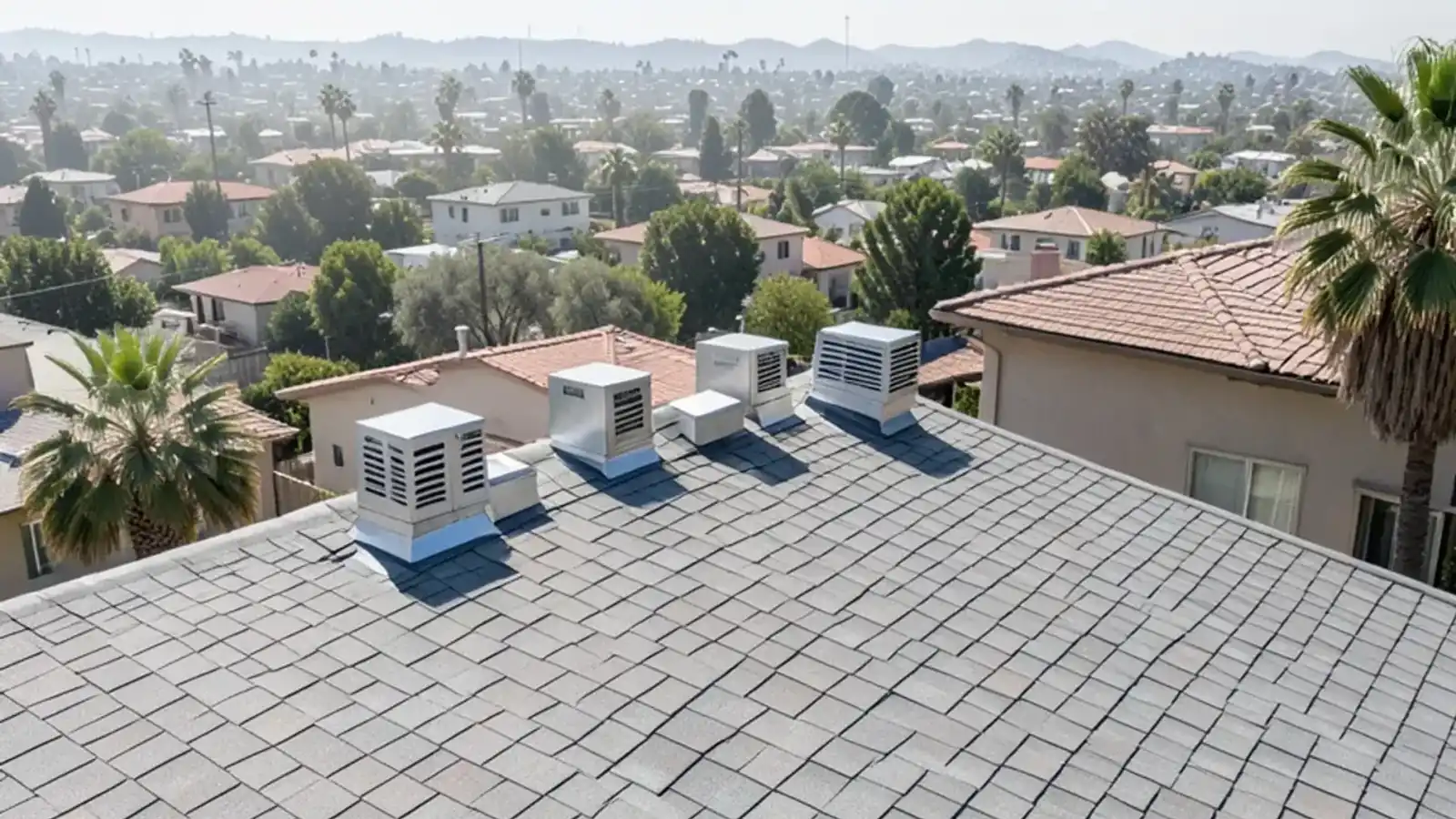
Attic Ventilation in Los Angeles, CA
Attic ventilation repair in Los Angeles means getting hot air and moisture out of the attic and fresh air in at the eaves, using vents that suit your roof. We check intake and exhaust first, then repair, move or add vents. Bird blocking at the eaves belongs in the same look.
- ★ 4.9 on Google · 69 reviews
- Same-day or next-day bookings
- Based in Van Nuys, CA
On this page
- What does attic ventilation work in Los Angeles include?
- Signs your Los Angeles attic is not breathing
- What causes a hot attic or attic condensation?
- Ridge vents, box vents, solar vents and attic fans compared
- How we check and correct attic ventilation, step by step
- What bird blocking is, and why vents need ember-resistant screens
- What affects the cost of attic vent installation and repair?
- Rules for attic vents: code, permits and fire areas
- Why Clear Shield for attic ventilation in Los Angeles
- Common questions
A ventilated attic works like a chimney. Cool air enters low at the eaves, warms up under the roof, and leaves high at the ridge or through roof vents. When one half of that path is blocked, the other half does very little. This page covers repairs and vent work; the wider skylights and roof ventilation page covers how it fits with skylights and the roof.
What does attic ventilation work in Los Angeles include?
Ventilation work starts at the eaves, not the ridge. Intake comes first because exhaust cannot pull air that has no way in. The written estimate lists each item so you can compare it with any other quote:
- Clearing or restoring soffit and eave intake
- Counting and checking existing exhaust against the attic size
- Replacing cracked, rusted or badly placed vents, with new flashing
- Adding ridge, box or solar vents where exhaust is short
- Bird blocking and ember-resistant screens where vents need them
- Photos of the attic, intake and every vent
Insulation and bathroom ducts are checked too, since either can block airflow.
Signs your Los Angeles attic is not breathing
- Upstairs rooms that stay hot well after sundown, and an air conditioner that runs long cycles
- Rust on nail tips or dark, damp-looking roof boards in winter
- Shingles aging faster on one slope than the rest of the roof
- A musty or sour smell from the attic hatch after a cool, damp morning
- Daylight, droppings or nesting material along the eaves
- A vent that looks wrong: rusted, cracked, missing a hood or set low where rain can reach it
What causes a hot attic or attic condensation?
Four causes cover most of what we find. Intake is blocked, because soffit slots were painted over or stuffed with insulation. There is too little exhaust for the size of the attic. Two kinds of exhaust fight each other, for instance a ridge vent and a powered fan, so the fan pulls air in through the ridge instead of out of the soffit. Or a bathroom or kitchen fan blows humid air into the attic.
Los Angeles winters rarely freeze, so most moisture problems here come from indoor humidity and the cool, damp mornings of the rainy season. NOAA's 1991-2020 normals put Van Nuys near 13 inches of rain a year, falling mostly between December and March. Rust, mildew smell and damp sheathing show up then, long before a stain does.
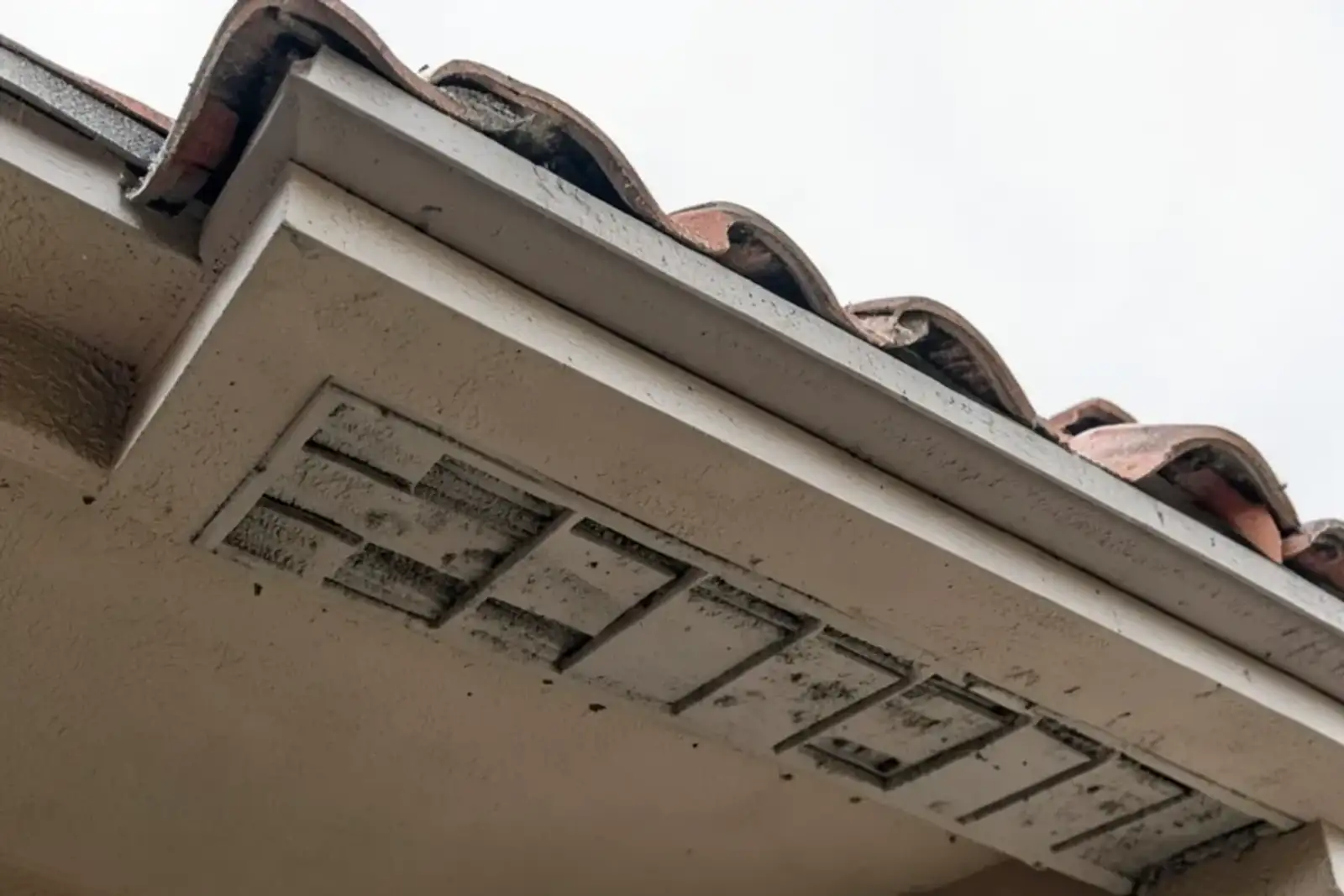
Ridge vents, box vents, solar vents and attic fans compared
No type is right for every roof. The best fit depends on the roofing, the attic shape and where the intake is.
| Type | Works well when | Watch for |
|---|---|---|
| Ridge vent | The roof has a long, unbroken ridge | Needs clear eave intake and a slot cut in the deck |
| Box (static) vents | Short ridges, hip roofs, tile roofs | Needs enough of them, placed high on the slope |
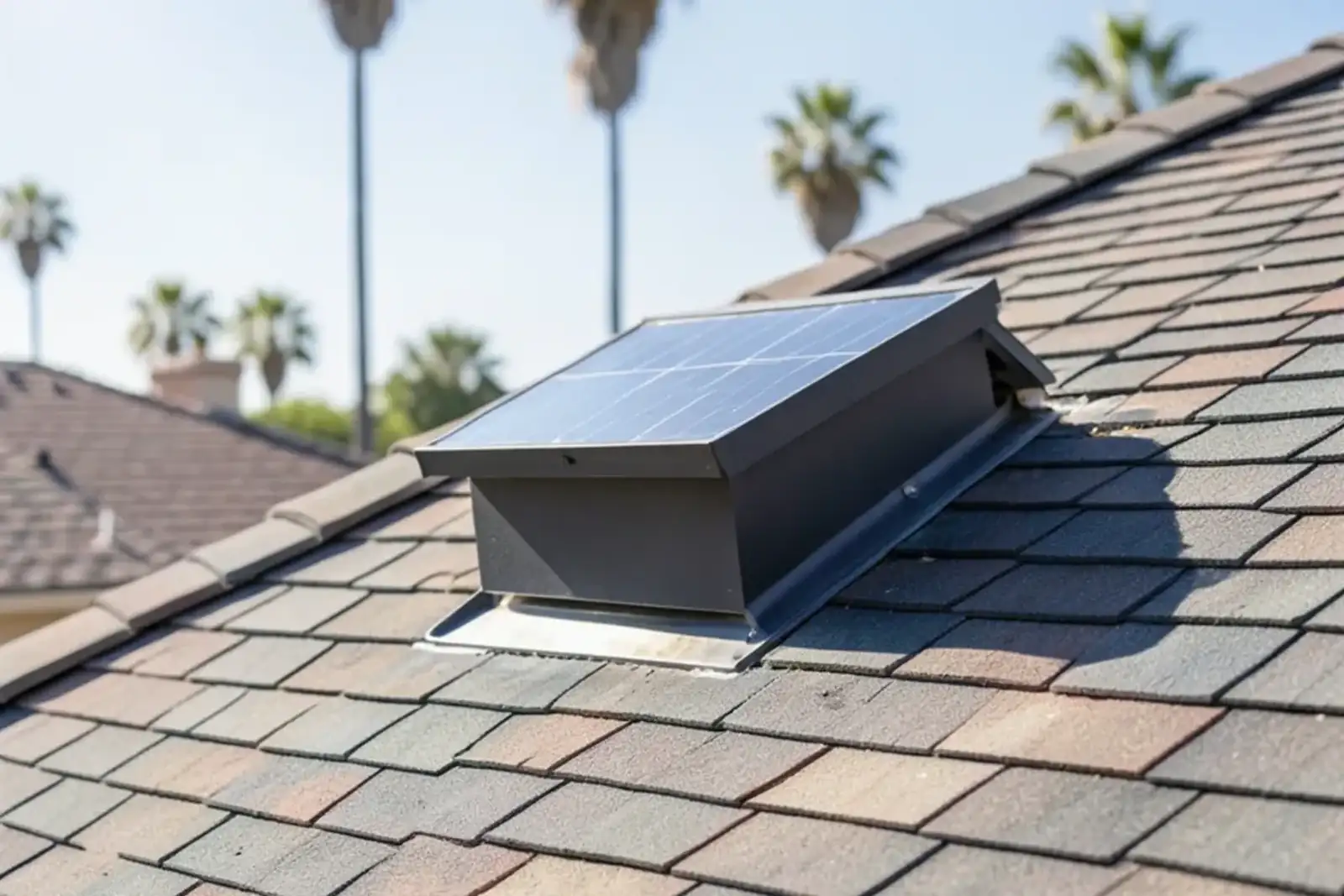
| Solar-powered fan | A hot attic with no ridge to vent from | Needs intake; does not mix with a ridge vent |
| Electric fan on a thermostat | Large attics that run very hot | Uses power; can pull flue gases back from a gas appliance in the attic |
For deeper comparison, our guide to solar attic vents versus ridge vents sets out the trade-offs. We do not recommend adding vents until intake has been checked. If you want a replacement roof vent installed, we also look at the one it replaces, since a cracked hood or rusted base means the flashing around it is likely tired too.
How we check and correct attic ventilation, step by step
- Ask what you notice. Which rooms run hot, when, and what has been added or painted.
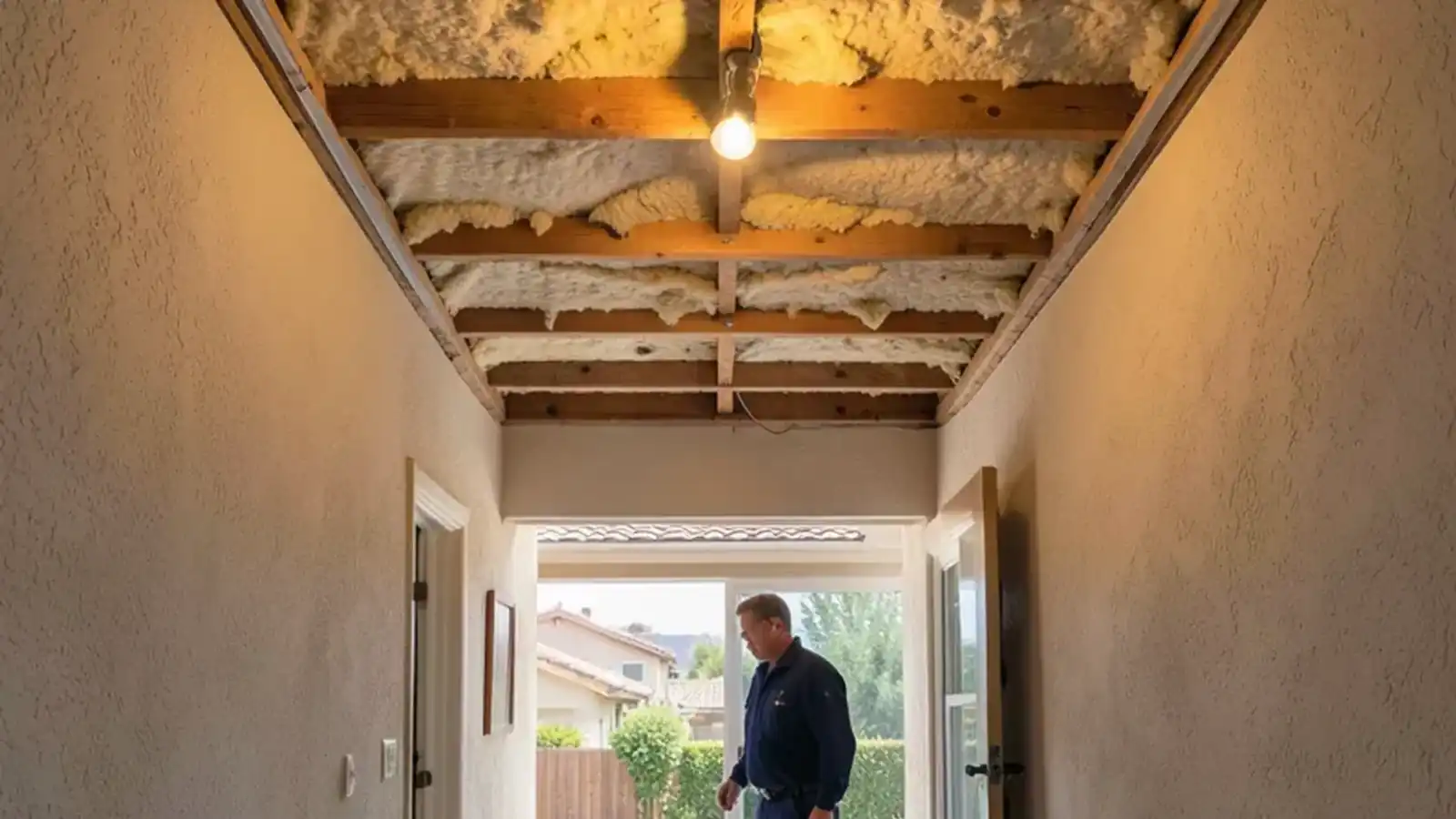
- Look at intake. Soffit slots, eave gaps and insulation near the edges get checked from the hatch.
- Look at exhaust. Vents, the ridge and any fans are counted and checked against the attic size.
- Photograph the findings. You see the same pictures we do, including vents that are cracked, rusted or in the wrong spot.
- Price the fix in writing. The estimate names each vent to be replaced, added or removed.
- Make the change. Intake is cleared first, then exhaust is corrected. Roof openings are flashed and sealed.
What bird blocking is, and why vents need ember-resistant screens
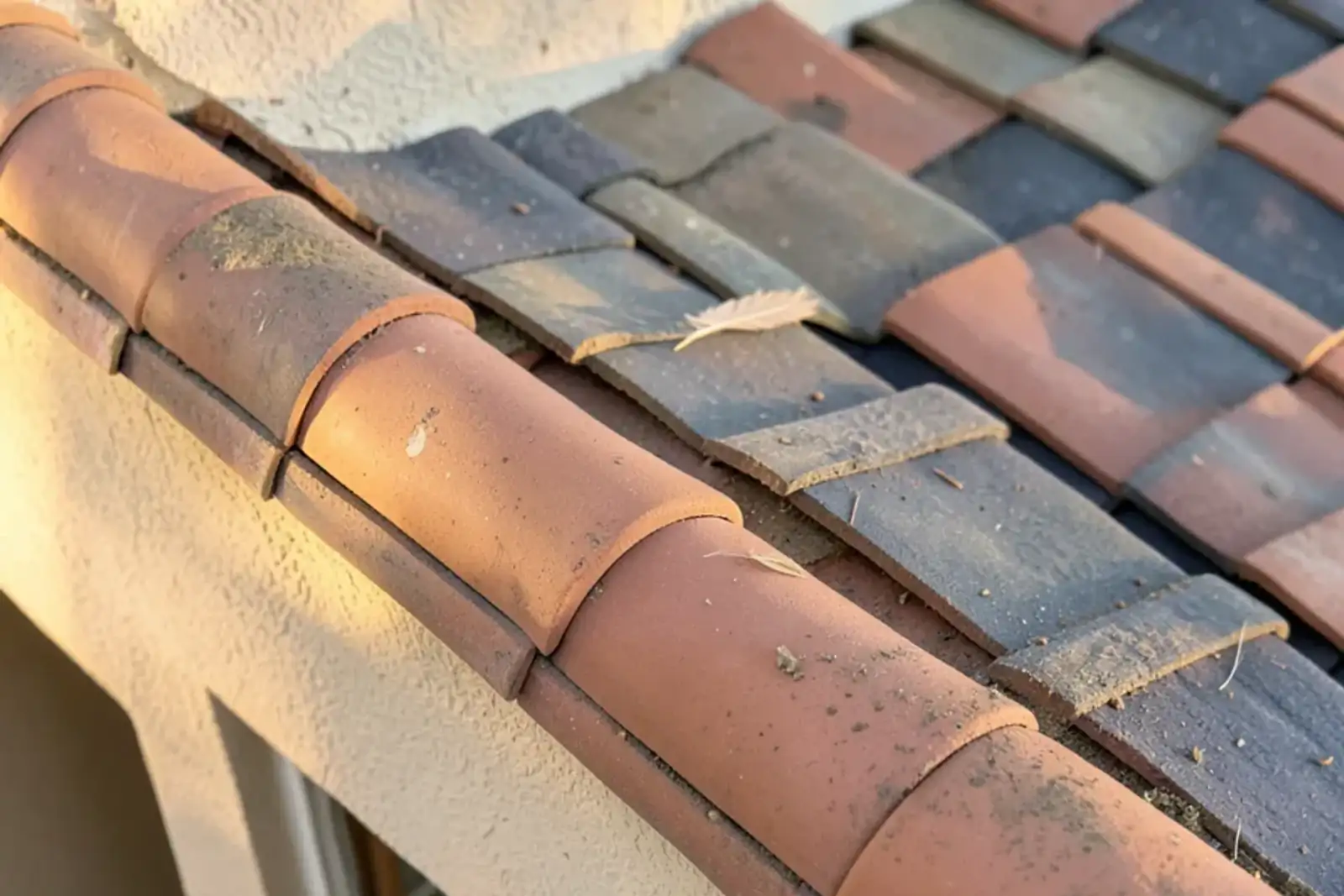
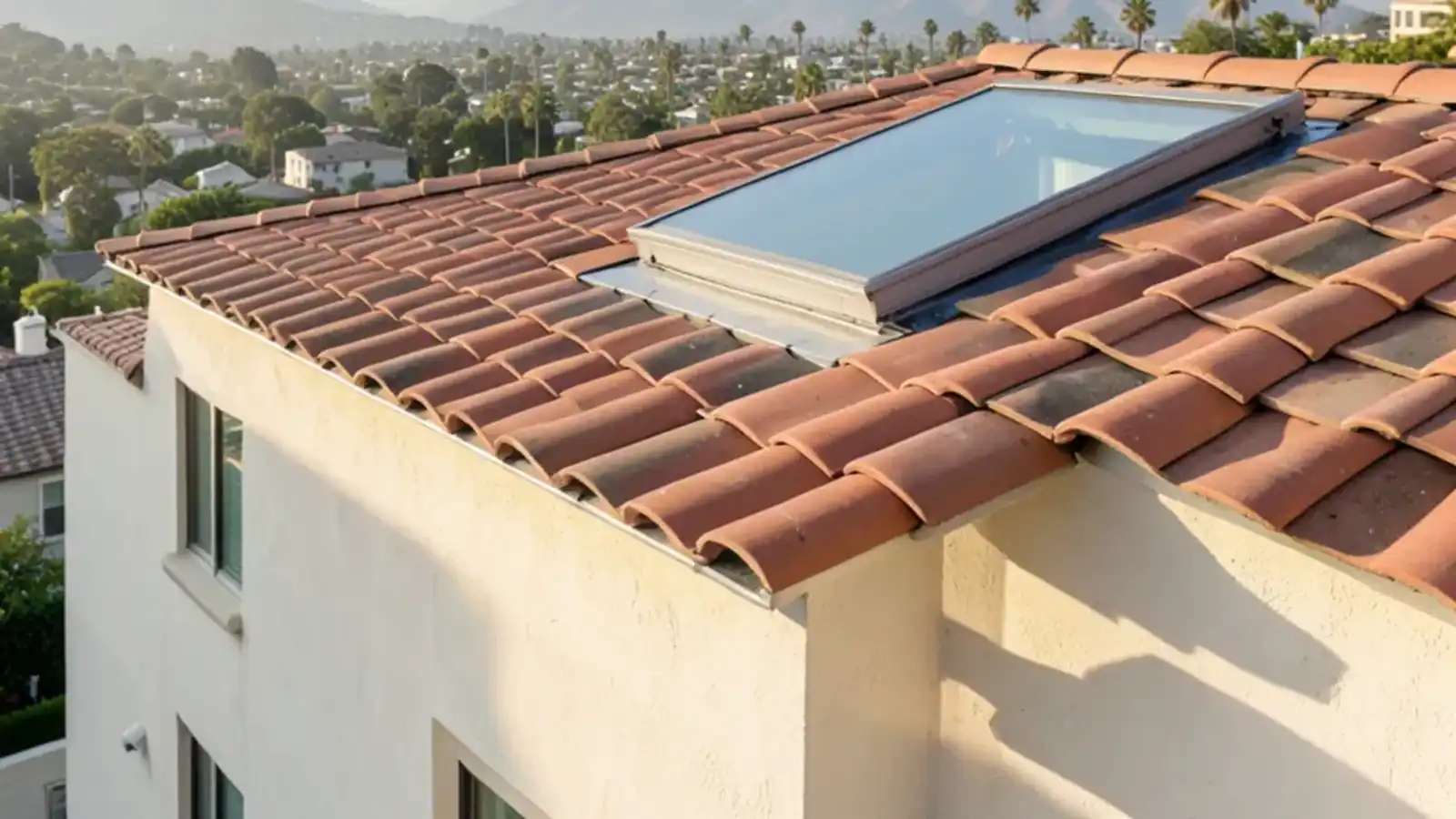
On a tile roof, the open gaps under the first course at the eaves let birds and rodents into the attic, along with leaves and dust. Bird blocking fills them with closure strips or mortar. A customer reviewing a Van Nuys inspection describes a poorly placed roof vent, fascia damage and the need for bird blocking all turning up in one visit.
Vent openings are also where embers can enter an attic. California's Wildland-Urban Interface Code (Title 24, Part 7) took effect January 1, 2026, and covers vent protection in mapped fire areas. Check your address on CAL FIRE's viewer, since La Crescenta-Montrose and Bell Canyon both sit against wildland edges, and our guide on protecting roof vents from birds and embers covers the options.
What affects the cost of attic vent installation and repair?
The number of vents, the roof type and access set the price. A ridge vent on a long shingle ridge is a different job from a handful of box vents on a tile roof, where tile has to be lifted and reset. Clearing blocked soffits adds time, and so does replacing cracked flashing around a vent. Steep roofs and two-story homes take longer to work on safely.
We price each job after we look at the attic and the roof. The written estimate lists each vent and what happens to it, so you can compare it with any other quote.
Rules for attic vents: code, permits and fire areas
The long-standing starting point for vent area is the residential code's ratio of net free vent area to attic floor area, covered in the FAQ at the end of this page. Roof work that goes beyond a small repair may need a permit, and cities run their own building departments, so check with the City of Los Angeles building department (LADBS) or your local agency. Unincorporated areas go through the county.
Cool roof and energy rules apply separately when a large share of a roof is replaced. See attic insulation for how insulation and vents interact, and the skylight repair page if a skylight sits near the vent you are replacing.
Why Clear Shield for attic ventilation in Los Angeles
Reviewers in Van Nuys describe a crew that finds hidden problems on a roof. One customer says the crew found a poorly placed roof vent, fascia damage and the need for bird blocking that they had no idea about. A ridge vent and gutter job after storm-fallen limbs is another job named in reviews.
What Van Nuys customers say about roof vents and inspections
“They also performed a full water test afterward to make sure the leak was fully resolved, and everything stayed dry.”
“The crew’s workmanship looked top-notch, and they kept me updated by sending drone photos of the roof work as it happened, which was really helpful since I wasn’t about to climb up there myself!”
“During the new roof installation, a small leak showed up after some seasonal rain, and Frederick and the crew responded right away, even on a Sunday morning, to fix it fast.”
4.9 on Google · 69 reviews as of November 2026. Read all reviews
We cover the Westside and the foothills as well. Clay tile and slate work come first on many Beverly Hills roofs, so vents on tile need careful flashing. In Santa Monica, marine air corrodes metal vents and fasteners, which makes material choice matter.
Attic Ventilation: common questions
How much attic ventilation does my home need?
The residential code's usual starting point is about one square foot of net free vent area per 150 square feet of attic floor. It can relax to one in 300 when vents are split between the eaves and the ridge. Confirm the number with your local building department. Mid-century Valley attics often fall short because soffit slots were painted over or blocked.
Are solar-powered vents worth it in Los Angeles?
In a hot attic with open intake, they can be. They run when the sun is strongest, which is when the attic is hottest, and they cost nothing to power. They do not replace intake, they should not share an attic with a ridge vent, and they can pull conditioned air from the house through ceiling gaps. We look at intake first.
What is bird blocking and does my roof need it?
Bird blocking is the closure that fills open gaps under the first course of tile at the eaves, keeping birds, rats and wind-blown debris out of the attic. Tile roofs without it often leave a row of open gaps along the bottom edge. One customer describes bird blocking turning up as a need during an inspection.
Can a bathroom fan vent into the attic?
No. A fan that dumps warm, humid air into the attic feeds mold, rusts nails and ruins insulation. The duct should run to the outdoors through a roof or wall cap. We check where bathroom ducts end when we look at attic ventilation in Los Angeles homes, because a loose duct looks like a ventilation problem and is not one.
Why does my Los Angeles attic get hot when the vents look fine?
Vents may be present and still not move air. Blocked eaves, a single ridge-side vent with nothing feeding it, or two types of exhaust fighting each other all stall airflow. Insulation pushed against the roof boards can also close off the path. The attic is only ventilated if air has a way in at the bottom and out at the top.
Areas served for attic ventilation
- Huntington Park, CAMedian home built in 1957 (Census ACS) and about 286 sunny days a year; older attics under strong sun are where undersized vents and blocked intake show up.
- Santa Rosa Valley, CARural ranch homes and outbuildings in Ventura County, where large attics, nearby wildlife and county permits make vent screening and bird blocking worth asking about.
- Jurupa Valley, CAInland Riverside County heat is hard on attics, and the median home dates to 1979 (Census ACS). It is a long drive from Van Nuys.
- Inglewood, CASmall attics in 1920s-50s bungalows can have painted-over eave vents, and LAX-area marine air corrodes metal vent hoods.
- Avocado Heights, CAHills to the south keep this equestrian area warmer than neighbors, and barn and outbuilding roofs need vents sized for their own attic space.
- South San Jose Hills, CAPostwar homes (median build 1964, Census ACS) in an unincorporated community, so county permitting applies and original venting is likely thin for today's summers.
- San Fernando, CAVan Nuys, nearby, averages about 77 days a year at 90°F or hotter (NOAA), and a 1956 median build year (Census ACS) points to older attics.
- West Carson, CAMedian home built in 1973 (Census ACS) in an unincorporated South Bay community, so attics are mid-aged and county permits apply to larger roof openings.
- Camarillo, CAMarine-layer moisture meets Santa Ana winds on the Oxnard Plain, and tile-roofed tracts need eave bird blocking and vents that handle both damp mornings and dry heat.
- Beverly Hills, CA
- La Crescenta-Montrose, CA
- Bell Canyon, CA
- Santa Monica, CA
- Kern County, CA
- West Whittier-Los Nietos, CA
- Maywood, CA
- West Rancho Dominguez, CA
- Willowbrook, CA
- West Puente Valley, CA
- West Carson, CA
Need attic ventilation?
Call and tell us what you are seeing on the roof. We will take it from there.