Torch-Down Roofing in Los Angeles, CA
Torch-down roofing is modified bitumen, a layered asphalt roof whose sheets are heated onto the deck, and it sits in the same family as hot-mop built-up roofing. In Los Angeles, fire rules and building age shape the choice as much as price. We assess the roof and quote the method that fits.
- ★ 4.9 on Google · 69 reviews
- Same-day or next-day bookings
- Based in Van Nuys, CA
On this page
- Torch-down roofing in Los Angeles: modified bitumen and built-up roofs
- Torch-down, hot mop or cap sheet: which method fits the building?
- Is torch-applied roofing safe on an older Los Angeles building?
- Signs a built-up or modified bitumen roof is wearing out
- How a torch-down or hot-mop quote is put together
- What affects the cost of a torch-down or built-up roof?
- Permits, fire watch and asbestos rules for torch-down roofs
- Why Clear Shield for torch-down and built-up roofing in Los Angeles
- Common questions
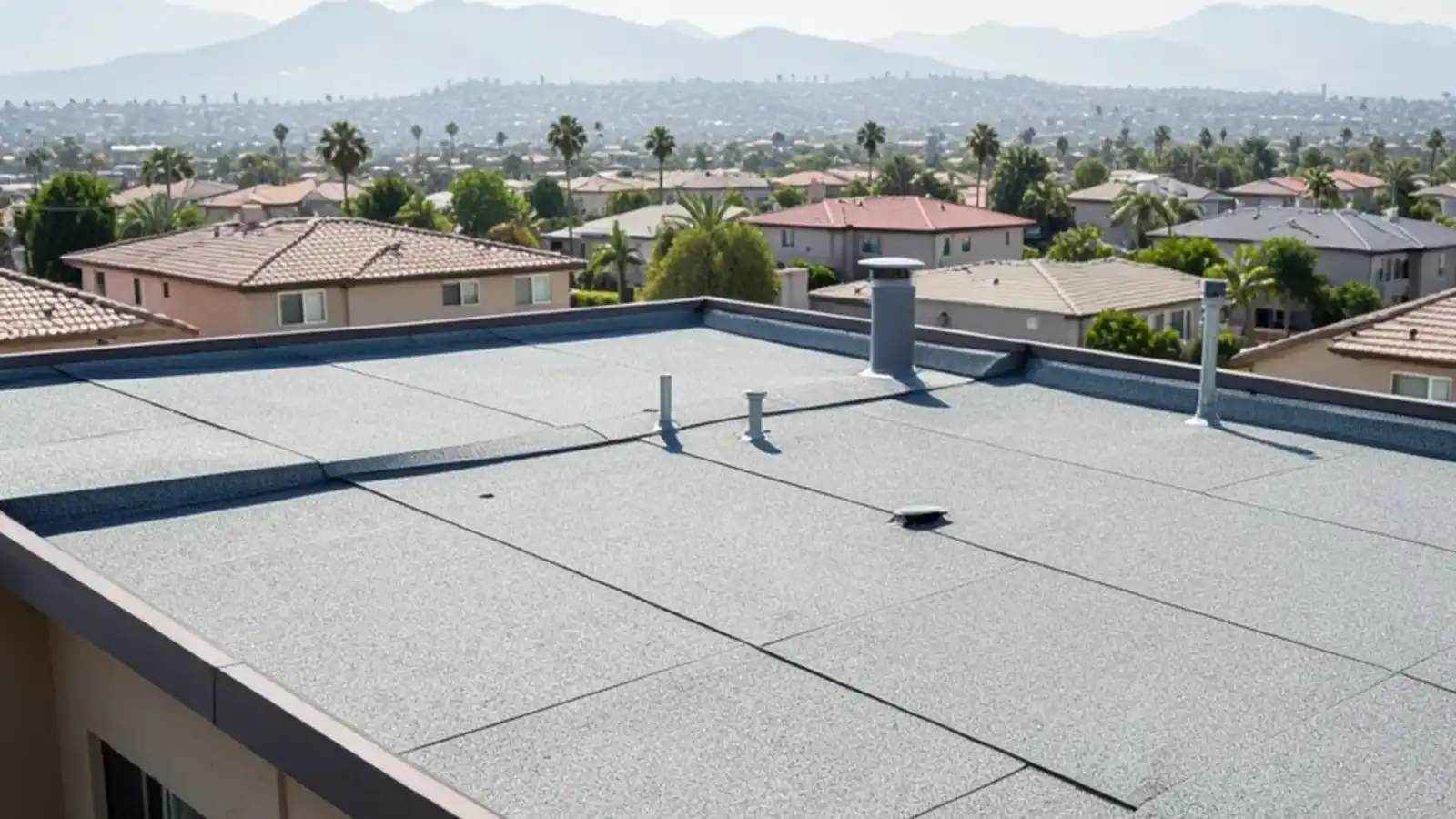
Torch-down is the common name for torch-applied modified bitumen. Factory-made asphalt sheets, reinforced with polymers, are unrolled and heated until they bond to the layer beneath. The result is a rugged, layered surface that has covered flat and low-slope roofs across Los Angeles for decades. This page belongs to our flat roofing group, next to spray foam roofing and roof coating.
Torch-down roofing in Los Angeles: modified bitumen and built-up roofs
Two related systems share the same asphalt base. Modified bitumen uses rolled sheets with added polymers for flexibility, usually in two layers: a base sheet and a granulated cap sheet. Built-up roofing (BUR) stacks felt plies in asphalt, topped with a cap sheet or gravel. Many older dingbat apartments and mid-century buildings still carry BUR in one form or another.
Both are heavy, tough underfoot and repairable. Both age as the surface wears and the seams stress. A roof with several old layers may need a closer look before anything goes on top.
Torch-down, hot mop or cap sheet: which method fits the building?
Method choice is about heat, fire risk and access, not only material.
| Method | How it bonds | Best when | Watch for |
|---|---|---|---|
| Torch-applied | Flame heats the sheet's underside | Small to mid-size roofs, good clearances | Open flame near wood, gaps and voids |
| Hot mop | Hot asphalt sets the plies | Large roofs, built-up systems | Kettle on site, fumes, heated asphalt |
| Cold-applied adhesive | Adhesive, no open flame | Occupied or fire-sensitive buildings | Cooler or damp weather slows cure |
| Self-adhered | Peel-and-stick sheet | Small areas and tie-ins | Needs a clean, primed surface |
We would walk the roof, then recommend a method that fits its edges, framing and neighbors. Our TPO vs torch-down vs foam comparison sets these against the other major systems.
Is torch-applied roofing safe on an older Los Angeles building?
The risk sits at the edges. Old buildings often have wood eaves, gaps behind parapets, unsealed voids and combustible material close to the roof edge. A torch flame can reach places you cannot see.
That is why the work is regulated as hot work. Torch-applied roofing falls under the California Fire Code, and permits and fire watch vary by the local fire department. Ask how long a fire watch will stay after the torch is out, who provides it and what the contract says. Roofing magazine reports that OSHA sets a 30-minute minimum, while an industry torch-applicator certification program calls for two hours. When the building is a poor candidate, a cold-applied or self-adhered sheet gives a similar roof without the flame.
Signs a built-up or modified bitumen roof is wearing out
Look at the surface, the seams and the drains. These show up first:
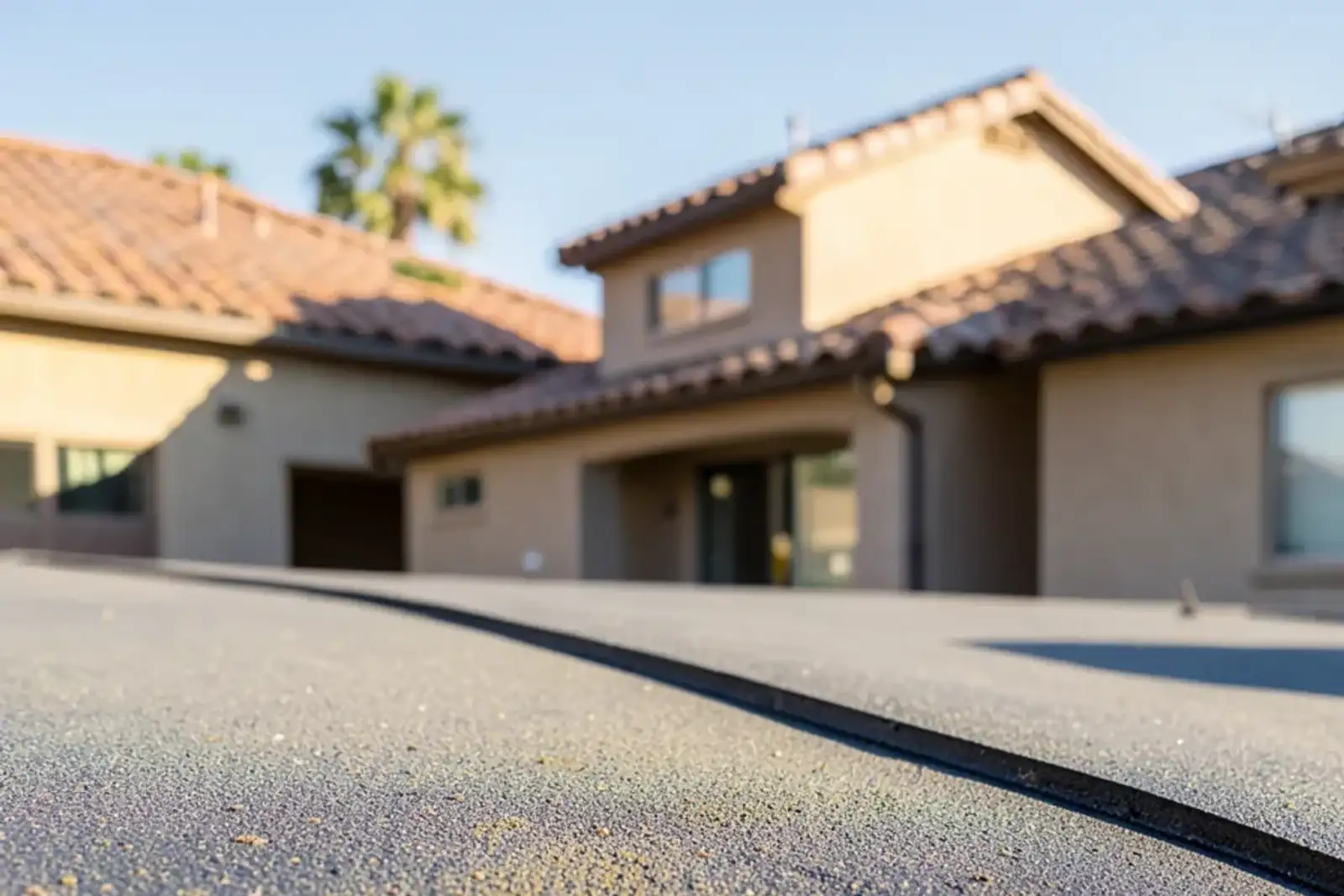
- Cracked or alligatored asphalt that looks like reptile skin
- Bare spots where gravel or granules have washed or blown away
- Open laps at seams and curling edges
- Blisters that split when stepped on
- Standing water that lingers two days after rain
- Ceiling stains under drains, walls or equipment
Heat accelerates all of it. Van Nuys averages about 77 days a year at 90°F or hotter by NOAA's normals, and dark asphalt gets hotter than the air. Patching is covered on our flat roof repair page, and a roof worn across its whole surface may call for flat roof replacement instead.
How a torch-down or hot-mop quote is put together
What the written scope should list
- Tear-off or recover, with the number of existing layers
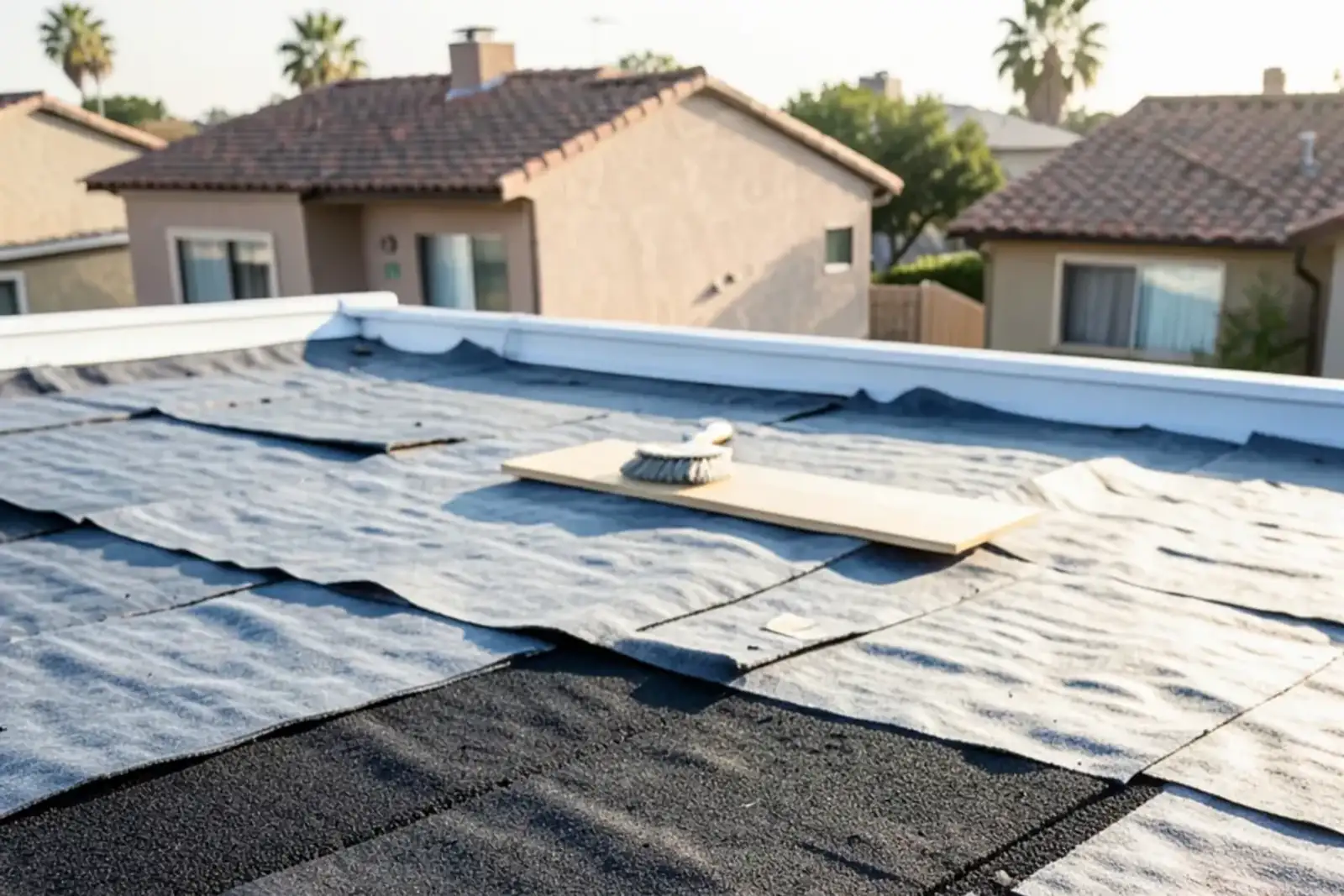
- Base sheet and cap sheet, or the plies for a built-up roof
- Flashing at walls, curbs, parapets and drains
- Wet insulation or soft deck, priced once it is opened
- The method chosen and the fire-safety plan, including fire watch
- Cleanup and haul-away of old asphalt and gravel
The steps
This is the process we would follow, from first look to written price.
- Walk the roof. We look at layers, surface wear, seams, drains, parapets and penetrations.
- Check the edges. Wood framing, eave gaps and nearby combustibles decide whether open flame is a sound option.
- Look for moisture. Soft spots or dark patches may mean wet insulation, which changes the scope.
- Choose the method. Torch-applied, hot mop, cold-applied or self-adhered, based on the building.
- List the scope in writing. Tear-off or recover, base and cap sheets, flashing, drains and the fire-safety plan.
- Set the schedule. Weather and the local fire department's requirements are built in.
What affects the cost of a torch-down or built-up roof?
Roof size, the number of plies, tear-off versus recover, deck condition and insulation lead the list. Flashing at walls, curbs and parapets takes time and material. Hot-work requirements, such as a fire watch, are priced in too. Heights and tight access add labor, and a roof with many penetrations costs more per square than a clean field.
For scale, Angi estimates roof replacement in Los Angeles at roughly $4 to $12 per square foot, averaging about $8.60, or about $17,200 for a typical 1,700 square foot home (accessed November 2026). A flat roof's cost depends on the system and details, so use that only as a market reference. We price the roof in writing after seeing it. Keep in mind that a bid with no flashing details is not comparable with one that has them.
Permits, fire watch and asbestos rules for torch-down roofs
A re-roof in the City of Los Angeles generally calls for a building permit or, for eligible single-family homes, a certificate of compliance from a contractor in LADBS's Certified Licensed Contractor program. Other cities use their own building departments. Fire department requirements for hot work come on top of that.
Replacements covering more than half the roof must generally use a cool-roof-rated product, and a gray cap sheet may or may not qualify, so ask for the listing. Some older roofing materials may contain asbestos. If we see signs of it, we recommend lab testing before removal, and SCAQMD Rule 1403 sets survey and notice rules.
Why Clear Shield for torch-down and built-up roofing in Los Angeles
On this page we limit what we say to how we assess and quote a roof. Reviewers in Van Nuys mention that a low-slope roof was replaced, that pictures and measurements came before the quote, and that hidden problems were found and explained. Others mention a full water test after a leak repair, and leaks traced before any coating went on. Those are the checks we would bring to a flat roof.
What Van Nuys customers say about our work
“I recently had my old shingle roof replaced with a new CertainTeed Pro line roofing system, and I am very happy with the results.”
“We were deciding between a standing seam metal roof and asphalt shingles, and frederick was a great guide who helped us understand the pros and cons so we could make the best choice for our home and budget.”
“They also took care of the permit process, which made everything much easier for me.”
4.9 on Google · 69 reviews as of November 2026. Read all reviews
We cover older flat-roof buildings across the county. Beverly Hills has period homes where roof details need care. Santa Monica has marine air that attacks flashing and fasteners. Willowbrook is unincorporated, so permits run through the county, and La Crescenta-Montrose sits against the Angeles National Forest, where fire rules deserve extra attention.
Torch-Down Roofing: common questions
How does torch-down compare with hot mop?
Both are asphalt-based and layered. Torch-down heats factory-made modified sheets with a flame, while hot mop sets felt plies in melted asphalt carried up from a kettle. Torch-down is cleaner and faster on small roofs. Hot mop brings kettle fumes and heated asphalt on site. Cold-applied adhesive versions of both avoid open flame where fire rules or the building call for it.
Is torch-down safe on older buildings?
It can be, with limits. Open flame near old wood framing, eave gaps or voids in parapets raises fire risk, so the method and a fire watch need planning. Torch-applied roofing is regulated as hot work under the California Fire Code, and permits and fire watch vary by jurisdiction. On a risky building we would quote a cold-applied or self-adhered option.
How long does a modified bitumen roof last?
Modified bitumen roofs often run somewhere between 15 and 25 years, and the manufacturer's rated life governs. Foot traffic, drainage, sun exposure and seam workmanship change that. A granulated cap sheet protects the asphalt from UV, so worn patches shorten life. Look at the seams and the surface after winter storms.
Can a torch-down roof be repaired instead of replaced?
Often, if the roof is dry and the sheets are still flexible. Lifted laps, cracked flashing and small punctures can be patched, and a cold-applied method avoids open flame. Wet insulation or widespread cracking points toward replacement. We trace the leak first, then tell you which side of that line your roof is on.
What does a hot tar roof repair involve on an older Los Angeles building?
Usually clearing gravel from the area, drying and cleaning the surface, then patching with reinforcing fabric and asphalt or a cold-applied patch material. Old tar roofs often hide layers and trapped moisture, so the patch area may grow once the surface is opened. We explain what we see before pricing the repair.
Areas served for torch-down roofing
- Lakewood, CAA planned early-1950s suburb where same-age homes with flat porch and addition roofs reach replacement around the same time.
- Citrus, CAPostwar homes follow county permitting, and the fire department serving the address sets hot-work rules on top of that.
- Charter Oak, CAModest postwar homes with flat additions or patio roofs may carry older layers worth inspecting before any flame work.
- Ladera Heights, CACounty permits apply to these postwar view-lot homes, and close neighbors make flame clearances a first check.
- Hermosa Beach, CANarrow lots and walk streets make staging and flame clearances as hard as beating salt air on a flat roof.
- Cypress, CAMostly 1950s-70s tract homes in a former dairy town, where flat sections get checked for old layers before a method is chosen.
- Huntington Beach, CAConstant salt air wears flashing and cap sheet edges, so seam and flashing detail matter on coastal flat roofs.
- Santa Monica, CAMarine air attacks flashing and fasteners, and apartment buildings with flat roofs make method choice and occupant safety first questions.
- Willowbrook, CAOlder homes under county-issued permits, where a roof with several old layers needs a close look before any torch work.
- Beverly Hills, CA
- La Crescenta-Montrose, CA
- Bell Canyon, CA
- Los Angeles County, CA
- Las Flores, CA
- El Cerrito, CA
- Wrightwood, CA
- Coronita, CA
- Lytle Creek, CA
- Santa Clarita, CA
Need torch-down roofing?
Call and tell us what you are seeing on the roof. We will take it from there.