
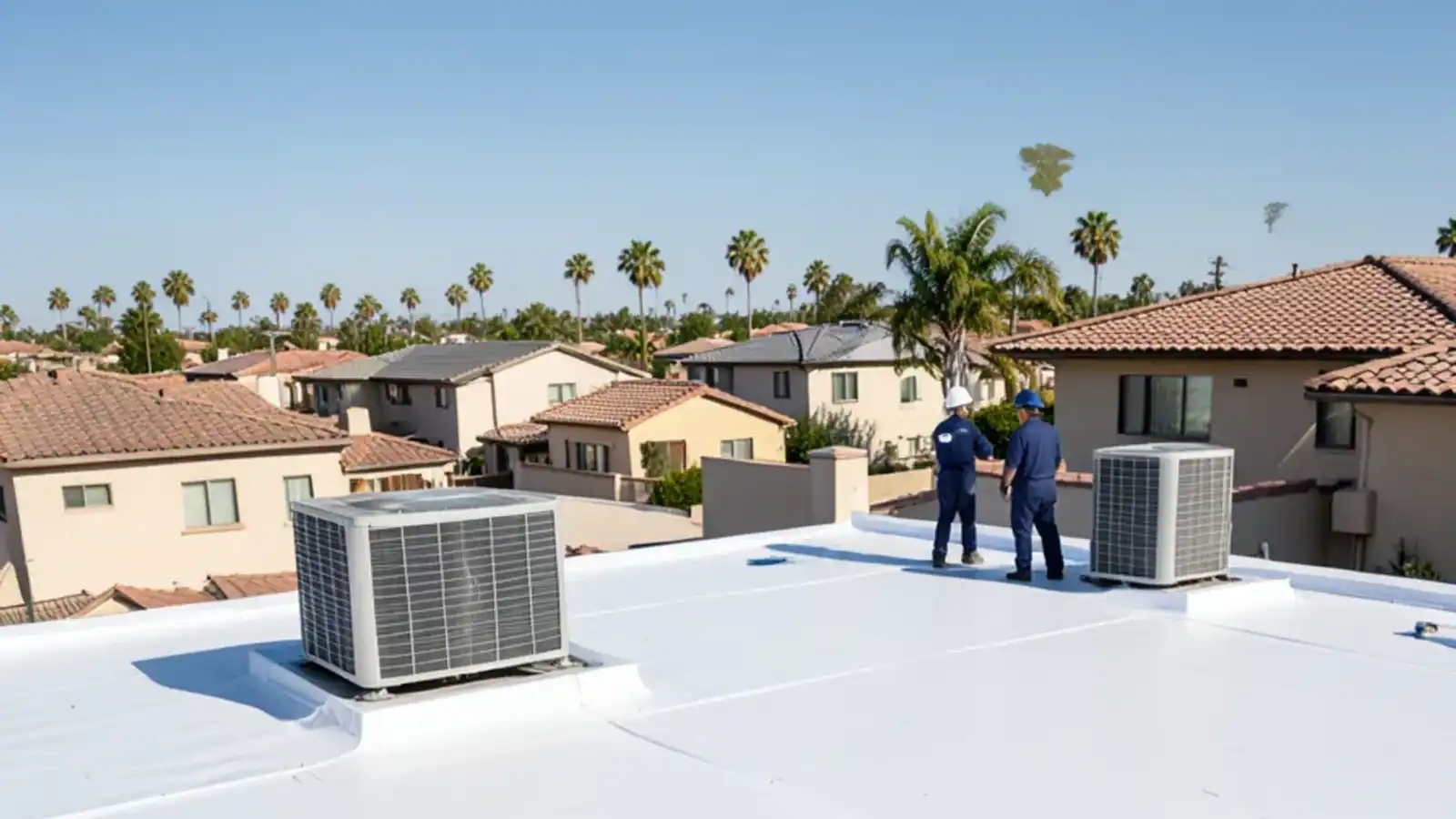
Commercial Roofing
Commercial Roof Maintenance Plan for LA Property Managers
A commercial roof maintenance plan in Los Angeles is a short, repeating schedule of inspections, drain clearing, small repairs and records. Two visits a year, one before the rainy season and one after, plus a check after any big storm, covers most buildings. The paper trail is what makes budgets predictable.
- ★ 4.9 on Google · 69 reviews
- Same-day or next-day bookings
- Based in Van Nuys, CA
Published and updated November 3, 2026 · By the Clear Shield Roofers team, Van Nuys, CA
On this page
- What a Los Angeles commercial maintenance calendar looks like
- What each maintenance visit covers
- What to leave out of the plan
- Warranty terms, access logs and who walks your roof
- The hands-on view: how we would run your first visit
- Maintenance, repair as needed or replacement: the honest trade-offs
- Budgeting from the report
- Maintaining warehouse and retail roofs in Commerce
- Start a maintenance plan for your building
- Common questions
A maintenance plan for a commercial roof is not complicated. It is a calendar, a checklist and a folder. The calendar puts a roofer on the roof before the winter rains and again after them. The checklist says what gets looked at each time. The folder holds the photos, repairs and dates that let you budget with confidence.
For a property manager, the value is mostly in what does not happen: the surprise leak into a tenant's space, the emergency bill, the argument over whether the damage was old. Our commercial roof maintenance service is built around this idea, and it fits inside the broader commercial roofing work we quote.
What a Los Angeles commercial maintenance calendar looks like
Los Angeles rain is concentrated. Downtown averages about 14 inches a year, mostly from December through March, by NOAA's 1991-2020 normals. Van Nuys averages about 13 inches and roughly 77 days a year at 90°F or hotter, versus about 26 downtown. A roof here faces a long baking season and then a few hard storms, so the schedule follows that rhythm.
| When | Focus | Why it matters |
|---|---|---|
| Early fall | Drains, scuppers, flashing, seams, rooftop units | Fix what summer heat cracked before the first storm |
| After the first big storm | Ponding, new stains, clogged drains | Catch leaks while the weather can still confirm them |
| Late spring | Wear from winter, sealant and caps | Plan repairs while the weather is dry |
| After any rooftop work | Penetrations, foot traffic, debris | Other trades often damage membranes |
What each maintenance visit covers
A visit is a defined list, not a stroll. Whoever is on the roof should work through the same items every time, so a change shows up.
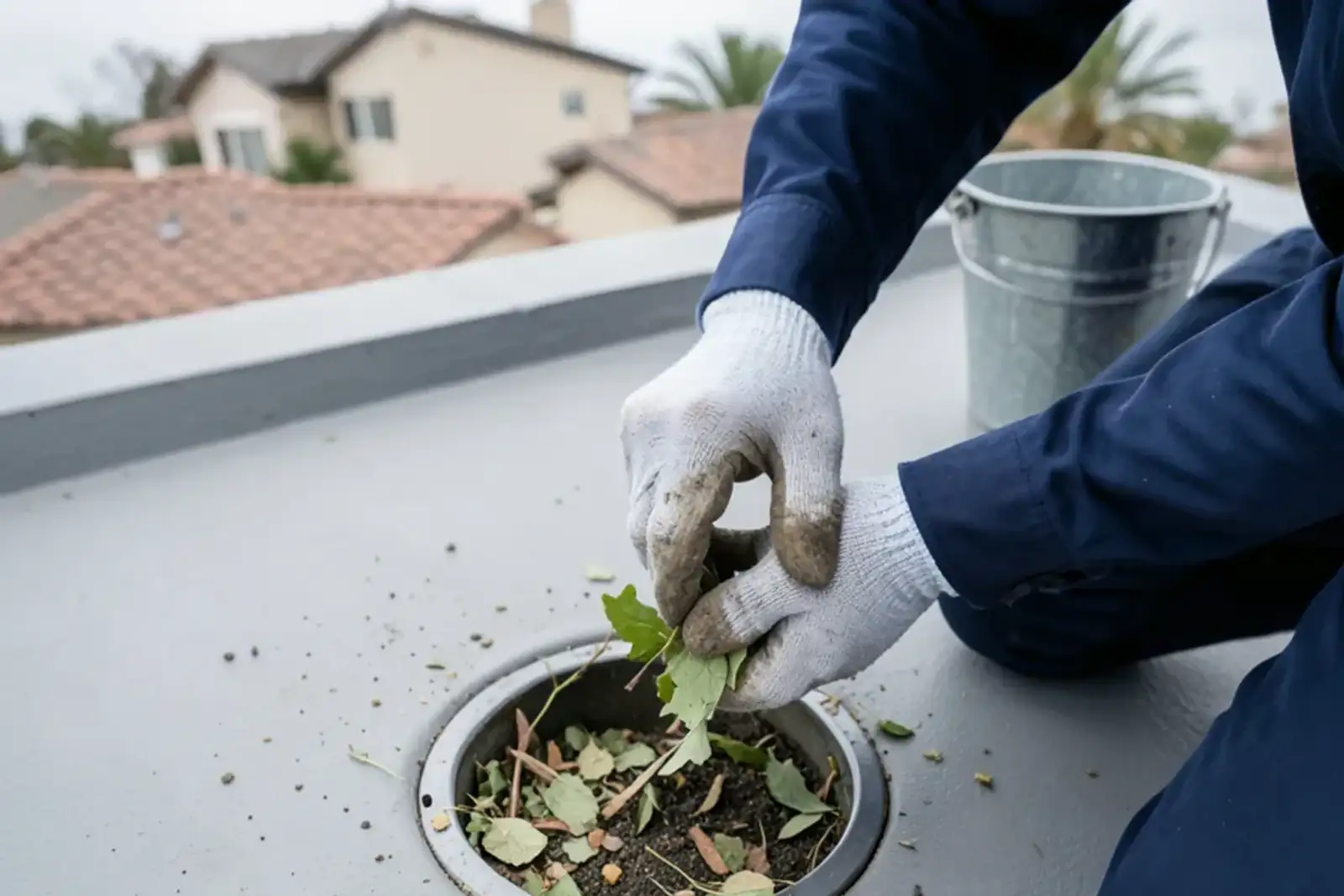
- Clear drains, strainers and scuppers, and note any standing water
- Walk every seam and look for blisters, splits and lifted edges
- Check wall and curb flashing, coping caps and sealant
- Inspect penetrations such as pipes, conduit and skylights
- Look at rooftop units for leaks, loose panels and damaged pads
- Remove debris and record any damage from foot traffic
- Photograph each area with a date and a location note
Anything small, such as a loose fastener or a split boot, can often be fixed on the spot. Larger items get a written repair scope and price before work goes ahead. Tenant-reported leaks between visits should be logged the same way, with the date, the room and the weather, since that detail points a roofer to the right spot.
What to leave out of the plan
A plan has limits, and a manager should know them. Maintenance does not cover hidden problems like wet insulation unless a moisture check is part of the scope. It does not replace a membrane that has reached the end of its life, and it does not turn an old roof into a new one.
Be wary of any plan that lumps in work you cannot see or measure. Ask what is excluded in writing. Exclusions usually include storm damage from a named event, roof damage caused by other trades, and equipment on the roof that belongs to a tenant.
Warranty terms, access logs and who walks your roof
A maintenance plan and a warranty are separate things, but they touch. Industry maintenance guides note that many membrane warranties expect documented upkeep, such as an annual inspection, so read your own paperwork before assuming either way. If you do not have it, ask the installer or manufacturer for the terms in writing, including what voids coverage.
Keep a roof access log. Other trades walk commercial roofs all year, and a log of who went up, when and why lets you trace a cut or crushed seam back to its cause. Limit access to people who need it, and ask anyone who works up there to report what they touched.
Fall protection matters on every visit. Roofs with low parapets or open edges need proper edge protection for anyone working near them, so a manager should ask any contractor how they will protect the crew. Our commercial roof repair work starts from the same record.
The hands-on view: how we would run your first visit
Our first visit on a building sets the baseline. We would ask for any past reports, then start with the drains, since clogged drains cause more trouble than any other single item. After that we work the roof in a pattern, usually along the walls first and across the field second, because edges fail before the field does.
We photograph what we find and sort it into three buckets: fix today, fix this season and watch. That gives a manager a short list instead of a pile of worries. Reviewers in Van Nuys mention pictures and measurements before quoting and clear explanations of what was found, and that is the standard we aim for on your roof too.
If the roof is near the end of its life, we say so plainly and give a rough window, always with the manufacturer's rated life governing.
Maintenance, repair as needed or replacement: the honest trade-offs
Working roofers see three paths, and none is always right.
A scheduled plan costs a little each year and catches small defects. It suits a roof with useful life left, and its payoff is fewer surprise leaks and a record you can show a lender or buyer. Its limit is that it cannot add years to a membrane that is already worn out.
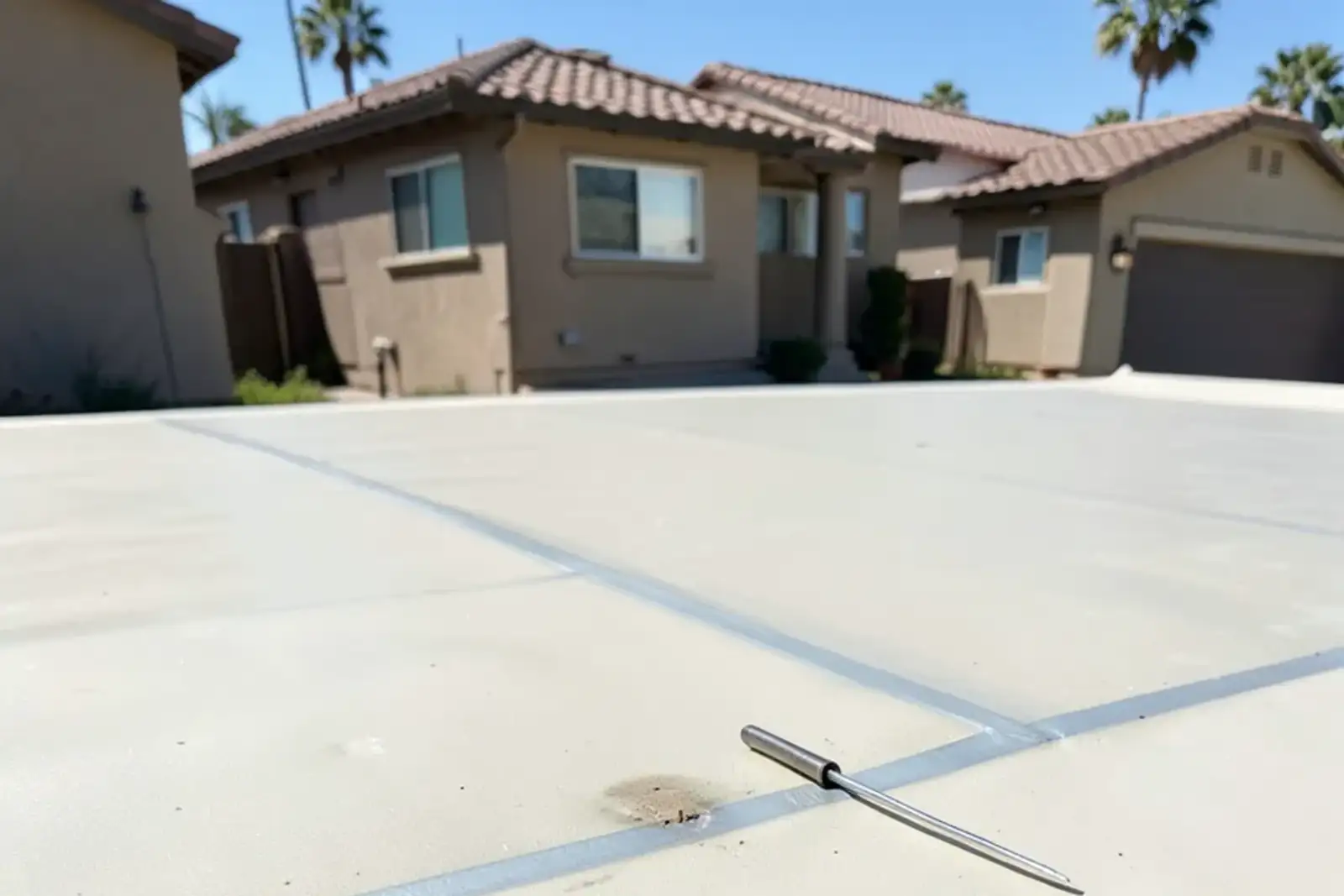
Repairing only when something leaks is cheaper on paper in a quiet year. The catch is that you find problems after water reaches a tenant, and the same leak can soak insulation first. It also leaves you with no paper trail when you need one.
Replacement ends the guessing and costs the most. If your reports show repairs piling up, ponding in several places or wet insulation, money spent on patches is better saved toward commercial roof replacement. A rated life is a guide, not a promise, so the manufacturer's own figures govern. The records from a maintenance plan are what let you decide with facts.
Budgeting from the report
The point of the records is to forecast spending. After a year of dated reports, you can see how many small repairs the roof needs, which areas keep returning and whether the cost of patching is climbing toward the cost of a new membrane. That trend, not any one visit, is what a board or owner needs to see.
Build the plan into the annual budget as two line items: scheduled visits and a repair reserve. Our prices come in writing after we see the roof, since cost depends on roof size, access, material and what the first visit turns up.
For buildings in Commerce, an industrial city southeast of downtown, we cover the area from Van Nuys. Our Commerce service area page covers what matters there.
Maintaining warehouse and retail roofs in Commerce
Commerce is built around its industrial base. The Santa Fe railway ran through in 1887, factories followed by the 1920s and the city incorporated in 1960 to keep that industrial land together, according to Wikipedia. Large flat roofs on warehouses and retail buildings are common, and many have rooftop units, skylights and a lot of drains to keep clear.
The city sits beside the Los Angeles River and the Rio Hondo, with the Long Beach and Santa Ana freeways running through it, so check drains and scuppers for the grit that settles around busy industrial corridors. Commerce is about 28 miles and 45 minutes from our Van Nuys base by our estimate, so we would plan visits around your tenants and the forecast. Whether you manage one building or several, the same twice-a-year calendar applies.
Start a maintenance plan for your building
Tell us the roof type, its age and any tenant leak history, and we will outline a visit schedule. Call (209) 563-1278 and we will set the earliest visit we can, as the schedule allows.
Quick answers
How often should a commercial roof in Los Angeles be inspected?
Twice a year is a sound baseline, once before the wet season and once after it, with an extra look after any major storm or rooftop work. Most Los Angeles rain falls from December through March, so the fall visit matters most. Buildings with trees, older membranes or heavy rooftop traffic may need a third check.
What should be in a roof asset report for a property manager?
Keep the roof's age and material, drain and unit locations, dated photos of each visit, a list of repairs with what was done, and any open issues. Add warranty terms in writing and contractor invoices. That file lets a manager show a lender, buyer or insurer what shape the roof is in without starting from scratch.
Do maintenance visits replace a roof warranty?
No. A maintenance visit finds and fixes small problems, while a warranty is a written promise from the manufacturer or installer with its own terms. Ask for those terms in writing and read what they require, since some need documented maintenance. A visit report can help show that you kept the roof up.
Should a property manager keep a roof access log for a Los Angeles building?
Yes. Heating and cooling techs, antenna crews and other trades walk commercial roofs, and a dropped tool or dragged hose can cut a membrane. A simple log of who went up, when and why lets you trace damage to its source. Add it to the same folder as your inspection photos and repair invoices.
What does a commercial roof maintenance plan cost in Los Angeles?
It depends on roof size, material, access, drain count and how often the visits run, so we put the price in writing after we see the roof. Ask each bidder what a visit includes, what repairs are covered on the spot and what is billed separately. Comparing scopes matters more than comparing totals.