
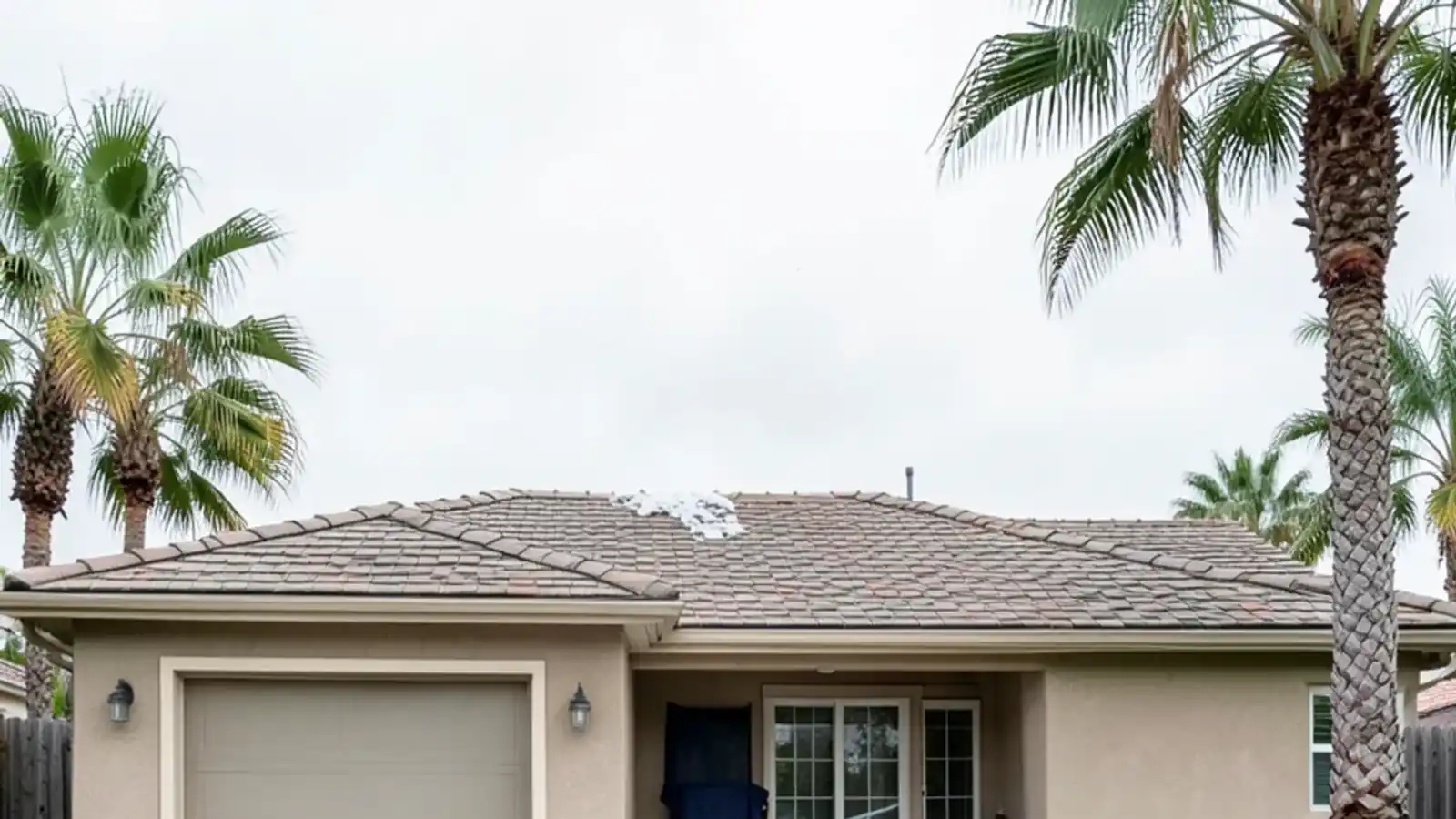
Emergency Roof Repair
Does Home Insurance Cover Roof Replacement in California?
Does home insurance cover roof replacement in California? Sometimes. A standard homeowners policy generally pays when a sudden, covered event such as wind or a fallen tree damages the roof, and generally does not pay for age, wear or neglect. Your policy wording, roof age and deductible decide which side you land on.
- ★ 4.9 on Google · 69 reviews
- Same-day or next-day bookings
- Based in Van Nuys, CA
Published and updated November 3, 2026 · By the Clear Shield Roofers team, Van Nuys, CA
On this page
- Does home insurance cover roof replacement in California?
- Why roof age changes what an insurer will pay
- Replacement cost or actual cash value: how your roof gets valued
- What a roofer can document for a claim
- What working roofers see in roof claims, and the trade-offs
- The first weeks of a roof claim, step by step
- Pasadena homes and the roof-age question
- Getting roof damage documented in Los Angeles
- Common questions
Coverage depends on what damaged the roof, not on the roof itself. Insurers generally pay for sudden, accidental damage and decline wear, age and deferred upkeep. That one split explains most of the surprises homeowners meet.
If you are weighing a claim, our page on roof insurance claims lays out what a roofer can document for you. Below is how coverage usually plays out on a California home.
Does home insurance cover roof replacement in California?
It can, when a covered event damaged enough of the roof that repair is not practical. Your policy lists the covered causes of loss, so read that section before you call anyone. As a rule of thumb:
| What happened | How insurers usually treat it | What helps your case |
|---|---|---|
| Wind lifts or tears shingles or tile | Often covered as sudden damage | Dated photos and a count of missing pieces |
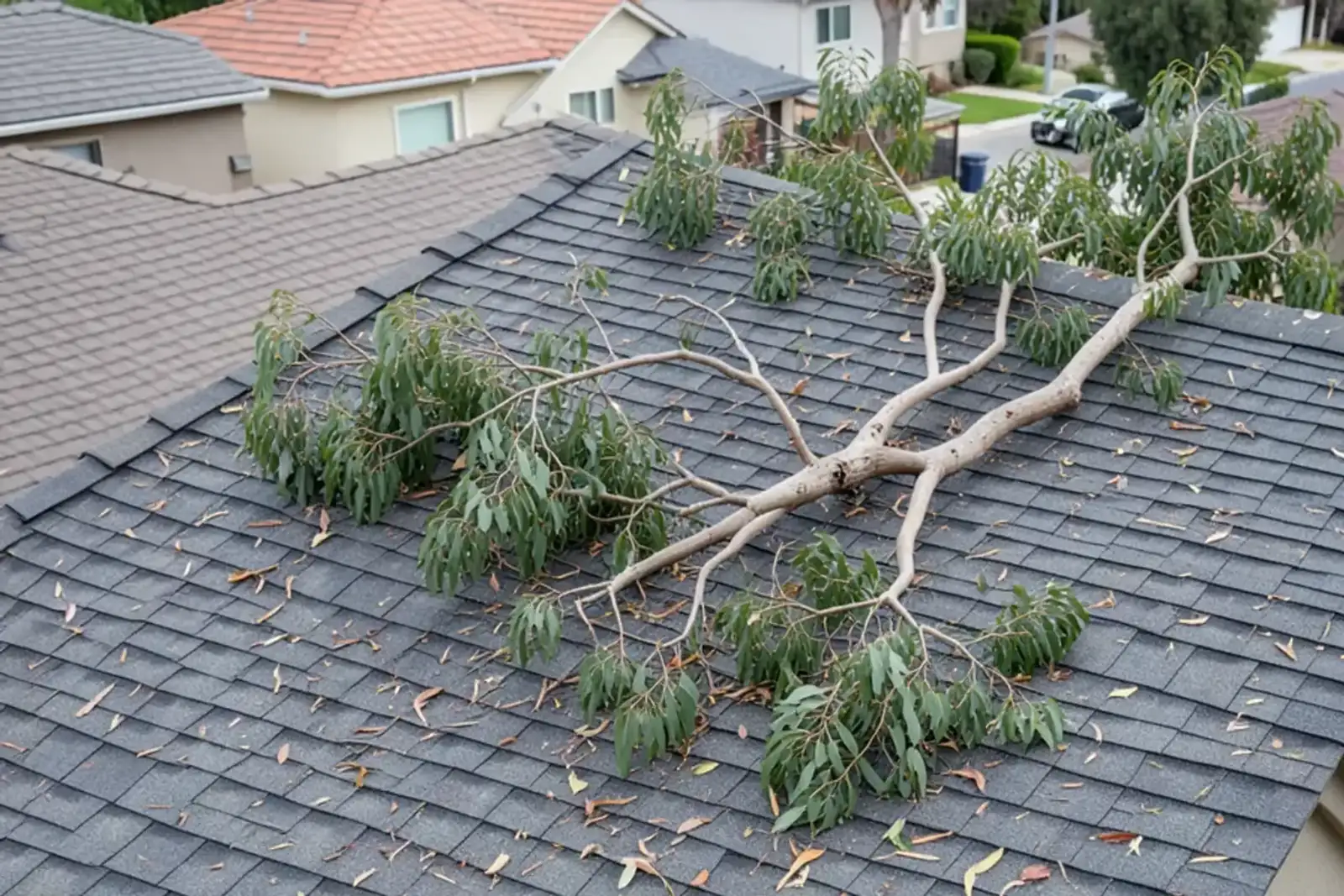
| A tree or limb lands on the roof | Often covered | Photos before the debris is moved |
| Fire or smoke | Covered under fire policies, including the FAIR Plan | Photos and a written damage list |
| A slow leak from worn flashing | Often excluded as wear or maintenance | Past repair invoices |
| Curling, cracking and granule loss from age | Generally excluded | An inspection report that shows the pattern |
Covered does not always mean replaced. If the damage sits on one slope, an insurer may pay to repair that slope and nothing more. A covered replacement still has to follow code. California's residential code does not allow a new roof over one that already has two applications, or over a water-soaked roof, so tear-off may be part of the scope.
Why roof age changes what an insurer will pay
Insurers consider roof age and condition when they decide whether to write or renew a policy, and some policies pay a depreciated value on older roofs. We cannot tell you how yours works, so ask. These questions are worth putting to your insurer, ideally by email so the answers are in writing:
- Does the policy pay replacement cost or actual cash value on the roof?
- Is there an age limit or roof-surfacing schedule attached to the policy?
- Is wind covered, and does a separate wind deductible apply?
- What does the insurer need from a roofer to support a claim?
The FAIR Plan deserves its own note. It is a basic fire policy, with wind available as an add-on, and it does not behave like a full homeowners policy. Check the California Department of Insurance's residential guide if your coverage comes through the FAIR Plan.
Replacement cost or actual cash value: how your roof gets valued
The California Department of Insurance describes replacement cost as the amount needed to replace an item with one of similar kind and quality, without deducting for depreciation. Actual cash value pays what it takes at current market value. On a roof, that gap can be large.
A replacement cost policy aims to return you to a new roof of similar quality. An actual cash value policy accounts for the age and wear of the old one, so a 20-year-old roof on a covered loss can pay far less than a new roof costs. Your declarations page and roof endorsements say which applies. The first check is also often an advance rather than a final payment, according to the same guide, so ask what comes next before you sign a repair contract.
Code upgrades and "ordinance or law" coverage
Roofing rules change. A re-roof in Los Angeles may call for a cool-roof-rated product, and a mapped fire zone may call for Class A material. The CDI guide says that unless your policy has ordinance or law coverage, you may face non-reimbursable costs to rebuild to current code. It is sold as an endorsement. Ask whether you have it.
What a roofer can document for a claim
When we inspect a roof for a claim, we are sorting fresh damage from old. Fresh wind damage tends to show bright, clean edges where a shingle tore, creased tabs in a line that points the way the wind blew, or tile that slid and cracked at the edge. Old wear shows dark staining, moss, curled corners and bare patches where granules are gone.
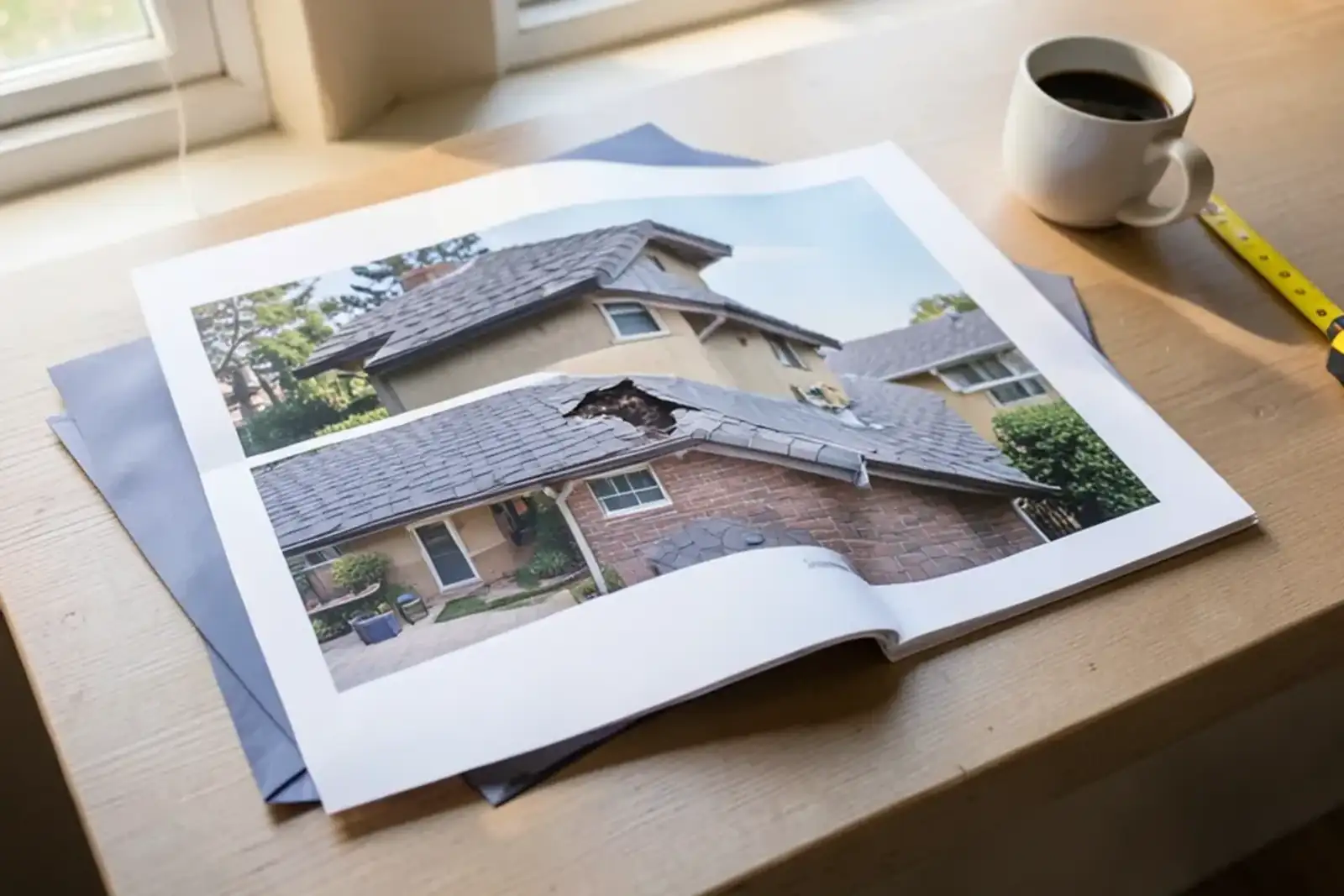
We photograph each slope, measure the affected area, check flashing and decking, and write a repair estimate. One Van Nuys customer had a roof inspected and the damage documented for an insurance claim, and reviewers also mention drone photos sent as work progressed. If you ask, we can also be there when the adjuster walks the roof.
The claim stays yours. Only the policyholder or a licensed public adjuster negotiates with the insurer, and you can verify a public adjuster's license at insurance.ca.gov.
What working roofers see in roof claims, and the trade-offs
These are the places where roof claims tend to split, and none of them have easy answers.
Repair one slope or replace the roof. An insurer may approve repair of the damaged slope. A roofer may note that old brittle shingles will not match or accept new fasteners well. Either view can be reasonable, so get the roofer's findings in writing and take them to the adjuster yourself.
Tarp now or wait for the adjuster. A tarp stops more damage and is usually expected. It also covers evidence, so photograph the damage before it goes on.
Insurer's estimate or the roofer's. The two often differ because they price different scopes. Ask the adjuster to explain what each line covers. When hidden damage turns up after tear-off, ask your insurer how it wants it documented, then photograph it before it is covered.
Claim or pay out of pocket. A repair under the deductible may not justify a claim. A widespread loss on a roof that is near the end of its life may. Ask your insurer how filing could affect renewal, since insurers consider roof age and condition.
We can inspect, photograph, write the repair estimate and be on site when the adjuster visits. Negotiating or settling the claim belongs to you as policyholder or to a licensed public adjuster you hire.
The first weeks of a roof claim, step by step
- Stop more water getting in. Tarp the opening or have a roofer do it, and keep the receipt.
- Photograph everything. Take ground-level shots, close-ups with a tape measure and any interior stains, with dates on the files.
- Read your declarations page. Note the deductible and any roof endorsement.
- Report the claim. California's claims regulations generally require an insurer to acknowledge a claim within 15 days and accept or deny it within 40 days after receiving proof of claim.
- Get a written repair estimate to hand to the adjuster.
- Escalate if it stalls. Call the Department of Insurance consumer line at 800-927-4357.
Your deductible is a cost under your policy. Ask your insurer how it applies before you sign a repair contract. Contract rules matter too: a down payment is limited to $1,000 or 10 percent of the price, whichever is less.
Pasadena homes and the roof-age question
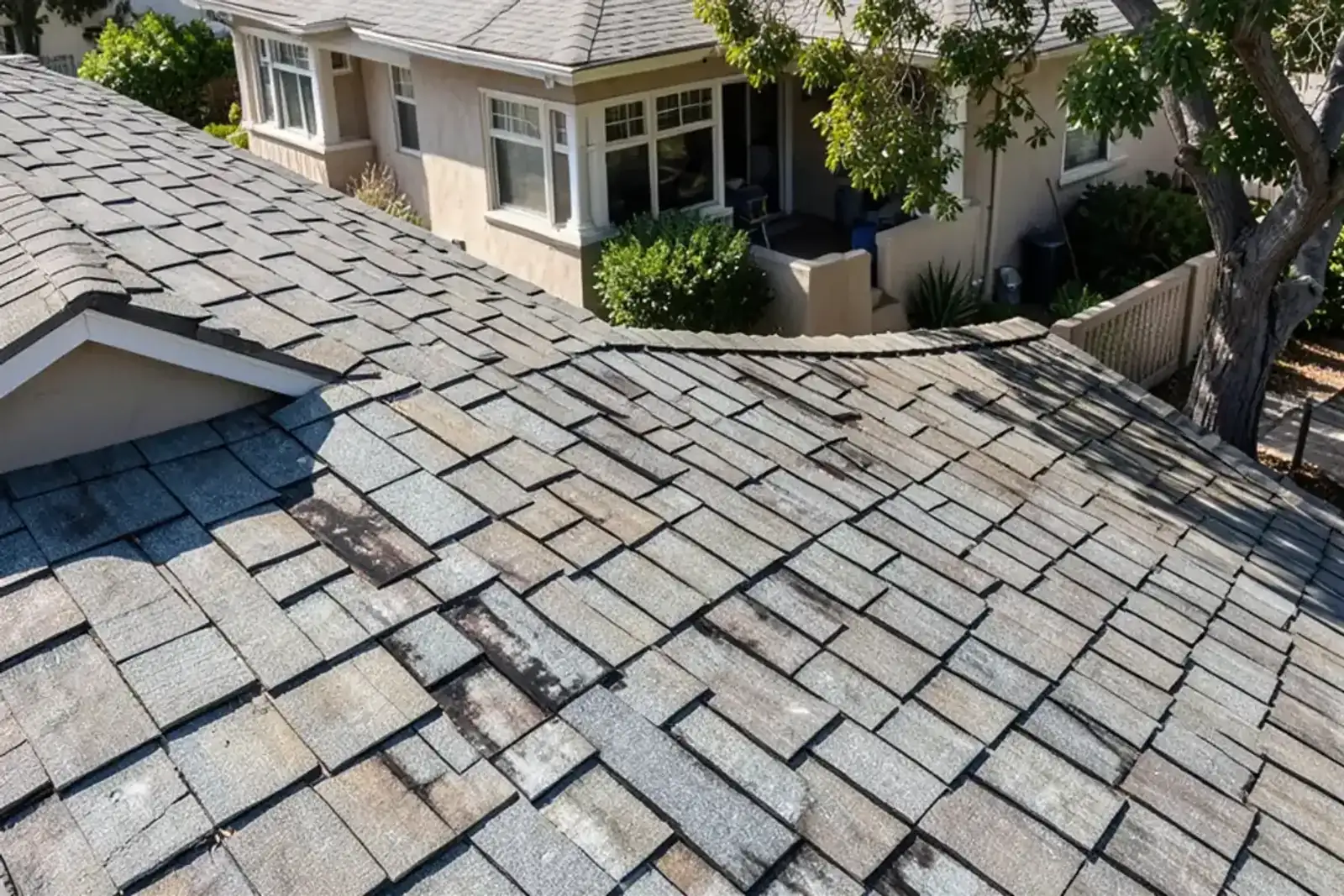
Pasadena's older neighborhoods, including Bungalow Heaven, are full of Craftsman homes with wide eaves, exposed rafters and tricky valleys. Census ACS 2020-24 puts the median home build year at 1961, and about 43 percent of homes are owner-occupied. On a house that old, the roof has probably been replaced at least once, so the date and invoice from the last re-roof can matter in a claim.
Pasadena is about 23 miles from Van Nuys, an estimated 40-minute drive, and we cover it. Keep your roofing paperwork in one folder before you ever need it.
Getting roof damage documented in Los Angeles
Call before repairs begin, and tell us what happened, when and what you have photographed. Our wind damage roof repair and storm damage roof repair pages explain how we would approach an inspection. For the adjuster visit and for a denial, read our guides to meeting an insurance adjuster and appealing a denied roof claim.
Need your roof inspected and the damage documented? Call (209) 563-1278, tell us what happened, and we will set the earliest visit we can.
Quick answers
Will insurance pay for a whole new roof after wind damage in California?
It can, but many wind claims end with a repair of the damaged slope instead. The insurer decides whether the damage is limited enough to repair or widespread enough to replace. Photos of every slope, a written repair estimate and a record of the roof's age make that decision easier to discuss with your adjuster.
Does homeowners insurance cover a roof that is simply old?
Generally no. Wear, age and long-term deterioration are usually excluded, even when the roof is leaking. A sudden event on an old roof can still be covered, though the payout may reflect the roof's age depending on your policy. Read the declarations page and ask your insurer how it values older roofs.
What is the difference between replacement cost and actual cash value on a roof?
The California Department of Insurance says replacement cost pays what it takes to replace the item with one of similar kind and quality, without deducting for depreciation. Actual cash value pays the amount needed at current market value, which for an older roof usually means a smaller check. Look for which one your policy uses on the roof and whether roof-age terms apply.
Should I repair my roof before I report the damage?
Protect the home first, then report. Tarp the opening, photograph the damage before and after, and keep every receipt. Ask your insurer which temporary repairs it expects. Permanent work before the insurer has seen the damage can make the claim harder to document.
Does the California FAIR Plan cover roof damage?
The FAIR Plan is a basic fire policy, so roof damage from fire, lightning, internal explosion or smoke is its core coverage. Wind and hail can be added, but it is not a full homeowners policy. Read your FAIR Plan declarations to see which perils you carry before assuming a storm claim qualifies.
Sources
- California Department of Insurance, Residential Property Claims Guide (replacement cost, actual cash value, code upgrades)
- California Department of Insurance, residential insurance guide (FAIR Plan, nonrenewal)
- 10 CCR 2695.5, Cornell Legal Information Institute (claim acknowledgment timing)
- 10 CCR 2695.7, Cornell Legal Information Institute (accept or deny timing)
- California Department of Insurance, insurance fraud guide (consumer hotline)