
Emergency Roof Repair
Meeting the Insurance Adjuster: Roof Claim Prep Guide
When the insurance adjuster inspects your roof, be home, hand over your dated photos and a short list of what you noticed, and let the adjuster take the measurements. You may ask your roofer to attend. Stick to facts you can show, and leave guesses about cost or cause out of the conversation.
- ★ 4.9 on Google · 69 reviews
- Same-day or next-day bookings
- Based in Van Nuys, CA
Published and updated November 3, 2026 · By the Clear Shield Roofers team, Van Nuys, CA
On this page
- What to do when the insurance adjuster inspects your roof
- The photos that help most
- What to say, and what to leave out
- What an adjuster looks at, and what we point out
- Should you get the roof looked at before the adjuster arrives?
- Having your roofer on site
- Burbank's low-pitch roofs and the adjuster's visit
- What to do in the days after the adjuster leaves
- Booking a roofer for your adjuster visit
- Common questions
The visit is short, yet it often decides the scope of the claim. Prepare for it like an appointment: photos printed or ready on your phone, a short timeline of when you noticed the damage, and your policy number to hand.
Our page on roof insurance claims covers what a roofer can document. If a storm caused the damage, storm damage roof repair explains the work after the claim is sorted.
What to do when the insurance adjuster inspects your roof
Use this order on the day:
- Tell the adjuster up front if the roof is steep, tile or wet, so everyone agrees how it will be reached.
- Walk the damage with them. Point to each spot you photographed, and name the slope.
- Show the inside too: ceiling stains, attic framing and any drips.
- Hand over your timeline, with when you noticed the damage and when you reported it.
- Ask what happens next and when you should expect the decision.
- Write down the name of the adjuster, the date and anything promised.
California's claims regulations generally require an insurer to acknowledge a claim within 15 days. If you have not heard anything, write down the dates and follow up in writing.
The photos that help most
Photos are the record of a roof you may not be able to show again once repairs start. Keep the original files.
| Shot | What it proves |
|---|---|
| Each slope from the ground | Where the damage is and how widespread it looks |
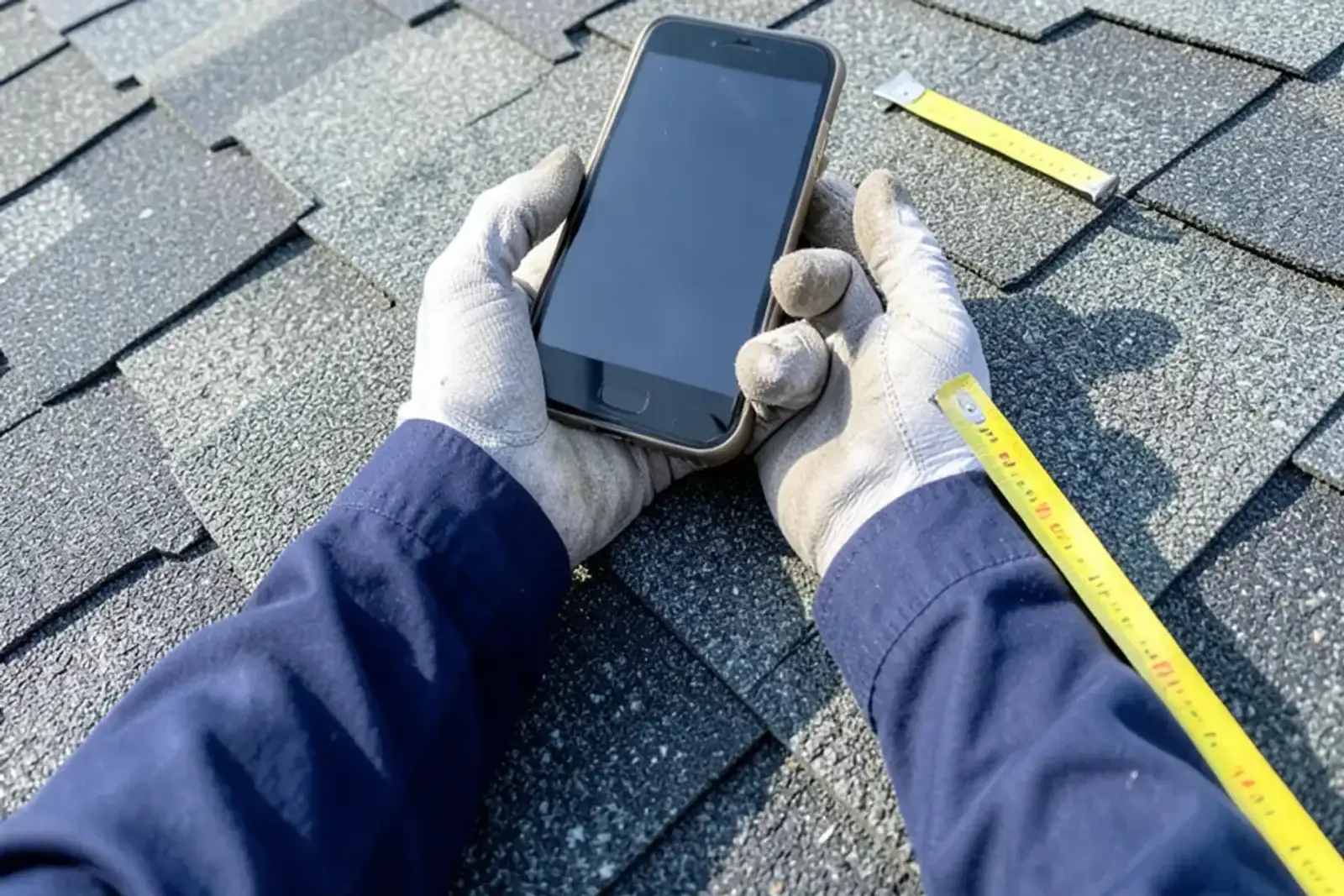
| Close-up with a tape measure | The size and type of each defect |
| Ceiling stains and attic framing | Water entry and decking condition |
| Gutters and downspouts | Granule loss, debris or fallen pieces |
| Any tarp or temporary fix | That you protected the home |
| The whole house from the street | Which roof the photos belong to |
Take them before anyone moves debris. If you must tarp, photograph before and after.
What to say, and what to leave out
Answer questions truthfully and keep them short. Describe what you saw and when: the storm date, the first stain, the sound of a limb hitting the roof. That is information the adjuster can use.
Leave out guesses. Do not speculate about the cause or about cost, and do not call the roof old or in bad shape unprompted. If you do not know an answer, say so and offer to follow up in writing. Read anything before you sign it, and ask for copies.
What an adjuster looks at, and what we point out
An adjuster is trained to judge cause and scope. A roofer is trained to read the surface, so the two views fit together when both are on the roof. These are the details we draw attention to, because they are easy to miss at a glance:
- Slopes facing the wind: damage often clusters on one side, which supports a single-event cause
- Ridge caps and hips, where wind lifts material first
- Pipe boots and flashing, where a small tear lets in a lot of water
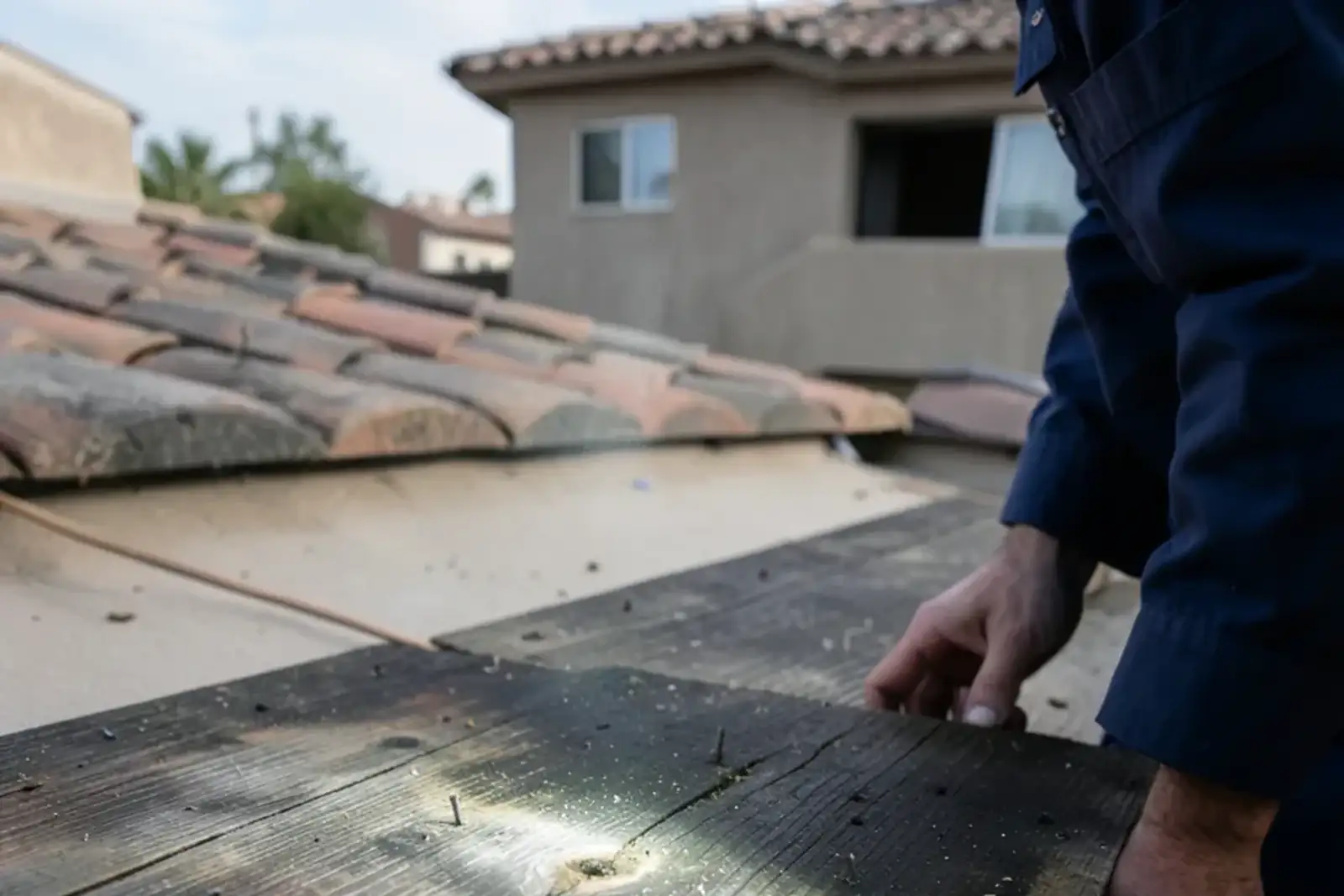
- Soft decking, which you find by pressing, not by looking
- Older repairs, so they are not mistaken for new damage
Honest labeling matters. If a patch is ten years old, we say so, and the adjuster can then set it aside and focus on what changed this season.
Should you get the roof looked at before the adjuster arrives?
It depends on the weather, the damage and how soon the visit is booked. A roofer's photos taken ahead of time give you a record in case rain or wind makes things worse before the adjuster comes. They also help you write the short damage list the adjuster will ask about.
Two cautions apply. The Department of Insurance advises against hiring a repairer before your insurer's adjuster has inspected, other than emergency protection of the home, so document first and repair later. And every trip across a slope adds foot traffic to tile and brittle shingles. On a fragile roof we would rather photograph from the ladder and the attic than walk it twice.
Having your roofer on site
When we attend an adjuster visit, our job is the roof. We walk the slopes, point out what we documented, and answer technical questions about materials, flashing and decking. Afterward we can write the repair estimate that matches what we saw.
Negotiation is not part of what we do. Only the policyholder or a licensed public adjuster may negotiate a claim for a fee, and you can verify a public adjuster's license at insurance.ca.gov. The Department of Insurance also advises against paying cash or making a final payment before the building department signs off, and against hiring a repairer before your insurer's adjuster has inspected, other than emergency protection of the home.
Reviewers mention drone photos sent during their work, and one Van Nuys customer had the roof inspected and damage documented for an insurance claim.
Is a roofer at the visit worth it? The honest trade-offs
A roofer on site helps most when the roof is steep, tile, wet or large, or when damage is subtle. We can point to a lifted ridge cap or a pulled fastener that a ground-level look skips. We can also say plainly when something is old wear, which keeps the file credible.
There are costs. The visit takes longer, scheduling two people around one appointment can delay it, and a roofer cannot change what the policy covers. If the roof has a clear fallen limb through it and no argument is likely, you may not need anyone beside you. If the cause is disputed, a second set of trained eyes is worth the extra hour.
Burbank's low-pitch roofs and the adjuster's visit
Burbank has a large stock of 1940s and 1950s ranch homes around Magnolia Park, with low-pitch roofs and, in some cases, aging decking. Census ACS 2020-24 puts the city's median build year at 1959, with about 43 percent of homes owner-occupied.
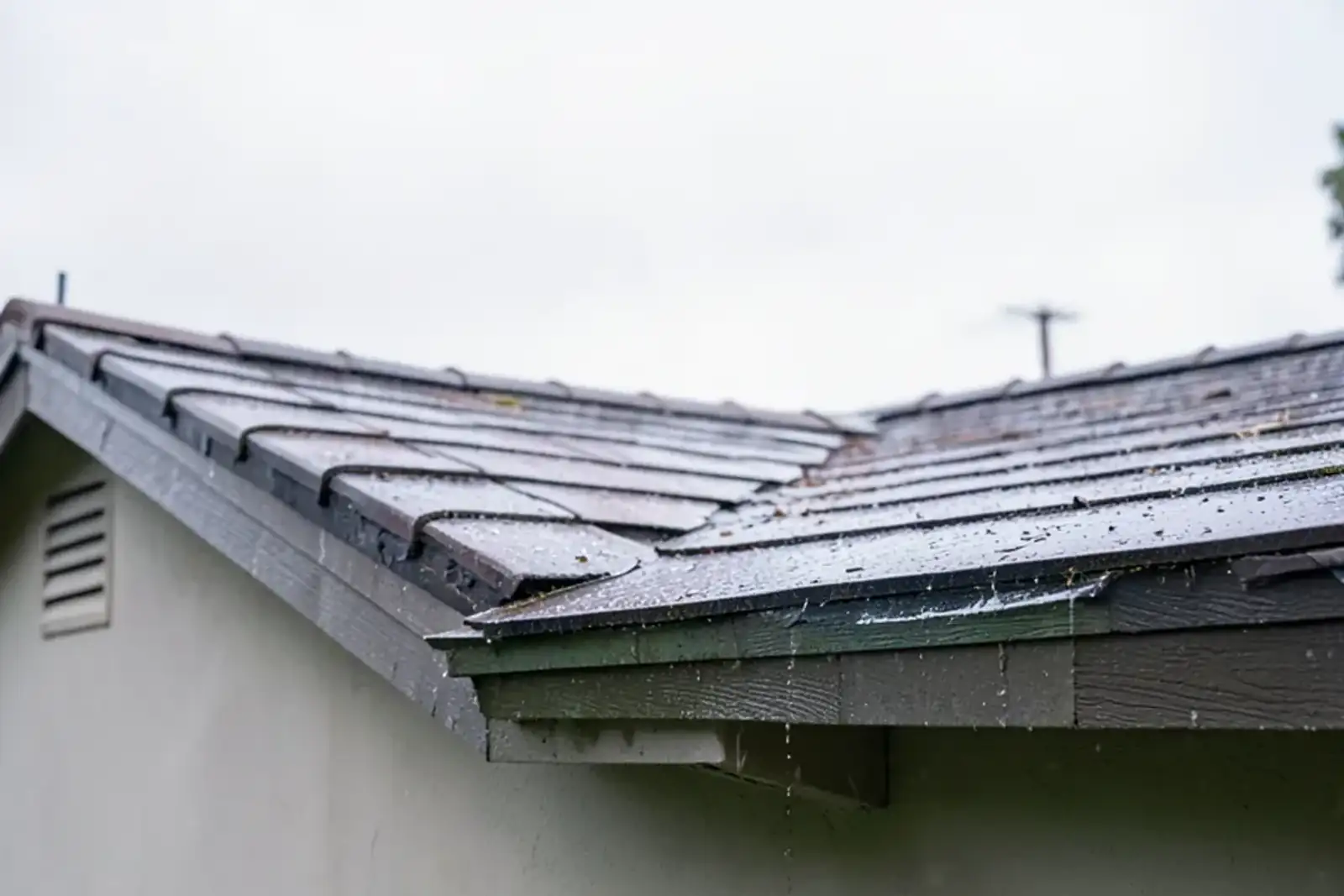
Low-pitch roofs shed water slowly, so staining can sit along the lower edge and soft decking may only show from the attic.
Ask the adjuster to look from inside the attic as well as from the ladder. For a visit in Burbank, the trip from our Van Nuys base is roughly 9 miles.
What to do in the days after the adjuster leaves
The visit is not the end of the file. Use this checklist while it is fresh:
- Email the adjuster the same day with the areas you pointed out and your photos attached
- Write down what was said about timing, coverage and next steps
- Ask when the written estimate will arrive and in what form
- Compare the insurer's scope with a written repair estimate, slope by slope
- If an area was missed, ask in writing for a second look and name it
Keep the dates, because insurers have timing rules of their own. California's claims regulations generally require an insurer to respond to a claim communication within 15 days. If the estimate comes in short or the claim is denied, our guide to appealing a denied roof claim in California lays out the next steps.
Booking a roofer for your adjuster visit
Tell us the date and time of the appointment, the roof type and what you have noticed. We will set the earliest visit we can, take our own photos beforehand if the schedule allows and be on the roof when the adjuster arrives. Call (209) 563-1278 to put it on the calendar.
Quick answers
Should I be home when the roof adjuster visits?
Yes, if you can be. You know when the damage appeared and what changed, and the adjuster may have questions that only you can answer. If you cannot be there, ask a trusted adult or your roofer to be on site, and send your photos and notes ahead of time by email so they are on record.
Can my roofer talk to the adjuster for me?
Your roofer can attend, point out what was documented and answer questions about the roof. The claim stays with you. Only the policyholder or a licensed public adjuster negotiates, so any decision on scope, payment or settlement is yours or your public adjuster's to make.
What photos should I take before the adjuster arrives?
Take a wide shot of each slope from the ground, close-ups of every damaged spot with a tape measure beside it, interior ceiling stains, attic framing and gutters with debris or granules. Keep the original files with their dates. Tarp photos before and after count too, so photograph any emergency work.
What if the adjuster does not climb on the roof?
Some adjusters use drones, ladders or photos instead of walking a slope. If you think an area was missed, say so politely and ask for a second look at it. Written follow-up with your roofer's photos of that area is the most reliable way to put the point on record.
What should I do after the roof adjuster leaves?
Send a short email the same day thanking the adjuster, listing the areas you pointed out and asking when to expect the estimate. Attach your photos. California's claims regulations generally expect an insurer to answer a claim communication within 15 days, so note the date and follow up in writing if you hear nothing.