
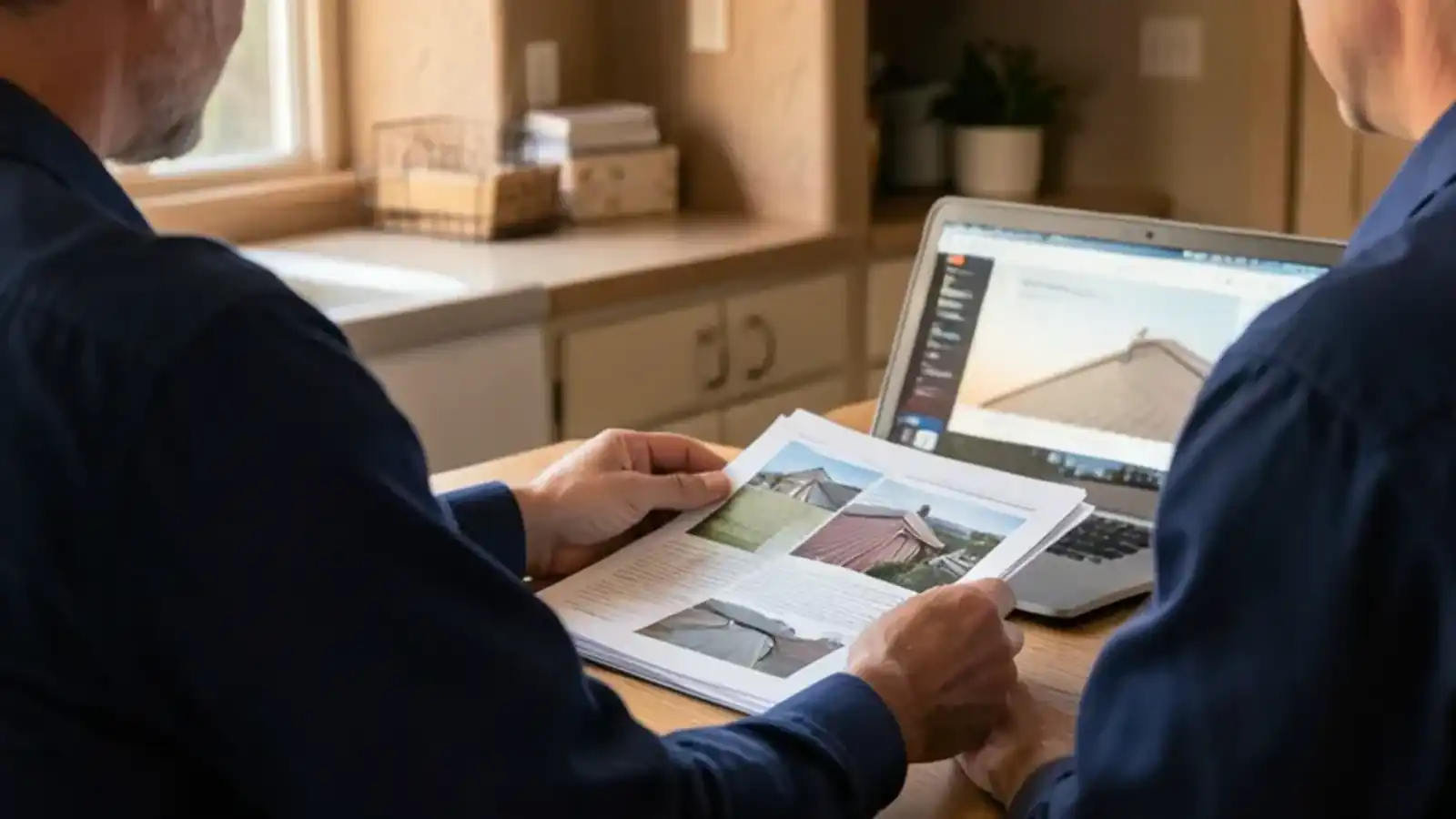
Emergency Roof Repair
How to Appeal a Denied Roof Claim in California
A denied roof insurance claim in California is not always the final answer. Ask the insurer for the denial in writing, compare it with your policy and photos, send new evidence and request a reinspection. If the claim stalls, you can contact the California Department of Insurance. This is general information, not legal advice.
- ★ 4.9 on Google · 69 reviews
- Same-day or next-day bookings
- Based in Van Nuys, CA
Published and updated November 3, 2026 · By the Clear Shield Roofers team, Van Nuys, CA
On this page
- What to do in the first days after a denial
- Reading the reason for the denial
- What to put in an appeal letter for a denied roof claim
- What the roof itself can show a reinspection
- What roofers see when an insurer calls it wear and tear
- When a public adjuster, an attorney or the state fits
- Appealing a roof claim on a Glendale tile roof
- Your next step after a denied roof claim
- Common questions
Start with the denial letter, because everything else depends on the reason in it. Insurers deny roof claims for a handful of repeat reasons, and each one is answered with a different kind of evidence.
You are not stuck at "no". A policyholder can ask for the decision in writing, add proof, ask for a second look and contact the state. We are roofers, not lawyers, and nothing here is legal advice. We can tell you what a roof shows. Our roof insurance claims page explains the part we can help with.
What to do in the first days after a denial
Work in this order. Each step builds the file you may need later.
- Ask for the denial in writing if you only heard it by phone, with the policy language the insurer relied on.
- Read your policy alongside the letter, covering the dwelling section, exclusions and any roof endorsement.
- Gather your evidence: dated photos, past repair invoices, weather dates, and the repair estimate you were given.
- Ask for a reinspection by email, naming the slopes or areas you think were missed.
- Keep every date. Note who you spoke to and when. Send important messages in writing.
- Contact the California Department of Insurance if you believe the claim was handled unfairly. The consumer line is 800-927-4357.
California's claims regulations generally require an insurer to accept or deny a claim within 40 days of receiving proof of claim. If your timeline seems off, mention the dates when you call.
Reading the reason for the denial
The wording of the letter tells you what kind of proof to gather.
| Reason given | What may answer it |
|---|---|
| Wear and tear or age | Photos showing fresh edges and creasing that point to a recent event |
| Damage predates the policy or the event | Dated photos or past inspection records |
| Below the deductible | A fuller scope that counts every affected slope |
| Reported too late | Proof of when you noticed it and when you called |
| Cause not covered | A roofer's written description of the cause |
An underpayment is its own case. The claim is accepted, but the insurer's scope covers a repair and you think the roof needs more. A line-by-line comparison between the insurer's estimate and a written repair estimate shows where the two differ.
What to put in an appeal letter for a denied roof claim
Keep the letter short, dated and factual. Send it in a way that leaves a record, such as email, and keep a copy. California's claims regulations require a denial to be in writing, to list each basis and to cite the policy provision or law the insurer relied on, so you can answer the letter point by point. The denial should also say that you may ask the California Department of Insurance to review it. Include:
- The claim number, policy number, date of loss and the date of the denial letter
- Each reason the insurer gave, with your response under it
- New evidence attached: dated photos, the written repair estimate, the roofer's findings, weather dates and past repair records
- One clear request, such as a reinspection of named slopes, a supervisor's review or a revised scope
- A reasonable date to hear back
Leave out anger and guesses about motive. A letter an adjuster can answer in a few lines is easier to act on than three pages of history. Many policies also have an appraisal clause for disputes over the amount of a loss, so read yours and ask the insurer in writing how disagreements are handled.
What the roof itself can show a reinspection
A reinspection works when the adjuster sees something new. On the roof, we look for the things a quick visit can miss:
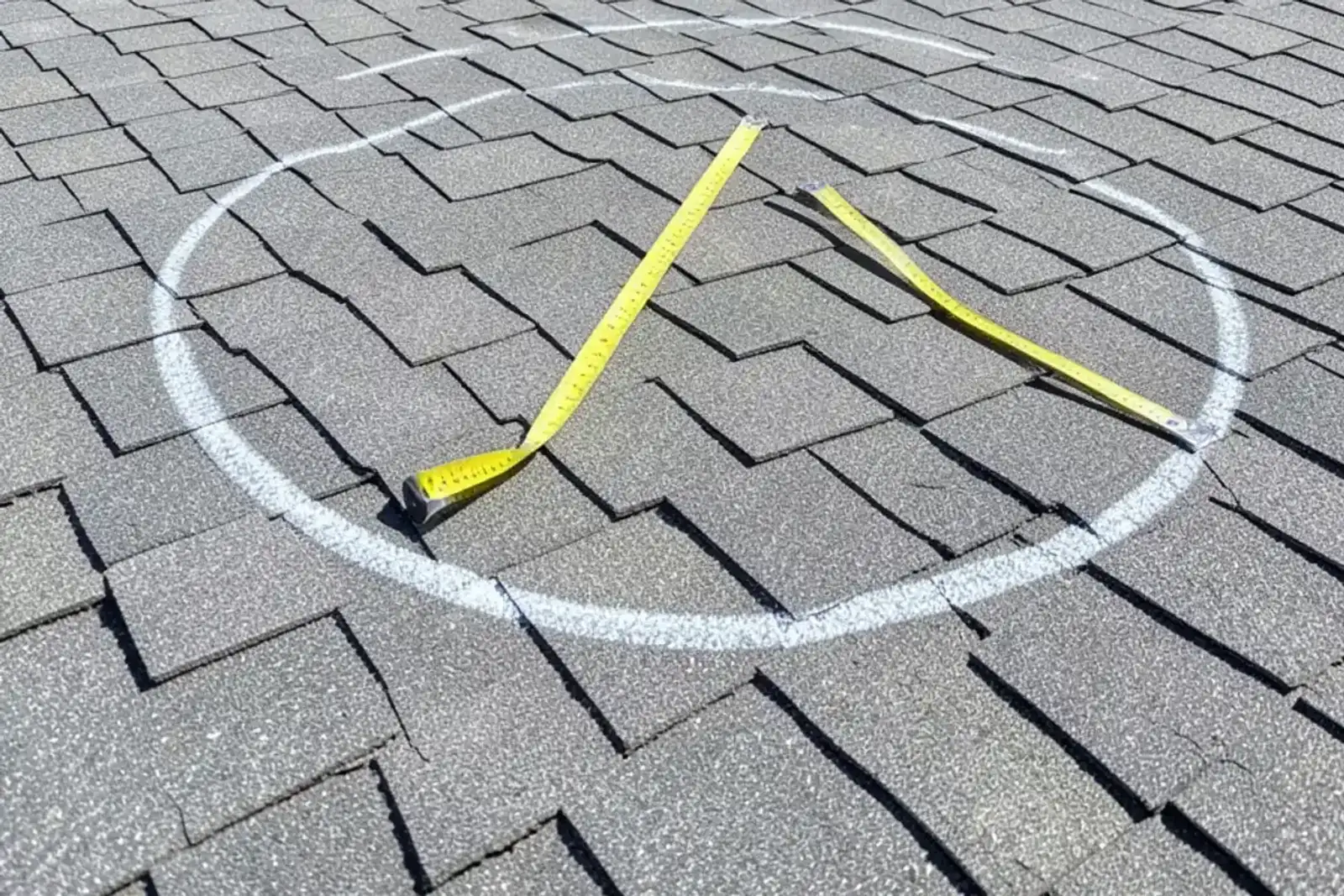
- Creased shingles in a line that follows the wind direction, which is how fresh wind damage often reads
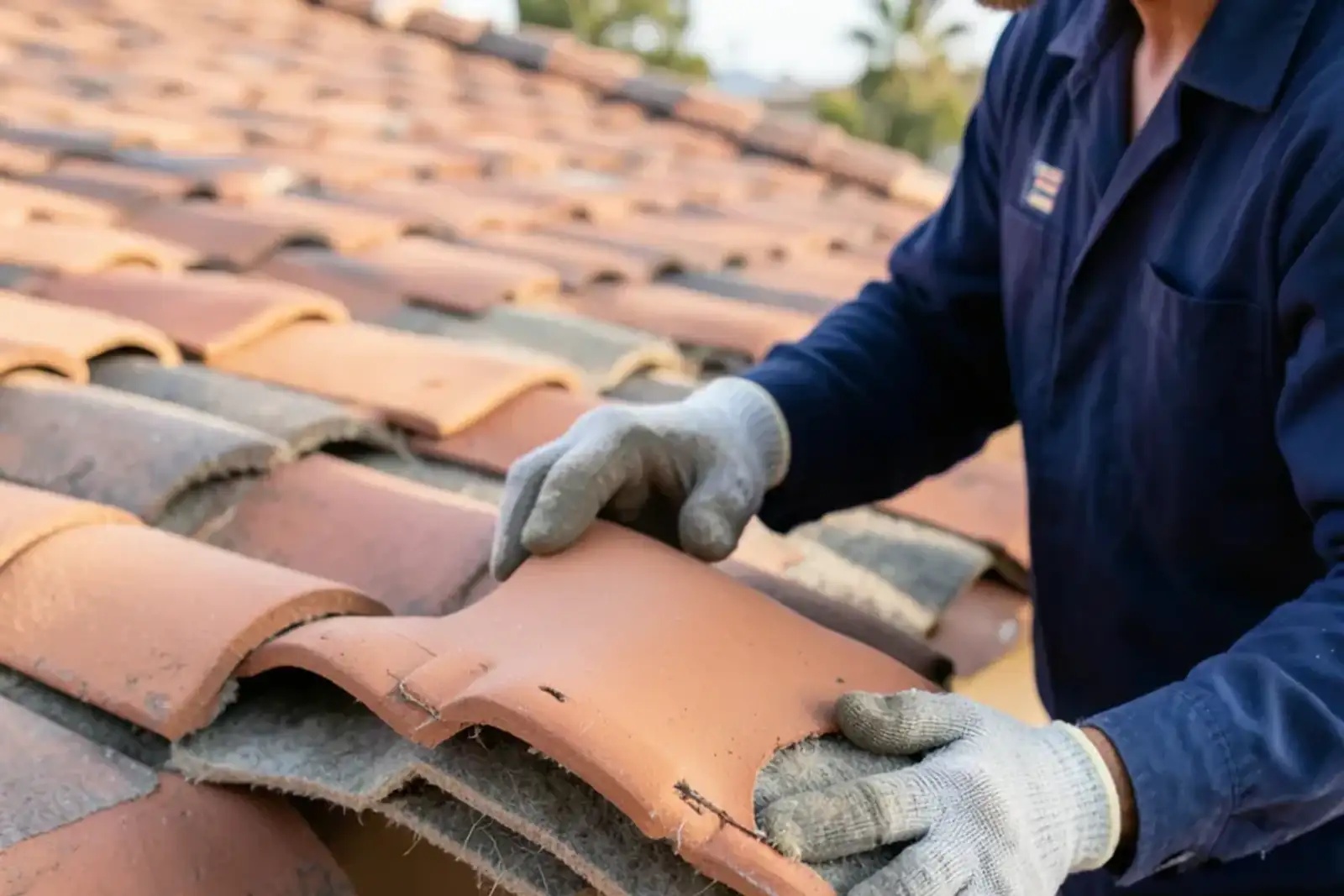
- Slipped, cracked or loose tile, and torn underlayment beneath it
- Fasteners pulled out of the deck, and soft or stained decking from the attic side
- Damage around vents, skylights and flashing, where sudden damage and old wear can sit side by side
We photograph with a tape beside each defect, mark it and note which slope it is on. We can write a repair estimate and be on site for the reinspection. Reviewers mention drone photos sent while work was underway, and one Van Nuys customer had damage documented for an insurance claim.
What roofers see when an insurer calls it wear and tear
This is the working roofer's view, trade-offs included. Age and storm damage can sit on the same roof, and a denial is sometimes right. A 25-year-old shingle roof with granule loss on every slope and brittle, curling tabs is aging, and no letter turns that into wind damage. What shifts a denial is a pattern tied to one event: creases in a line on one exposure, a ridge cap gone, wind damage on the side that took the gusts, tile displaced on one slope only, and clean, unweathered edges where material tore.
Three honest trade-offs come up on almost every denied claim:
- A reinspection can confirm the denial. You lose a few weeks but learn where you stand, and you can plan a repair or replacement on your own schedule.
- Repairs can erase evidence. Waiting leaves the roof open to the next rain, and many policies expect reasonable steps to prevent further damage. Photograph first, keep removed pieces if you can and tarp. Our storm damage roof repair page covers what temporary protection involves.
- A roofer's opinion is an observation, not an engineering report. On a large or disputed loss, an engineer or an attorney may carry more weight than we can.
If the honest repair cost sits below your deductible, an appeal will not produce a payment. Fix the roof, keep the invoice and move on.
When a public adjuster, an attorney or the state fits
Each helper does a different job.
- The Department of Insurance takes consumer complaints by phone and online. The hotline runs weekdays, 8 a.m. to 5 p.m. Pacific.
- A licensed public adjuster can negotiate the claim for a fee. Verify the license at insurance.ca.gov before signing anything.
- An attorney can advise you on legal options, deadlines and policy interpretation.
- Your roofer documents the roof. Negotiating and settling belong to you or a licensed public adjuster.
Be cautious with anyone who knocks on your door after a storm offering to run the claim. The Department of Insurance warns about disaster-repair scams, and California limits a home-improvement down payment to $1,000 or 10 percent of the contract price, whichever is less.
Appealing a roof claim on a Glendale tile roof
Glendale is a Spanish Revival city, with Rossmoyne and Verdugo Woodlands full of clay tile roofs. Tile hides damage. A slipped tile may look fine from the street while the underlayment below is torn, and an adjuster working from the ground or a drone can miss it. A reinspection with a roofer who lifts a few tiles can show what the first visit did not.
Glendale's Census ACS 2020-24 figures show a median build year of 1966 and about 35 percent owner-occupied homes. If you rent, your landlord files and holds the claim. We cover Glendale from Van Nuys, an estimated drive of about 30 minutes for 15 miles.
Your next step after a denied roof claim
Start with the letter, then the roof. Get the denial reasons in writing, gather your photos and records, and ask for the reinspection in the same email. If you want a roofer to look at the slopes and document what is there, call (209) 563-1278 and we will set the earliest visit we can.
Quick answers
How long do I have to appeal a denied roof claim?
Deadlines depend on your policy and the insurer's letter, so read both for time limits and act early. Do not wait for a perfect packet. Ask the insurer in writing what deadlines apply to a review or reinspection, and keep proof of every date you send something. An attorney can tell you about legal time limits.
Can I ask for a different adjuster after a roof claim denial?
You can ask. Put the request in writing and say why, such as a missed slope or a disagreement about the cause. The insurer decides, and a supervisor review or a second inspection is more common than a new adjuster. A short, factual request with photos attached tends to be taken more seriously.
Does a denied claim mean my roof damage is not real?
No. A denial says the insurer did not accept the claim under your policy as written, often because it judged the damage to be wear or because the damage was below the deductible. Fresh wind damage and long-term wear look different on a roof, and photos that show the difference can change the conversation.
Who can negotiate a roof claim with my insurer for a fee?
Only a licensed public adjuster may negotiate a claim for a fee, and California's Department of Insurance says to check the license at insurance.ca.gov. A roofer can provide an inspection report and a repair estimate, but cannot stand in for you or an adjuster in settlement talks.
Should I repair my roof while I appeal a denied claim?
Protect the roof first, then repair. Photograph every damaged spot with the date visible, keep any removed tile or shingle pieces and save receipts for tarping. Ask the insurer in writing whether it wants a reinspection before permanent repairs begin. Leaving a roof open to the next rain can create new damage that is harder to argue about.