
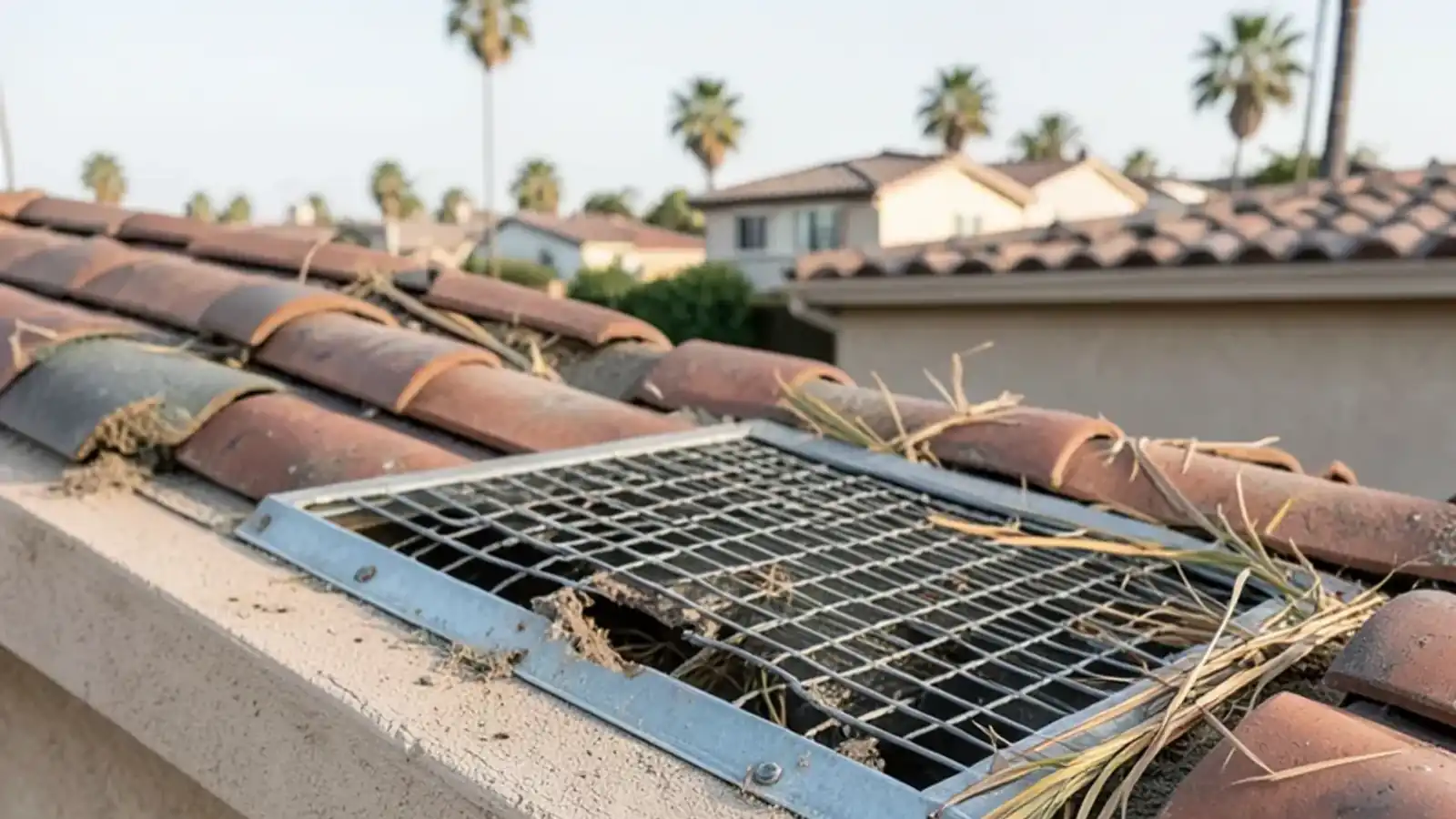
Animal Damage Roof Repair in Los Angeles, CA
Animal damage roof repair in Los Angeles closes the gaps that rats, raccoons, squirrels and birds use to get in, then repairs what they chewed or tore. The goal is an exclusion that holds. Removal of live animals is wildlife control work, so we repair the roof once the animals are out.
- ★ 4.9 on Google · 69 reviews
- Same-day or next-day bookings
- Based in Van Nuys, CA
On this page
- Which animals damage Los Angeles roofs, and where they get in
- Signs of animal damage on the roof and in the attic
- Sealing roof entry points: materials that animals cannot chew
- How an animal damage repair goes, step by step
- What affects the cost of animal damage roof repair?
- Does insurance cover animal damage, and do repairs need a permit?
- Why Clear Shield for animal damage roof repair in Los Angeles
- Common questions
Animals do not need much of an opening. A rat can fit through a hole about the size of a quarter, a squirrel will chew a larger one, and a raccoon can lift a loose panel in a night. The damage that follows is real roof damage, which is why roof repair in Los Angeles includes this work.
This page is about the roof side of the problem: finding the way in, repairing the damage and closing the gap properly. If animals are still inside, a wildlife control professional should remove them first so none are sealed in.
Which animals damage Los Angeles roofs, and where they get in
Different animals leave different marks. Reading the marks tells you what to repair.
| Animal | Where it usually gets in | What it leaves |
|---|---|---|
| Roof rats | Eave gaps, vents, gaps at roof-wall joints, often from palms or wires | Gnawed edges, greasy rub marks, droppings, torn insulation |
| Squirrels | Chewed fascia or soffit corners, vent screens | Larger chewed holes, nesting material |
| Raccoons | Lifted tiles, loose soffit panels, ridge vents | Torn panels, scratched shingles, noise at night |
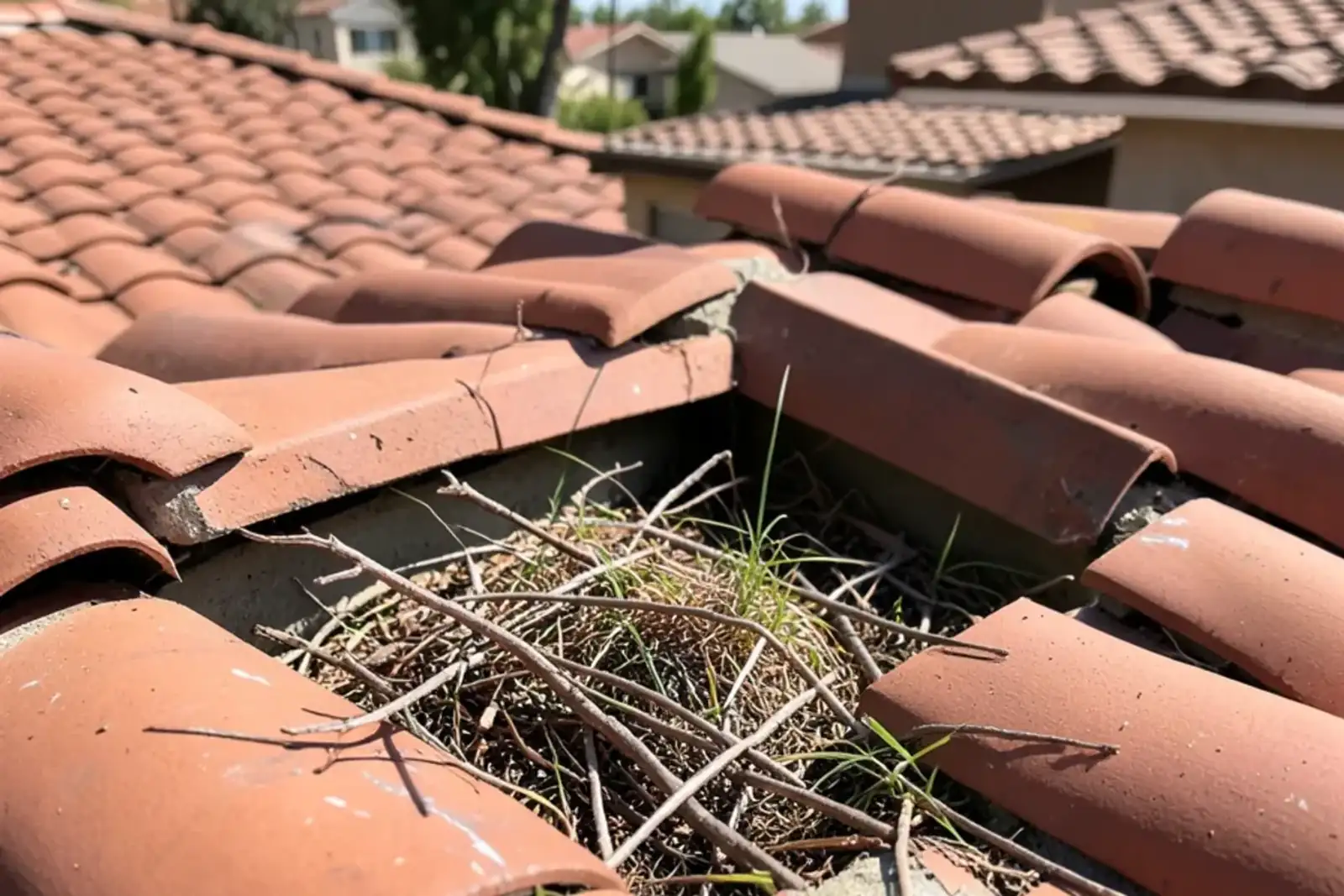
| Pigeons and other birds | Roof vents, open tile ends at eaves, gaps under ridge caps | Nests, droppings, blocked vents |
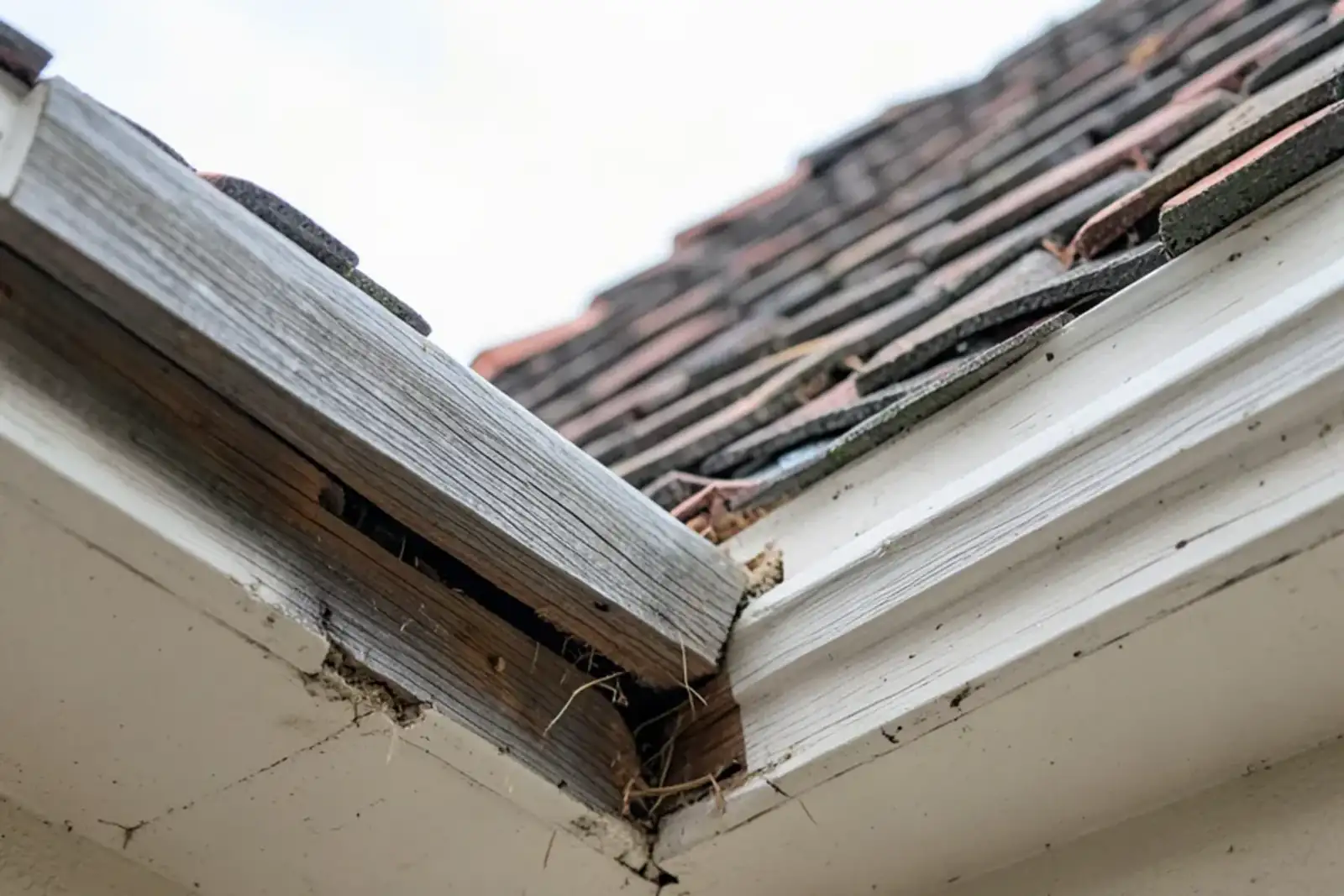
Signs of animal damage on the roof and in the attic
Many people hear the problem before they see it. Scratching at dusk, thumping at night or a strong odor in the attic are the usual first clues. Then the signs get physical:
- Chewed or frayed corners on fascia, soffit and vent covers
- Nesting material in a vent opening or stuffed into an eave
- Droppings or greasy rub marks along the beams and at entry points
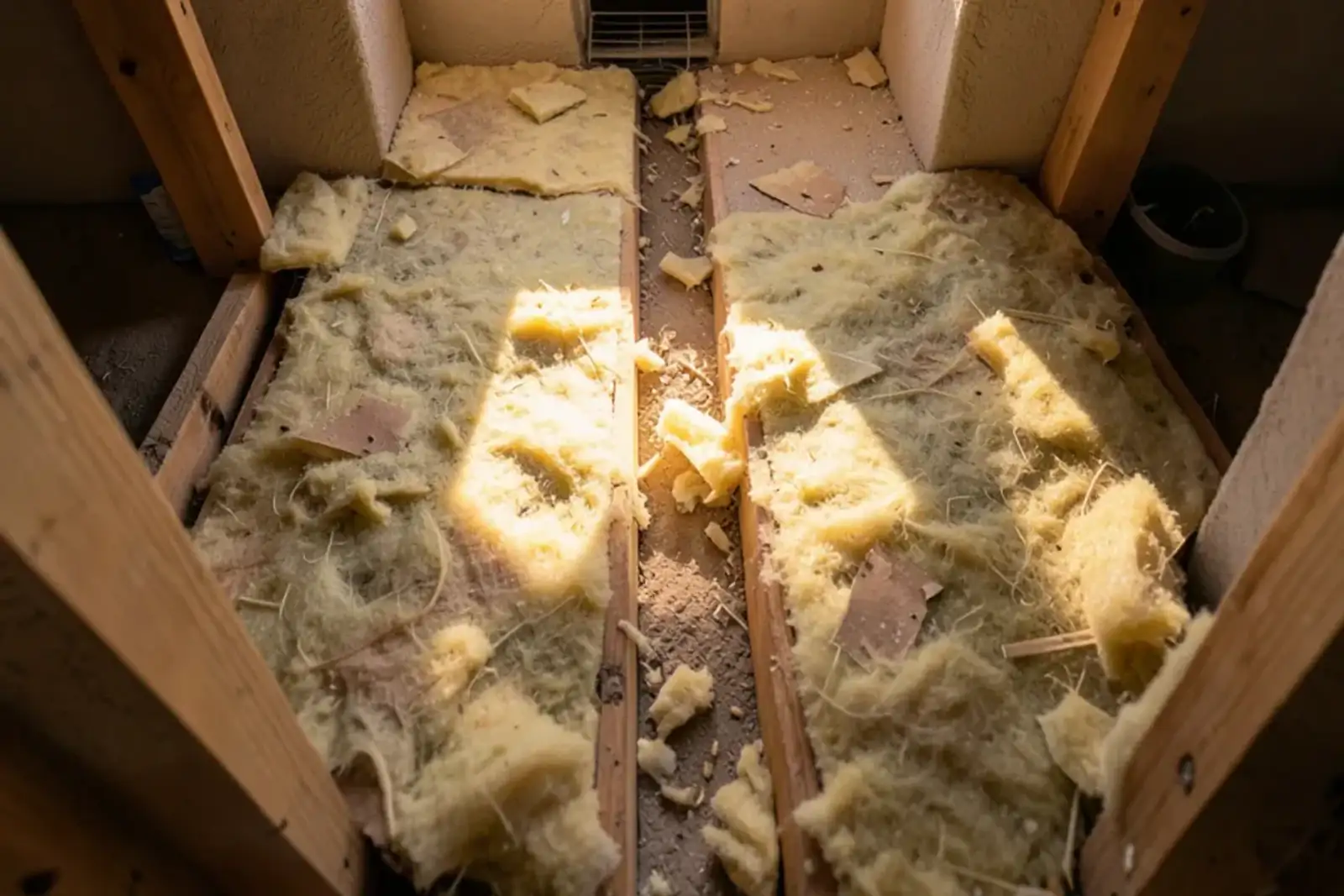
- Torn or flattened attic insulation, with trails along the joists
- Displaced tiles or a vent cover left hanging
One Van Nuys customer describes an inspection that found hidden problems, among them a need for bird-blocking protection that nobody in the house knew about. Entry points are often found on the roof, not in the attic.
Sealing roof entry points: materials that animals cannot chew
Sealing is the part that decides whether the animals come back. The right material depends on the opening.
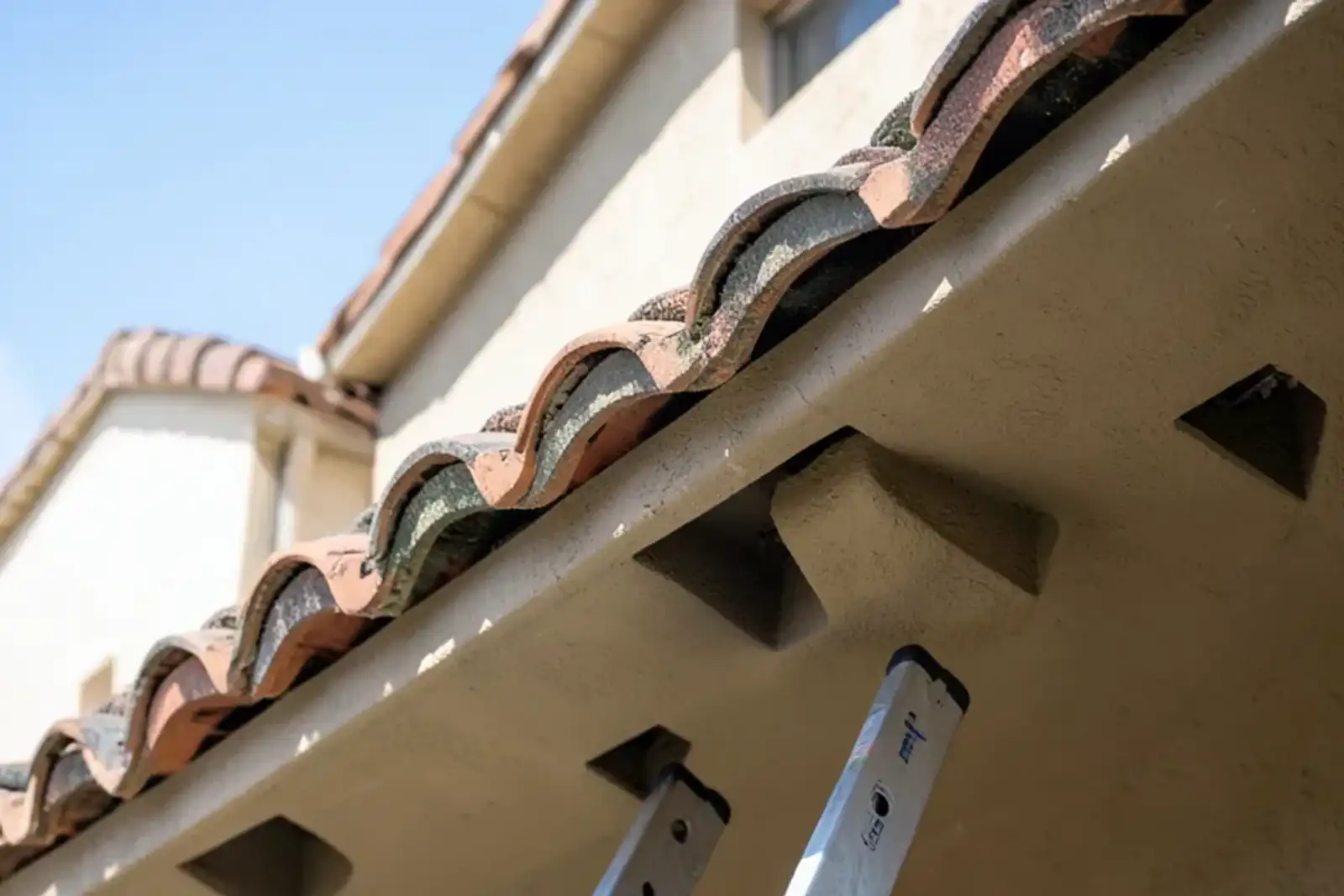
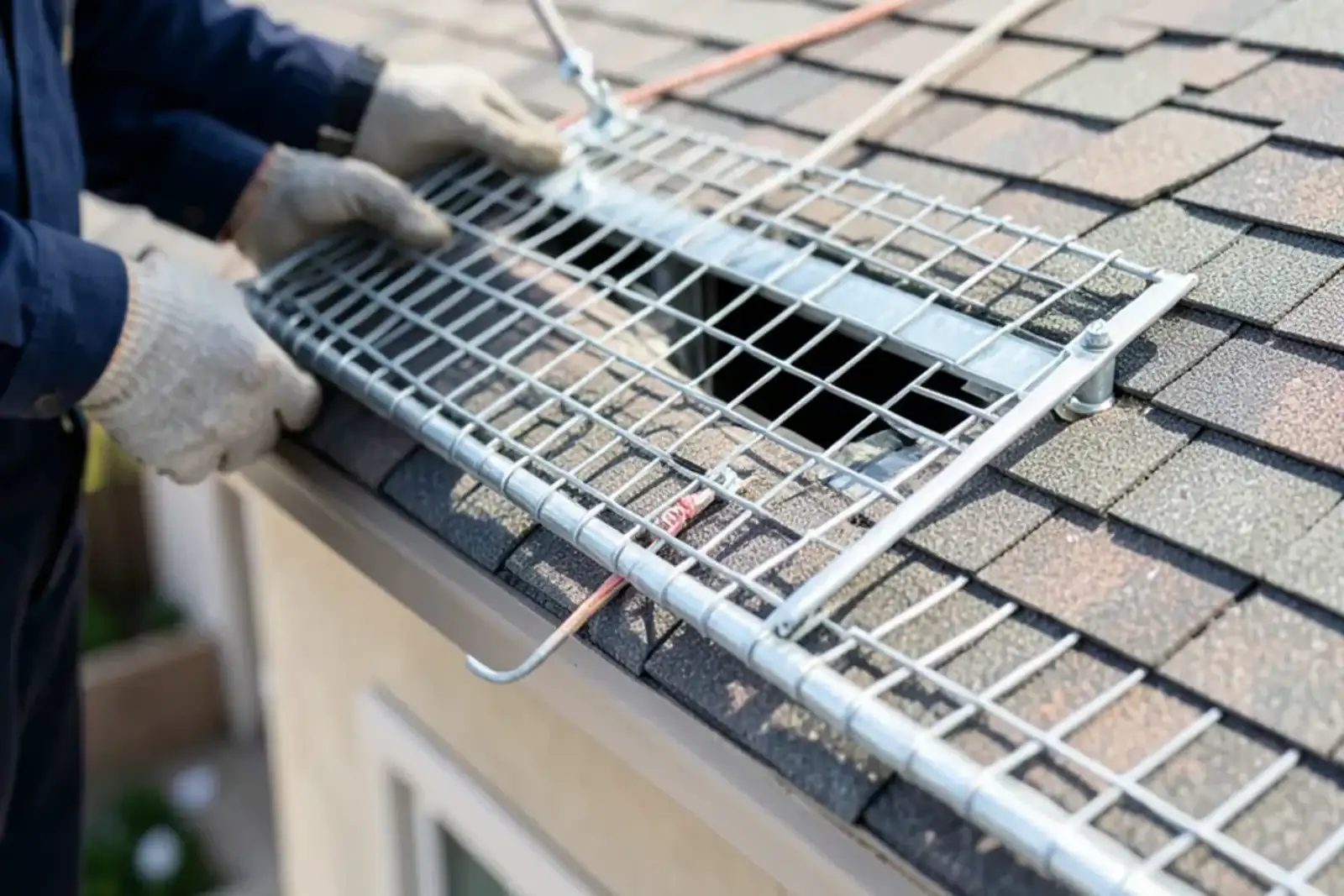
For small holes in wood, we cut out the damage and install a new piece, usually with metal flashing over the edge. For vents, a new metal screen replaces the damaged one, and a rodent proof roof vent has a screen with small enough openings to stop a young rat. For tile eaves, closure strips or bird stops fill the gap under the barrel tiles. At fascia and soffit corners the board is replaced, because a chewed board gives the next animal a place to start.
Foam and caulk are not exclusion. They fill a hole for a few weeks. We do not recommend them as the only fix.
What does animal damage roof repair include?
- Entry point survey: eaves, vents, tile ends, ridge gaps, and pipe or cable penetrations
- Chewed wood replaced: fascia, soffit corners and rafter tails
- Vent screens: metal screens sized to the opening, ember-resistant where required
- Tile closures: closure strips or bird stops under barrel tile at the eaves
- Photos: each opening documented before and after
How an animal damage repair goes, step by step
- Find out what is happening. You tell us what you have heard, seen and smelled, and when it started.
- Confirm the animals are out. If any are inside, wildlife removal comes first.
- Trace every entry point. We walk the roof, eaves and vents, and look in the attic if we can reach it.
- Document the damage. We take photos of each opening and any damaged fascia, soffit, vent or tile.
- Repair and close. Damaged wood is replaced, vents get metal screens, and tile eaves get closures.
- Check the result. We look for any remaining gaps and tell you what to watch.
What affects the cost of animal damage roof repair?
The number of entry points is the main driver. Roofs often have more than one, and a sealed hole on the north side does nothing if the animals have another way in on the east. Height and access matter, and tile eaves take longer than a flat fascia board. Damage that reaches the rafter tails or decking adds structural roof repair, and a rotted fascia or soffit adds fascia and soffit repair.
Cleanup is separate from repair, as noted above. We price the roof work after seeing it, and the price comes in writing before work starts.
Does insurance cover animal damage, and do repairs need a permit?
Many homeowners policies exclude damage caused by rodents and other animals, so read yours or ask your insurer before you plan around a claim. Insurers also weigh roof age and condition. We can inspect, photograph the damage and write a repair estimate, which is useful whatever your policy says. A claim is argued by you or by a licensed public adjuster, not by us.
Patching an eave or adding vent screens generally does not need a permit, but rules depend on the address. Check with the City of Los Angeles building department (LADBS) or your local agency. In mapped fire zones, vents may need to be ember-resistant, so a screen you add yourself could be the wrong type. Our guide to protecting roof vents from birds and embers explains the trade-off, and the animal damage to roofs post covers the signs.
Why Clear Shield for animal damage roof repair in Los Angeles
Animal entry usually involves a second problem somewhere nearby: water, a loose panel or a vent in the wrong place. Reviewers in Van Nuys describe inspections that found hidden problems, including a poorly placed vent. We look at the whole edge and tell you what we find before pricing the repair.
What Van Nuys customers say about hidden roof problems
“They also performed a full water test afterward to make sure the leak was fully resolved, and everything stayed dry.”
“During the new roof installation, a small leak showed up after some seasonal rain, and Frederick and the crew responded right away, even on a Sunday morning, to fix it fast.”
“They also found hidden roof problems we had no idea about, including a poorly placed roof vent, fascia damage, and the need for bird-blocking protection.”
4.9 on Google · 69 reviews as of November 2026. Read all reviews
A hole at a pipe or a chewed vent can also let in water, so see our roof leak repair page for tracing a leak, and shingle roof repair if the covering was torn. We cover Santa Monica, where marine air corrodes flashing and fasteners, Calabasas, beside brush and foothills, Santa Clarita and Hawthorne, where 1950s and 1960s stucco homes are common.
Animal Damage Roof Repair: common questions
Which animals damage roofs most in Los Angeles?
Rats are the most common, especially roof rats that run along wires and palm trees, followed by squirrels, raccoons and birds such as pigeons and starlings. Rats and squirrels chew into eaves and vents. Raccoons pry loose panels and lift tile. Birds nest in vents and under tile. The repair depends on the animal, so we look at the damage first.
How do you seal roof entry points?
With materials animals cannot chew or pull away. Small holes get metal flashing or galvanized mesh fastened with screws, damaged fascia and soffit are replaced, and vents get a metal screen rated for the opening. Tile eaves get closure strips or bird stops. Caulk or foam alone does not hold, because a determined rat chews straight through it.
Can birds nesting in vents cause roof problems?
Yes. Nests block airflow and hold moisture against the vent, and dry nesting material is fuel if embers ever blow in. Droppings can corrode metal. A vent packed solid can also back water up under the roofing. Remove the nest, check the vent, then screen it so birds cannot return.
Do I need wildlife removal before roof repair?
If animals are still inside, yes. Sealing a hole with a raccoon or a nest of young in the attic traps them and creates a worse problem. A wildlife control professional removes the animals, and then we can close the entry points. If you are unsure, tell us what you have heard or seen and we will say what to check first.
Does animal damage roof repair include attic cleanup?
Repair and attic cleanup are different trades. We can repair and seal what the animals damaged on the roof and at the eaves. Insulation fouled by droppings and urine, and the health concerns that come with it, call for a cleanup crew that handles contaminated material. We tell you what we see so you can plan for both.
How do I keep rats off my Los Angeles roof once the damage is repaired?
Trim tree limbs and palm fronds back from the roofline, since roof rats use them as bridges. Keep fruit off the ground, store pet food indoors and check the screens once a year. A repaired eave only works while it stays tight, so look at it after each strong wind and after the first rain of the season.
Areas served for animal damage roof repair
- Bell Canyon, CABrush and oak hills in the Simi Hills bring raccoons, squirrels and rats to eaves and vents, and vent screens must suit fire-zone rules.
- Acton, CARural lots with ranch outbuildings between two mountain ranges give animals many nearby routes onto roofs and into eaves.
- Rowland Heights, CAHillside homes in the Puente Hills sit near open slopes and trees, a common route for rats and raccoons to reach eaves.
- Pico Rivera, CAPostwar tract homes near the Whittier Narrows open space and two river corridors, where older eaves and vents can have gaps.
- South El Monte, CAOlder single-story homes beside small manufacturers, where original vents and eave gaps give rodents easy entry.
- El Cerrito, CAEstablished single-family homes with mature trees and palms, which rats use as bridges to the roofline.
- Moorpark, CATract roofs built in the same era share the same vent and eave details, so one entry point often means more.
- Lancaster, CADesert wind and heat swings open gaps at eaves and vents, and sun-baked sealant lets go sooner than on coastal roofs.
- Temescal Valley, CANewer HOA tracts beside open hills, where tile eaves need closure strips and vents need screens to keep birds and rodents out.
- Santa Monica, CA
- Calabasas, CA
- Marina del Rey, CA
- Santa Clarita, CA
- Orange County, CA
- Sierra Madre, CA
- Malibu, CA
- East Whittier, CA
- Del Aire, CA
- Citrus, CA
- West Athens, CA
Need animal damage roof repair?
Call and tell us what you are seeing on the roof. We will take it from there.