
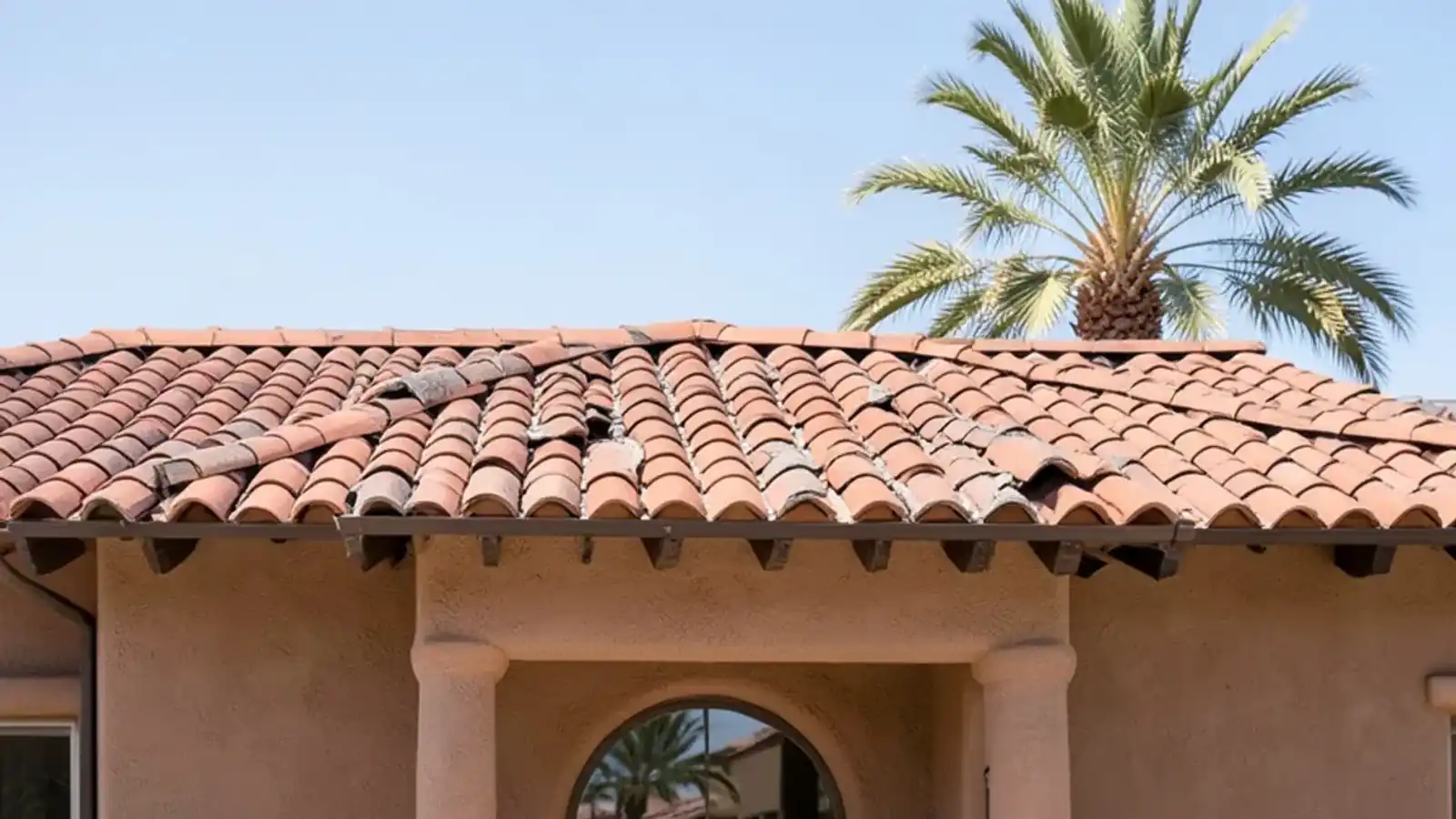
Roof Repair
Cracked Roof Tiles: Repair, Relay or Replace?
A few cracked tiles over sound underlayment can be swapped one by one. If the roof leaks with little visible tile damage, or the underlayment has worn out, the tiles are lifted and relaid over new underlayment. Replace the whole roof when the tile itself is crumbling. Here is how to decide.
- ★ 4.9 on Google · 69 reviews
- Same-day or next-day bookings
- Based in Van Nuys, CA
Published and updated November 3, 2026 · By the Clear Shield Roofers team, Van Nuys, CA
On this page
- Cracked roof tile repair or replace: the quick rule
- Spot repair, relay or replacement compared
- Why most tile leaks start under the tile
- What cracks roof tiles in the first place
- What lift and relay looks like on the roof
- When replacing the whole tile roof makes sense
- What working roofers look for on a cracked tile roof
- What changes the price of a tile repair
- Tile roofs on Glendale's Spanish Revival homes
- Next step for a cracked tile roof
- Common questions
Most cracked tiles are not the leak. The tile sheds the first layer of water, but the underlayment beneath it is the real barrier, and that layer often wears out before the tile does. So the question is not only how many tiles are broken. It is what is under them. Our tile roof repair service starts there, as part of our wider roof repair work.
Cracked roof tile repair or replace: the quick rule
Match what you see to the fix:
- A few cracked tiles, no leak: replace those tiles
- A few cracked tiles and a leak: check the underlayment under the break before you swap
- Leaks with little visible tile damage: lift and relay the area
- Underlayment worn out across a slope: lift and relay the slope
- Tile crumbling, flaking or breaking underfoot: consider replacement
Spot repair, relay or replacement compared
| Option | Best when | What it involves | Ask about |
|---|---|---|---|
| Spot tile repair | A handful of cracked tiles over sound underlayment | Remove and replace the broken tiles | Whether the nearby underlayment was checked |
| Lift and relay | Tile is good, underlayment is tired | Lift tiles, renew underlayment and flashing, set tiles back | Breakage allowance for old tile |
| Full replacement | Tile itself is failing, or the roof is being changed | Remove tile, replace deck issues, install a new roof | Removal, disposal and the new covering |
Why most tile leaks start under the tile
Tile roofs shed most water, but not all of it. Wind-driven rain gets under the tiles, and the underlayment catches it and sends it down to the eave. When that layer dries out and cracks, water finds the deck. The tile looks perfect from the street while the layer under it fails.
That is why a stain with no visible roof damage is so common on tile. Our approach is to lift a few tiles around the suspect area and look at the underlayment, battens and flashing, because swapping a visible cracked tile would not touch the real cause.
What cracks roof tiles in the first place
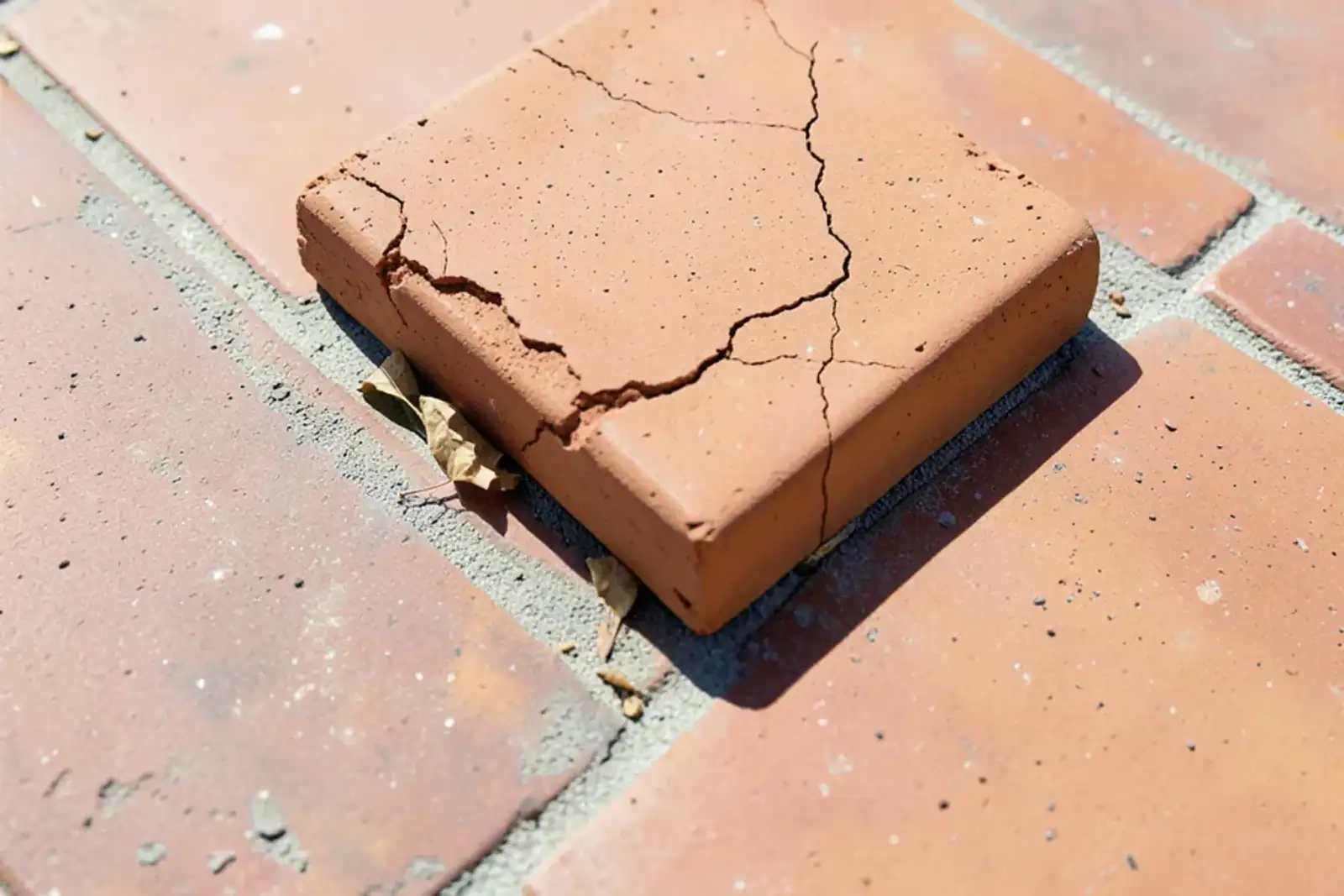
Cause matters because it tells you whether more cracks are coming. A fallen palm frond or limb breaks a tile or two and nothing more. Foot traffic from satellite installers, painters and gutter cleaners cracks tiles in lines along the route they walked. Heat cycles and age make old tile brittle across the whole slope, and that is the pattern that leads toward replacement.
Look at where the cracks sit. A tight cluster usually means one event. Cracks scattered across a slope suggest the tile is aging out.
What lift and relay looks like on the roof
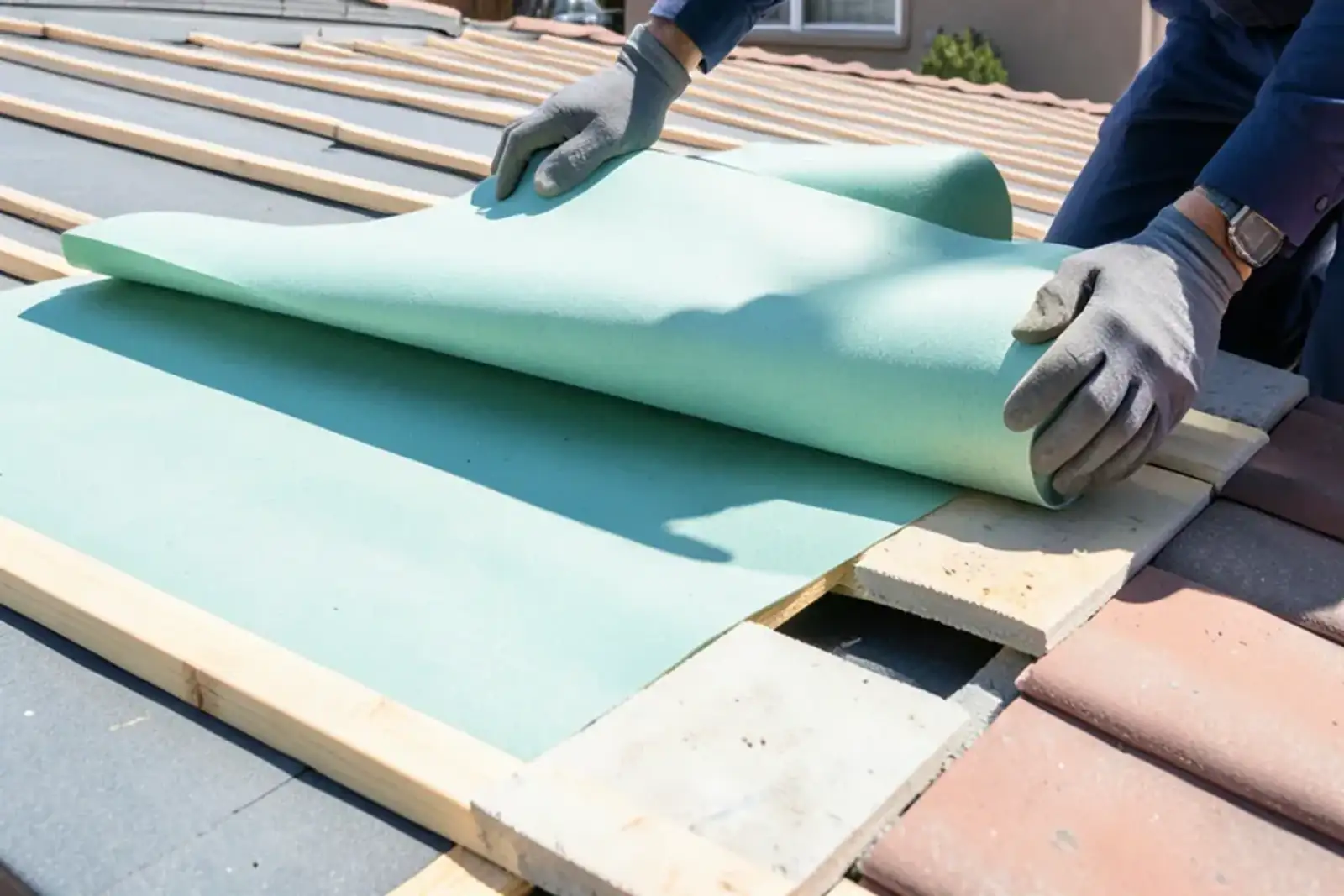
Lift and relay is slow, careful work. We pull tiles from the area in order, stack them, and check which ones survive. Underlayment and metal flashings get renewed, and tiles go back in the same order, with new ones for any that cracked during handling. A roof that has been relaid should be water-tested at the repair area afterward where conditions allow.
Some tiles always break during a relay, especially old, brittle ones. Ask the roofer how many replacement tiles are allowed for in the quote, how extras are priced and where matching tiles will come from. That one question settles most arguments after the job. Also ask what happens if the deck under the underlayment turns out to be soft, since lifting tile is often when hidden damage shows.
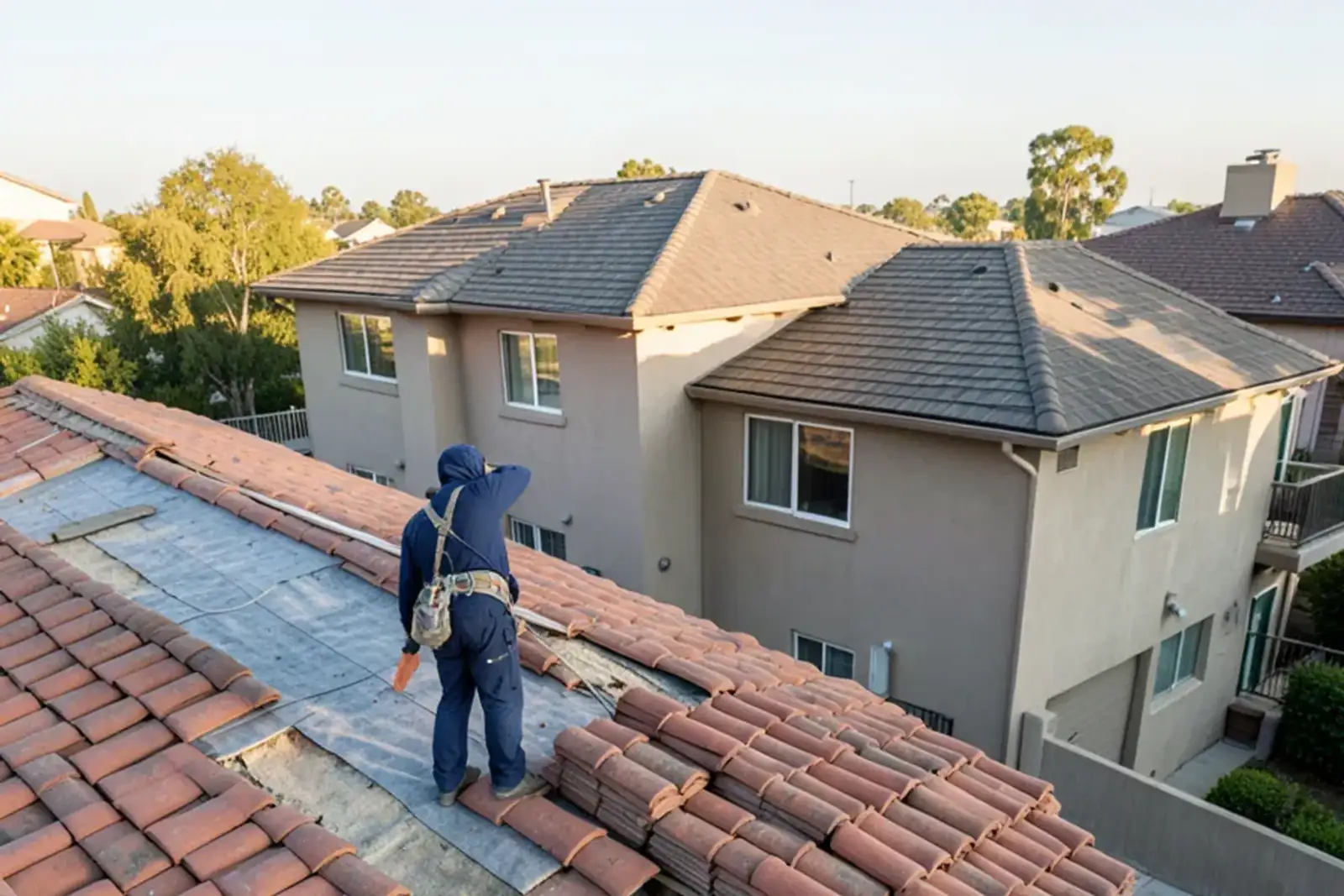
Walking on tile breaks tile if it is done wrong. Pros step on the lower, supported part of each tile and move carefully across the roof. A homeowner who climbs up to look usually adds cracks. If you want to know how your roof looks, photograph it from the ground, from a neighbor's yard or with a drone.
When replacing the whole tile roof makes sense
Sometimes the answer is a new roof. The signs: tile that crumbles, spalls or breaks when touched, underlayment gone on most slopes, repeated leaks in different places or deck damage across a large area. A full replacement also makes sense if you plan to change roofing material. One Van Nuys customer describes an old tile roof switched to asphalt shingle, which shows it is an option, but it is a separate decision from a repair.
California's residential code does not allow a new roof to be laid over clay or cement tile, so a change of material means tile removal first.
What working roofers look for on a cracked tile roof
Here is how the decision looks from the roof. We rarely judge by the broken tile alone. We look at the tiles around it, the battens, the metal in the valleys and whatever the underlayment looks like under three or four lifted tiles. That small sample usually tells us which of the three options fits.
Spot repair is the cheapest honest answer when the damage is limited and the layer below is sound, but it has a trade-off. Each repair means lifting neighboring tiles, and old tile does not always forgive that. If spot repairs on an aging roof keep stacking up, that pattern often points to the underlayment, and the next swap only delays the real job.
Lift and relay has its own trade-off. You keep the tile and its color, but every tile is handled twice, so some break and need matches. Full replacement costs the most and ends the matching problem, but it is a different decision from fixing a leak. Read the roof repair vs replacement guide if you are weighing age and repeat repairs on any roof type.
What changes the price of a tile repair
We do not publish one number, because tile jobs vary too much. These variables move a quote:
- How much tile is affected: a handful of tiles or a whole slope
- Underlayment condition: sound, tired or gone
- Matching: salvaged tile is cheaper than a special order, and some profiles are hard to find
- Access and pitch: steep or tall roofs need more safety gear and time
- Hidden deck damage: soft boards found during a lift are priced separately and shown to you first
Ask for these lines in writing. Quotes that name the breakage allowance and the underlayment product compare cleanly. If the roof turns out to be near the end of its life, our tile roofing page covers replacement options.
Tile roofs on Glendale's Spanish Revival homes
Glendale has Spanish Revival homes in areas such as Rossmoyne and Verdugo Woodlands, where curved clay tile and arched details are part of the look. Matching that look matters. Census ACS (2020-24) puts the median home at a 1966 build, so many tile roofs here have underlayment that is decades old. We cover Glendale from Van Nuys, and for a tile job we explain which tiles will be reused and which will be new.
Next step for a cracked tile roof
Take photos from the ground, note where any stain showed up inside and when it first appeared, and keep off the tile. Then call Clear Shield Roofers at (209) 563-1278. We will ask what you see, and if the work is one we take on, we will set a visit to lift a few tiles and show you what is underneath before anyone quotes a fix.
Quick answers
Can I replace just a few cracked roof tiles?
Yes, if the tiles are the only problem and the underlayment below is sound. A cracked tile is replaced with a matching one, and the work is checked for leaks around it. If the leak continues after a few swaps, the underlayment is the likelier cause, and the roof needs lifting and relaying instead.
What is a tile lift and relay?
It means removing the tiles from a section or slope, replacing the underlayment and flashing underneath, and setting the same tiles back, with new ones for any that broke. It addresses the layer that actually fails on most tile roofs. It costs more than swapping tiles and less than starting over, and the tiles you keep stay in their original color.
Will new tiles match my old ones?
Rarely perfectly, because old tiles weather and fade. Ask about salvaged tiles from a hidden area such as a rear slope or garage, and use those where they show. New tiles are best put on the least visible slope. A close match is usually possible, an exact match often is not.
Should I worry about tiles next to the one that cracked?
Yes, check them. The same fallen branch or footstep that broke one tile often leaves hairline cracks in the tiles beside it, and those show up later as leaks. A roofer lifting the neighbors to reach the underlayment can spot them. Photograph the area from the ground first so you can compare after the repair.
How do I know whether my tile roof needs new underlayment?
If the roof leaks while the tile looks fine, or the roof has had no underlayment work in decades, the underlayment is the first suspect. Ask for photos from under a few lifted tiles. Dry, cracked or torn underlayment, or a stain on the deck, shows the layer has done its job and needs renewing.