
Roofing Contractor
Coast vs Valley: How LA Microclimates Age a Roof
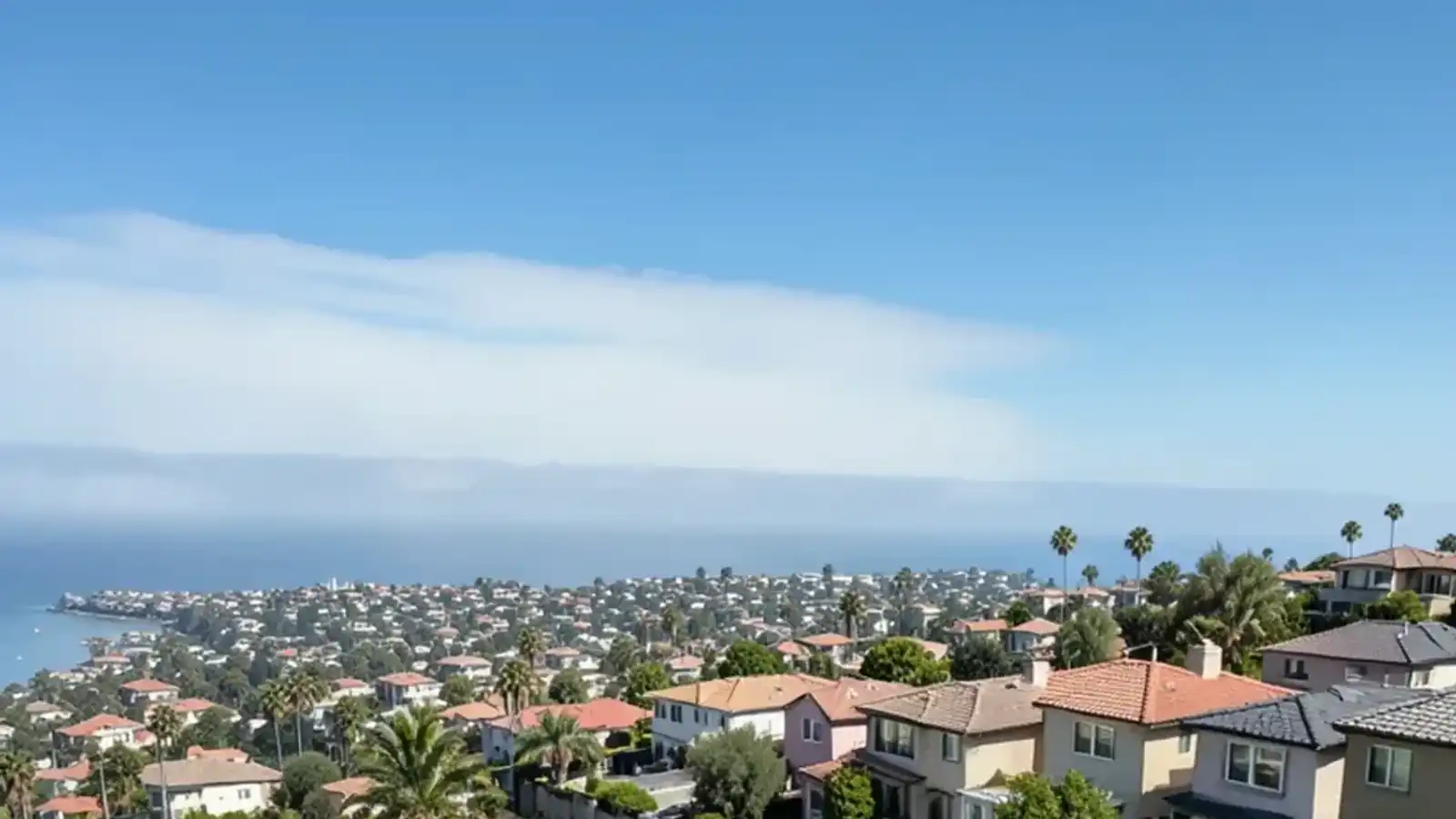
Where your house sits in Los Angeles changes how climate affects roofs here. Valley heat bakes shingles and rubber parts, coastal air corrodes metal, and the marine layer keeps shaded roofs damp. Rain is similar across the basin, so heat, salt and shade explain most of the difference.
- ★ 4.9 on Google · 69 reviews
- Same-day or next-day bookings
- Based in Van Nuys, CA
Published and updated November 3, 2026 · By the Clear Shield Roofers team, Van Nuys, CA
On this page
- What heat does to a Valley roof
- Salt air and the marine layer near the coast
- Which parts of a roof fail first in each zone
- What the attic tells you in each climate
- What do roofers weigh when climate pulls two ways?
- How do you check a roof in your own microclimate?
- How we read a roof by its address
- How do daily temperature swings wear out a roof?
- Why one slope can age faster than another
- Choosing materials for where you live
- Getting a roof checked for your part of Los Angeles
- Common questions
Los Angeles has no single roof climate. Three NOAA stations show it in one table, using the 1991-2020 normals:
| Station | Rain per year | Days at 90°F or hotter |
|---|---|---|
| Van Nuys (San Fernando Valley) | about 13 inches | about 77 |
| Downtown Los Angeles | about 14 inches | about 26 |
| LAX (coast) | about 12 inches | about 5 |
Rain is close to equal. Most of it falls from December through March. Heat is not equal at all, and that gap is why the same shingle can age at very different speeds across town.
What heat does to a Valley roof
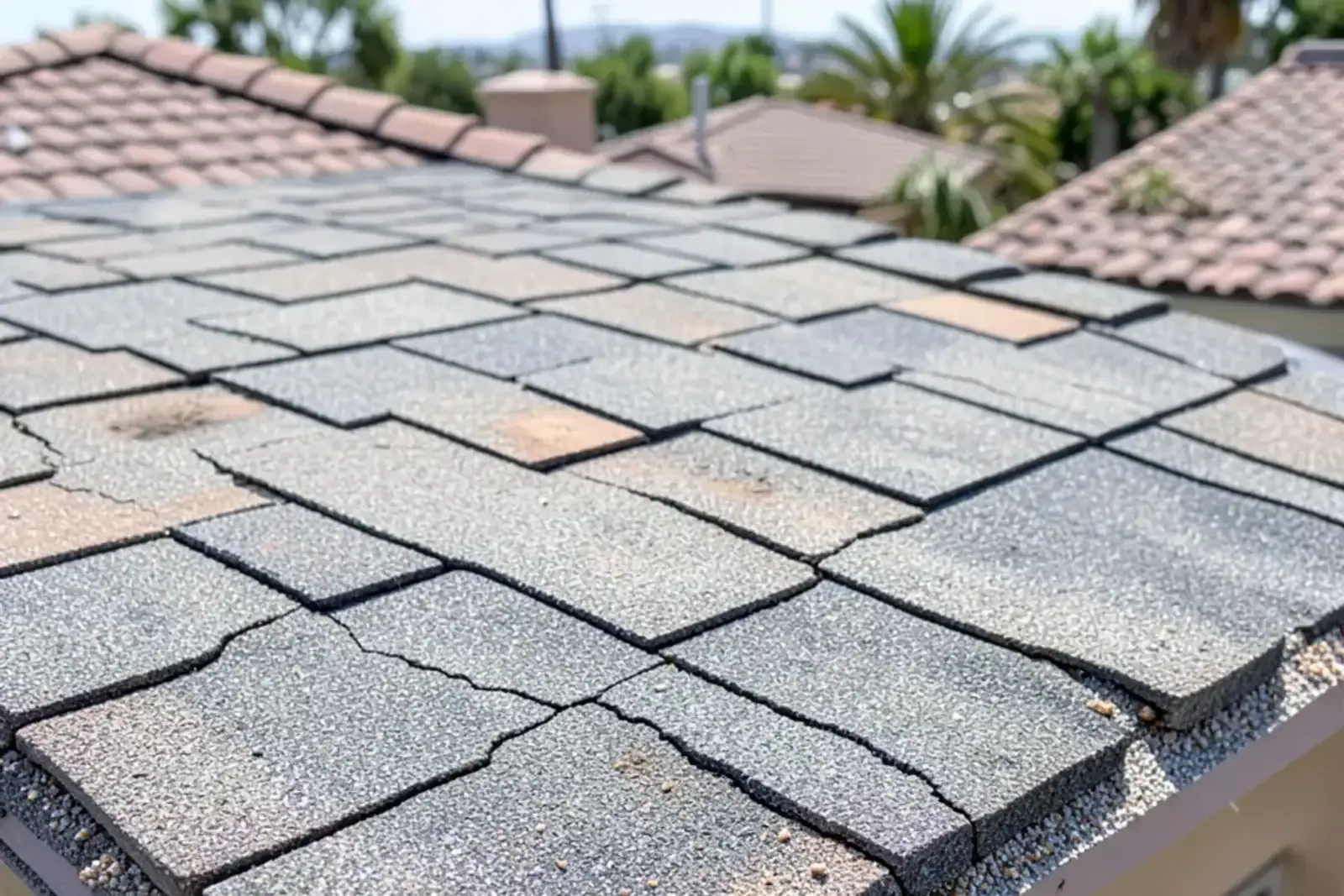
Heat works from both sides. The sun dries the top surface, and a hot attic cooks the underside. Shingles lose granules and curl, rubber pipe boots crack, and sealant at flashing hardens and pulls away. Dark roofs run hottest.
Poor attic ventilation makes it worse. A Van Nuys reviewer describes hidden problems found on their roof, including a poorly placed roof vent, which is the kind of detail that holds heat in the attic. Ratings help, but the manufacturer's rated life governs, and a roof in a hot place often falls short of it.
Salt air and the marine layer near the coast
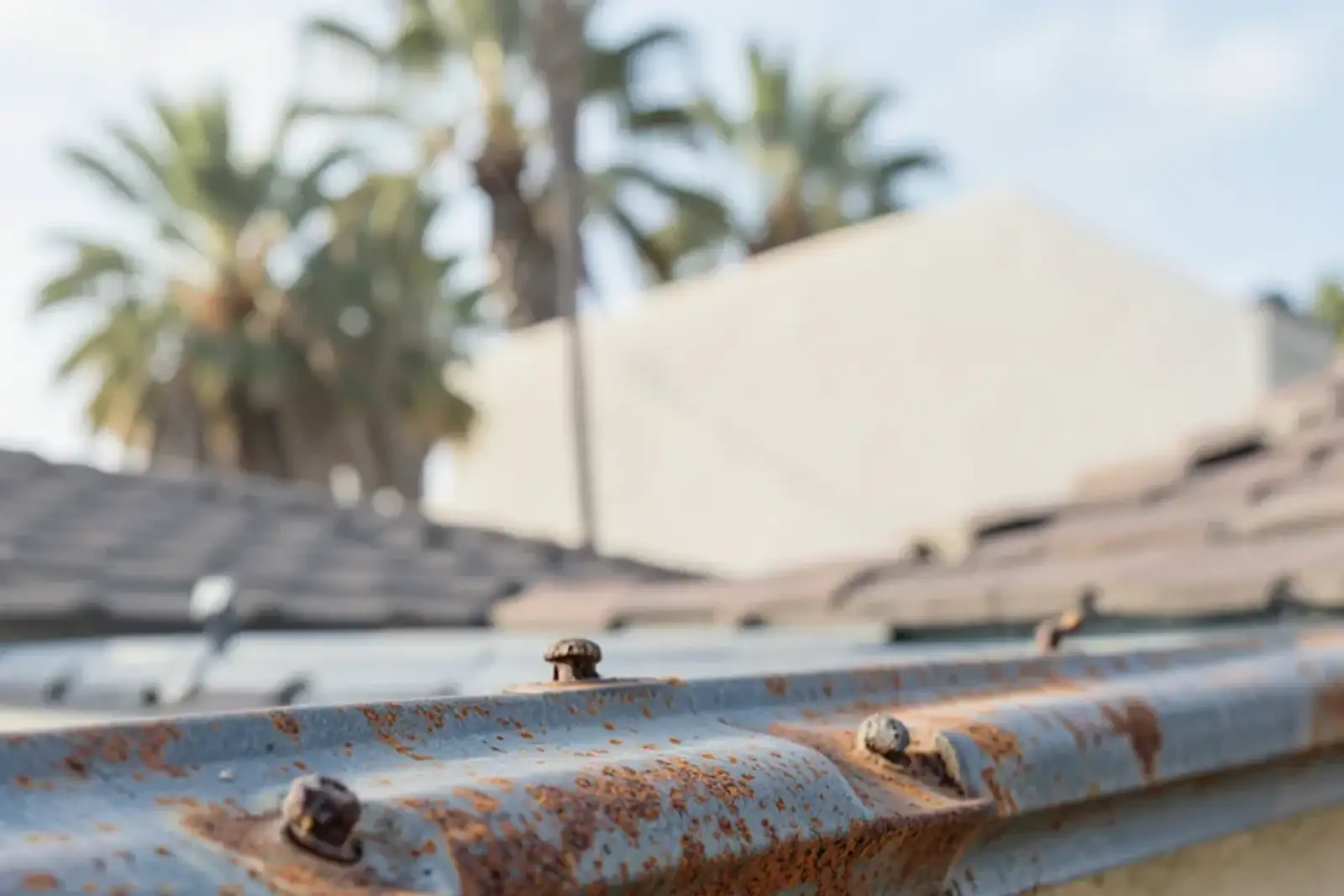
Close to the water, the fight shifts. Salt in the air corrodes metal parts: flashing, nails, vents, gutters and fasteners. Santa Monica sits on the bay, and its roof metals face this daily. Rust is the first sign, then staining on stucco below.
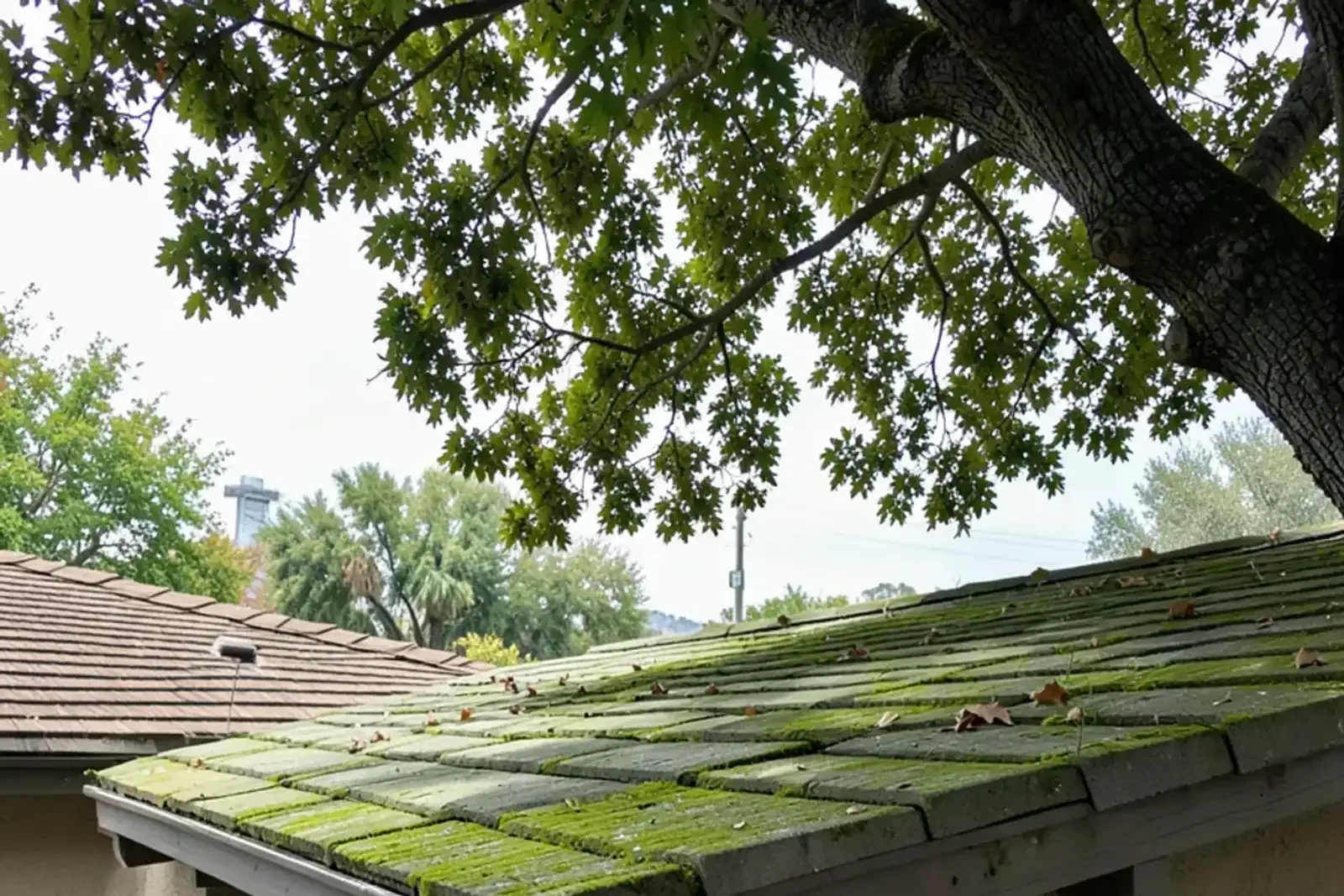
The marine layer, the low gray cloud that sits over the coast on many mornings, adds moisture without adding much rain. Shaded or north-facing roof areas stay damp longer. Algae streaks, trapped debris and slow rot at the eaves follow. A coastal home does not need a different roof so much as better metals and more frequent checks. Our Santa Monica page covers what we expect from roofs in that city.
Which parts of a roof fail first in each zone
Every microclimate has a weak spot. These are the ones we look for first:
- Valley and foothill roofs: cracked pipe boots, curled shingles, dried sealant, hot attics
- Coastal roofs: rusted flashing and fasteners, corroded gutters, stained fascia
- Shaded canyon and tree-covered lots: algae, clogged valleys, damp eaves, moss in cracks
- Hillside and Santa Ana wind corridors: lifted ridge caps, loose tile, wind-driven debris
- Inland basin: a mix of heat and dust, with fewer extremes
Tile roofs tend to last long in dry heat, though the underlayment beneath them wears out sooner than the tile. Shingle life swings the most. Lifespans only work as rough ranges, and they are never promises.
What the attic tells you in each climate
The attic is where climate shows its hand. In the Valley, attic heat can run far above the outside air, and a roof with poor airflow bakes from below. Insulation dries out, shingle decks warp and plastic or rubber parts become brittle.
Near the coast, the attic fights damp instead. Stale, humid air can leave water stains on decking, rusty nail tips and a musty smell even when the roof shows no hole. These are early warnings. Check the underside of the deck with a flashlight after the first foggy stretch of the season, and again after the first big storm.
What do roofers weigh when climate pulls two ways?
Honest answers have trade-offs, and here is how we would reason through them on your roof.
Over-building for the coast can waste money. Stainless fasteners and coated edge metal make sense near the water, but a house a few miles inland may not need them. Distance from the ocean is a sliding scale, so we would ask where the house sits before naming a spec.
Cool-rated is not automatically the answer near the coast. Reflective products earn their keep where summers run hot. A shaded, damp coastal roof gains more from cleaning, clear valleys and sound flashing than from a lighter color.
Shade protects and punishes. Trees cool a roof in August and drop leaves and moisture on it from fall through spring. Trimming back limbs often does more than any product change.
Climate does not excuse neglect. An old roof fails because of age as well as sun or salt, so the cause matters less than catching it early.
How do you check a roof in your own microclimate?
Use this routine twice a year and after strong wind:
- Walk the yard and look for granules, broken tile, loose ridge pieces or debris near the downspouts.
- Look at the metal: flashing, vents and gutters, for rust streaks or white salt crust near the coast.
- Scan shaded slopes for dark algae streaks and soft fascia boards.
- Check the attic with a flashlight for stained decking, damp wood and hot, stale air.
- Photograph what you see with the date, so you can compare next season.
- Book a closer look when anything is soft, rusted or lifting.
Our roof maintenance page covers what a regular visit includes.
How we read a roof by its address
When someone calls, the address tells us half the story before we climb a ladder. A roof in Van Nuys gets checked for heat damage, boots and attic airflow. A roof near the coast gets checked for corrosion and wet shaded areas.
Our approach is simple. We look at the roof you have, not the one in a brochure. Photos go with every finding, along with a plain note on what is normal wear for your area and what is not. A roof inspection in any microclimate starts the same way: look at the weak spots, then the rest.
How do daily temperature swings wear out a roof?
Roofing materials expand in the afternoon heat and shrink as the night cools. InterNACHI notes that roofs facing extreme thermal cycling are less stable and deteriorate faster than roofs with less of it. The wear shows up at the weak joints: sealant lines, flashing laps, shingle tabs and the nail heads under them.
Inland neighborhoods generally see wider swings between afternoon and night than the coast, where the ocean evens things out. That is one more reason a Valley roof can show cracked sealant and curled tabs while a beach roof of the same age looks tidy and rusts instead. The marine layer adds its own pattern, since coastal cloud is typically heaviest in May and June and inland valleys usually clear first each morning.
Why one slope can age faster than another
Even on one house, the roof does not age evenly. The south and west slopes take the longest, hottest sun, so they usually curl, crack and shed granules first. The north side stays cooler and damper. A good inspection compares slopes, because a worn south face with a healthy north face may mean a partial replacement is worth pricing.
Wind adds its own pattern. Santa Ana gusts lift edges and ridge caps on exposed hillsides, and they blow debris into valleys and gutters that were clear a week before. After a windy week, walk the yard and look for pieces on the ground.
Choosing materials for where you live
Material choice follows climate. Lighter-colored, cool-roof-rated products reflect more heat. Roof replacements in Los Angeles covering more than half the roof must use a cool-roof-rated product, and rules depend on slope and climate zone. We do not guess your zone. The California Energy Commission has a lookup by address.
Near the coast, ask about stainless or coated metals. In the Valley, ask about ventilation and underlayment. Under trees, plan for cleaning. Pick a roofing contractor in Los Angeles who matches the plan to the neighborhood and puts it in writing.
Our cool roofing page explains the rating system for hot-side roofs.
Getting a roof checked for your part of Los Angeles
Tell us the street and what you are seeing, and we will say what is likely to wear first at that address. Reviewers in Van Nuys describe pictures and measurements sent before quoting, and drone photos during the work. To book a roof check, call (209) 563-1278 and we will set the earliest visit we can.
Quick answers
Does salt air damage a roof in Santa Monica or Venice?
It can, mostly on metal. Salt-laden marine air speeds corrosion on flashing, fasteners, vents and gutters near the water. Tile and shingle surfaces cope better, but the metal pieces around them do not. Rust streaks and flaking paint are the early signs. Ask the roofer what metals and fasteners are in the quote.
Why do Valley roofs wear out faster than beach roofs?
Heat is the main reason. Van Nuys averages about 77 days a year at 90°F or hotter, against about 5 at LAX, by NOAA's 1991-2020 normals. Sun and heat dry out shingles, split rubber boots and bake the attic from below. Cooler coastal roofs fight salt and damp instead.
Can the marine layer cause roof leaks without much rain?
Indirectly. Morning cloud and dew keep shaded roof areas wet for hours, which feeds algae, clogs valleys and rots wood at the eaves over time. A true leak still needs an opening, such as failed flashing. Look for dark streaks, soft fascia and damp attic wood after foggy weeks, not just after storms.
How often should I check a Los Angeles roof for climate damage?
Twice a year is a sound habit, once before the rainy season starts and once after the hottest stretch of summer. Look from the ground and the attic, and add a check after any windy week. Coastal owners should add a look at metal parts and gutters, while Valley owners should watch pipe boots and shingle edges.
Do tile roofs hold up better near the coast than shingles?
Tile surfaces generally shrug off salt air better than shingle granules, but the metal around them does not, including flashing, fasteners and vent pipes. Underlayment beneath tile also ages out sooner than the tile does. If you are weighing tile near the water, ask the roofer to name the metals and fasteners in writing.