
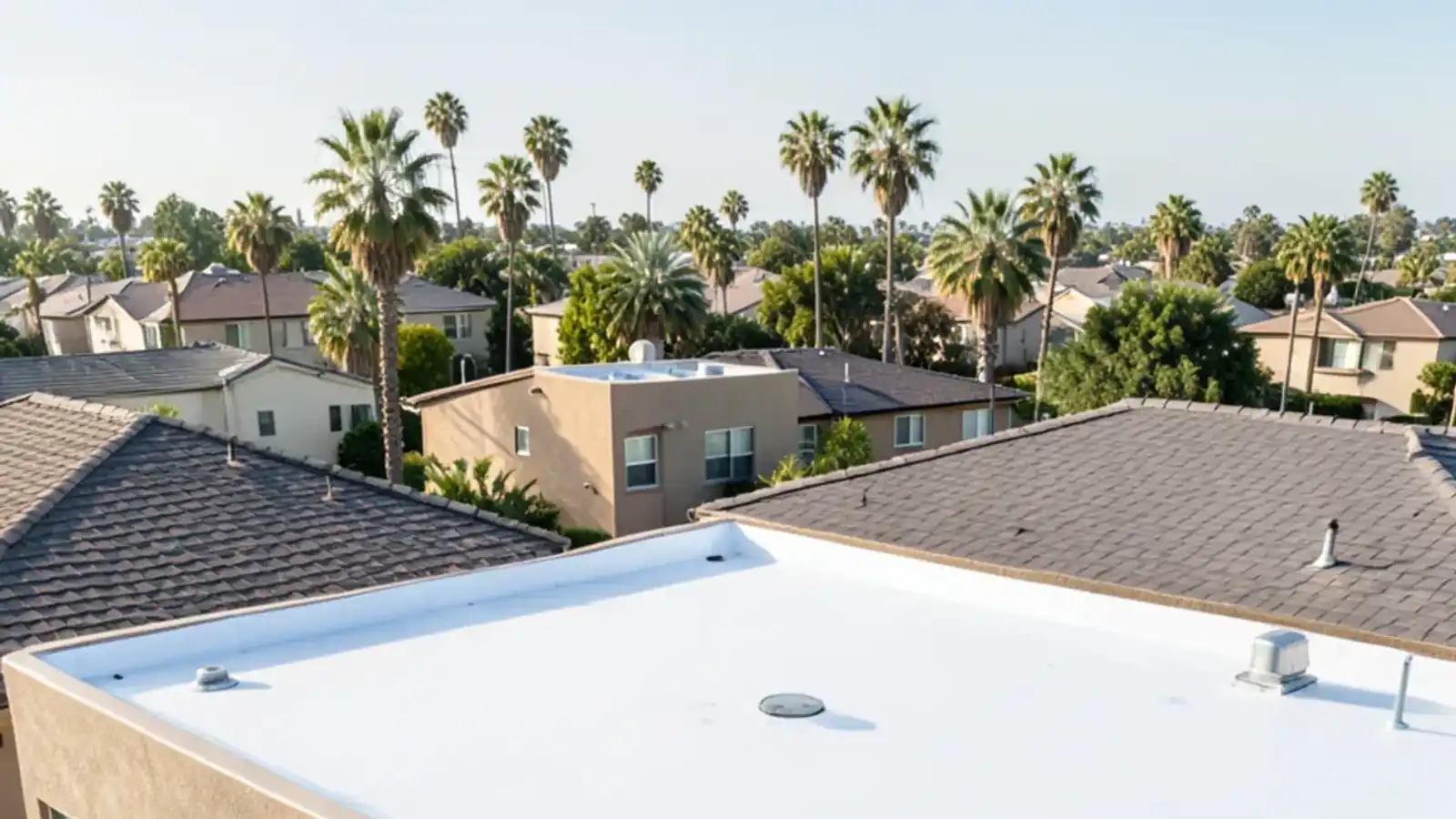
Flat Roofing
Flat Roof Cost in Los Angeles by System
Flat roof cost in Los Angeles depends on the roof's size and shape, what has to come off, the system you pick and how water leaves the roof. Material is rarely the biggest swing. We give prices in writing after we see the job.
- ★ 4.9 on Google · 69 reviews
- Same-day or next-day bookings
- Based in Van Nuys, CA
Published and updated November 3, 2026 · By the Clear Shield Roofers team, Van Nuys, CA
On this page
- What drives flat roof cost in Los Angeles
- Tear-off or recover: the decision that sets the labor
- How TPO, torch-down, foam and coatings change the quote
- Why a flat roof estimate can change after tear-off
- What working roofers weigh on a flat roof, and the trade-offs
- What we check on the roof before we price it
- Drains, parapets and cool roof rules that add a line
- How to compare two flat roof quotes
- Getting a flat roof price in writing
- Common questions
Two flat roofs of the same size can price far apart. One has a clean deck and two drains. The other has three old layers, a wet corner and a parapet that needs rebuilding. The membrane is the same on both.
We do not quote numbers from a desk, and this page gives none. It shows which parts of a flat roofing job move the price so a written estimate makes sense when it arrives. If you are already planning the work, our flat roof replacement page covers the process.
What drives flat roof cost in Los Angeles
| What changes | Why it matters | Effect on price |
|---|---|---|
| Roof size and shape | More area means more material and labor. A roof cut into many small sections takes longer per square foot than one open field. | Rises with size and complexity |
| Existing layers | Every layer that has to come off is labor, hauling and disposal. | Rises with layers |
| Deck and insulation condition | Wet insulation and soft decking must be replaced before anything new goes on. | Can add a lot, and only shows after tear-off |
| System chosen | TPO, torch-down, foam and coatings each need different materials, tools and crews. | Differs by system |
| Drains and slope | New drains, scuppers or tapered insulation add material and flashing work. | Rises with drainage fixes |
| Edges, curbs and equipment | Parapets, skylight curbs, vents and rooftop units each need flashing. | Rises with count |
| Access and staging | Material that must be hoisted, or a tight lot, adds time. | Rises with difficulty |
| Rules and permits | Cool roof products, hot work rules and permit steps vary by address. | Varies by place |
Size and condition set the baseline. The system choice shifts it, but it rarely overrides a failing deck.
Tear-off or recover: the decision that sets the labor
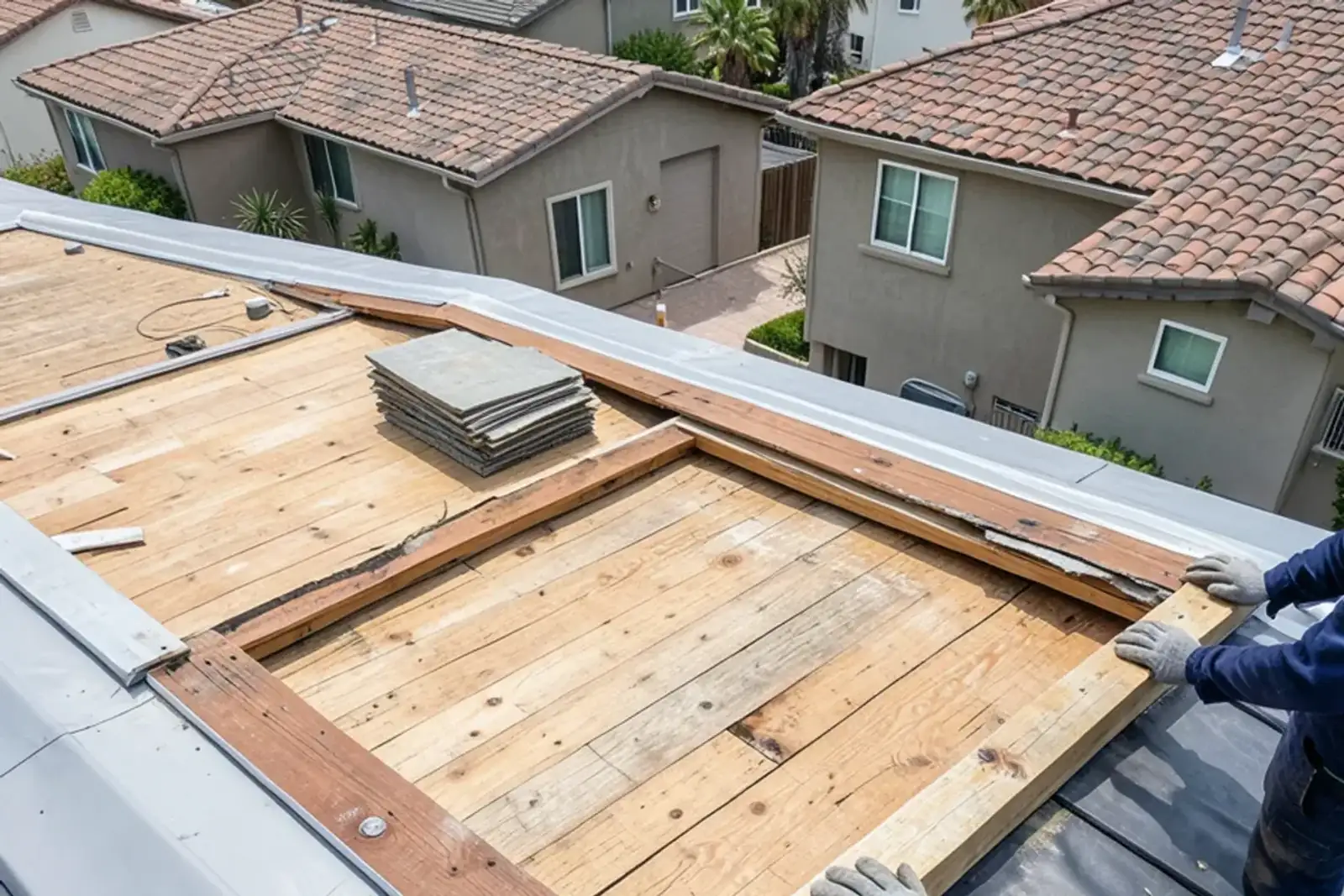
A recover means putting a new roof over the old one. A tear-off removes the old roofing down to the deck. California's residential code does not allow a new roof over one that already has two applications, or over a deteriorated or water-soaked roof. Commercial buildings follow their own code, so ask which one applies to yours.
Tear-off costs more in labor and disposal, but it lets the crew see the deck. A flat roof that has leaked for years usually has wet insulation that no top layer can fix. Covering it only traps the water.
Older roofing materials may also contain asbestos. If we see signs, we recommend lab testing before removal, and SCAQMD Rule 1403 sets survey and notification rules in Southern California. Testing is a separate line from the roofing work, and it can change the schedule.
How TPO, torch-down, foam and coatings change the quote
Each system prices differently because the work is different.
- TPO: white sheets that are fastened or glued down, then heat-welded at the seams. Cost follows insulation, seam length and the number of flashings.
- Torch-down: modified bitumen rolls melted onto the roof, usually in more than one layer. It is regulated as hot work under the California Fire Code, and fire watch or permits vary by jurisdiction, which can add time.
- Spray foam: foam sprayed to a set thickness and then topped with a protective coating. It needs a dry, calm window and a clean surface, and the thickness you choose changes the material.
- Roof coating: a liquid layer over a roof that is still sound. The scope is usually smaller because there is no tear-off, but it only suits a dry roof in decent shape.
Our tpo vs torch-down vs foam comparison goes into how each performs, not only how each prices.
Why a flat roof estimate can change after tear-off
A flat roof has layers a crew cannot see until they are lifted. The deck and insulation under the membrane set the final number, so a good quote treats them as allowances and says how they are charged.
- Wet insulation: it is replaced by the board or the square foot, and the price per unit should be written in the quote.
- Soft decking: each damaged sheet is replaced before the new roof goes on, and the owner should be told first.
- Hidden penetrations: abandoned vents or pipes found under the surface need capping and flashing.
- Extra layers: a second or third layer of old roofing adds hauling and disposal.
Ask for those unit prices up front. A change order that matches a price already in writing is easy to approve. One that arrives as a lump sum on the roof is hard to evaluate.
What working roofers weigh on a flat roof, and the trade-offs
Coat, recover or tear off. A coating costs least when the roof is sound, but it adds no new layers. A recover saves labor and hides what is underneath. A tear-off costs more now and shows the deck. Pick on the evidence from a moisture check, not on the cheapest line.
Thicker or thinner system. More thickness or layers add material and labor, and they also add life where foot traffic, equipment or strong sun are hard on the surface. A roof nobody walks on may not need the heaviest option.
Add insulation or match the old. Adding insulation, or tapered insulation to build slope, is easiest while the roof is open and adds cost. Leaving the insulation as is saves money and can leave ponding in place.
Small repair now or full replacement. On an aging flat roof with repeated seam failures, the repairs can add up. Ask for the repair price and the replacement price from the same visit.
Hot work or cold-applied. Torch-down is regulated as hot work under the California Fire Code, and fire watch and permits vary by jurisdiction. Cold-applied and heat-welded systems avoid the open flame, with their own trade-offs.
What we check on the roof before we price it
A flat roof tells you its problems if you walk it slowly. We look for dark stains and algae where water has stood, soft spots underfoot, blisters, open seams and flashing that has pulled off a wall. We check every drain for debris and for whether the roof actually slopes toward it.
Then we measure. Perimeter, parapet height, curbs, vents and drain count all become line items. One customer in Van Nuys describes drone photos sent during the work, and reviewers mention pictures and measurements coming before the quote. That is the habit: see it, document it, then price it.
The surprise is usually under the surface. We tell you plainly that wet insulation or rotted decking cannot be priced until it is opened up, and we say how we would handle the extra.
Drains, parapets and cool roof rules that add a line
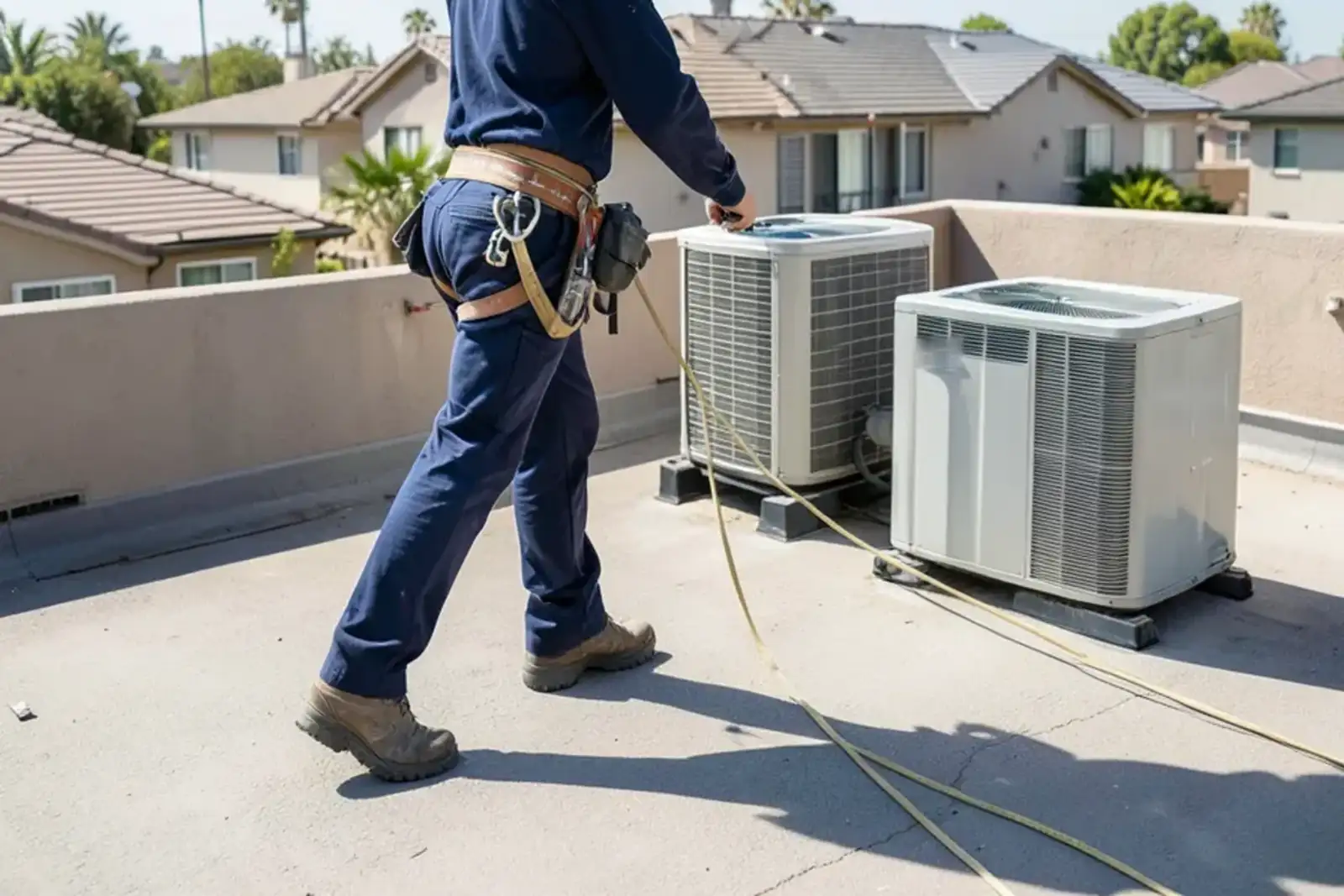
Drainage is the detail that is easy to skip and expensive to skip. A roof that holds water ages faster, and fixing it later means cutting into new work. Adding a drain or tapered insulation now is cheaper than correcting ponding after the fact.
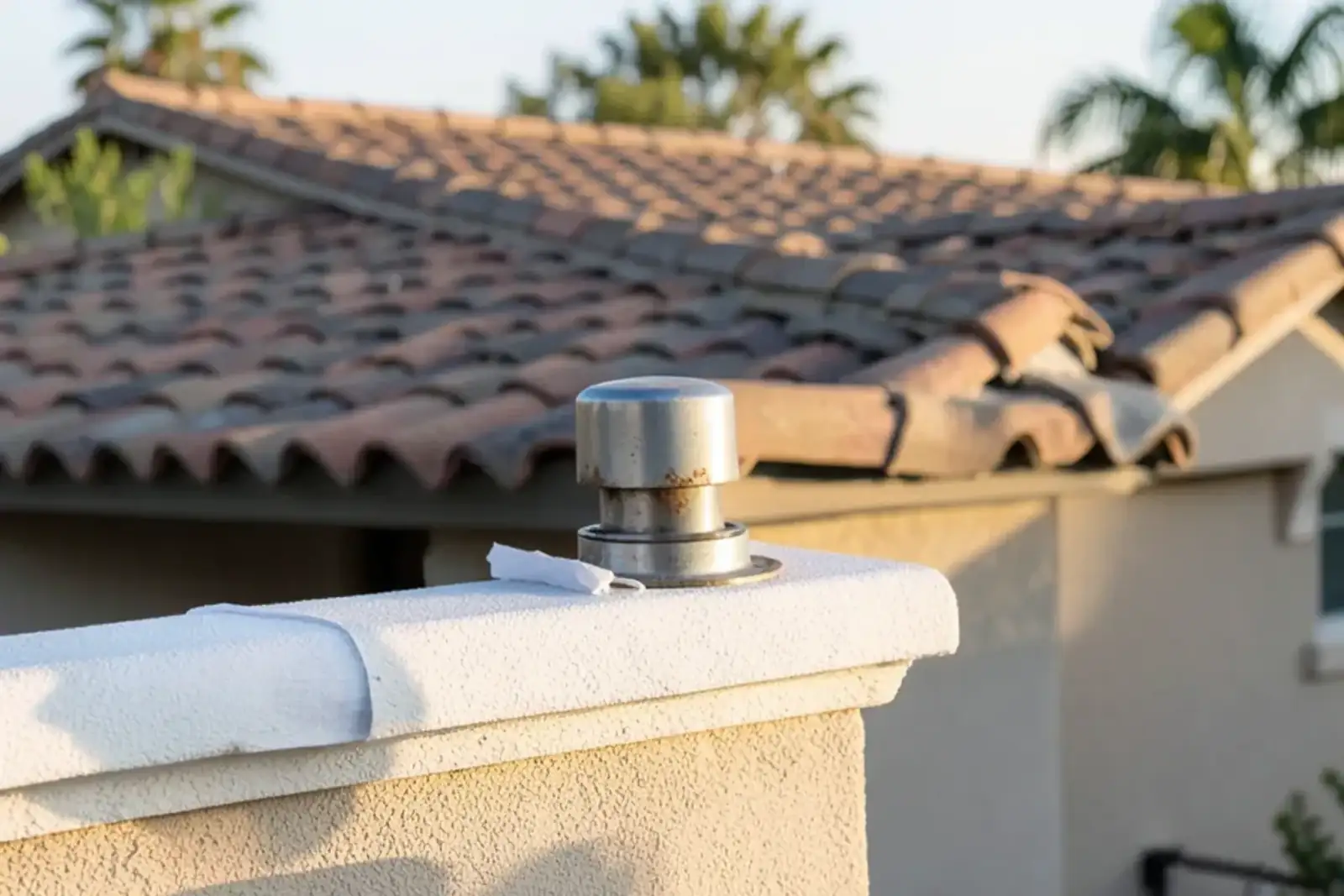
Rules add lines too. In Los Angeles, a roof replacement covering more than half the roof must use a cool-roof-rated product. The requirement depends on slope, with a split at 2:12, and on your climate zone, and the City of Los Angeles has its own rules on top of California's Energy Code. Check your zone with the California Energy Commission lookup and ask your roofer to confirm the product at estimate time.
Does replacing less than half the roof change the cost?
According to the CRRC summary of the Los Angeles Green Building Code, roof repair and replacement of 50 percent or less of the total roof area are exempt from the low-slope cool roof requirement. That can shape the scope on a large building, but it should never be the reason to leave a failing section alone. Confirm with the building department for your address, and check whether an LADWP cool roof rebate applies at ladwp.com/crp.
Flat and low-slope multifamily buildings are common in places like West Hollywood. Census ACS puts the median home there as built in 1965, and only about 20 percent of homes are owner-occupied, so many of these roofs are decided by property managers and boards. Those buyers do best with a written scope they can pass around.
How to compare two flat roof quotes
Put the quotes side by side and walk down this list:
- Scope of removal: tear-off to the deck, or cover over? Both can be right, but they are different jobs.
- Wet material: how will wet insulation or bad decking be handled and charged if found?
- Drainage: are drains, tapered insulation or scuppers included or left out?
- Edges and penetrations: are parapets, curbs and vents flashed, and how many are counted?
- Rules: who pulls the permit, and is the product cool-roof-rated where required?
- Terms in writing: get any warranty terms in writing, from the maker and the roofer, before you sign.
A quote that is much lower than the rest usually left something out. Ask what.
Getting a flat roof price in writing
Tell us the building type, the roof's approximate size, how many drains it has and where you see water. We will set a visit, measure the roof and write the scope and price in one document. We book same-day or next-day as the schedule allows. For related reading, see our guides on why flat roofs pond and roof coating versus replacement, or our TPO roofing and roof coating pages.
Have a flat roof that needs a real price? Call (209) 563-1278, describe the building, and we will set the earliest visit we can.
Quick answers
Why do two flat roof quotes for the same building differ so much?
Usually the scope differs, not the material. One quote may remove old layers and replace wet insulation while the other covers over them. Drain work, parapet flashing and deck repair also vary. Ask each roofer to list every item in writing, then compare line by line instead of by total.
Is a flat roof cheaper to replace than a pitched roof?
Not automatically. A flat roof has less surface to cover than a steep one of the same footprint, but drains, curbs, parapets and tapered insulation add detail work. Access can matter too, since material often has to be hoisted. The answer depends on the building, so it comes from a measured written estimate.
Can a flat roof coating cost less than replacing the roof in Los Angeles?
Often a coating has a smaller scope because there is no tear-off, but it only suits a dry roof in sound condition. If a moisture check finds wet insulation or the deck is soft, coating buries the problem and the savings disappear. A coating of more than half the roof is also generally treated like a re-roof for cool roof rules, so ask about both.
Can a rebate reduce the cost of a white flat roof in Los Angeles?
LADWP residential customers may qualify for a cool roof rebate of $0.20 to $0.60 per square foot, depending on SRI tier. It requires a CRRC Product ID and an application within 12 months of purchase, and funding is limited, so check ladwp.com/crp first. It applies to LADWP customers only, which excludes buildings served by other utilities.
Does a Los Angeles flat roof replacement need a permit?
Generally yes. Replacing a roof usually calls for a building permit from the city or county that covers your address, and the City of Los Angeles has its own process through LADBS. Cities run their own building departments. Ask the contract to name who pulls the permit before you sign.