
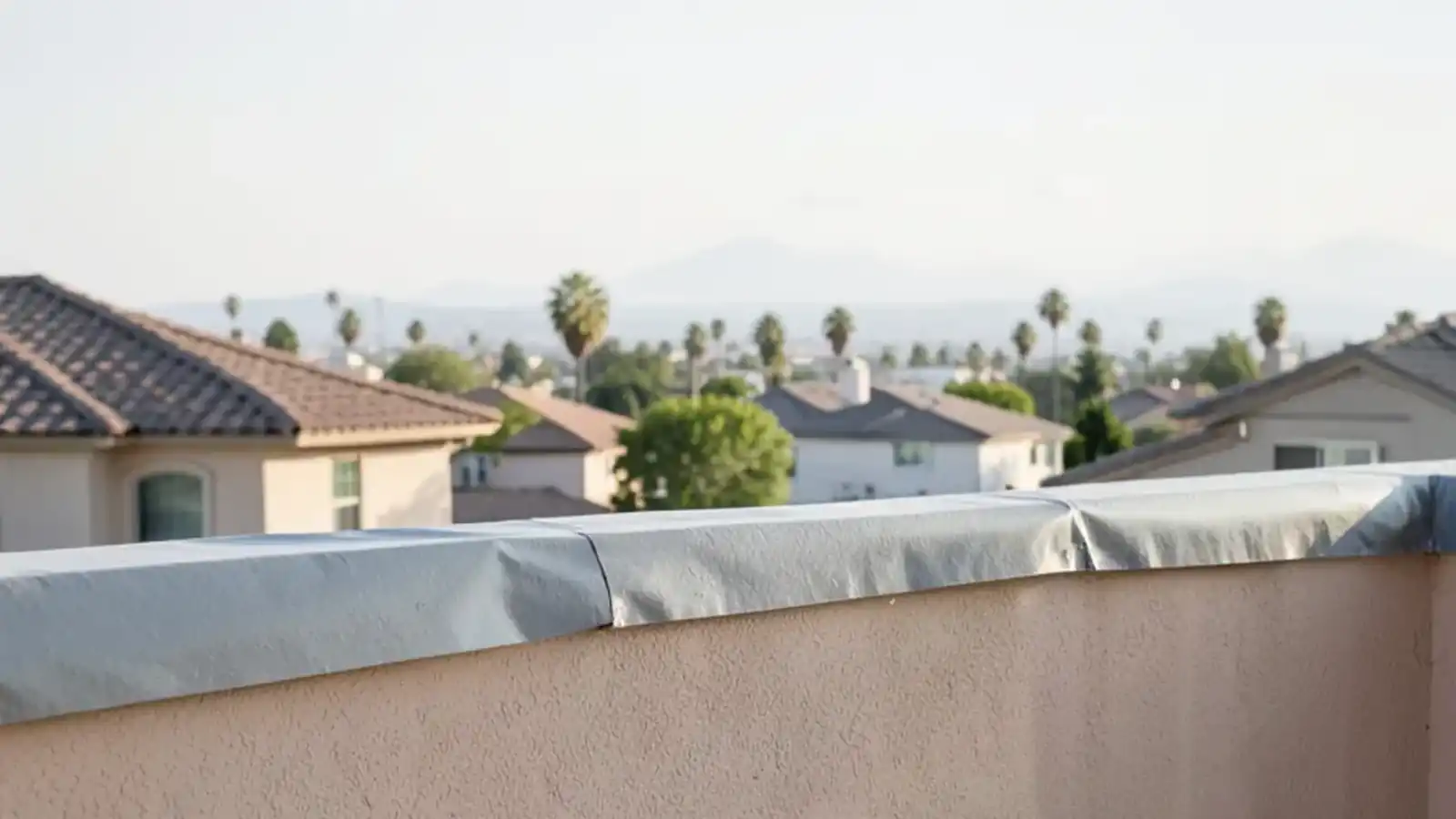
Roof Waterproofing in Los Angeles, CA
Roof waterproofing in Los Angeles targets the places water keeps getting in after the main roof is sound: parapets, decks over living space, balconies, curbs and wall tie-ins. We find the path, rebuild the detail with a proper membrane, then test it. Same-day or next-day bookings are possible for active leaks, as the schedule allows.
- ★ 4.9 on Google · 69 reviews
- Same-day or next-day bookings
- Based in Van Nuys, CA
On this page
- Roof waterproofing in Los Angeles: where water still gets in
- What causes roof leaks at parapets, decks and tie-ins?
- How we find the water path and rebuild the detail, step by step
- Sealant, coating or membrane: choosing the right layer
- What affects the cost of roof waterproofing?
- Do roof waterproofing jobs need a permit or an insurance claim?
- Why Clear Shield for roof waterproofing in Los Angeles
- Common questions
Waterproofing is for the spots where roofs fail first. A sound main roof can still leak at a parapet, a deck or a wall edge. This page belongs to our flat roofing group and works with roof coating for whole surfaces, while flat roof repair and flat roof replacement cover failures across the whole roof.
Roof waterproofing in Los Angeles: where water still gets in
Water follows small paths. A hairline crack at a parapet, an open joint in a metal cap, a tile deck with a failed layer beneath it, or a sealant bead that has dried out can each move a surprising amount of rain. These are the areas we check most:
- Parapet walls and coping: cracked stucco, open caps and failed flashing
- Decks over living space: failed membrane under tile, pavers or topping
- Balconies and walkways: edges, drains and door thresholds
- Wall-to-roof tie-ins: stucco meeting a membrane without a proper termination
- Curbs and penetrations: skylight and equipment curbs, pipes and conduits
Our guide to parapet and drain leaks explains how these show up on larger buildings.
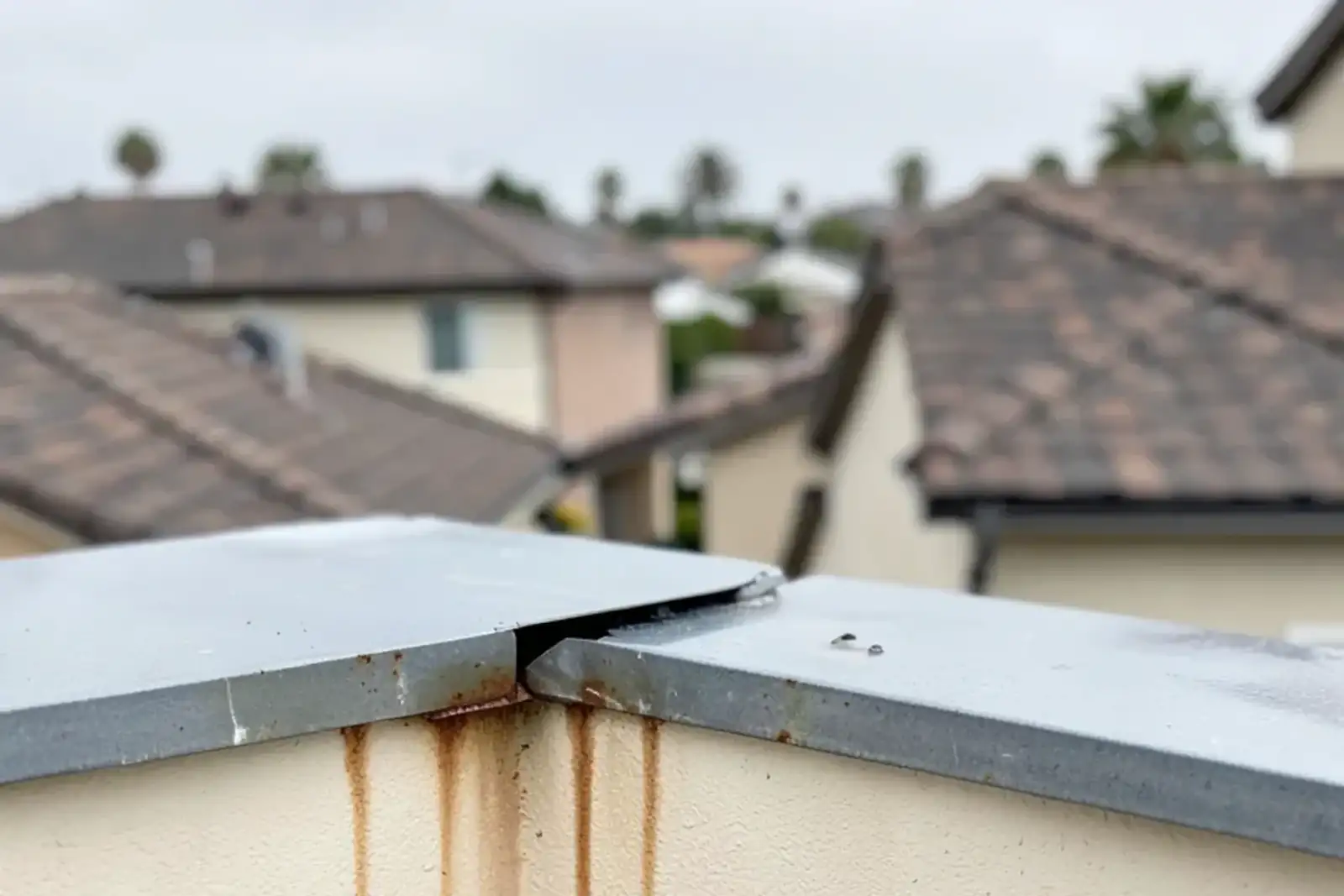
What causes roof leaks at parapets, decks and tie-ins?
Movement and neglect do the damage. Stucco shrinks and cracks, sealant dries under the Valley sun, and Van Nuys averages about 77 days a year at 90°F or hotter by NOAA's normals. Metal caps loosen at joints. Drains clog, and water that sits against a wall finds its way through.
Older buildings add their own problems. Additions tie a new roof into an old wall, decks get built over living space without a tested membrane, and layers of paint and sealant cover the real source.
Typical signs inside:
- A stain that follows a wall line below the roof
- Bubbling paint or efflorescence (white salts) on plaster
- A ceiling that stains only in heavy rain
- A musty smell near a balcony door
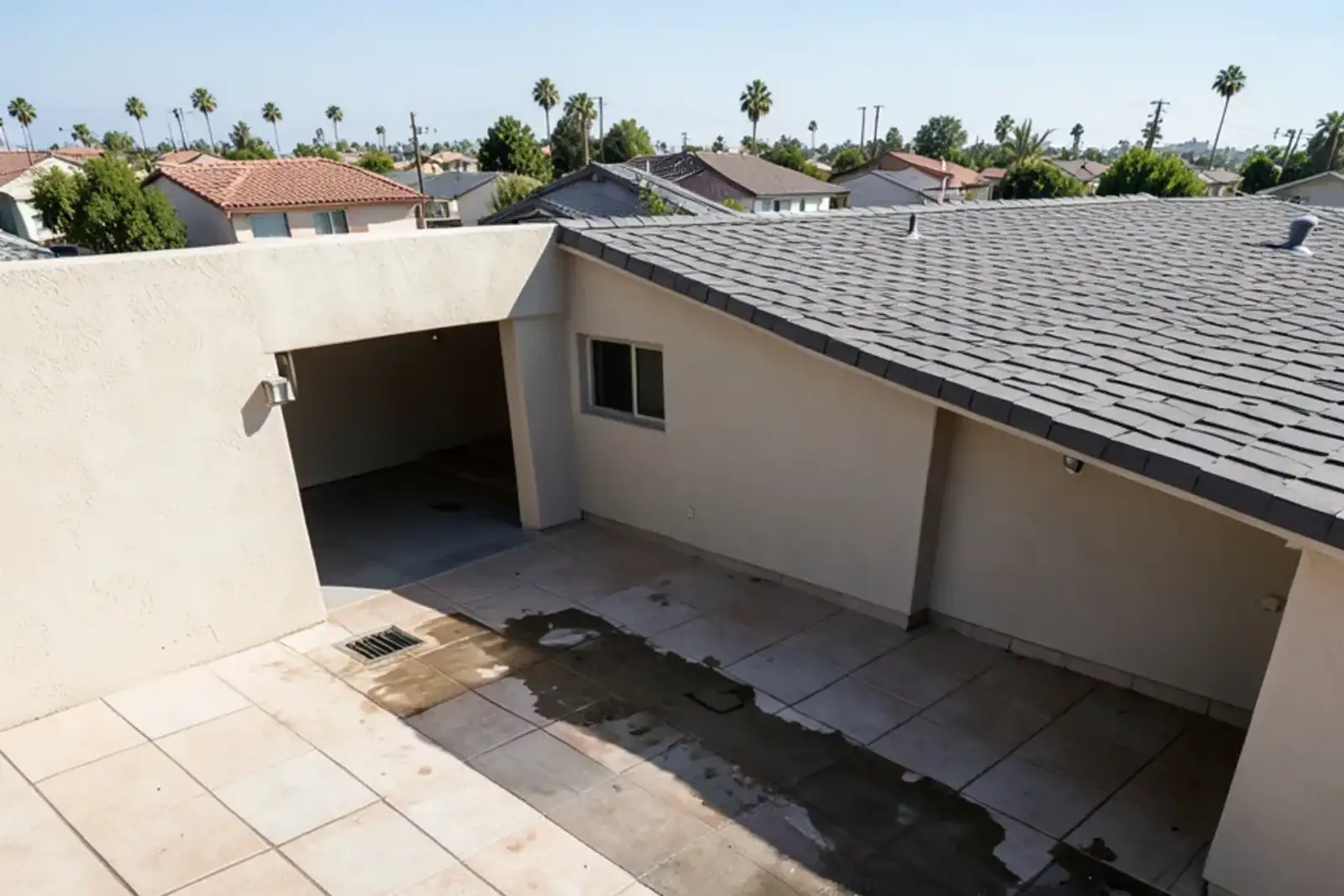
How we find the water path and rebuild the detail, step by step
- Listen and look inside. You tell us when it leaks, and we map stains, damp walls and ceilings.
- Inspect above it. We look at caps, stucco, flashing, drains, sealant and the deck surface, with photos.
- Test where needed. Hose tests, small flood tests or isolation of sections narrow down the entry.
- Explain the options. You see what we found and receive the choices and price in writing.
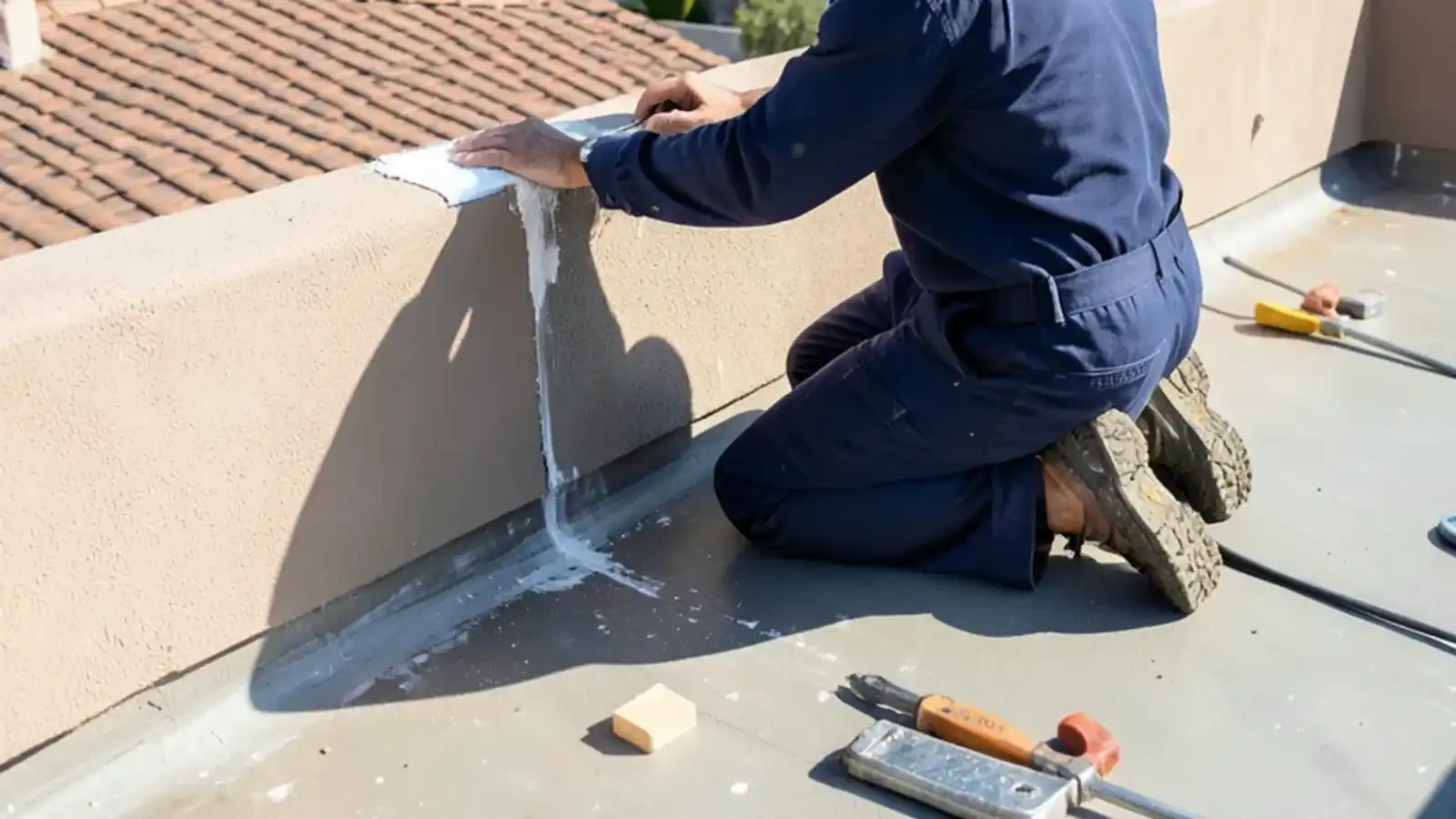
- Prepare and rebuild. The failed layer comes off, the substrate is repaired, and the membrane is reinforced at corners and terminations.
- Test and photograph. Where conditions allow, we water-test the finished work and send pictures.
Reviewers mention drone photos during work and a thorough water test after a leak repair, both in Van Nuys.
How a deck over living space is flood tested
Decks over living space are the one place a flood test makes sense. ASTM D5957 is the standard guide for it. It describes shallow ponding, no more than 4 inches, held after the membrane and flashing have cured, with the room below checked for moisture. The guide is not intended for building roofing systems, so a roof gets a hose test instead. We would confirm the structure can take the water before any ponding.
What the written scope should list
- The exact areas covered: parapet, deck, balcony, curb or tie-in
- Removal of the failed layer, including tile or topping on a deck
- Substrate and stucco repairs, each shown as its own line
- Membrane type, reinforcement at corners and terminations, and thickness
- Drain, cap and flashing work
- The test method and the photos you receive
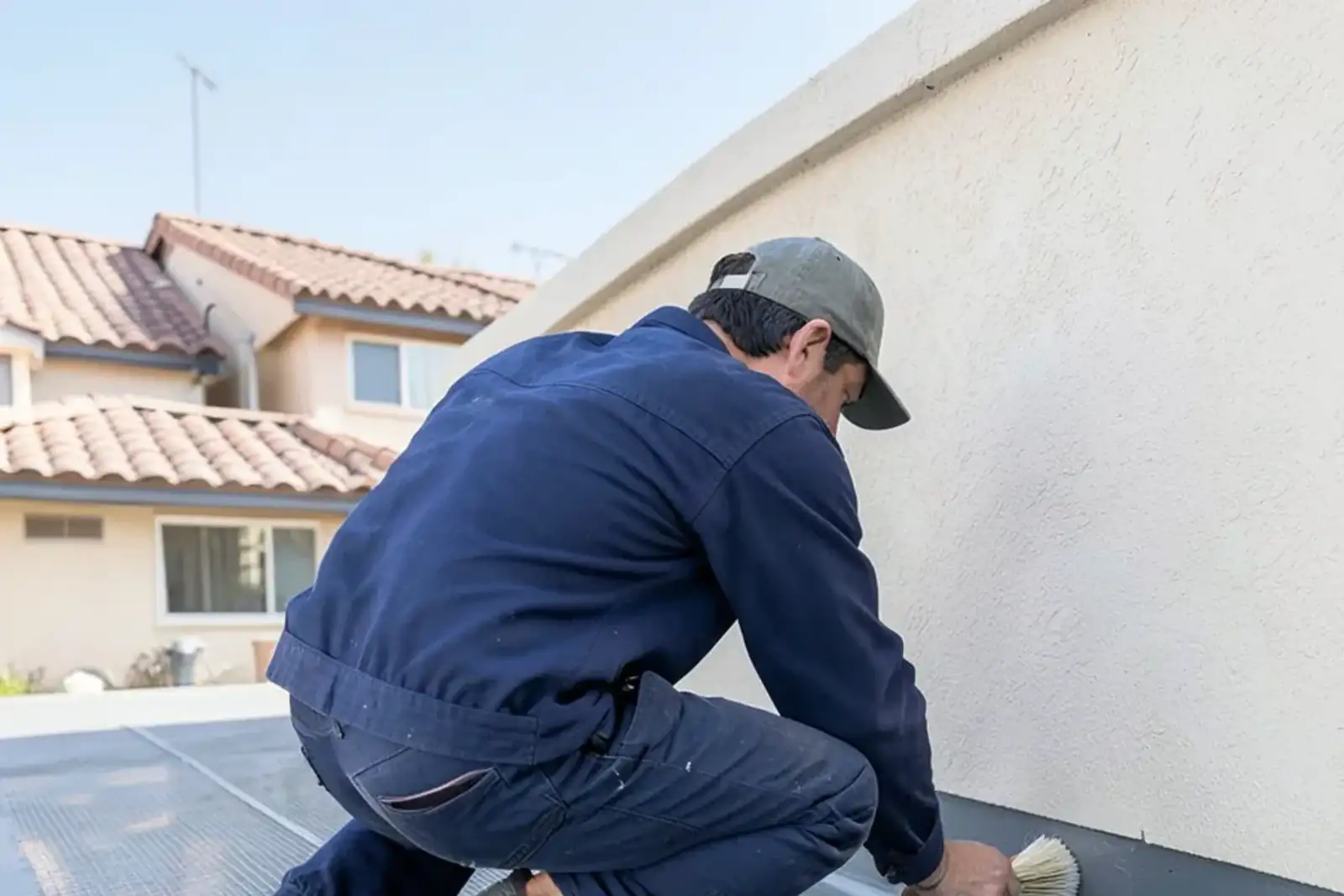
Sealant, coating or membrane: choosing the right layer
Not every leak needs a membrane. Pick the layer that fits the problem.
| Layer | Fits | Does not fit |
|---|---|---|
| Sealant | Small gaps at flashing and penetrations | Large cracks, moving joints, whole surfaces |
| Coating | A dry, intact roof surface | Active leaks, decks over living space |
| Reinforced membrane | Parapets, tie-ins, curbs, balconies | Roofs needing full replacement |
| Traffic-rated deck system | Decks and walkways over occupied space | Roofs with no foot traffic |
A bead of sealant is maintenance. A membrane with fabric at the corners is a repair. If you are unsure which applies, we can explain the difference in writing, and we may suggest a roof coating on the field of the roof as a second step.
What affects the cost of roof waterproofing?
Scope and access lead. A single parapet corner costs less than a full-perimeter rebuild with new coping. A deck that must have tile removed and reinstalled costs more than a bare roof detail. Substrate repairs, stucco work, drains, scaffolding and building height add up, and multi-day cure times affect scheduling.
For scale, Angi estimates roof replacement in Los Angeles at roughly $4 to $12 per square foot, averaging about $8.60, or about $17,200 for a typical 1,700 square foot home (accessed November 2026). Waterproofing a detail is a smaller scope, so treat that only as a market reference. We price each job in writing after we see the problem. Ask every bidder how they will test the work, since a quote with no test is only a hope.
Do roof waterproofing jobs need a permit or an insurance claim?
Small sealing work generally needs no paperwork, but rebuilding a deck, replacing roofing or altering a parapet can. Rules vary by city. The City of Los Angeles has its own building department, and unincorporated areas use county Public Works. Check your address before work starts, and ask the contract to name who handles the permit.
Sudden storm damage may be covered by an insurance policy, while gradual seepage or wear usually is not. We can inspect, photograph, document damage and write a repair estimate, and we can be on site when the adjuster visits. Negotiating a claim belongs to you or to a licensed public adjuster.
Why Clear Shield for roof waterproofing in Los Angeles
Reviewers describe a careful approach to leaks in Van Nuys. One describes water leaks traced around a window, another a full water test after repair, and a third a damaged board found near the roof and explained before work. Others mention a Sunday morning return to fix a leak after rain during a job, and a visit within the hour. We will set the earliest visit we can for an active leak.
What Van Nuys customers say about tracing and fixing leaks
“They also performed a full water test afterward to make sure the leak was fully resolved, and everything stayed dry.”
“The crew’s workmanship looked top-notch, and they kept me updated by sending drone photos of the roof work as it happened, which was really helpful since I wasn’t about to climb up there myself!”
“During the new roof installation, a small leak showed up after some seasonal rain, and Frederick and the crew responded right away, even on a Sunday morning, to fix it fast.”
4.9 on Google · 69 reviews as of November 2026. Read all reviews
We cover waterproofing work across the county. Burbank is full of 1940s and 1950s houses where a low-pitch roof meets a garage or addition wall. San Fernando is enclosed by Los Angeles but permits re-roofs through its own division. Duarte sits at the base of the San Gabriel Mountains, and Lomita is a small South Bay city with older modest homes. Ask for a real drive time when you call.
Roof Waterproofing: common questions
What is the difference between a coating and waterproofing?
A coating is a surface layer that reflects sun and protects the roof's existing skin. Waterproofing is a membrane system built to keep water out of a specific area, usually with reinforcement at joints, corners and edges. Coatings suit a sound roof. Waterproofing suits details that leak, decks over living space and surfaces that see traffic or standing water.
Can you waterproof parapet walls?
Yes. Parapet leaks usually come from cracked stucco, open caps or failed flashing at the roof line. The fix can include rebuilding the cap, sealing or re-skinning the wall surface and carrying a membrane up and over the top. We inspect the wall, cap and roof edge together, because treating only one leaves the water another way in.
How do you test that waterproofing worked?
Where conditions allow, by water. A hose test wets the work in sections, and a flood test holds shallow water over the area after the drains are plugged. Reviewers describe a full water test after a leak repair in Van Nuys, with everything staying dry. Tell us how the roof is built, since heavy ponding is not safe on every structure.
Can a deck over living space be waterproofed without removing the tile?
Usually not. Tile, grout and mortar hide the waterproof layer, and water travels under them. To rebuild the membrane, the deck surface typically has to come up, then the layer is replaced and the surface is reinstalled. We would test and inspect first, since the leak may come from a single detail such as a drain or a wall edge.
Will roof waterproofing in Los Angeles hold through a rainy winter?
A properly built and tested membrane is meant to. Most Los Angeles rain falls from December through March, often in short, hard storms, so the details get stressed quickly. Waterproofing works only if the substrate is sound and the drains flow. Get the product data and any warranty terms in writing, and keep drains clear.
Areas served for roof waterproofing
- Redondo Beach, CAOcean wind and salt air shorten the life of exposed metal, so parapet caps, flashing and sealant need closer checking.
- Rolling Hills Estates, CAOn the Palos Verdes Peninsula, view-side decks and balconies are where wall edges and door thresholds get checked first.
- Villa Park, CALarge custom homes can bring balconies and decks over living space, which need a tested membrane rather than surface sealant.
- Palmdale, CAHigh-desert wind and sun are harder on sealant and caps than rain, so dried-out joints and loose coping are what we would look for.
- Castaic, CAHot summers on newer tracts bake sealant and stress joints, so curbs and penetrations get checked before the rainy season.
- Stanton, CADense apartments mean shared parapets, balconies and walkways are likely leak points to trace.
- Westmont, CAOlder bungalows and small apartment buildings under county permits can have parapet and wall tie-in details that need rebuilding.
- Pomona, CAHistoric homes around Lincoln Park and older neighborhoods can hide old sealant and paint layers over the real leak source.
- View Park-Windsor Hills, CAMid-century view-lot homes can have decks and flat sections where wall tie-ins and drains are traced from inside to out.
- Ladera Heights, CA
- Burbank, CA
- San Fernando, CA
- San Bernardino County, CA
- Marina del Rey, CA
- Topanga, CA
- Bell Canyon, CA
- Hidden Hills, CA
- Palmdale, CA
Need roof waterproofing?
Call and tell us what you are seeing on the roof. We will take it from there.