
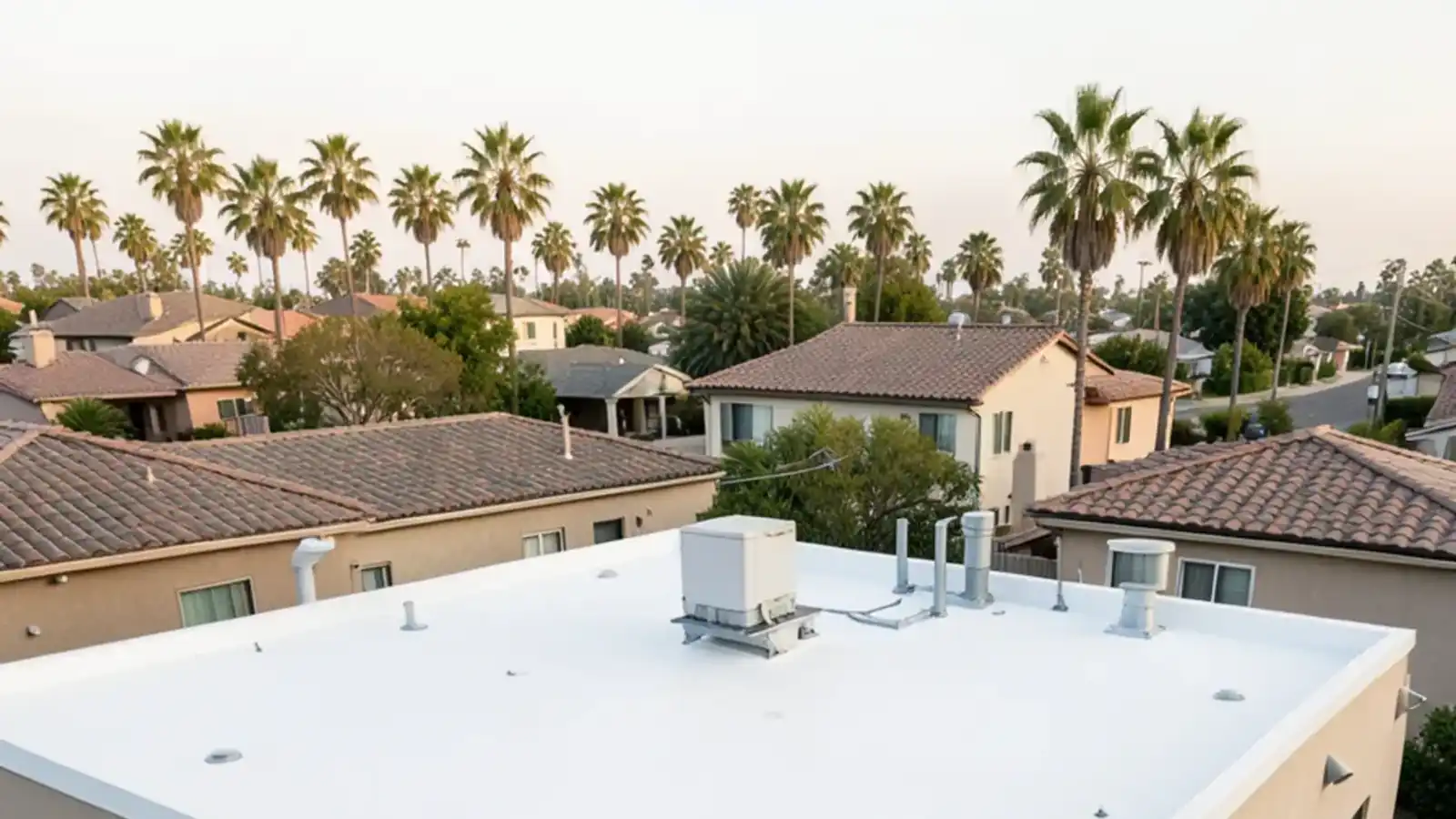
Flat Roofing
Flat Roof Maintenance Checklist for LA Owners
A flat roof maintenance checklist comes down to two walks a year, one before the rainy season and one after it. Clear the drains, look at seams and flashing, note any standing water, and fix small defects before they leak. Here is the full list.
- ★ 4.9 on Google · 69 reviews
- Same-day or next-day bookings
- Based in Van Nuys, CA
Published and updated November 3, 2026 · By the Clear Shield Roofers team, Van Nuys, CA
On this page
- When to check a Los Angeles flat roof
- The flat roof maintenance checklist for fall and spring
- What the roof is telling you
- What we look at that owners usually miss
- Safety first, and what to leave to a roofer
- What working roofers say about patching, coating and replacing a flat roof
- Keep a simple roof log
- Culver City and the cost of skipping a year
- Schedule the next flat roof walk
- Common questions
Most flat roofs do not fail in one day. They fail slowly, from a drain that clogs, a seam that lifts and a puddle that never dries. All three are easy to catch if you look.
This is the flat roof repair list we would hand an owner. It is built around two walks a year and ends with the things that are not yours to fix. Part of it is for owners, and part of it you should hand to a roofer.
When to check a Los Angeles flat roof
Walk it in October or early November, before the wet stretch that runs roughly December through March, and again in April. Add a look after any hard Santa Ana wind. Heat is the other stress. Van Nuys averages about 77 days a year at 90°F or hotter by NOAA's normals, and a dark or aging membrane takes that heat every summer.
A short visit is enough. Fifteen focused minutes beats an hour of wandering.
The flat roof maintenance checklist for fall and spring
Work through this in order. The first five are owner tasks if the roof is reachable without risk.
- Clear every drain and scupper. Remove leaves, grit and debris, then run water and watch it leave.
- Sweep the surface. Debris holds moisture and hides defects.
- Look for standing water. Photograph any puddle and note how long it stays.
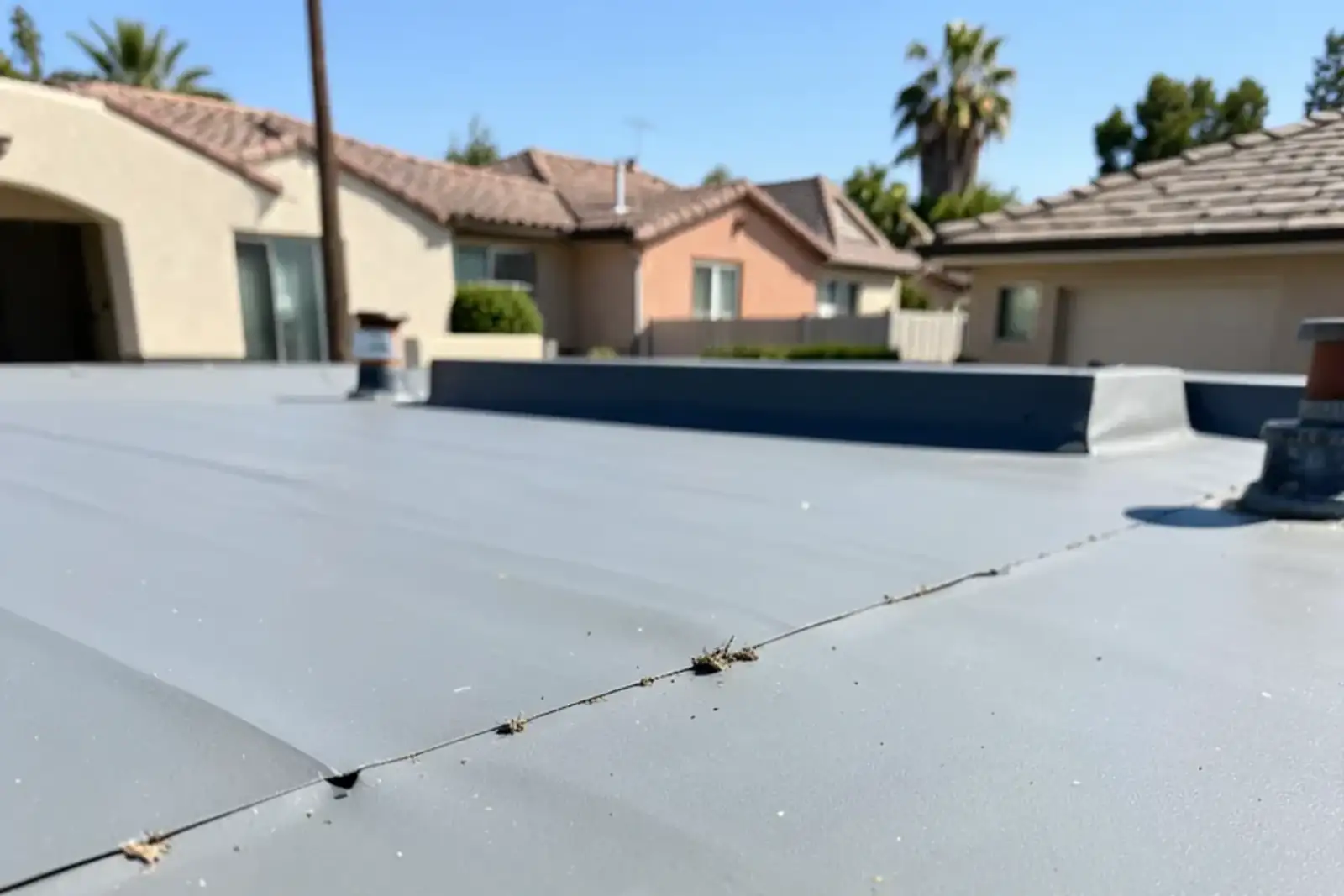
- Inspect seams and laps. Look for gaps, lifting edges or dirt packed in the joint.
- Check flashing. Walls, curbs, pipes and vents should have tight, unbroken metal or membrane.
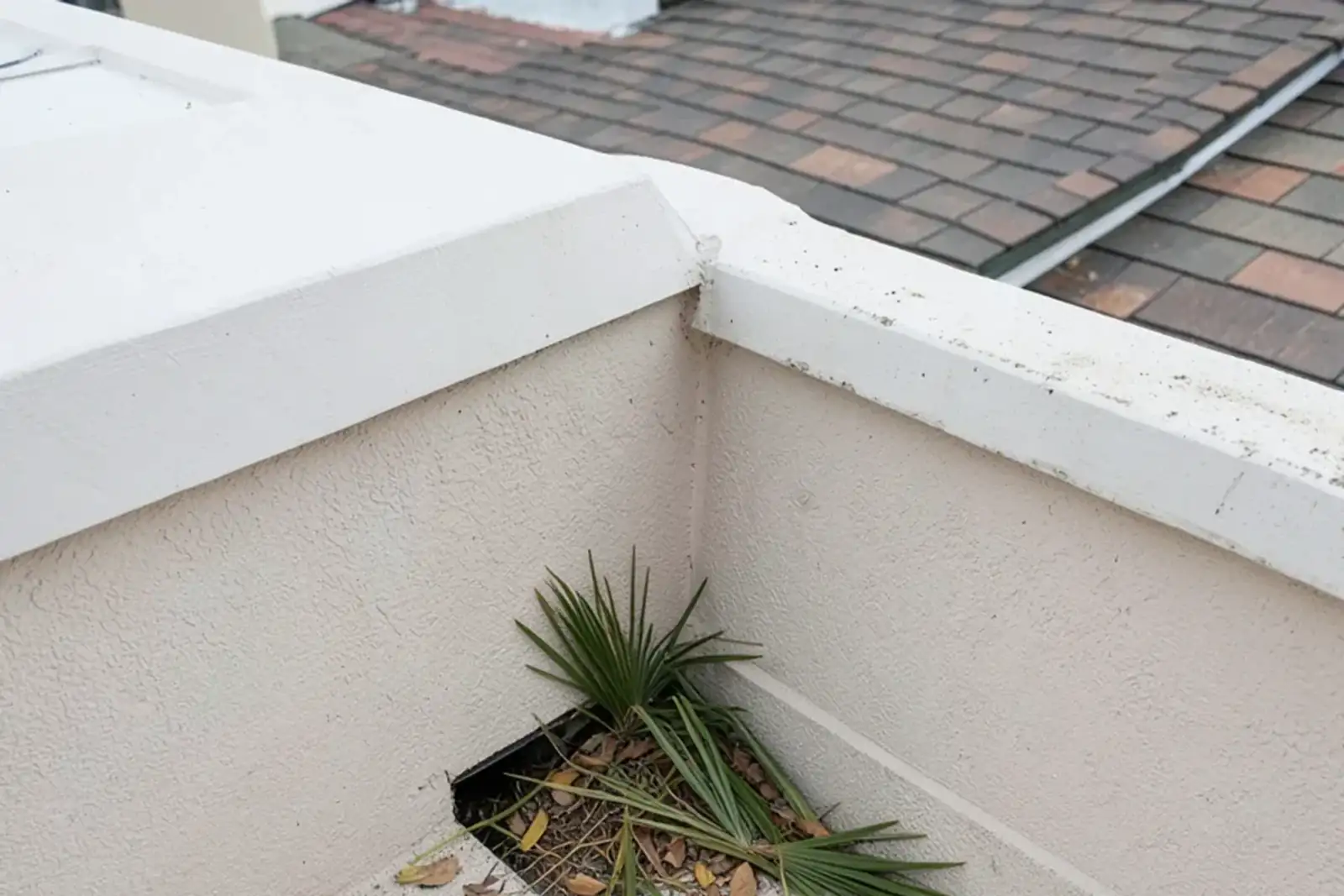
- Look at parapet caps and edges. Loose caps let water into the wall.
- Check rooftop equipment. Units, conduit and supports should sit on proper curbs with sealed penetrations.
- Check the underside. In the attic or ceiling, look for new stains, damp insulation or daylight.
If anything looks soft underfoot, stop and call. Soft means wet insulation or damaged decking.
What the roof is telling you
Small clues point at larger problems.
- A dark ring around a drain: water is slow to leave, so the drain is blocked or the area is low.
- Blisters: trapped moisture or air under the membrane. Do not pop them.
- Cracked or dried sealant: sun has aged it, and water will find the gap.
- Bare spots or alligatored coating: the protective layer has worn through.
- Footpaths worn into the surface: repeated traffic to equipment. A walkway pad would protect it.
Some of this is cosmetic and some is not. When you are unsure, send a photo.
How long is too long for ponding water?
Ponding is the most common slow failure on a low-slope roof. Contractor guides often treat water still standing about 48 hours after rain as a problem, and some membrane makers limit their coverage when ponding is left alone, so check your documents. That is an industry rule of thumb, not a code.
Los Angeles helps and hurts. With about 14 inches of rain a year, mostly December through March, roofs usually dry out between storms. A puddle that outlasts a few sunny days points to a low spot, a blocked drain or a deck that has sagged. Photograph it with something in the frame for scale, note the date and check again after the next rain.
Fixing ponding can be as simple as clearing a drain or as involved as adding tapered insulation to build slope. Our flat roofing pages explain the options, and the right one depends on why the water stays.
What we look at that owners usually miss
On a flat roof visit, we go slower around the details than across the field. Pipe flashings and pitch pockets, the metal-sealed boxes around penetrations, dry out and crack. Fasteners can back out and lift the membrane. A parapet that looks fine from the ground can have a cap that has loosened or flashing that has pulled away.
We also check how the roof meets everything else: the stucco wall, the skylight curb, the equipment support. Leaks usually enter at an edge, not in the middle of a sheet. After a repair, a hose test on the suspect area confirms it, and one Van Nuys customer describes exactly that, a full water test after a leak repair to check the roof stayed dry.
Safety first, and what to leave to a roofer
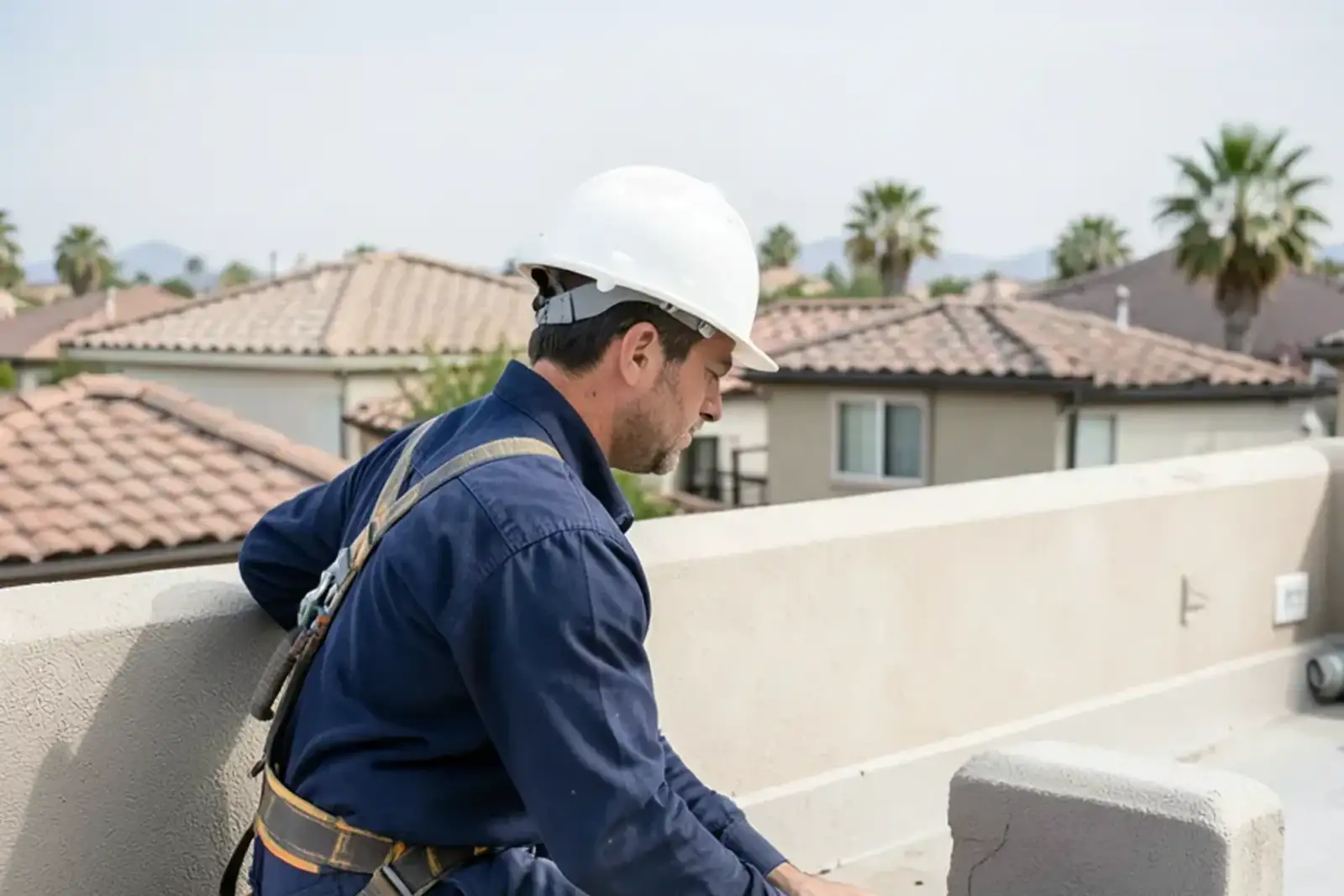
A roof is a work platform, not a patio. Do not walk a wet roof, do not stand near an unprotected edge and do not climb alone. If you cannot see the roof safely from a ladder, a roofer can inspect it and send photos. Reviewers mention drone photos sent during work, which is a safe way to see what is up there.
Leave these to a roofer: seam repair, flashing work, coating, membrane patches and anything involving hot work or heat welding. Torch-applied roofing is regulated as hot work under the California Fire Code, and requirements vary by jurisdiction.
What working roofers say about patching, coating and replacing a flat roof
Maintenance buys time. It does not buy a new roof, and we would rather say so up front.
A patch is the right answer for a localized defect: a split seam, a cracked boot, a puncture. It is quick and modest, and it protects the roof underneath. The trade-off is that several patches in one season mean the membrane is tiring.
A coating suits a roof that is clean, dry and sound. It adds reflectivity and a protective skin. It does not cure wet insulation or open seams, and coating over a hidden leak seals the water in. That is why we trace first. See flat roof coating for when it fits.
When the roof ponds in several places, the insulation is wet or leaks keep returning, repair money is better spent on flat roof replacement. Replacing costs more now and removes the guessing. Your maintenance log is the evidence that tells you which side of that line you are on.
Keep a simple roof log
Write down the date, what you cleared, what you saw and who else was on the roof. Air conditioning techs, satellite installers and window cleaners all walk flat roofs, and a dropped tool or a dragged hose can cut a membrane. A log tells you when a defect appeared and who was up there around then. Ask any contractor who works on the roof to report what they touched, and add it to the log.
Culver City and the cost of skipping a year
Flat and low-slope roofs sit on many Culver City commercial and creative-office buildings, and a missed year matters more on a roof with no slope to spare. A clogged drain after a leafy fall can hold water against a wall for weeks. Put the inspection on the calendar, keep your photos from each visit and compare them year to year. Changes show up fast in photos, and a dated record helps if you ever file an insurance claim.
Schedule the next flat roof walk
Put one date in October and one in April on your calendar. If you want a roofer to do the climbing, call (209) 563-1278 and we will set the earliest visit we can. Tell us the roof type, the building use and where water tends to sit, and send any photos you have.
Quick answers
How often should a flat roof be inspected in Los Angeles?
Twice a year is a good rule, once in fall before the rain season and once in spring after it. Add a check after any strong wind event, since Santa Ana gusts move debris and can lift edges. Between visits, look at your ceilings after rain, because a new stain is often the first alert.
Can I clean my own flat roof drains?
If you can reach them safely from a ladder, yes. Pull out leaves and grit by hand and rinse the bowl with a hose. Do not walk a wet or steep-edged roof without fall protection. Never use sharp tools near the membrane, and leave anything stuck or cracked to a roofer.
Should I recoat my flat roof as maintenance?
Only if the roof is sound and dry. A coating can reflect heat and protect a membrane that is in decent shape, but it does not repair wet insulation, open seams or ponding. We would trace leaks and fix them before coating anything, and check that the surface is clean enough for the product to bond.
When does standing water on a Los Angeles flat roof count as ponding?
A common industry rule of thumb treats water still standing about 48 hours after rain as ponding worth fixing. In Los Angeles, with about 14 inches of rain a year, most roofs dry fast between storms, so a puddle that outlasts a sunny weekend points to a low spot or a blocked drain. Photograph it and have a roofer look.
Who should walk a commercial flat roof in Culver City or elsewhere in Los Angeles?
Only people with a reason to be there and the right fall protection. Keep a log of every contractor who goes up, because air conditioning and antenna crews can cut a membrane without noticing. If the parapet is low or there is an open edge, ask a roofer or safety professional about edge protection before anyone steps out on the roof.