
Emergency Roof Repair
Tree on Your Roof? First Steps for LA Homeowners
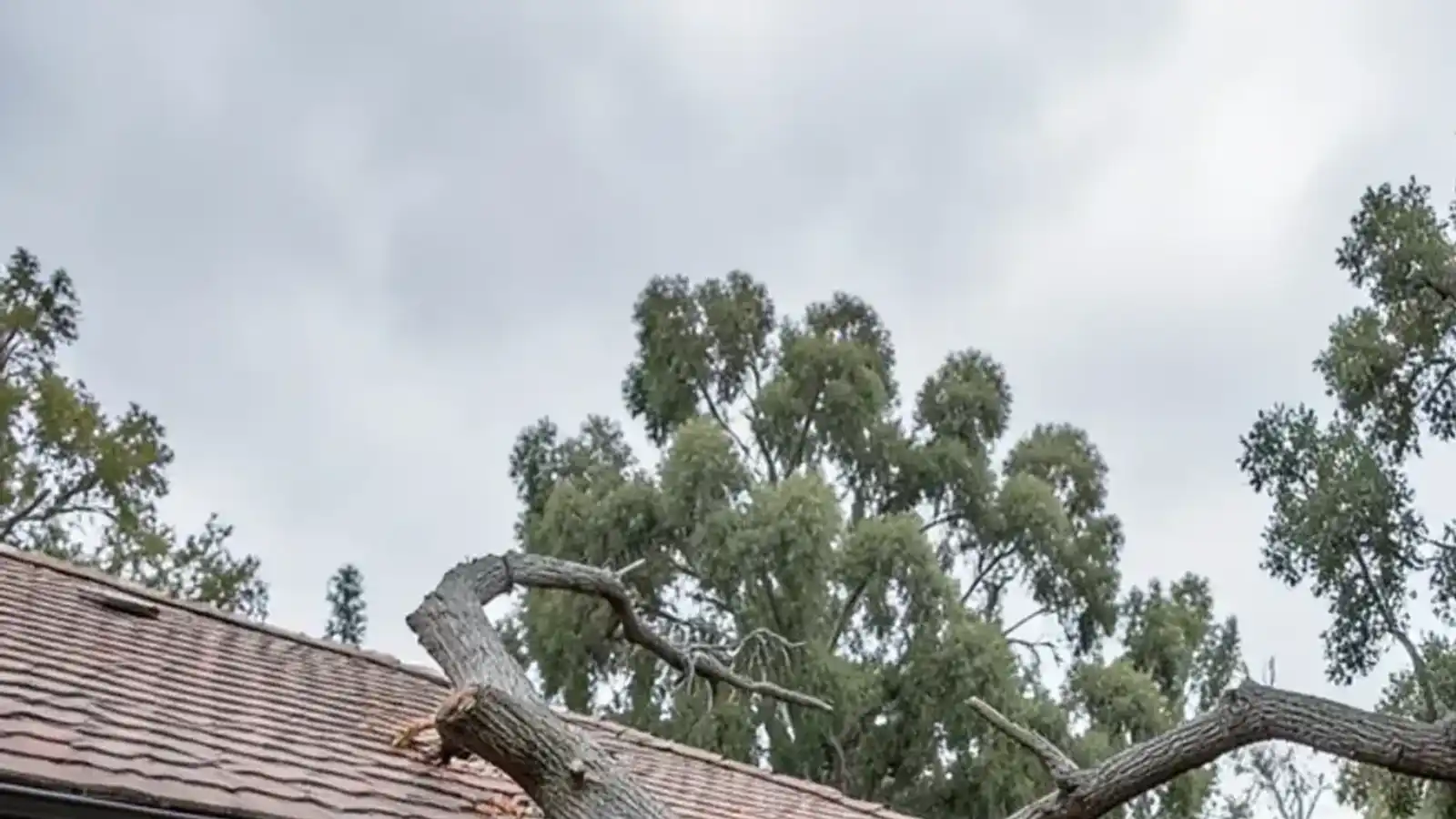
If a tree fell on your roof, get everyone out of any room under the damage and call 911 for injuries, downed wires or gas. Then photograph from outside, call your insurer, and have a roofer cover the opening. Hire a tree service for the removal.
- ★ 4.9 on Google · 69 reviews
- Same-day or next-day bookings
- Based in Van Nuys, CA
Published and updated November 3, 2026 · By the Clear Shield Roofers team, Van Nuys, CA
On this page
- Tree fell on your roof: the first hour, in order
- Who does what: roofer, tree service and insurer
- Tree impact damage: what shows and what hides
- How we would cover and repair a roof a tree has hit
- What roofers weigh when a tree is still on the roof
- Insurance after a tree falls
- Contracts after a storm and what California says
- Why older Pasadena streets need a closer look at trees
- Next steps after a tree hits your roof
- Common questions
A tree on the roof is a structural event first and a roofing problem second. The weight may be sitting on rafters, ceiling joists and walls that were never built for it. Your first calls should reflect that.
If you are asking what to do when a tree fell on your roof, the order is safety, evidence, insurance, cover, removal, repair. Our emergency roof repair work picks up at the cover and repair steps, and the sections below cover the rest.
Tree fell on your roof: the first hour, in order
Take these steps in this order, and stop at any step that is not safe.
- Get out of the damaged area. Move everyone and any pets to rooms away from the impact. If you hear creaking or see cracks, leave the house.
- Call 911 for injury, fire, gas smell or downed wires. Stay clear of any wire touching the tree or the house. Call the utility about it.
- Do not go under the tree or on the roof. A shifted limb can drop without warning.
- Photograph from the ground. Capture the tree, the roof, the yard and anything damaged inside, with dates.
- Call your insurer and start the claim.
- Call a roofer for a temporary cover and a tree service to cut the weight off.
If water is getting in, put buckets down and move belongings away. Do not climb into the attic to look. A cracked rafter can fail if you add weight on it.
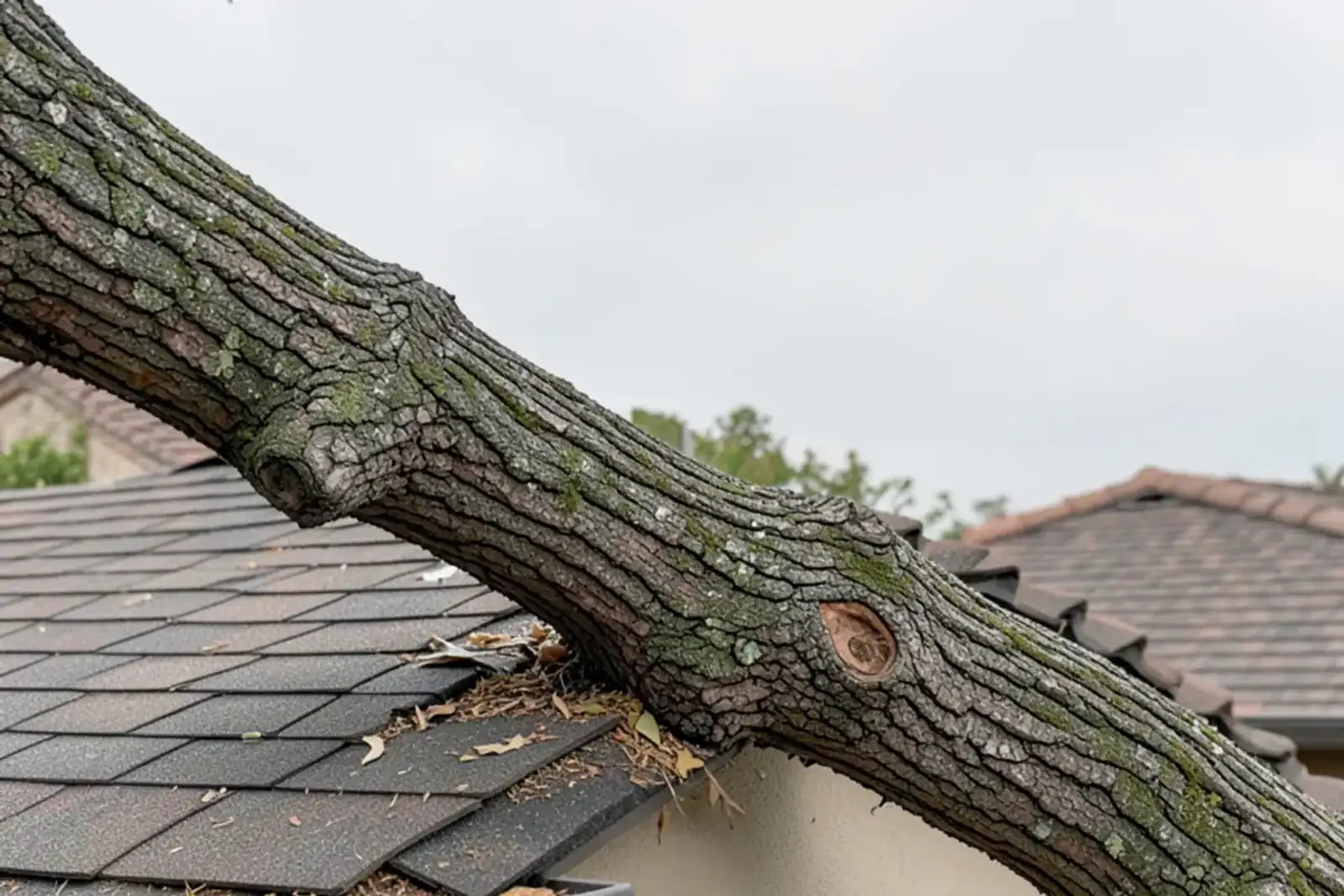
The day after a tree hits the roof
The first hour is about safety. The next day is about the record and the water.
- Photograph the tree before it moves: the trunk, the break point, the roots and any rot or hollow you can see from the ground.
- Check the utilities: a gas smell, flickering lights or a dead outlet near the impact is a call to the utility, not a DIY check.
- Keep water out: buckets inside, and a cover on the opening once it is safe to place one.
- Write down the timeline: when it fell, who you called, what the insurer said and the claim number.
- Ask before hauling away debris: your adjuster may want to see the damage first.
That log is also what a roofer needs to quote the repair correctly.
Who does what: roofer, tree service and insurer
People often call one trade expecting all three jobs. They are different jobs, and the order matters.
| Who | What they do | When |
|---|---|---|
| Emergency services and utility | Handle injuries, gas, fire and downed wires | First, if any of those exist |
| Tree service | Cuts and lifts the tree off, sometimes with a crane | Before the roofer can work, if the load is heavy |
| Roofer | Inspects, covers the opening and repairs the roof | After the weight is off, or alongside if the cover is safe |
| Insurer | Opens the claim and sends an adjuster | As soon as you can, in parallel |
| Structural pro | Checks framing if rafters or walls are cracked | When the roofer or adjuster finds damage below the roof |
A roofer is not a tree service. Some crews coordinate with one, and some limit what they will do around a heavy load. We would assess the roof first and tell you plainly what has to happen before a cover can go on.
Tree impact damage: what shows and what hides
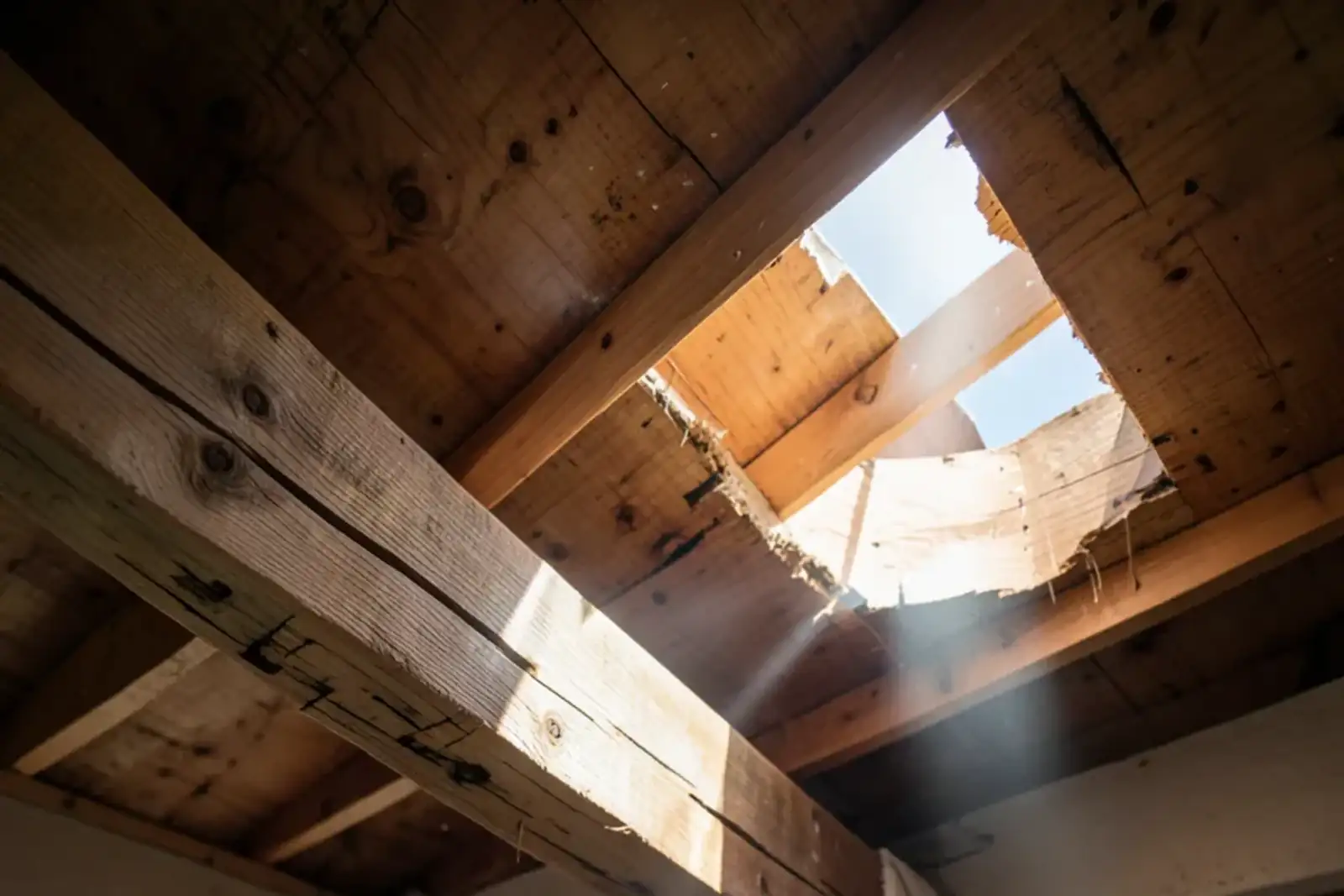
The visible damage is only part of it. A limb that lands on a roof pushes down through shingles, underlayment and decking, and it can crack rafters beneath. Check for:
- Punctures, craters or crushed tile where the tree touched down
- Sagging lines along the roof or a dip near the impact
- Gaps, daylight or fresh water stains on the ceiling inside
- Bent gutters, broken fascia and torn flashing
- Cracks in drywall, doors that stick and windows that will not close
Hidden damage is common. Water follows the path of the impact into walls and insulation, and a roof that looks patched from above may be soft below. A reviewer in Van Nuys describes a ridge vent and gutters repaired after storm-fallen limbs, and another describes a tree on a roof job. We would look at the framing, not only the surface.
How we would cover and repair a roof a tree has hit
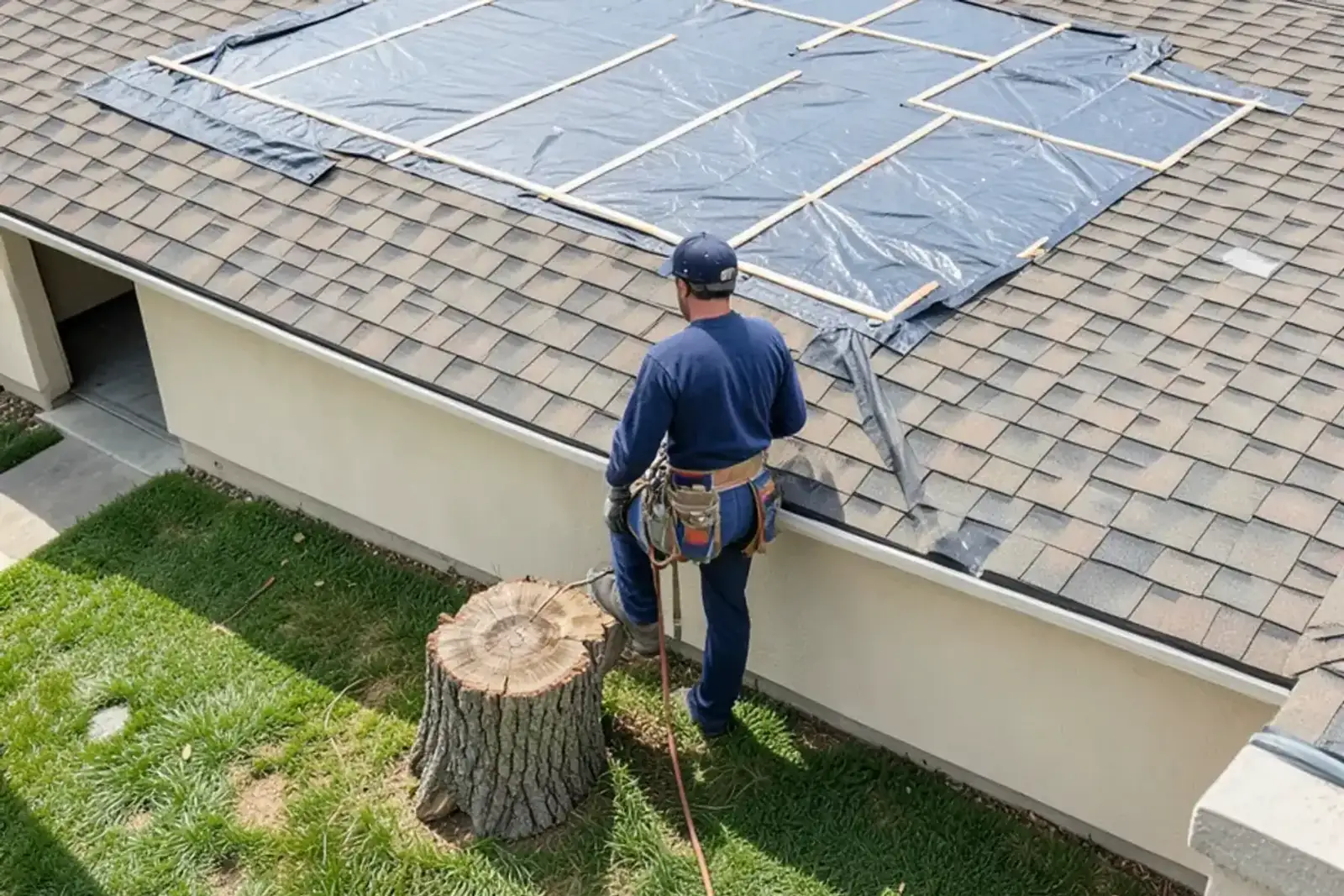
Once the tree is off, our approach is simple. We inspect from outside and from the attic, since the underside tells the truth about rafters. We then tarp the opening so rain stays out, using battens fastened into sound framing. Where framing is cracked, we say so in writing, because a structural fix comes before roofing.
Permanent repair follows in the order the damage demands:
- Remove crushed material and damaged underlayment
- Repair or replace broken decking, and sister or replace cracked rafters if needed
- Reinstall underlayment, flashing and the roof surface
- Repair gutters, fascia and soffit that were struck
Matching an older roof can be a problem. Discontinued shingles or aged tile may not blend with new, and we will tell you what we can match. Our fallen tree roof damage page lays out the repair steps.
What roofers weigh when a tree is still on the roof
These are the judgment calls on a tree job, and none of them are free.
Cover before the lift or after. Putting a tarp on while a heavy limb is still resting on the roof gets rain out sooner, but it means working under load. Waiting for the tree crew is safer, and costs another night of buckets if rain is close. We would rather wait than send someone under a limb that can shift.
Crane or hand-cut. A crane lifts the weight off in big pieces and keeps the framing from carrying a shifting load. It costs more and needs room for the truck. Hand-cutting is cheaper and takes longer, and the roof sees every piece that drops.
Repair the decking or sister the rafter. A cracked rafter can often be reinforced with a new board bolted alongside it, called sistering. If the damage is wide, replacing the member may be the better answer, and that is a framing decision before it is a roofing one.
Patch the area or renew the slope. On an older roof, a patched square next to worn shingles can fail at its seams. If the roof was near the end of its life anyway, the insurer's adjuster and your contractor may see the repair scope differently, so get the roofer's findings in writing.
Insurance after a tree falls
Whether insurance pays depends on your policy, the cause and what the tree did. Damage from a storm-felled tree is often covered, while a tree removed because of rot or neglect may be treated differently. Read your policy and ask your insurer directly.
California regulations generally require an insurer to accept or deny a claim within 40 days after proof of claim. Take photos before anything moves, keep receipts for emergency work and ask the adjuster what documentation helps. Emergency cover to stop further damage is normally expected. Permanent repairs usually wait until the adjuster has seen the damage.
Our part is an inspection, photographs, a written repair estimate and a presence on site when the adjuster visits. Claim negotiation stays with the policyholder or a licensed public adjuster.
When the tree came from a neighbor's yard
If the tree that hit your roof grew next door, tell your own insurer first and photograph the trunk, the break and the roots. Who ultimately pays can turn on the policies and on whether the tree was known to be dead or hazardous. Ask your insurer, and a lawyer if it becomes a dispute. Do not wait on that answer to cover the opening, because the rain does not wait.
Contracts after a storm and what California says
Storms bring door knockers. The California Department of Insurance advises against paying in cash and against making the final payment before the building department signs off. A down payment is capped at $1,000 or 10% of the contract price, whichever is less. You generally have at least three business days to cancel, and longer for disaster repairs.
Get the scope, price and start date in writing. Ask who pulls the permit, since the contract should name that person. Permits for structural repair vary by agency.
Why older Pasadena streets need a closer look at trees
Many older Pasadena neighborhoods have mature trees close to the roof, and Pasadena runs its own building department for permit questions. Limbs that hang over a roofline are a risk in any wind or storm, and dry years stress trees further. We work from Van Nuys and cover Pasadena, and we suggest a tree service look at overhanging limbs before the next storm season. The City of Pasadena's Urban Forestry FAQ says no city removal permit is needed for a tree that has already fallen, and that the owner is responsible for removing a private tree that fell on private property. Confirm the current procedure with the city, since that guidance is a few years old.
Next steps after a tree hits your roof
Get the scene safe, get the claim open and get the opening covered. Then look at the repair in writing, with the scope, the price and the start date. Our emergency roof leak repair and emergency roof tarping pages describe how we would approach the cover and the visit, and our tarp guide covers how long a cover really lasts.
Tree on your roof and the scene is safe? Call (209) 563-1278, tell us what you see, and we will set the earliest visit we can.
Quick answers
Who removes a tree that fell on a house?
A tree service removes the tree, and a roofer covers and repairs the roof. They work in sequence. The tree crew needs to cut and lift the weight off safely, sometimes with a crane. A roofer then checks the damage, tarps the opening and plans the repair. Ask your insurer whether removal is covered under your policy.
Should I call my insurance company or a roofer first?
Call 911 first if anyone is hurt or wires are down. After that, call your insurer to open the claim and call a roofer to cover the roof, in either order. Do not let a delay in one hold up the other. Take photos before anything is moved, and keep every receipt for emergency work.
Is it safe to stay in a house with a tree on the roof?
Not until someone has checked the framing. A cracked rafter or a stressed wall can fail without warning, especially if the tree shifts or wind picks up. Move to rooms away from the impact and keep children and pets out of the damaged area. If you hear creaking or see cracks, leave and call for help.
Do I need a permit to remove a tree that already fell on my Pasadena home?
The City of Pasadena's Urban Forestry FAQ says no city tree removal permit is required once a tree has already fallen, and that the owner is responsible for removing a private tree that fell on private property. That FAQ is a few years old, so confirm with the city before the crew starts. Repairs to the roof may still need a building permit.
What if the tree that hit my roof came from a neighbor's yard?
Document where the tree came from, photograph the trunk and roots, and tell your own insurer first. Who ultimately pays can depend on the policies and on whether the tree was known to be dead or hazardous, so ask your insurer and, for a dispute, a lawyer. Do not let that question delay the emergency cover over your roof.