
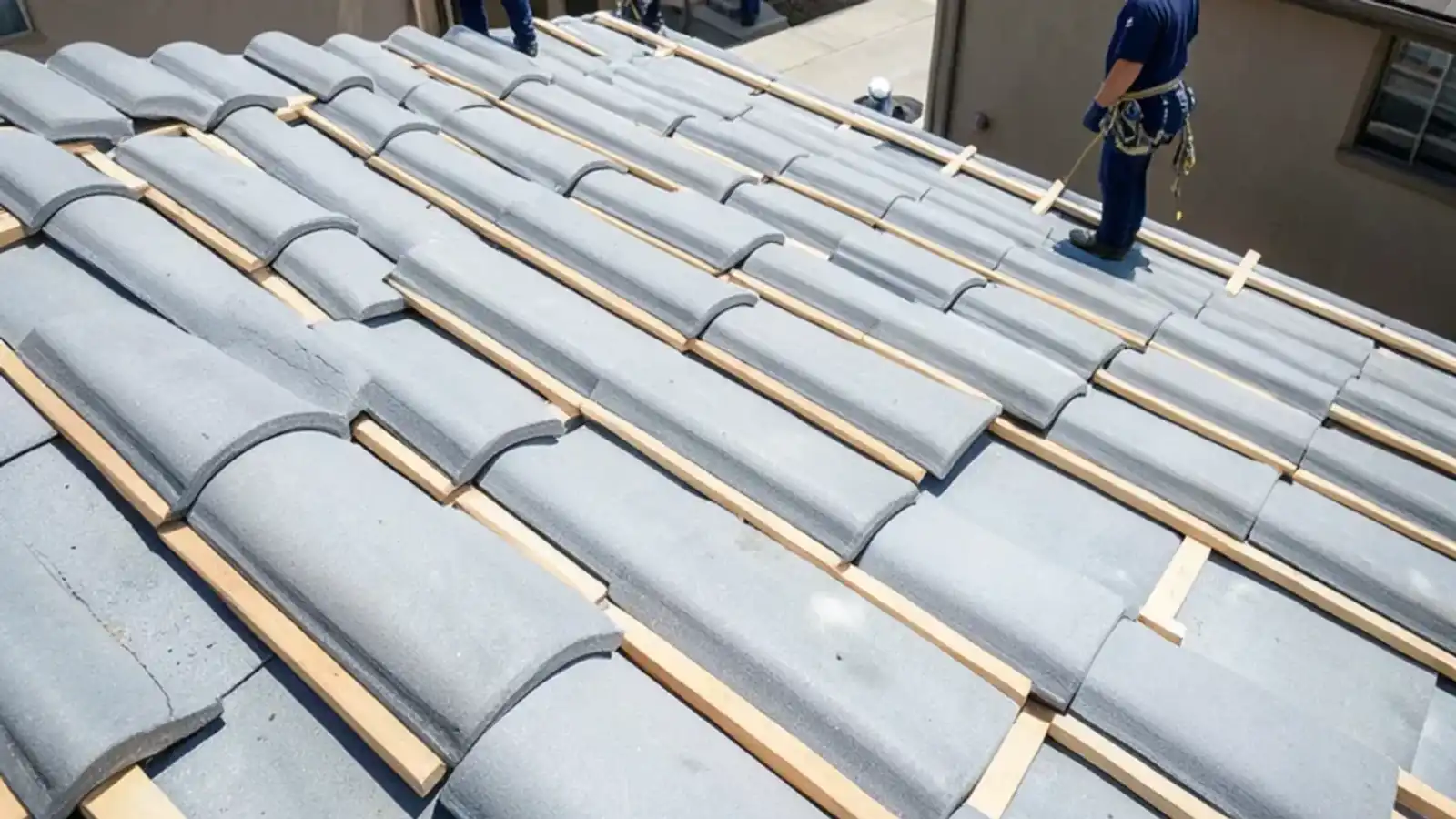
Roofing Materials
Tile vs Shingle for Southern California Homes
Tile lasts longer and handles heat well but weighs far more and costs more. Asphalt shingles cost less, weigh less and suit most framing. In Southern California the choice usually turns on your roof structure, your budget and how long you will stay. Here is how the two compare.
- ★ 4.9 on Google · 69 reviews
- Same-day or next-day bookings
- Based in Van Nuys, CA
Published and updated November 3, 2026 · By the Clear Shield Roofers team, Van Nuys, CA
On this page
- Tile vs shingle on cost, weight and lifespan
- Framing, weight and what a switch involves
- How much does a tile roof weigh compared with shingles?
- Heat, fire and style in Southern California
- What it looks like when a homeowner switches from tile to shingle
- The roofer's view: what we see under the tile
- Upkeep and what each roof asks of you
- Which fits your house
- Common questions
Tile and asphalt shingles dominate Southern California roofs, and each has real strengths. Tile brings long life, mass and a classic look. Shingles bring lower cost, lighter weight and fast, flexible installation. Neither is the wrong choice in every case.
What matters is how each one fits your house: the framing under it, the slope above it and the time you plan to spend there. Our tile roofing and asphalt shingle roofing pages go deeper on each material, and the roofing materials hub covers the rest.
Tile vs shingle on cost, weight and lifespan
The table below compares the points owners ask about. Lifespans are rough ranges, and the manufacturer's rated life governs.
| Factor | Clay or concrete tile | Asphalt shingle |
|---|---|---|
| Up-front cost | Generally higher | Generally lower |
| Weight | Much heavier; framing may need a check | Light on most framing |
| Typical life | Tile often outlasts what is beneath it | Often 15 to 30 years, varying by heat and product |
| Heat | Dense, with an air gap under the tile | Cool-rated shingles are available |
| Repair | Cracked tiles replaced one at a time | Easy to patch, widely understood |
| Look | Mediterranean, Spanish, Mission | Many colors and profiles |
| Underlayment | The part that tends to age out first | Replaced with the roof |
On cost, the one market figure we use is Angi's: roof replacement in Los Angeles at roughly $4 to $12 per square foot, averaging about $8.60 (accessed November 2026). That range spans every material. We price tile and shingle jobs in writing once we have seen the roof.
Framing, weight and what a switch involves
Weight is the biggest practical difference. Concrete tile is much heavier than shingles, so a home built for tile has framing sized for it. Going from shingle to tile can mean reinforcing the roof, and that adds cost and permit questions. Going from tile to shingle takes weight off, but the tile has to be removed first.
The state residential code bars a recover over slate, clay or cement tile, over a water-soaked or deteriorated roof and over a roof that already carries two applications. So a tile-to-shingle switch means tearing off down to the deck. That also lets the crew check the boards and replace any that are damaged. Old underlayment under tile that looks fine from the street is a common find once the tile is lifted.
How much does a tile roof weigh compared with shingles?
The trade press puts standard-weight concrete tile at roughly 9.5 to 12 pounds per square foot, and lightweight concrete tile at about 5.5 to 7 (Journal of Light Construction). Architectural shingles weigh a fraction of that. Put those figures on a 1,700 square foot house and the difference is thousands of pounds on the rafters.
That is why the order of the change matters. A home built for tile already has framing sized for it. A shingle-roofed home asked to carry tile should have its framing looked at by an engineer first, and the same goes for older homes with additions, where the old and new framing may not match. Lightweight tile is the usual workaround, though it still needs the same check.
Weight also matters in an earthquake, since a heavier roof puts more load on the walls below it. We are roofers, not structural engineers, so we would flag the question and send you to one for anything that involves added weight.
Heat, fire and style in Southern California
Both materials can work in hot weather. Tile's mass and air gap help it shed heat, and cool-rated shingles reflect more sun than standard ones. A Los Angeles re-roof that covers over half the roof needs a cool-rated product, with details set by slope and climate zone, so check any product's CRRC listing.
Fire rules matter in hill and foothill areas. Class A roof covering is required in the Very High Fire Hazard Severity Zone, and California's Wildland-Urban Interface Code took effect in 2026. Check your address on CAL FIRE's viewer. Glendale, at the base of the Verdugo Mountains region, spans flats and foothill streets, so the answer can differ from one block to the next. See our Glendale service area page for how we cover it.
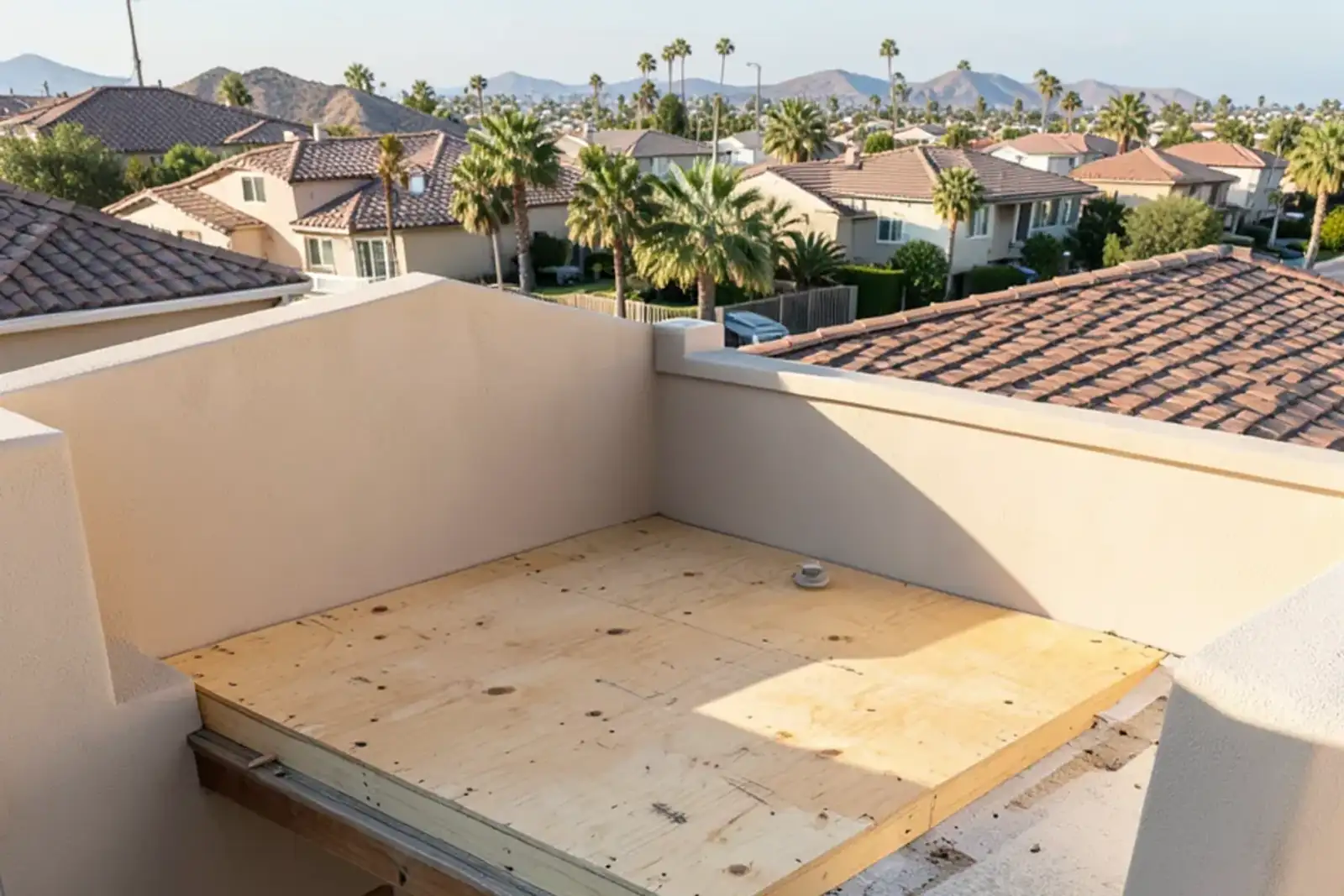
What it looks like when a homeowner switches from tile to shingle
Reviewers in Van Nuys describe an old tile roof switched to asphalt shingle. We treat that job as a sequence, and we would tell you what each stage involves before you commit:
- Inspect the existing roof. Check the tile, the underlayment and the framing.
- Remove the tile. It comes off in sections and is hauled away.
- Strip the underlayment and check the deck. Soft or damaged boards are replaced.
- Install new underlayment and flashing. Valleys, walls and vents are rebuilt.
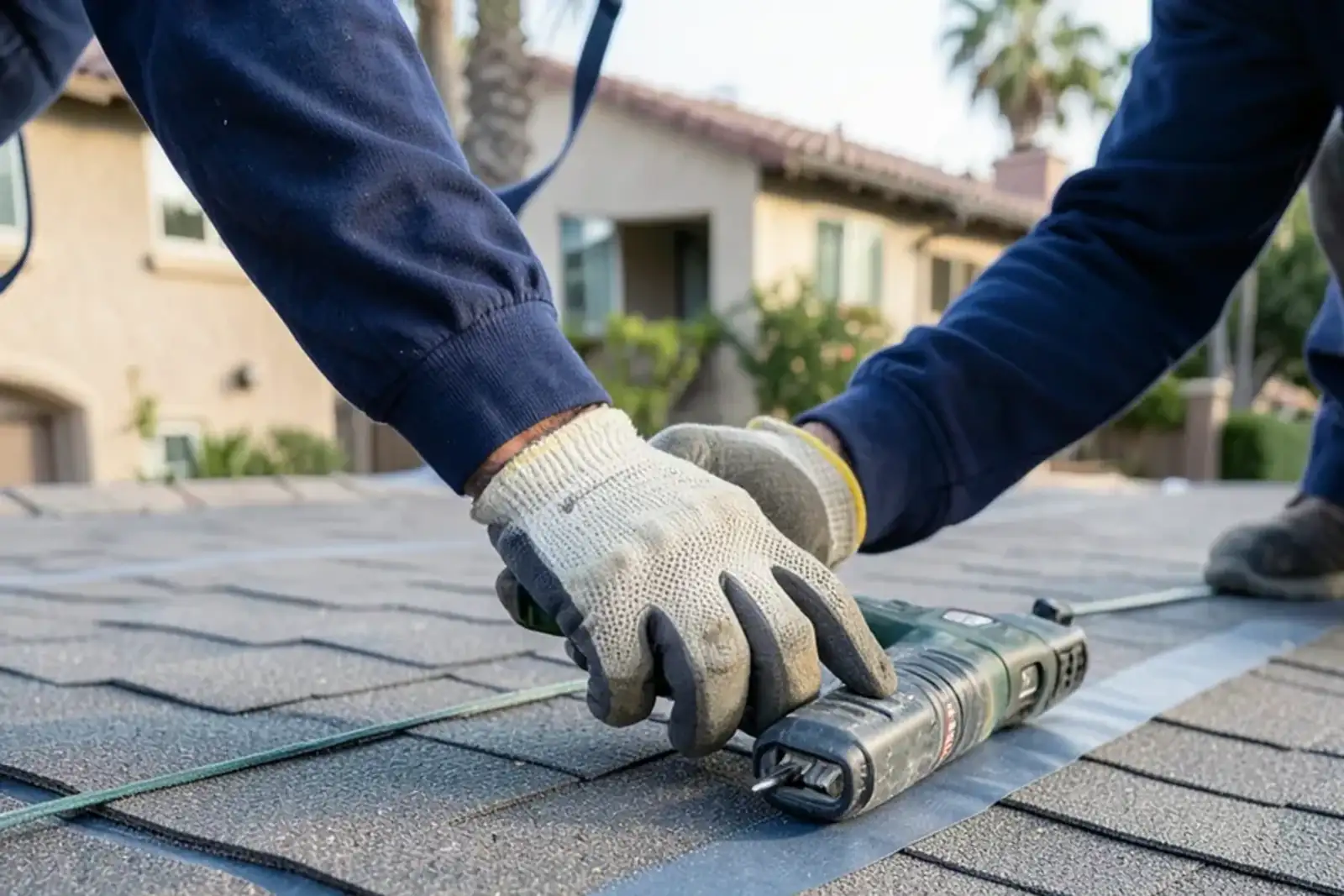
- Lay the shingles. Courses go on with the right nailing pattern and edge details.
- Clean up. We sweep for nails, including a second pass with a magnetic roller.
Reviewers also mention a second pass for missed nails and thorough daily cleanup. Those are Van Nuys customers' accounts, not a promise for a different job.
The roofer's view: what we see under the tile
Honest advice here cuts against the easy sale. A tile roof that looks fine from the street often has underlayment that is brittle and cracked, because the tile protects the surface while the paper beneath it bakes. That does not mean the tile is finished. If the tile is sound, lifting it, renewing the underlayment and flashing, and setting the tile back is often the better spend, and our tile roof repair page explains how that works.
Where we would steer you toward shingles is when the tile is broken in many places, the pieces no longer match, or the framing shows signs of strain. Where we would steer you away from shingles is when the house is Spanish Revival or Mission in style and the street expects tile, or an HOA requires it. Matching the architecture is a real factor, not a vanity one.
The trade-offs we raise with every owner:
- Tile: long-lived material, but you pay again for underlayment, and repairs need careful foot placement
- Shingles: cheaper and lighter, but the roof is shorter-lived and runs hotter in direct sun
- A switch from tile: adds tear-off and haul-away of heavy material, which raises the labor line
- A switch to tile: adds a framing check and possibly reinforcement
Upkeep and what each roof asks of you
Tile asks you to stay off it. Foot traffic cracks tile, so even gutter cleaning and antenna work become jobs for someone who knows where to step. Shingles tolerate a ladder and a careful walk, though steep or high roofs still call for proper fall protection.
Shingle roofs show wear on the surface: curling tabs, bare patches and granules in the gutters. Tile shows wear in cracked pieces and slipped courses, while the real wear sits out of sight. Either roof benefits from a yearly look in fall, before the first storm.
Which fits your house
Choose tile if you want the look, plan to stay long and your framing is ready, and be ready to renew the underlayment someday. Choose shingles if cost, weight or speed matter more, or if you are leaving a failing tile roof. Many homeowners are between the two, so ask for both quoted on the same scope.
If you are still undecided, call (209) 563-1278 and tell us what is on your roof now, and we will set the earliest visit we can to look at the tile, underlayment and framing.
Quick answers
Is a tile roof more expensive than a shingle roof in Southern California?
Generally yes, because tile material costs more and the installation is slower and heavier. Framing may also need reinforcement. We do not quote a price per square foot because it varies with the roof, so ask for tile and shingle priced on the same scope and compare the written line items, not just the totals.
Can I put new shingles over my old tile roof?
No. The state residential code bars a recover over slate, clay or cement tile. The tile has to come off down to the deck first. That tear-off lets the crew inspect the boards and replace any that are damaged, and the change in weight also makes it a simpler framing question than going the other way.
How heavy is a concrete tile roof compared with shingles?
Much heavier. Concrete tile can weigh several times what composition shingles do, which is why framing is checked before any switch to or from tile. Ask for the manufacturer's weight figures for the exact tile you are considering, and have a structural check done if the roof is old or has had additions.