
Gutters
Gutters Overflowing? Common Causes and Fixes
Why are my gutters overflowing? Clogs are the usual suspect, but pitch, size, downspout count and roof shape cause just as many spills. If water pours over a clean gutter, check for sag, a blocked downspout, open seams or a roof that sends more water than the trough can carry. Here is how to tell which it is.
- ★ 4.9 on Google · 69 reviews
- Same-day or next-day bookings
- Based in Van Nuys, CA
Published and updated November 3, 2026 · By the Clear Shield Roofers team, Van Nuys, CA
On this page
- What your overflow pattern tells you
- How pitch and sagging gutters send water over the edge
- Undersized gutters, valleys and fast roofs
- Quick checks you can do from the ground
- What we do with a hose and a ladder
- How roof area, downspouts and storms set the size
- What working roofers say about gutter overflow fixes
- What changes the cost of fixing overflowing gutters
- Burbank gutters and the winter storm test
- Next step for overflowing gutters
- Common questions
Overflow has a handful of causes and each leaves its own clue. A gutter that spills at one spot has a different problem from one that spills along its whole length. Start by watching where the water goes over the edge, then match it to the table below.
If you need work on a failed run, our gutter repair page covers what we fix, and the wider gutters section covers installation and guards. This guide helps you find out what is going wrong first.
What your overflow pattern tells you
| What you see | Likely cause | What fixes it |
|---|---|---|
| Spill at the downspout end | Blocked outlet or downspout | Clear the downspout and flush it |
| Spill along the whole run | Debris packed in the trough | Clean the trough, then check pitch |
| Spill at the low point only | Sag or lost pitch | Re-hang, or replace that section |
| Spill below a roof valley | Too much water in one place | Add an outlet or use a wider trough |
| Water jumps the gutter in heavy rain | Undersized trough or fast roof | Size up or add downspouts |
| Drips at joints and corners | Failed seam sealant | Reseal or replace the joint |
| Water runs behind the gutter | Missing or short drip edge | Correct the roof edge detail |
One cause often hides another. A clogged outlet fills the trough, and a full trough pulls on its hangers until the run sags.
How pitch and sagging gutters send water over the edge
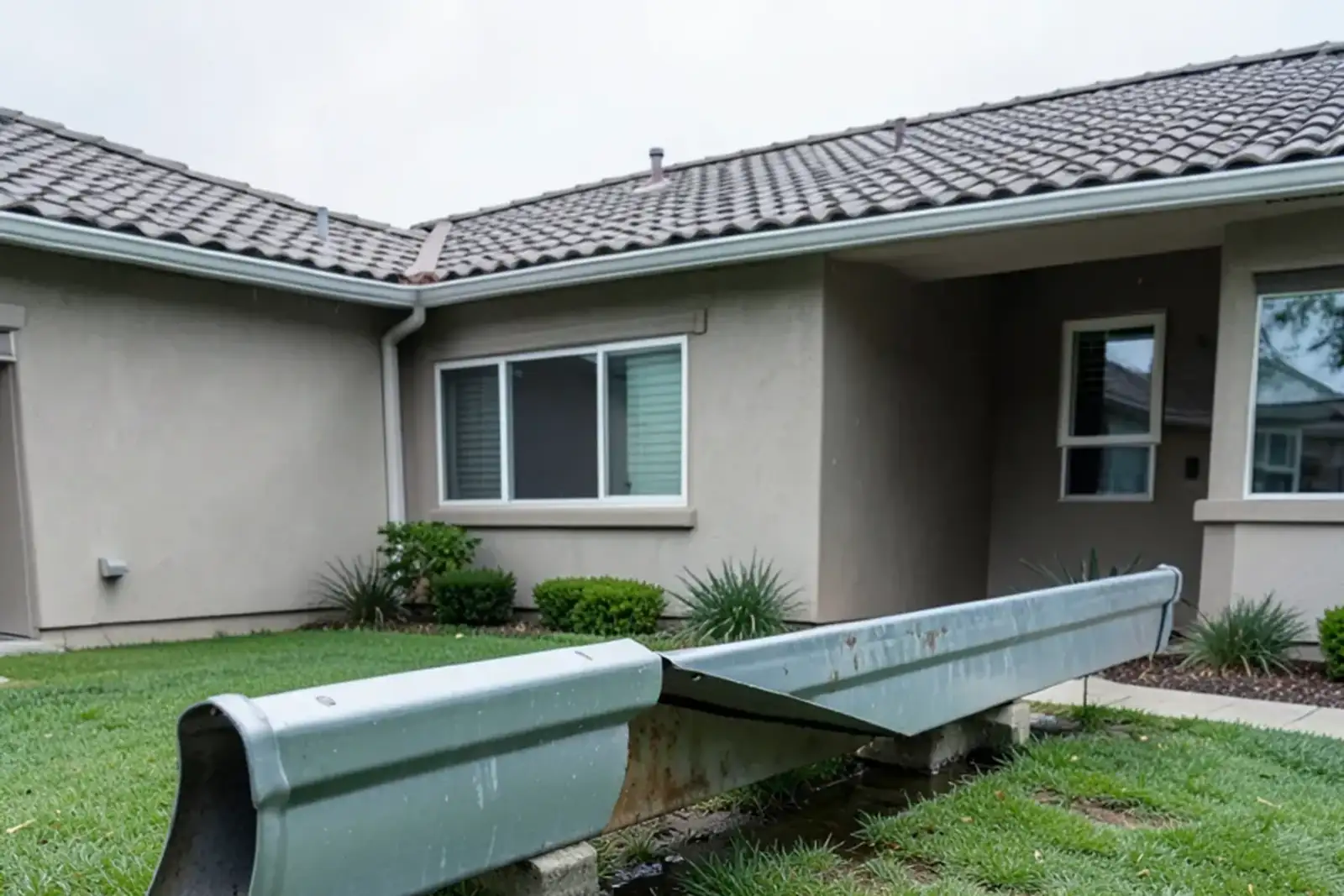
A gutter should slope gently toward each downspout, so water keeps moving. Hangers loosen over time, especially after ladder pressure, wind or a heavy load of wet debris. When the run sags, a pool forms in the low spot. It fills sooner, adds weight and pulls the gutter down further.
The test is simple. After a rain, look for standing water in the trough. If it is still there a day later, the pitch is off. Another clue is a gap between the gutter and the fascia board along part of the run, which means the hangers have pulled out of soft wood.
Undersized gutters, valleys and fast roofs
Not every overflow is a maintenance issue. Some gutters are too small for the roof they serve. A large roof, a steep slope or a valley, where two roof planes meet and funnel water, can send more water than a small trough and one downspout can carry.
The signs: the gutter is clean and well pitched, yet it spills in heavy storms in the same place each time. Fixes include a wider trough, an extra outlet, a larger downspout, or a diverter at a valley. Which one fits depends on the roof layout, so the design needs a look at the roof, not a standard package.
Quick checks you can do from the ground
Before you call anyone, a few checks cost nothing and take ten minutes:
- Watch a storm from a dry spot and note exactly where water leaves the gutter
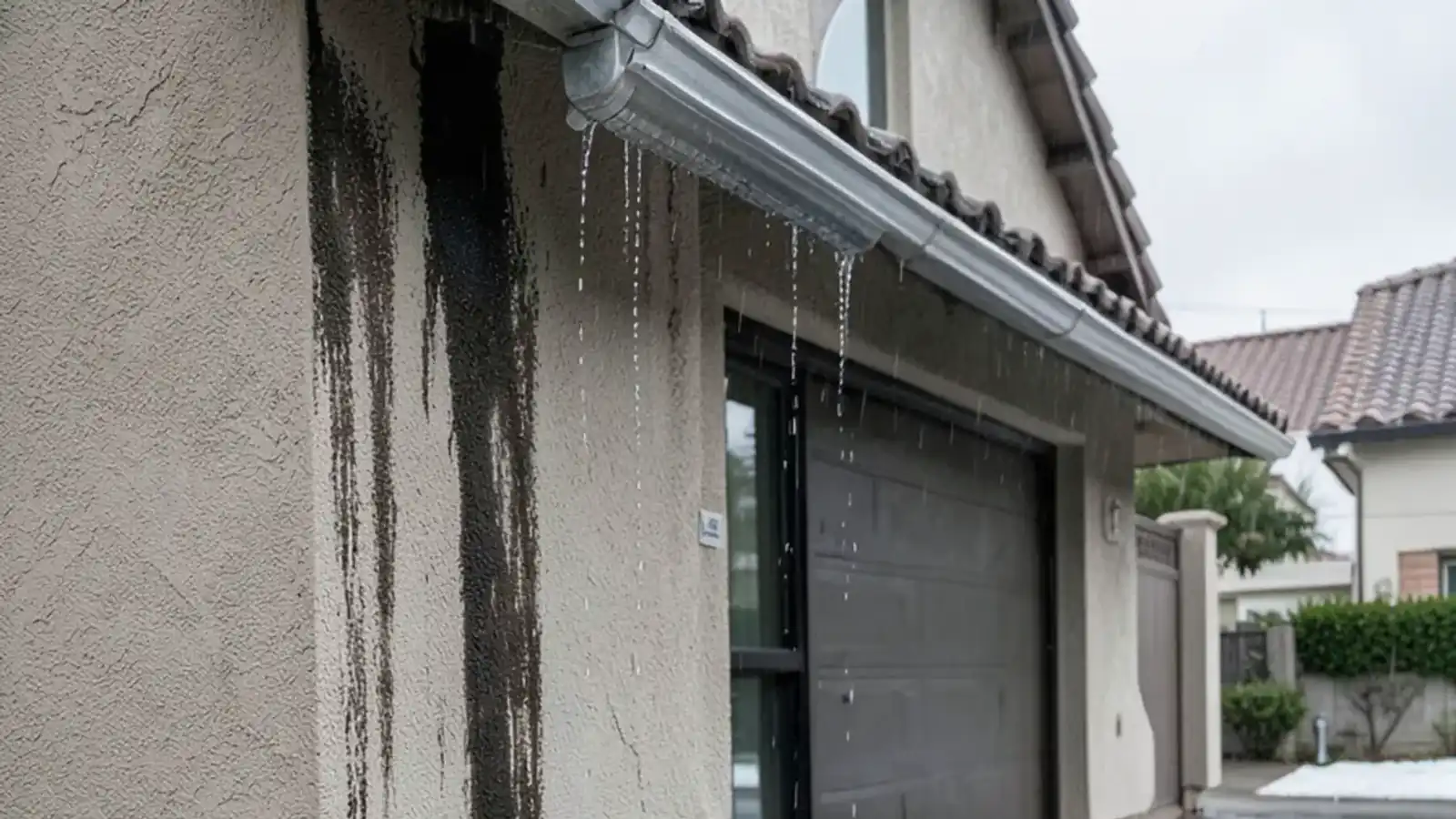
- Look for stains on the wall below, which mark the path of past spills
- Check the downspout bottom for a clear outlet, and for water trickling out
- Look at the ground for a bare patch or a dug-out groove under a corner
- Never climb a wet ladder. If the gutter needs a hand, wait for dry weather
Take photos of whatever you find. They make it easier to explain the problem when you call, and they help us decide how best to look at the roof edge.
What we do with a hose and a ladder
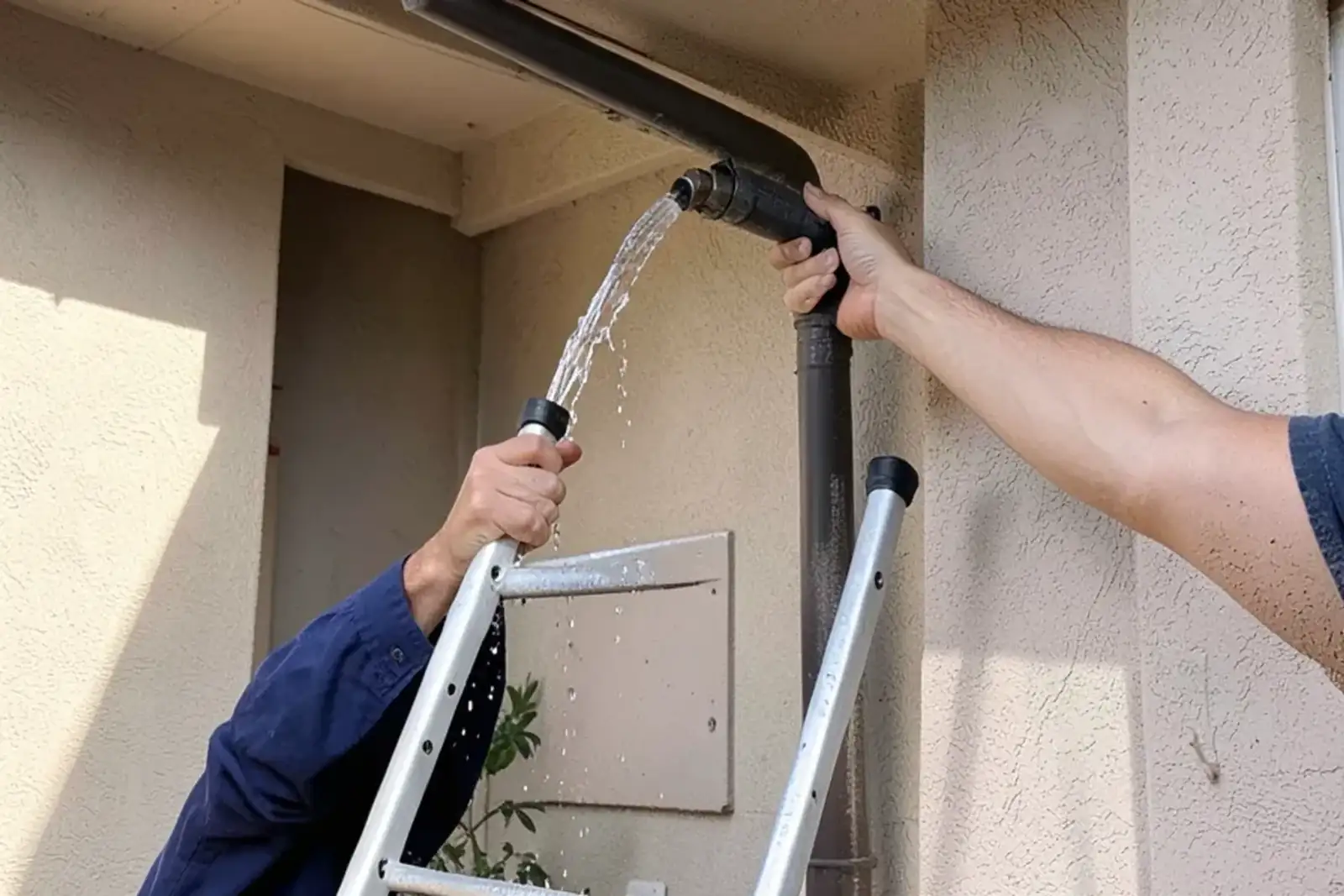
Our usual test is plain. We clear the trough, then run a hose into the high end and watch. If the water moves to the outlet cleanly, the pitch is good. If it pools, we mark the low spot. If it backs up at the downspout, we flush the downspout from the top and the bottom.
The test also catches seams. Dripping at a joint while the hose runs shows the sealant has failed. One Van Nuys customer describes how we handled gutter issues carefully during a roof cleaning, and reviewers mention ridge vent and gutters done after storm-fallen limbs. In every case we look for the cause before we recommend repair or replacement.
How roof area, downspouts and storms set the size
Gutters are sized to the water that reaches them, and that depends on roof area, slope and storm intensity. Sizing guidance works from the flat footprint of the roof. A 40-foot eave with a 15-foot run up to the ridge sends water from about 600 square feet of roof to that gutter, and each downspout can only serve a limited area.
Two sizes dominate. Five-inch gutters with 2x3 inch downspouts suit many single-story homes. Six-inch gutters with 3x4 inch downspouts suit large roofs, steep slopes and runs below valleys, and a 6-inch gutter carries noticeably more water because capacity grows faster than width. Design follows short, hard bursts of rain rather than annual totals, which fits Los Angeles, where a few storms deliver much of the year's rain.
Slope matters here too. Guidance often cites about a quarter inch of fall per 10 feet of gutter toward the outlet. More fall is not better, because a steep gutter can throw water past the end.
What working roofers say about gutter overflow fixes
The cheapest fix is usually the right first step: clear the outlet, flush the downspout and re-check. After that, the trade-offs begin. Re-hanging a sagging run is affordable, but it only holds if the fascia behind it is sound, so soft wood has to be repaired first. Bigger gutters and downspouts move more water, but the roof edge must carry the weight and the downspout needs somewhere to discharge.
Gutter guards help when leaves are the cause, but heavy flow can shoot over them, and they do not cure sag or a small trough. Our gutter guards page explains where they fit. One more cause is easy to miss: water running behind the gutter because the drip edge is missing or short, which leaves fascia stains and rot. Good practice puts the drip edge on before the gutter, so the roof edge guides water into the trough.
What changes the cost of fixing overflowing gutters
We price after seeing the roof edge, in writing. These variables decide it:
- Cause: clearing a downspout is small work, replacing a sagging run is not
- Length affected: one section or the whole elevation
- Fascia condition: rotted boards are repaired before anything is rehung
- Size and outlets: a wider trough or an extra downspout adds material and labor
- Height: a second-story edge needs more safety setup
If the whole system is worn, see gutter installation for how a replacement is scoped.
Burbank gutters and the winter storm test
Rain in the Los Angeles area falls mostly from December through March, and the first big storm of the season is when a neglected gutter shows its faults. Burbank's housing is older, with a Census ACS median build year of 1959, so original gutters and low-pitch ranch roofs are worth checking before the wet months.
NOAA's 1991-2020 normals put downtown Los Angeles at about 14 inches of rain a year, and much of it arrives in a few storms. That is why a gutter that copes with drizzle can still spill. Burbank is about 9 miles from our Van Nuys base, an estimated 20-minute drive.
Next step for overflowing gutters
Take photos of where the water leaves the gutter during the next rain, plus the stains on the wall below. Then call Clear Shield Roofers at (209) 563-1278 and describe what you saw, and we will tell you whether it sounds like a clog, a sag or a sizing problem.
Quick answers
Why do my gutters overflow only in heavy rain?
Because the system can handle light rain but not the volume that a hard storm sends off the roof. The usual causes are a blocked downspout, too few outlets, a trough too small for the roof area, or a valley that dumps a large sheet of water in one spot. A hose test shows which one it is.
Can wrong gutter pitch cause overflow?
Yes. A gutter needs a slight slope toward the downspout. If hangers loosen and the trough sags, water sits in the low spots, fills sooner and spills at the front lip. Standing water a day after rain is the usual clue. Re-hanging or replacing the sagging section fixes it, depending on how much damage the metal has taken.
Do gutter seams leaking mean the gutter is overflowing?
Not exactly, but they look alike. A seam leak drips from the joint or corner, often with a dark line down the wall, while overflow spills over the top or front edge. Both can happen together. Leaking seams usually call for resealing or replacing that joint, and clearing debris will not solve them.
Can a bigger downspout stop my gutter from overflowing?
Often, yes. Common downspouts are 2x3 and 3x4 inches, and the larger one carries considerably more water, so swapping it is a low-cost fix when the trough is clean and pitched correctly. If one downspout serves a long run or a valley, it may need a second outlet instead. A roofer checks the roof area each outlet serves.
Will gutter guards stop my gutters from overflowing?
They can help if debris is the cause, because they keep leaves and needles out of the trough. They will not fix sagging, wrong pitch, an undersized trough or too few downspouts, and heavy flow can shoot over some guard styles. Find the real cause first, then decide whether a guard fits.