
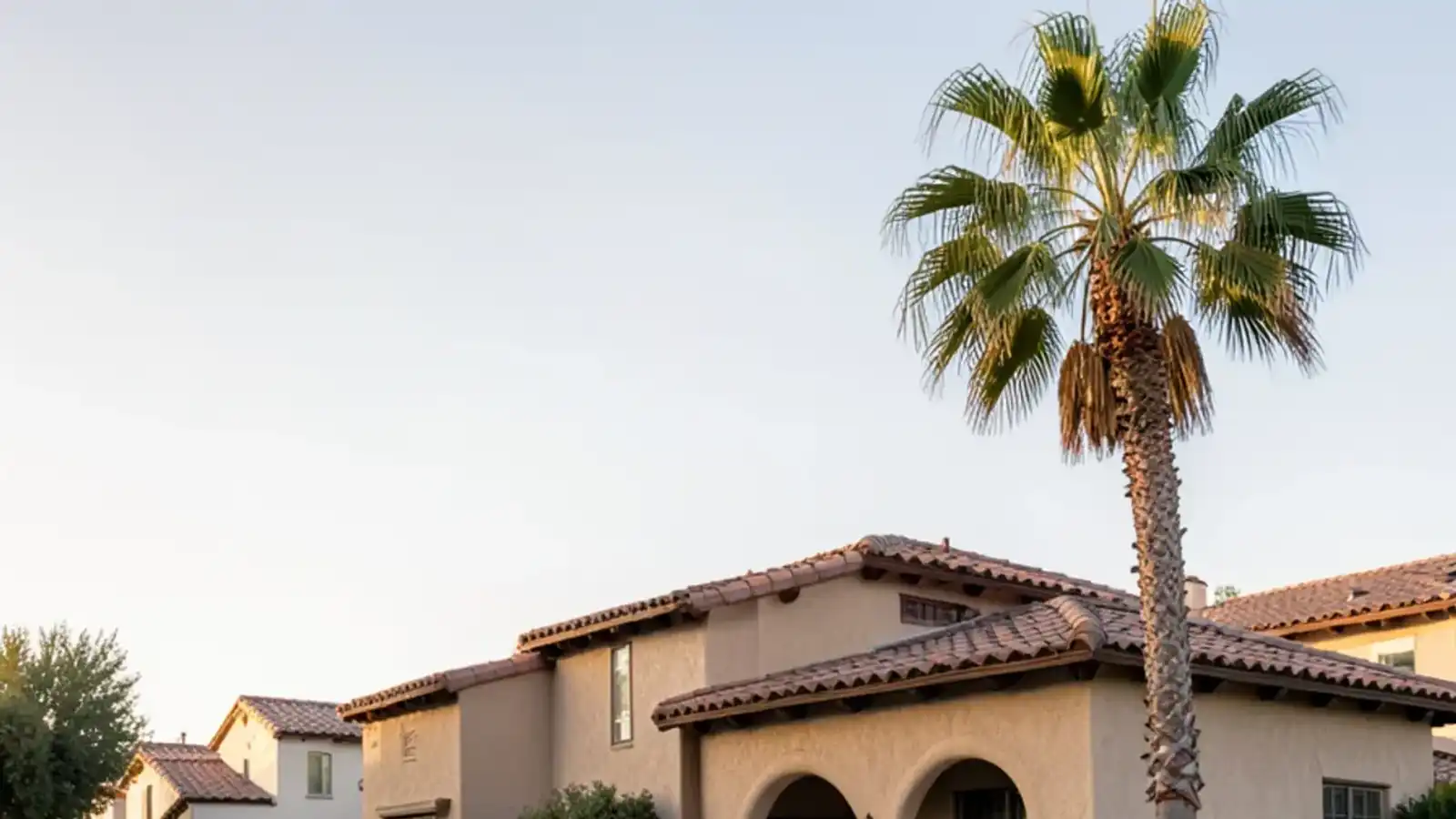
Roofing Materials
Spanish Tile Roofs in LA: Care and Underlayment
A Spanish tile roof in Los Angeles is usually kept up by caring for what sits beneath the tile. Clay tile can outlast the underlayment under it, so inspect for cracked and slipped tiles every year, renew the underlayment when it ages and keep foot traffic off the roof.
- ★ 4.9 on Google · 69 reviews
- Same-day or next-day bookings
- Based in Van Nuys, CA
Published and updated November 3, 2026 · By the Clear Shield Roofers team, Van Nuys, CA
On this page
- A yearly care routine for Spanish tile
- Why underlayment is the weak link under tile
- When to repair tile and when to relay the roof
- How heavy is a clay tile roof, and why does it matter for repairs?
- What does a tile lift and relay involve, step by step?
- What a roofer looks for on a Spanish tile inspection
- What do working roofers say about tile roof trade-offs?
- Historic homes and the Pasadena question
- Getting your Spanish tile roof looked at
- Common questions
Clay tile is one of the longest-lived roofing materials in Southern California. The tile itself is often fine after decades of sun. The trouble sits underneath it, in the underlayment, the water-resistant layer laid directly over the roof deck. That layer does the real waterproofing, and it ages out of sight.
Most care advice comes down to that one idea: look after the tile, but plan for the layer below it. Our tile roofing page covers repair and replacement options, and the roofing materials hub compares tile to other choices.
A yearly care routine for Spanish tile
Spanish-style roofs reward steady, small attention. Walk the ground around the house after a wind event and again in early fall. Binoculars show a lot.
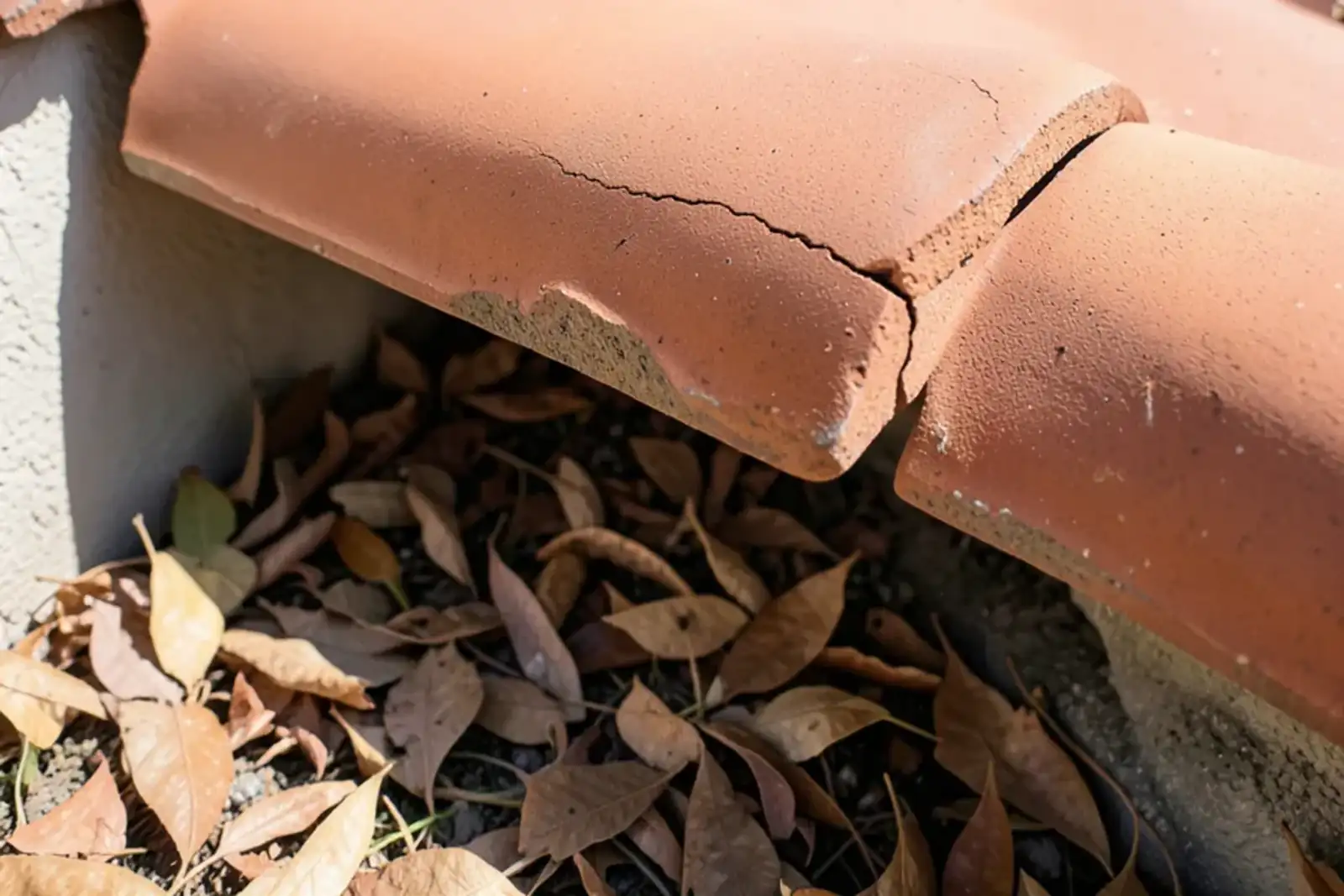
- Cracked or chipped tiles: hairline splits become leaks in heavy rain
- Slipped tiles: a tile that has shifted out of line leaves a gap in the water path
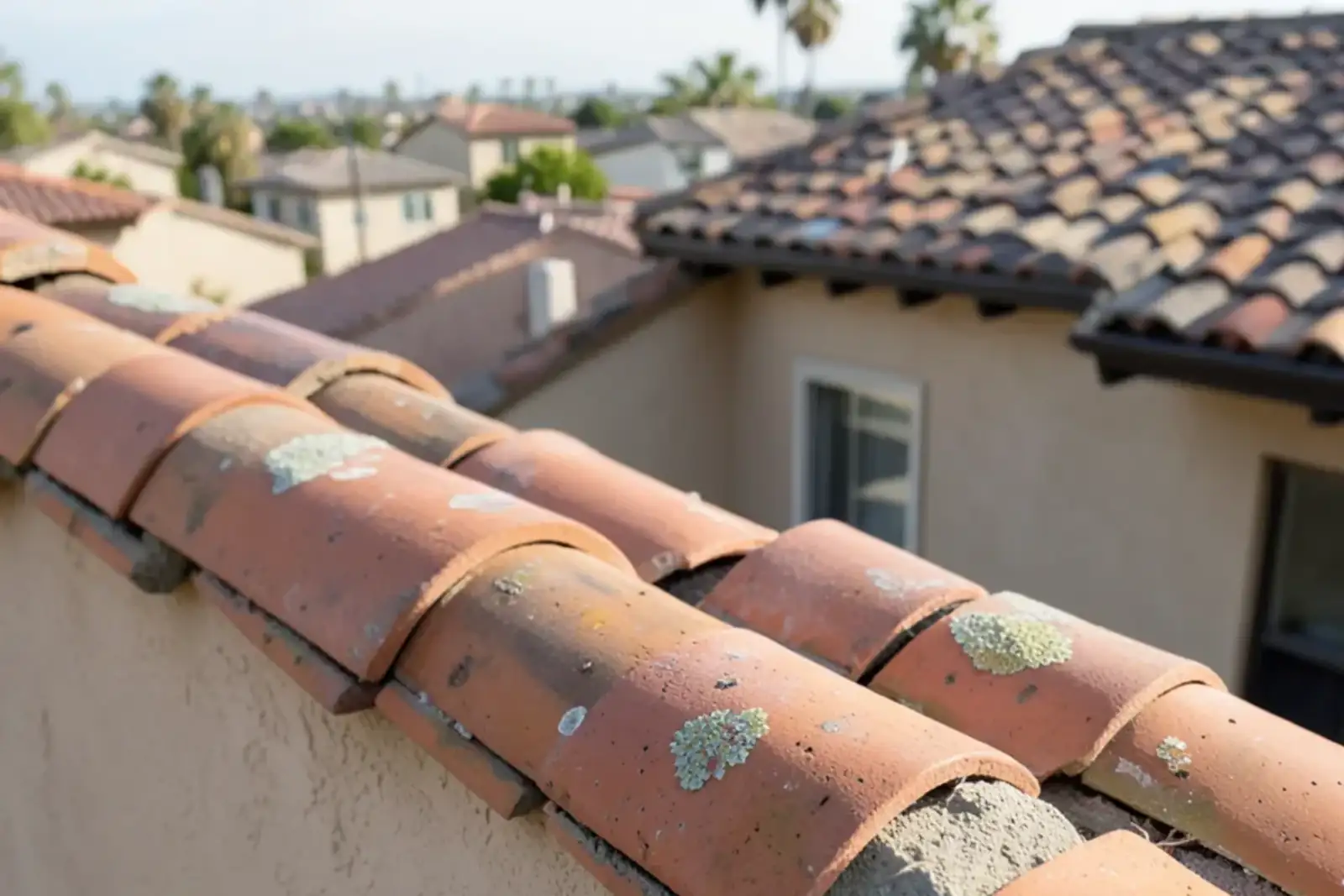
- Ridge and hip caps: mortar can crack and cap tiles can loosen
- Valleys: leaves and grit dam water against the metal below
- Stucco below the roofline: stains and bubbling point to a leak above
- Bird and rodent signs: gaps at the eave can let animals into the attic
Keep trees trimmed back and clear debris from valleys from a safe position. Do not climb onto the tile.
Why underlayment is the weak link under tile
Tile sheds most of the water, but wind-driven rain gets under it and runs down the underlayment. The underlayment is the real water barrier. Traditional felt underlayment often wears out well before clay tile does, and the manufacturer's rated life of the product governs. Los Angeles heat hastens it, since an enclosed layer under dark tile can bake for months. Van Nuys, for example, sees about 77 days a year at 90°F or hotter by NOAA's normals.
You cannot see the underlayment from the ground. The signs are indirect: stains on ceilings after rain, a musty attic, or leaks that repair after repair fails to stop. In those cases the problem is usually the layer, not a single tile.
This is why tile roofs can leak while looking perfect from the street. A roofer lifts a few tiles in a test spot to check what is below, and the state of those few feet tells the story for the rest.
When to repair tile and when to relay the roof
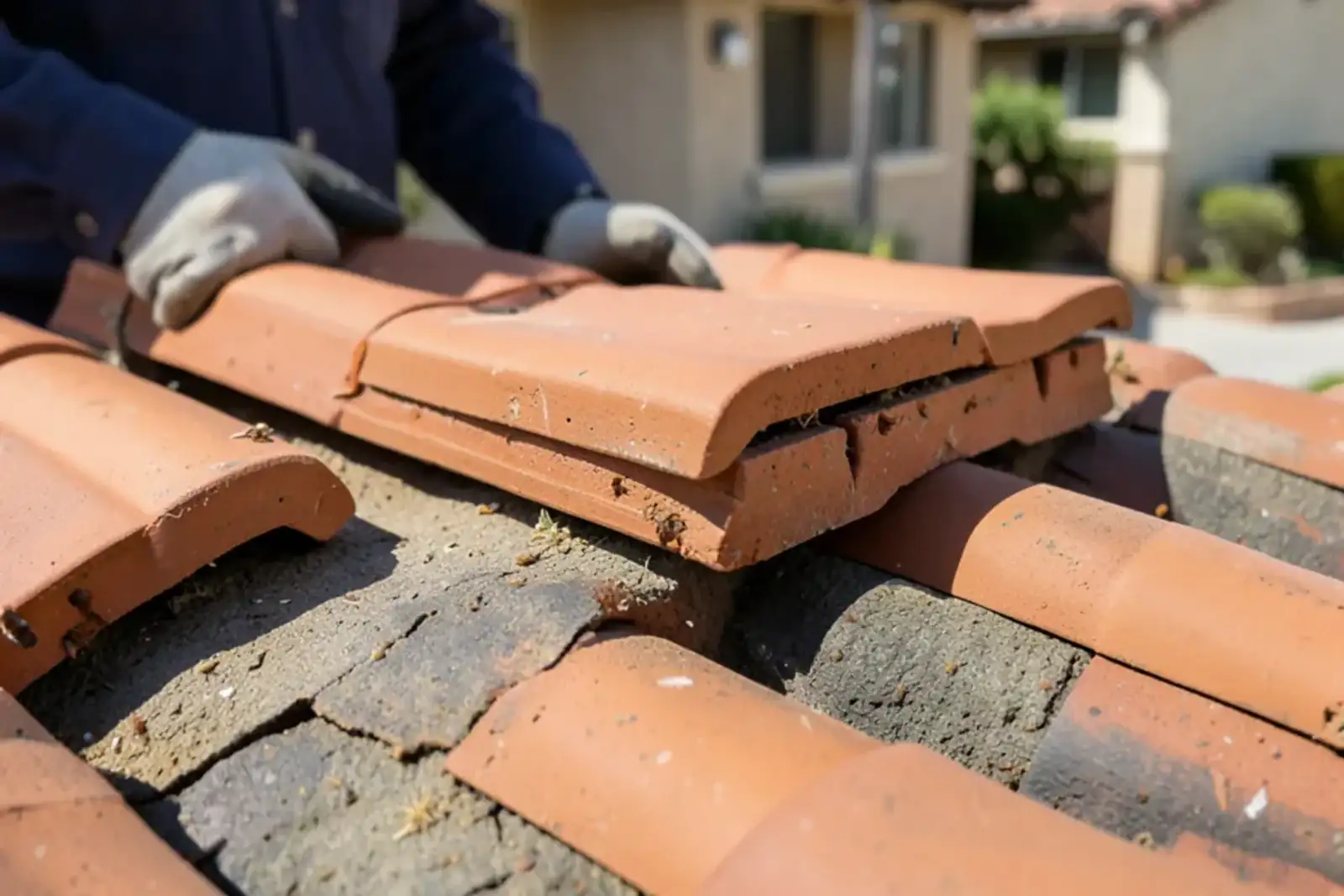
Repairing individual tile makes sense when the underlayment is sound and the damage is local. A lift-and-relay, where the tile is stacked aside, the underlayment is renewed and the sound tile goes back, makes sense when the layer is the problem. It saves the tile and fixes what failed.
| Situation | Usual approach |
|---|---|
| A few cracked or slipped tiles, dry underlayment | Replace or reset those tiles |
| Repeated leaks in different spots | Inspect underlayment, likely lift and relay |
| Tile itself crumbling or heavily broken | Replace tile, possibly more of the roof |
| Cracked ridge caps | Reset caps and renew mortar or fasteners |
Matching old tile can be hard, especially on older homes, where the profile and the faded color of the original clay may no longer be made. Salvage from a hidden slope, such as the back of a garage, can help, and it is worth raising early so the plan includes it. Ask the estimate to say how many spare tiles are being set aside and where they came from.
How heavy is a clay tile roof, and why does it matter for repairs?
Clay tile is heavy. NIST's product data puts one-piece S-tile at roughly 800 pounds per roofing square, a square being 100 square feet, and two-piece Mission tile weighs more. That weight is why a lift and relay needs space to stack the tile safely and a plan for where it goes while the roof is open.
It is also why a material change needs a framing check. Swapping tile for a lighter covering is possible, but going the other way, from shingle to tile, can overload framing that was never built for it.
What does a tile lift and relay involve, step by step?
The details vary by roof, and a written scope should spell them out. A lift and relay generally follows this order:
- Photograph the roof and mark broken, slipped and missing tiles.
- Stack and set aside the sound tile in controlled piles, so loads stay off the framing.
- Remove the old underlayment and inspect the deck for stains and soft spots.
- Repair or replace decking where it is damaged, with the work explained first.
- Install new underlayment and flashing at valleys, walls and penetrations.
- Relay the tile in its original pattern, with salvaged or matched pieces for the broken ones, and reset the ridge caps.
What a roofer looks for on a Spanish tile inspection
Here is how we approach a tile roof. We stay off the tile where we can, and we carry the right footwear and gear for the places we must walk. We start at the eaves and valleys, because water collects there. We note every cracked, shifted and missing tile, photograph them and mark them for you.
Then we check the penetrations and flashing, since a pipe or chimney detail often fails first. Finally we look in the attic if we can, to find water trails on the rafters. Reviewers in Van Nuys mention hidden problems found and explained, plus leaks traced before any coating. We aim to give the same plain explanation of a tile roof, with the findings in writing.
Prices come after we see the roof. Cost depends on how much tile moves, access, the amount of damaged underlayment or decking, and tile availability.
What do working roofers say about tile roof trade-offs?
Tile care is full of honest either-ors, and these are the ones we would walk through with you.
Keep the old felt or renew it? Renewing costs more now, but it is the one repair that addresses the layer that actually keeps water out. Patching tile over worn felt can be a fair short-term choice on a roof you plan to leave soon, as long as you know what you are not fixing.
Match the tile or accept a patchwork? Salvaged tile blends better but takes time to source. Newer tile in a similar profile is easier to find, yet a color difference may show for years until it weathers.
Mortar or mechanical fasteners on ridge caps? Mortar looks right on older Spanish homes but cracks with movement. Fastened caps hold better and are easier to service. The choice depends on the style and any historic review.
Do not let the cheapest quote skip the flashing. A tile roof with new underlayment and old flashing can still leak at the wall.
Historic homes and the Pasadena question
Older Spanish and Mission-style homes carry value that a modern replacement can erase. Pasadena is a good example, with historic districts such as Bungalow Heaven. Before changing a roof's material or look, ask the city whether review applies. Our Pasadena service area page has more on how we cover it from Van Nuys.
Do not assume a tile roof is safe to keep or to replace based on looks alone. Weight, framing and fire rules matter too. A switch from tile to a lighter material is possible, but it changes the look and needs a permit.
Bungalow Heaven, for example, was Pasadena's first locally designated landmark district, and exterior alterations there generally need design approval before a building permit. Features that cannot be seen from the public right-of-way are generally exempt under its conservation plan, so the visible slopes are the ones to ask about. Call the city's Design and Historic Preservation counter before you order materials.
Getting your Spanish tile roof looked at
Describe the tile, the age of the house and what you have seen on the ceilings or the ground, and we will say what a first visit would cover. Reviewers in Van Nuys mention leaks traced before coating and hidden problems explained. To book a look, call (209) 563-1278 and we will set the earliest visit we can.
Quick answers
How often should a Spanish tile roof be inspected in Los Angeles?
Once a year is a sound habit, ideally in fall before the rains, plus a look after any strong wind event. A roofer can see cracked, slipped and missing tiles and check valleys, ridge caps and flashings. Older roofs, or ones with overhanging trees, may justify a second look after winter.
Can I walk on my clay tile roof to clear debris?
Better not to. Clay and concrete tile crack under foot, and a cracked tile that looks fine can become a leak at the next storm. Clear debris from the ground or from a roof edge you can reach safely, and leave anything on the surface to a roofer who knows where to step and what gear to use.
What is the difference between replacing tile and replacing the underlayment?
Replacing tile swaps individual broken pieces. Replacing underlayment means lifting the tile, removing the old layer below it, installing new material and setting the sound tile back. The second job costs more and takes longer, but it addresses the part of a tile roof that tends to wear out first.
Does a Spanish tile house in a Pasadena historic district need design review for a roof job?
It may. Bungalow Heaven was Pasadena's first locally designated landmark district, and exterior changes there generally go through the city's Design and Historic Preservation counter before a building permit. Whether a like-for-like tile repair is reviewed depends on visibility and scope, so ask the city first and keep the answer in writing.
How long does underlayment last beneath a clay tile roof in Los Angeles?
It often fails years before the tile does, especially older felt that has baked under the sun. The product's manufacturer-rated life governs, and heat and installation quality move the real number. Instead of guessing from the date, have a roofer lift a few tiles in a test spot and look at the condition of the layer.