
Skylights and Ventilation
Skylight Leaks: Flashing, Seal or Replace?
Why is my skylight leaking? Most often the flashing or the sealant around it has failed, not the glass. Water on the inside of the glass can be condensation, not a leak. A test tells them apart, and the fix runs from resealing to new flashing to replacement.
- ★ 4.9 on Google · 69 reviews
- Same-day or next-day bookings
- Based in Van Nuys, CA
Published and updated November 3, 2026 · By the Clear Shield Roofers team, Van Nuys, CA
On this page
- Why is my skylight leaking? The usual suspects
- Condensation or a real leak?
- How we trace a skylight leak
- Reseal, reflash or replace: how to choose
- Why sealant alone rarely lasts
- What a properly flashed skylight includes
- Curb-mounted or deck-mounted: what working roofers weigh
- What changes the cost of fixing a skylight leak
- Pasadena skylights on older roofs
- What to do while you wait for a visit
- Common questions
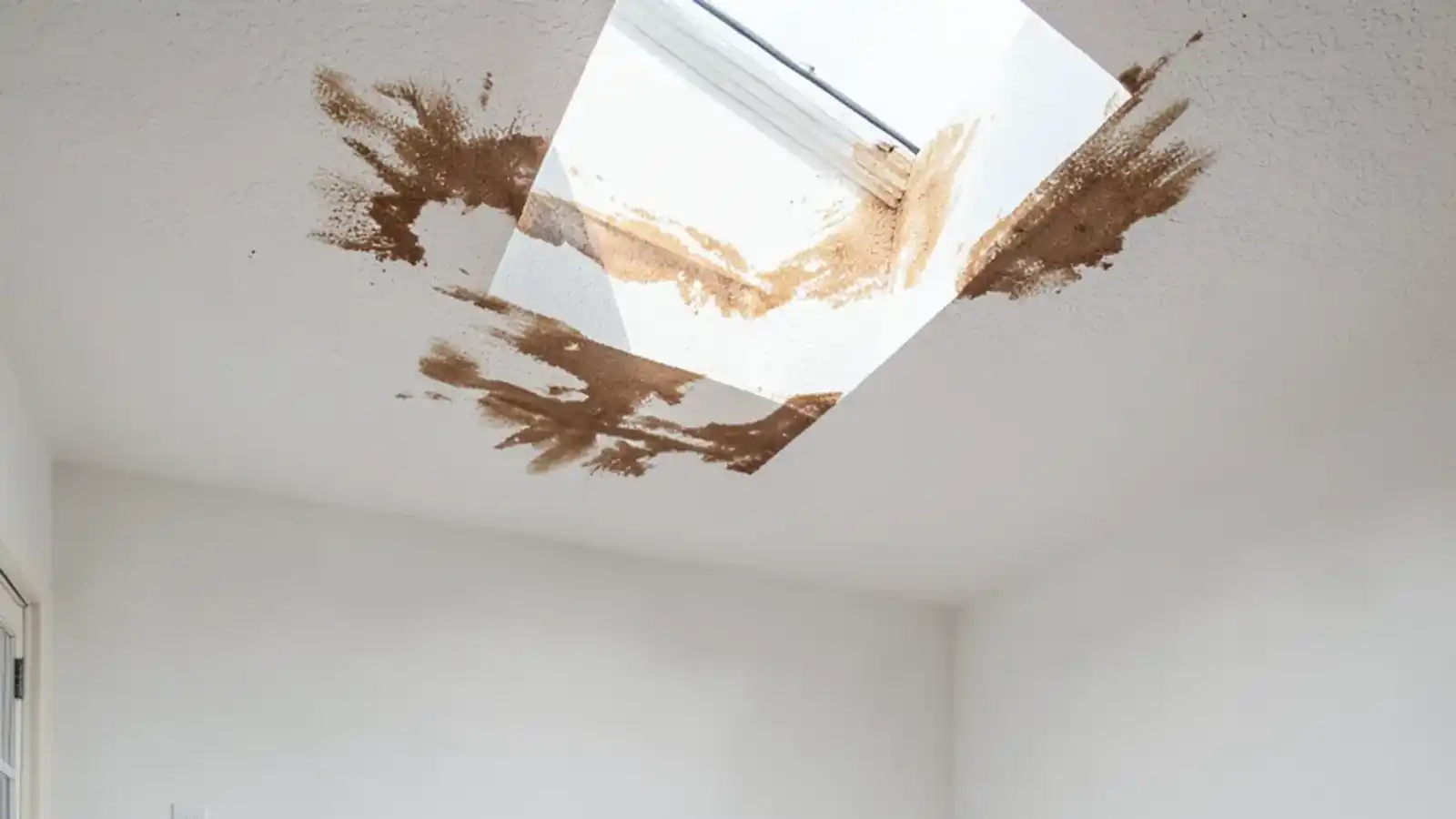
Not every wet spot under a skylight is a leak. Some are condensation, some are a failed seal between glass panes and some come from a roof problem above. Each has a different fix.
This guide helps you sort them. If your skylight is old or has been resealed more than once, our skylight repair page shows how we approach it. Skylights and vents are part of the wider skylights and ventilation work we cover.
Why is my skylight leaking? The usual suspects
| Cause | Where you see it | Typical fix |
|---|---|---|
| Failed flashing | Staining on the shaft walls after rain | Rebuild the flashing |
| Cracked or dried sealant | Drips at frame corners | Clean and reseal if the frame is sound |
| Rotted curb or deck | Soft, dark wood around the opening | Replace the damaged wood, then reflash |
| Failed glass seal | Fog or water spots between two panes | Replace the glass unit or the skylight |
| Cracked dome or glass | Visible crack, drips from the glazing | Replace the glazing |
| Debris damming water | Leaks only after heavy rain | Clear debris and add a diverter |
Condensation is its own category and gets its own section below. Flashing and sealant are the most common culprits we would check first.
Condensation or a real leak?
Condensation is moisture from indoor air landing on a cool surface. It shows as beads or a thin film on the inside of the glass, and it tends to dry as the room warms. Showers, cooking and unvented bathrooms make it worse. A leak shows as staining, bubbling paint or drips that follow rain.
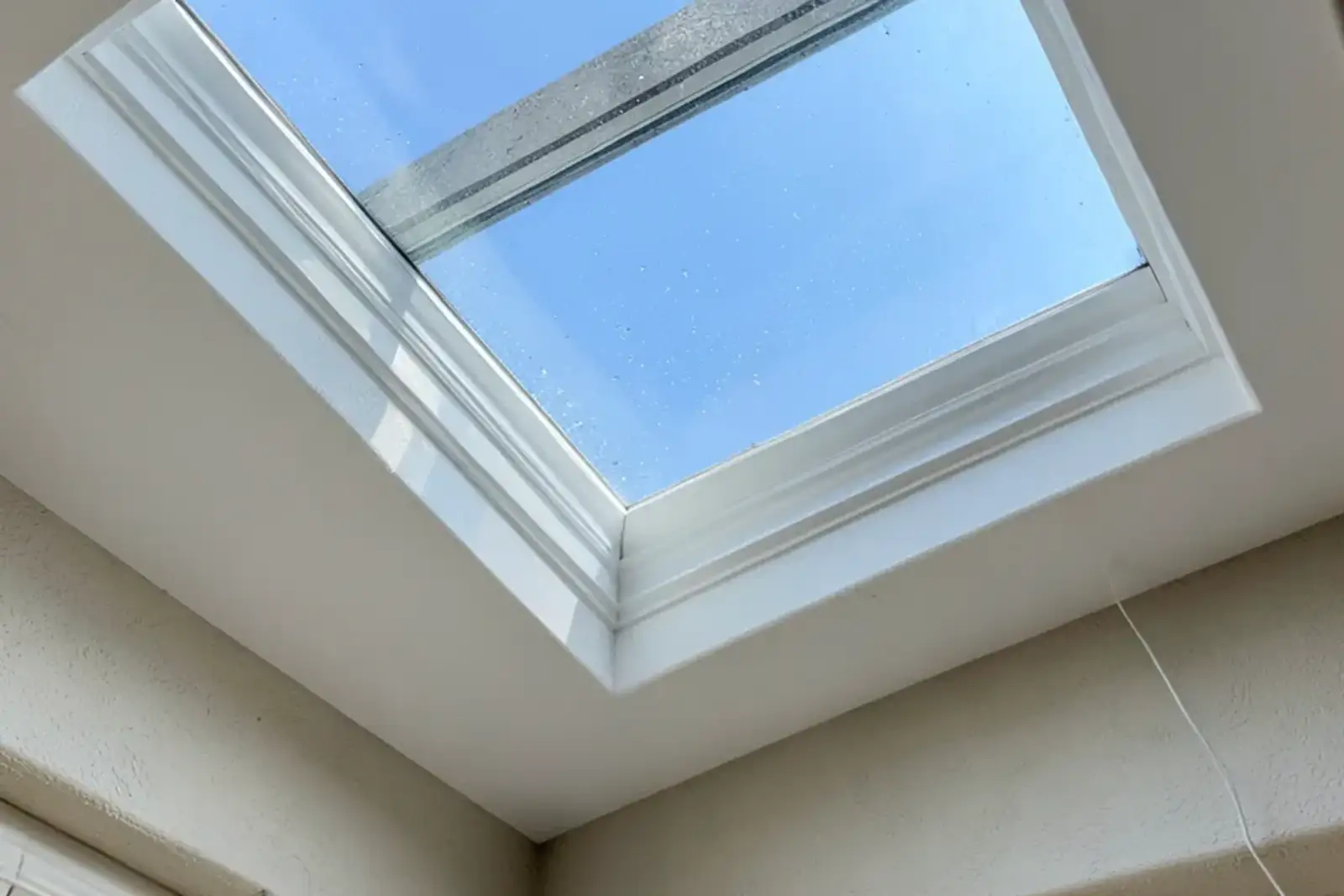
Watch the timing. If it appears on a clear, cool morning, it is probably condensation. If it appears during or after rain, suspect a leak. Fog trapped between two panes is neither. That is a failed seal in the glass unit, and replacing the unit is usually the fix.
How we trace a skylight leak
A stain on the ceiling is not the leak, only where the water ended up. Water can enter above the skylight, run down the curb and drip several inches away. We start inside, checking the shaft and framing for moisture, then go outside to look at the flashing, the sealant, the glazing and the roof above.
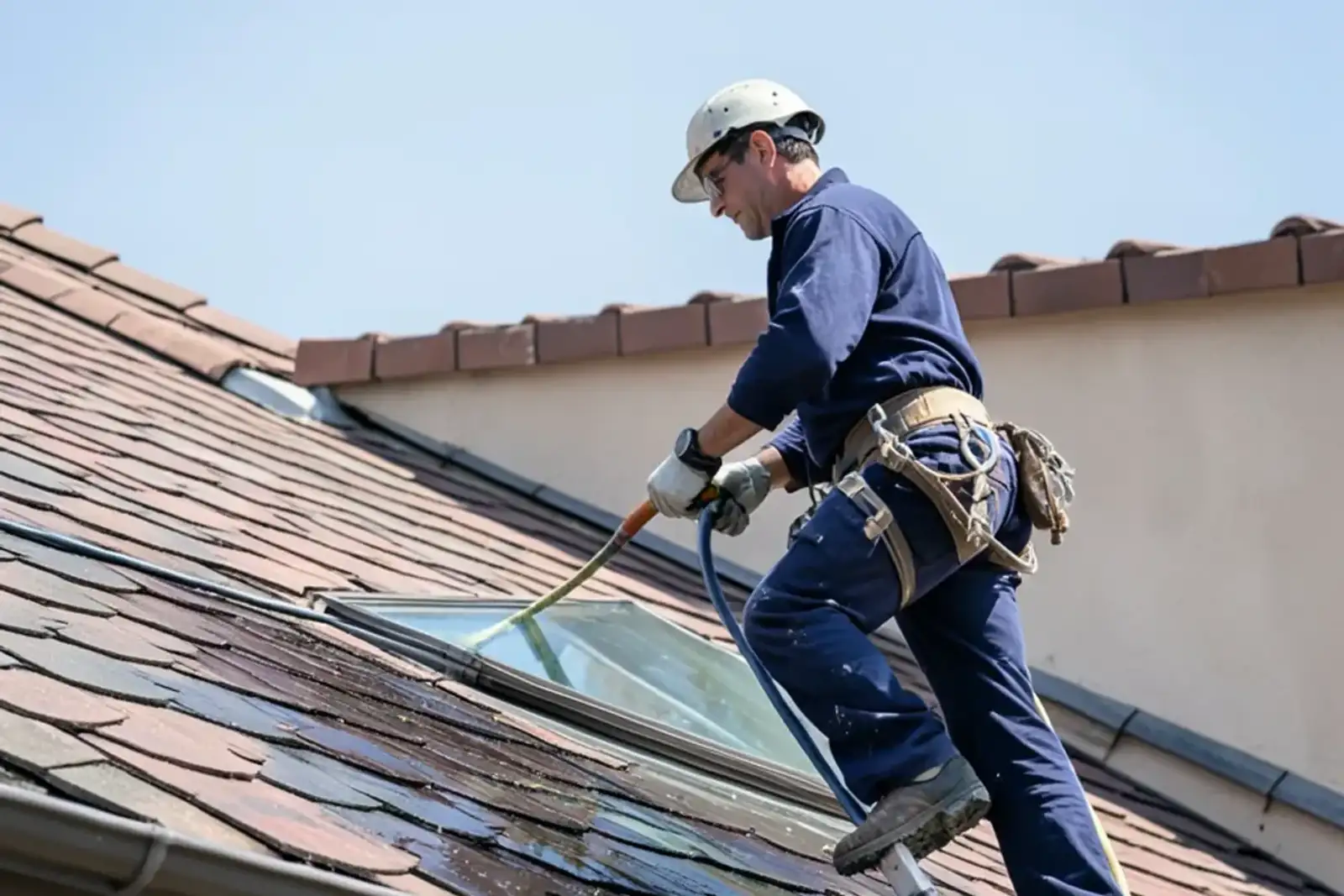
Then comes the water test. We wet the roof in sections, starting low and working up, with someone inside watching. This isolates the entry point. One customer in Van Nuys describes a full water test after a leak repair to confirm the roof stayed dry, and that step is how you know a fix worked. Guessing and sealing everything with caulk usually moves the water somewhere else.
Reseal, reflash or replace: how to choose
The right answer depends on the age and condition of three parts: the frame, the glass and the flashing.
- Reseal: the frame and curb are sound, the glass is clear and only the sealant has aged. This is a short-term fix at best.
- Reflash: the unit is fine but the metal around it was installed poorly or has pulled away. The roofing around it is lifted and the flashing is rebuilt.
- Replace: the glass seal has failed, the frame is corroded or cracked, or the curb is rotted. A new unit with new flashing is the lasting answer.
Age matters. A skylight that has been resealed twice and is old enough that parts are hard to match is usually a replacement candidate. If the roof is also near the end of its life, replacing the skylight with a re-roof avoids doing the work twice.
Why sealant alone rarely lasts
Sealant, often called caulk, is not a roof. It is a gap filler, and the sun and heat that Southern California delivers break it down. Van Nuys averages about 77 days a year at 90°F or hotter by NOAA's normals, so exposed sealant dries, shrinks and cracks faster in the Valley.
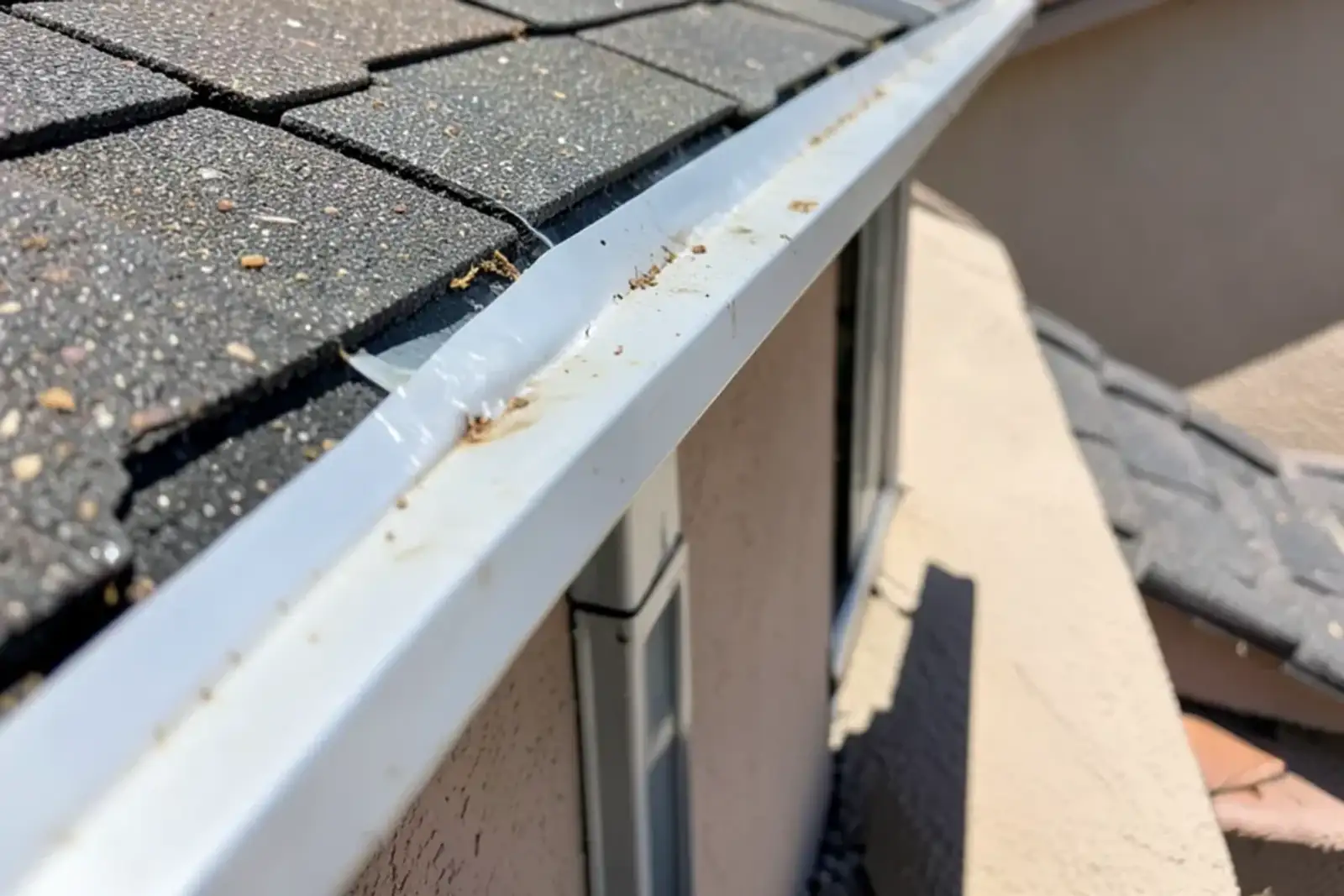
Sealant has a place. It finishes a properly built flashing detail. It should not be the only thing between rain and your ceiling. When we see a skylight edge that is mostly caulk, that tells us the metal and underlayment were never built right.
What a properly flashed skylight includes
A skylight is a hole in the roof's water layer, so the detail around it decides whether it stays dry. Guidance from the Pacific Northwest National Laboratory says the flashing must tie into the underlayment and the roofing, built from the bottom up so each upper piece laps over the one below.
On a curb-mounted unit, the usual order looks like this:
- Membrane: self-adhered sheet at the sill and sides of the curb
- Sill flashing: metal at the bottom edge, carrying water onto the roof
- Step flashing: woven into the shingles up each side
- Head flashing: tucked under the shingles above, so water runs over it
- Wood check: any rotted curb or deck is replaced before the unit goes back
If a skylight edge is mostly caulk with none of these layers, a reseal will not last. That is the point where we recommend reflashing.
Curb-mounted or deck-mounted: what working roofers weigh
There is no single right answer. A deck-mounted skylight sits directly on the roof deck, costs less and looks cleaner from outside. It works best on a roof with enough slope and when the roofing is being replaced, since the flashing has to weave into the new covering. A curb-mounted skylight sits on a raised wood frame, which gives water room to drain and suits low-slope roofs, but the curb adds a part that can rot and a seam to flash.
The honest trade-off is that the raised curb is more forgiving on a flat roof, while the deck-mounted unit leaves fewer places for water to hide on a pitched one. We would check the slope and the roofing first, then recommend.
What changes the cost of fixing a skylight leak
We give prices in writing after seeing the roof. These variables move the number:
- Cause: resealing, reflashing and replacement are different jobs
- Roof type: tile and shingle need different lifting and flashing work
- Wood damage: a rotted curb or wet deck is added to the scope once found
- Unit age: parts for old skylights may not be available, which pushes toward replacement
- Access: a second-story ceiling shaft or a steep slope adds time
If the unit needs replacing, see our skylight replacement page for how we scope it.
Pasadena skylights on older roofs
Many older homes in Pasadena have roofs that have been patched over the decades, and Census ACS puts the median home there as built in 1961. An older skylight may sit in a curb built to a different standard, with flashing layered over several roof coverings. Tile roofs add their own detail, since tile has to be lifted and relaid around the curb. That makes tracing the leak slower, not impossible.
What to do while you wait for a visit
Put a bucket or towels under the drip, and move anything valuable. Take photos of the stain and note when it appears. If the ceiling is bulging with water or a light fixture is wet, stay clear of it and call right away. Do not climb onto a wet roof.
Call with the photos and the timing. Those two details help us decide whether it is a quick reseal, a flashing job or a replacement, and we will set the earliest visit we can. Call Clear Shield Roofers at (209) 563-1278 and we will talk it through.
Quick answers
How can I tell skylight condensation from a leak?
Condensation forms on the inside of the glass or frame, usually on cool mornings, and dries as the day warms. A leak leaves stains that grow after rain, often around the frame or on the shaft walls. Fog between two panes is a failed glass seal, not a roof leak. A hose test confirms which one you have.
Can a skylight be resealed instead of replaced?
Sometimes. If the frame and curb are sound and only the sealant has dried or cracked, resealing can work for a time. If the flashing is the problem, it needs to be rebuilt. Dried sealant is often a sign of age, so ask what condition the frame and glass are in before choosing.
Is a skylight on a low-slope roof more likely to leak?
It can be. Deck-mounted units suit steeper roofs, and a low slope drains slowly, so water lingers at the frame. A raised curb gives water room to clear. On a flat or low-slope roof in Los Angeles, ask how high the curb will be and how the flashing meets the membrane before you approve the work.
Why does my skylight only leak in heavy rain?
Heavy or wind-driven rain pushes water past small gaps that stay dry in light rain, so failed flashing or a cracked sealant joint shows up only in storms. Debris stacked uphill of the skylight can also dam water against the curb. Los Angeles rain is concentrated from December through March, so many leaks appear in those months.