
Emergency Roof Repair
Roof Damage After a Wildfire: Smoke, Ash and Embers
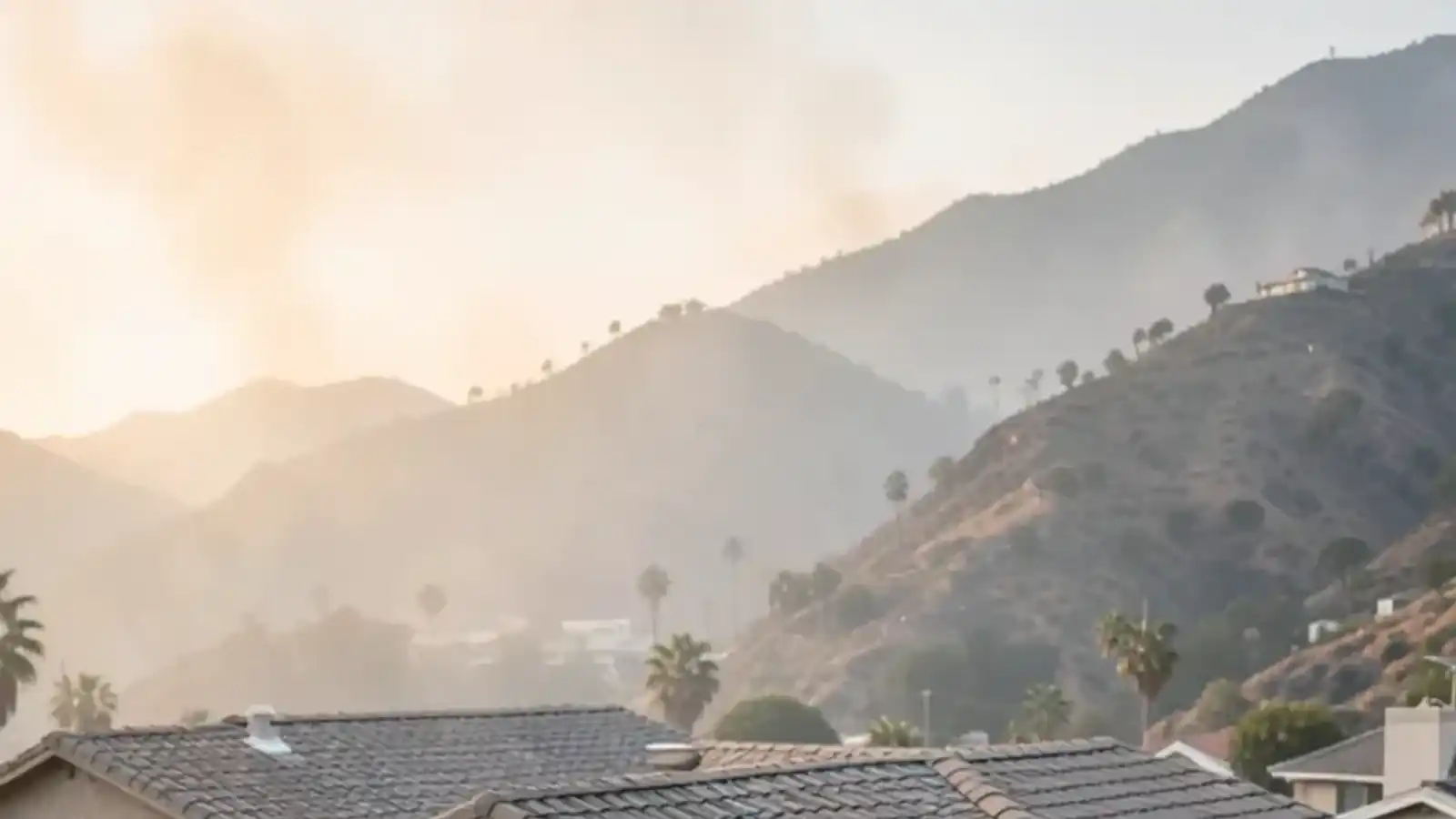
A home can survive a wildfire and still have roof damage from embers, heat, smoke and ash. Stay off the roof, photograph everything from the ground and have the roof inspected before the next rain. Document first, and clean ash only with proper protection.
- ★ 4.9 on Google · 69 reviews
- Same-day or next-day bookings
- Based in Van Nuys, CA
Published and updated November 3, 2026 · By the Clear Shield Roofers team, Van Nuys, CA
On this page
- What embers, heat, smoke and ash do to a roof
- Signs of ember and heat damage you can see from the ground
- Ash on the roof: what to do first
- How roofers inspect a roof after a fire
- What roofers weigh after a fire: clean, repair or replace
- Fire rules for rebuilding a roof
- Insurance after a fire: what to document and who does what
- Why Altadena is handled through the county
- Booking a roof check after a wildfire
- Common questions
Wildfire does not have to reach a house to hurt its roof. Embers fly far ahead of the flame front, and heat, smoke and ash settle across whole neighborhoods. The roof is the first surface they land on.
This guide covers what each does, what to look for and how to document it. It is written for homeowners in burn-area foothill communities, and it follows the way our emergency roof repair work starts, with a careful look before any fix.
What embers, heat, smoke and ash do to a roof
Each one leaves different marks. Knowing which you are looking at tells you what to ask for.
| Cause | What it leaves | Why it matters |
|---|---|---|
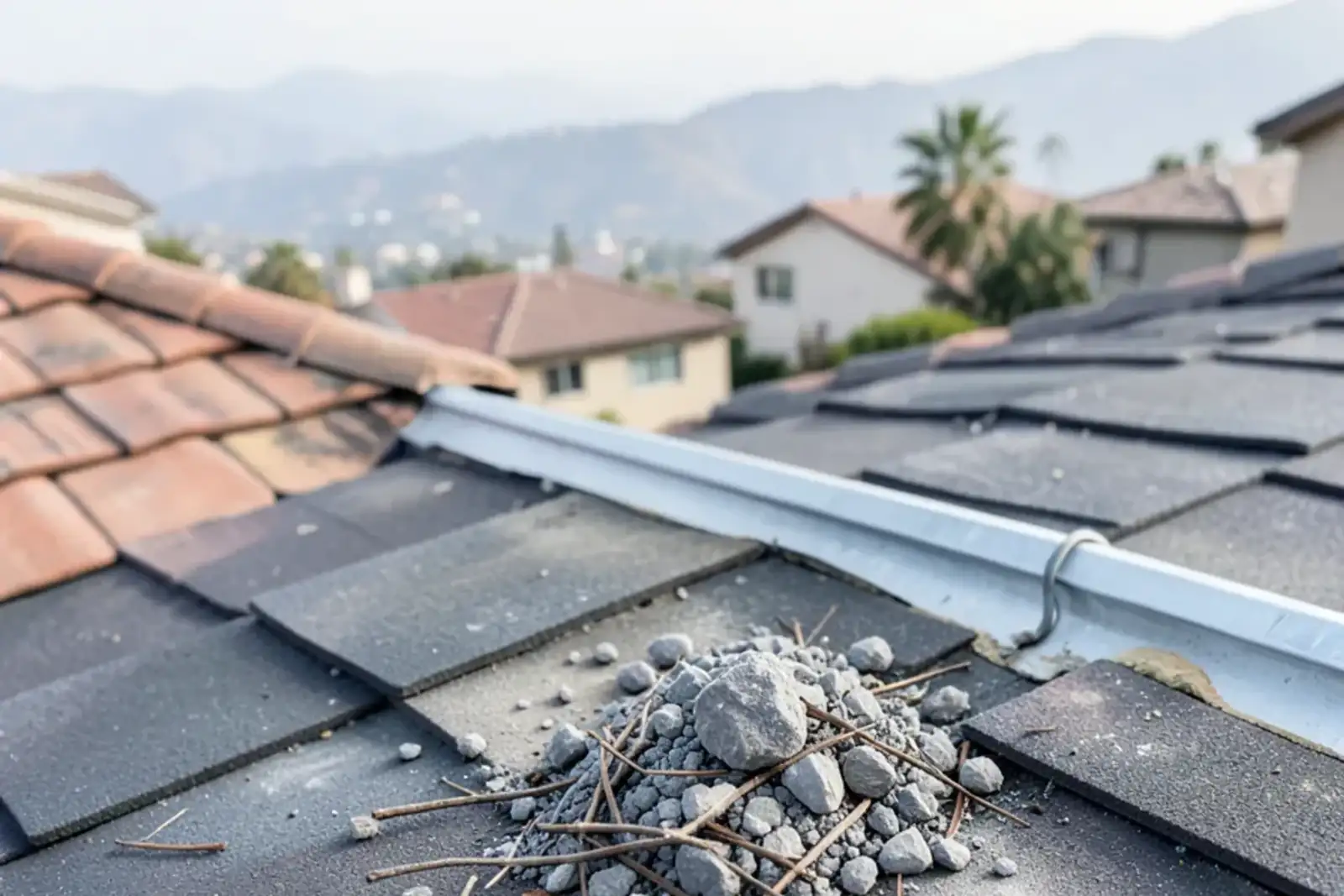
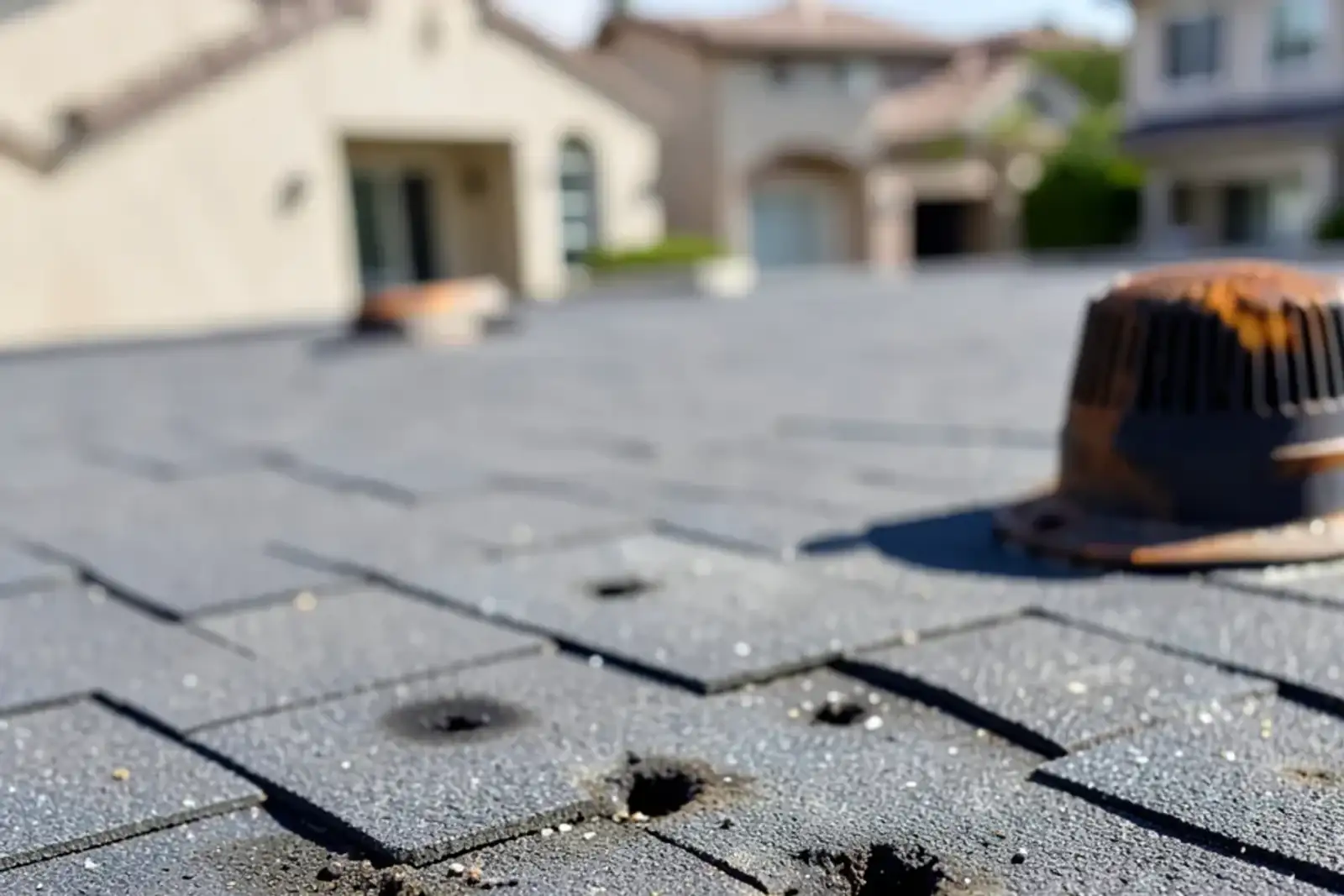
| Embers | Burn pits, scorched sealant, charred debris in valleys and gutters | Small openings leak; debris can reignite or hold water |
| Radiant heat | Warped or blistered shingles, cracked tile, deformed plastic | Weakens the waterproofing layer even if nothing burned |
| Smoke | Soot film, odor in the attic and insulation | Can stain and may need cleaning or replacement |
| Ash | Gray or white film, clogged gutters, paste when wet | Blocks drainage and may carry harmful material |
| Firefighting water | Saturated attic insulation and decking | Hidden moisture that outlasts the fire |
The Eaton Fire in January 2025 destroyed 9,419 structures, according to CAL FIRE, and the Palisades Fire destroyed 6,845. Those numbers hide the many homes that stayed standing and still need a roof check. Older roofs with dry debris in the valleys are the ones most open to embers.
Signs of ember and heat damage you can see from the ground
Stay on the ground, and use your phone zoom. These are the signs to record:
- Small dark pits or melted spots on shingles
- Cracked, chipped or discolored tile
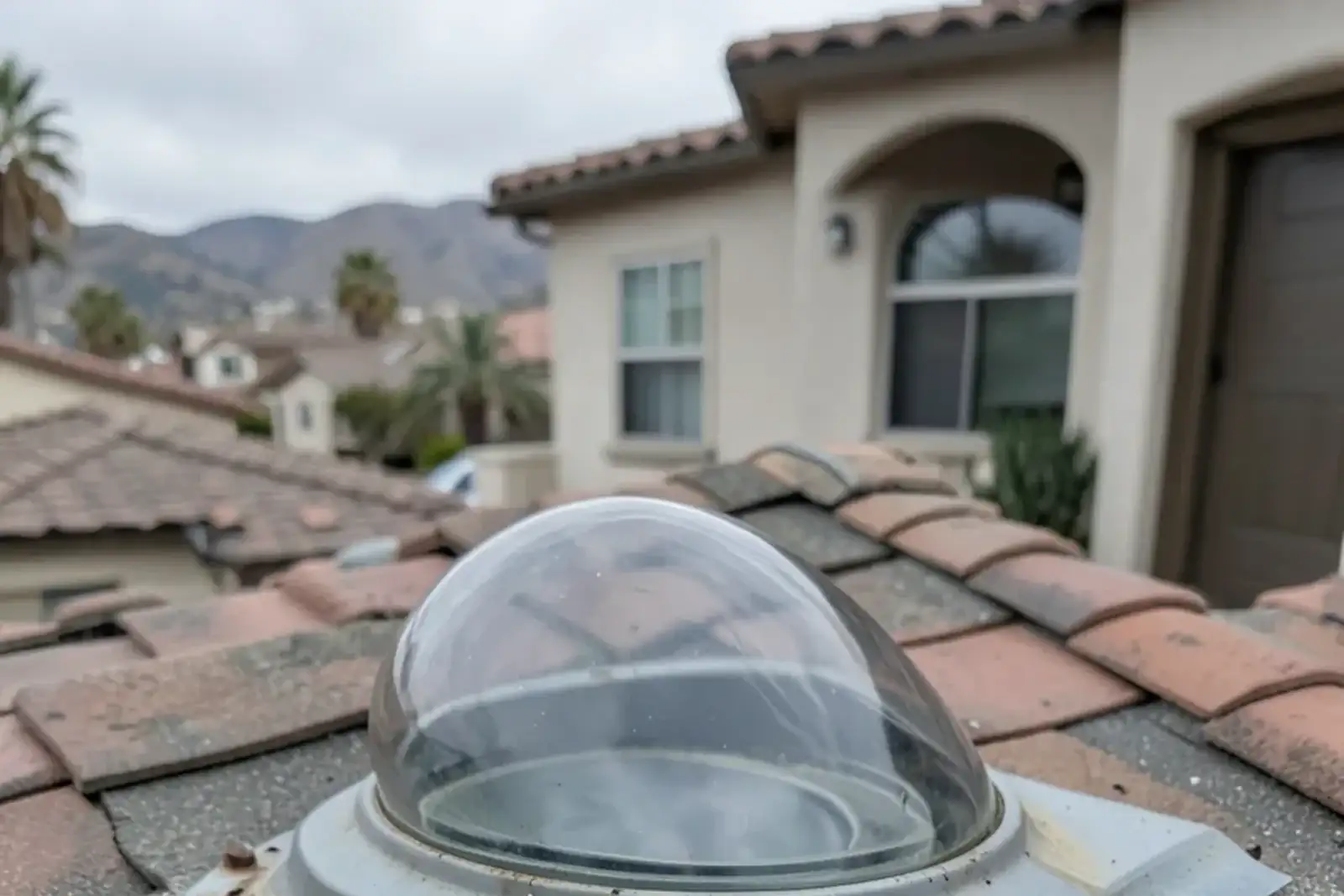
- Warped plastic vents, cloudy or deformed skylight domes
- Scorched paint on metal vents, flashing and fascia
- Charred debris or ash drifts in valleys and gutters
- Soot or odor inside the attic, or water stains on ceilings after firefighting
Smoke odor is a clue in itself. It tells you the attic and insulation took exposure, even when the roof looks fine. Note it for your insurer.
Ash on the roof: what to do first
Treat ash as a hazardous nuisance. Do not sweep it dry and do not blast it with a hose. Both put it in the air or in the drains.
- Photograph before cleanup. The ash layer is part of the record.
- Protect yourself. Wear a respirator rated N95 or better, gloves and eye protection.
- Keep it out of drains and pools.
- Ask a roofer to remove debris from valleys and gutters before rain, so water drains.
- Check local health guidance for how to bag and dispose of ash.
We would not hose or scrub a roof until we know what is under the ash. A cleaning pass can scour granules off shingles that already took heat damage.
How roofers inspect a roof after a fire
We start from the ground, then the attic, then the roof surface. In the attic we look for daylight, scorch marks, soot and wet insulation. On the roof we check shingles and tile for burn pits and cracks, plus vents, skylights, flashing and the gutter line. We photograph each finding with notes on location, and we send those to you.
If damage is spread across the roof, the fix may be a section or a full replacement. That decision follows the evidence. Our approach to a fire inspection is described on our fire damage roof repair page. Reviewers in Van Nuys mention roof inspections that documented damage for an insurance claim, and that is the kind of record we aim to give you.
Older roofs bring another question. Some older roofing materials may contain asbestos. Where a roof shows signs of it, lab testing before removal is the step we would recommend. SCAQMD Rule 1403 sets survey and notification duties for regulated work in the region.
Fire damage versus damage that was already there
A post-fire inspection should record both. After the Eaton Fire, an engineering assessment of a newly built Altadena school found ember burn-through holes in one roof and scorching on its flat roofs, and it also separated those from earlier flashing and hatch problems that let water in. The same discipline applies to a house. Insurers consider roof age and condition, so ask yours how it will treat wear that was there before the fire, and keep older photos if you have them.
What roofers weigh after a fire: clean, repair or replace
Each path has a cost, and the honest answer depends on the evidence.
Clean and leave. If embers did not land and only a light ash film settled, a careful cleaning of valleys and gutters may be all that is needed. Aggressive washing can scour granules off shingles that were already heated, so the cleaning method matters as much as the decision.
Repair a section. Burn pits and melted vents are often fixable without a full replacement. The trade-off is matching: older shingles or tile may not blend with new ones, and a patched section next to heat-weakened material can fail at its edges.
Replace the covering. When damage is spread across the slope, or the underlayment beneath has been cooked, a new roof is often the cleaner answer. It costs more, and in mapped fire zones it brings the Class A and local material rules into the scope.
Cover first or wait for the adjuster. A temporary cover protects the house from the next rain, and photographs taken before it goes on protect the record. Waiting for an adjuster visit costs time in a wet week, so ask your insurer what it needs before you decide.
We would rather give you the options with a written price for each than push one.
Fire rules for rebuilding a roof
Rules depend on your address. In the City of Los Angeles, wood shake and wood shingle roof coverings are prohibited, with a narrow exception for small repairs. A Class A roof covering, the highest fire rating, is required in the Very High Fire Hazard Severity Zone. California's Wildland-Urban Interface Code, Title 24, Part 7, took effect January 1, 2026, and state hazard maps were updated in 2025.
Check your own address on CAL FIRE's hazard zone viewer and confirm requirements with the agency that issues your permit. Do not assume your block is in or out of a zone.
Insurance after a fire: what to document and who does what
Start with photos and a written inventory of what you can see. Ask your insurer what it needs for roof damage. California's claim regulations generally require an insurer to acknowledge a claim within 15 days and to accept or deny it within 40 days after proof of claim. If your coverage is a FAIR Plan policy, know that it is a basic fire policy, and wind can be added.
We can inspect, photograph the damage, write a repair estimate and be on site when the adjuster visits. Claim negotiation belongs to the policyholder or a licensed public adjuster, and you can verify any adjuster at insurance.ca.gov. Be cautious of anyone who knocks at the door right after a fire.
Why Altadena is handled through the county
Altadena is an unincorporated community, so building permits there go through LA County rather than a city building department. The Eaton Fire severely affected the community in early 2025, and rebuilding has a different pace and rulebook from the incorporated cities nearby.
We work from Van Nuys and cover Altadena. Because it is a longer trip, we will tell you plainly what the schedule allows before you commit.
Booking a roof check after a wildfire
Call before the next rain, and have your photos ready. Tell us what you saw from the ground, whether there is smoke odor in the attic and whether any water has come through. Our fire damage roof repair page explains how we would assess a burn-area roof, and our emergency roof tarping page covers a temporary cover if openings are found. For more on rebuilding and the fire-zone rules, read our guides to roofing in Altadena after the Eaton Fire and Class A roofs in Los Angeles fire zones.
Fire left your roof worse than it looks? Call (209) 563-1278, tell us what you see, and we will set the earliest visit we can.
Quick answers
Can embers damage a roof if the house did not burn?
Yes. Embers can burn into shingles, collect in gutters and valleys, lodge under tile edges and enter vents. Even a roof that looks intact may have small burn pits, scorched sealant or melted plastic parts. Photograph the roof from the ground and ask for a close inspection before the next rain, since small openings can still leak.
How do I tell wildfire damage from ordinary roof wear?
Look at the pattern. Burn pits, scorched paint and melted plastic cluster where embers landed or heat reached, while age wear shows as even granule loss, curling or cracked sealant across a whole slope. A careful inspection records both. After the Eaton Fire, one engineering review of an Altadena school separated ember damage from older flashing problems for the same reason, so your claim stays accurate.
Should I wash ash off my roof?
Not right away. Ash can contain harmful material, and spraying it can push it into gutters, drains and the yard. Photograph first, then ask a roofer or cleanup specialist how to remove it safely. Wear a respirator rated N95 or better and gloves if you must handle it. Local health and air quality agencies publish ash-handling guidance.
How soon should a roof be checked after a wildfire?
As soon as it is safe to be on the property, and ideally before the next rain. Wet ash turns into a paste that clogs gutters and holds moisture against the roof. Damaged areas can leak at the first storm. We will set the earliest visit we can, and photos from the ground help us plan.