
Roof Repair
How to Spot Failed Roof Flashing
Signs of bad roof flashing are rust, gaps, lifted or bent metal, dried-out sealant and stains on a ceiling or wall near a roof joint. Flashing is thin metal that sheds water where roof planes, walls and pipes meet. When it fails, water gets under the roofing. Here is how to spot it.
- ★ 4.9 on Google · 69 reviews
- Same-day or next-day bookings
- Based in Van Nuys, CA
Published and updated November 3, 2026 · By the Clear Shield Roofers team, Van Nuys, CA
On this page
- Signs of bad roof flashing you can see from the ground
- Where flashing fails, joint by joint
- What we check up close that you cannot see from the yard
- Why heat and wind wear flashing out early
- Repair or replace the flashing
- A roofer's view of flashing, and the trade-offs in fixing it
- A ten-minute flashing check after the first rain
- Flashing on Pasadena's Craftsman bungalows
- Getting failed flashing looked at
- Common questions
Flashing causes more roof leaks than the roofing around it. It sits at the weakest points: chimneys, walls, valleys, vents and skylights. Most of it is hidden under shingles or tile, so you spot trouble from the edges and from the inside of the house. This guide covers the signs of bad roof flashing, then how we judge whether a repair is enough.
If you want a hand with a leak you already have, see our roof flashing repair page.
Signs of bad roof flashing you can see from the ground
Bring binoculars and look at each joint from a safe distance.
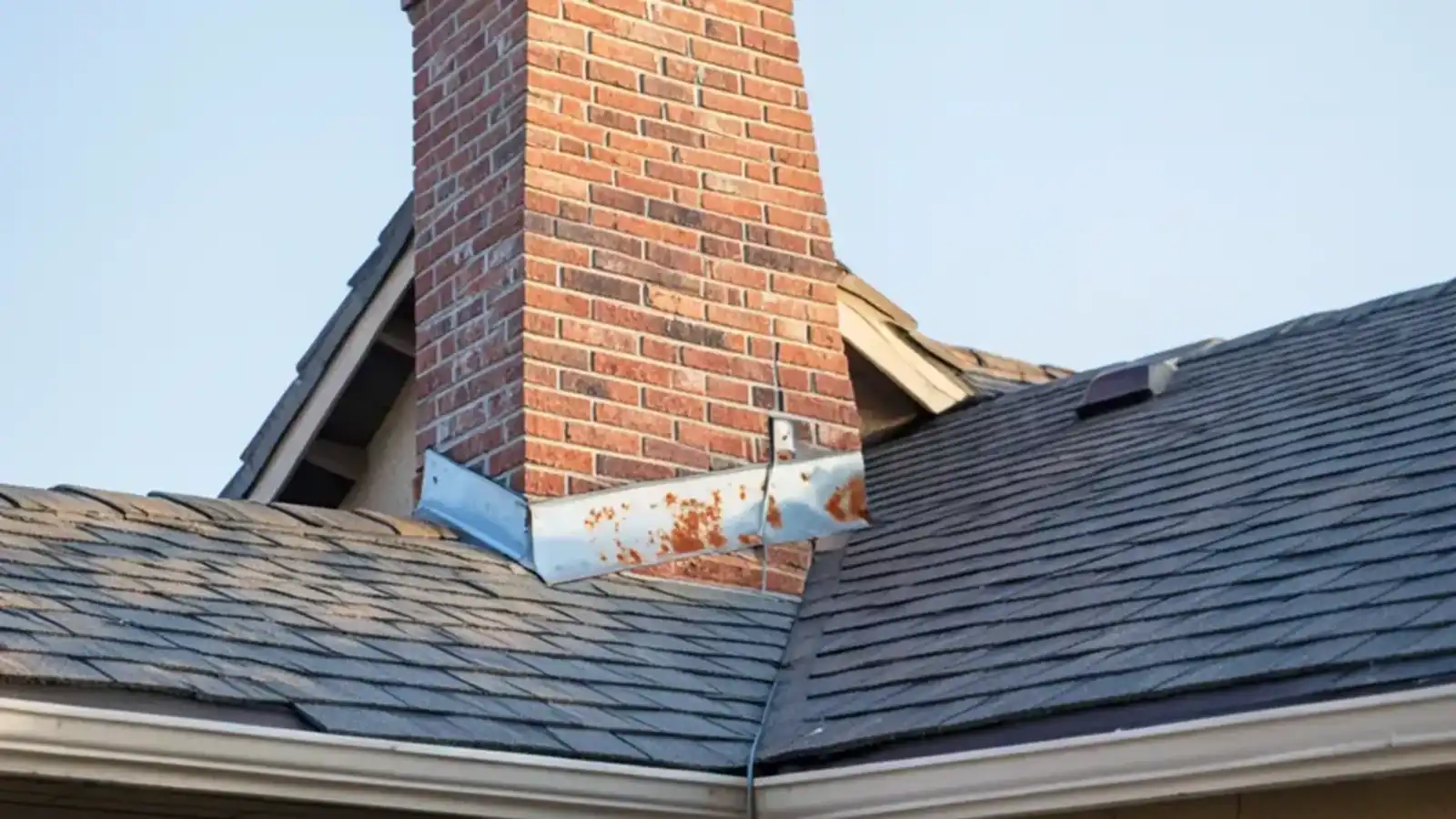
- Rust streaks on the metal or on the wall or roof below it
- Gaps between the metal and a wall, chimney or skylight
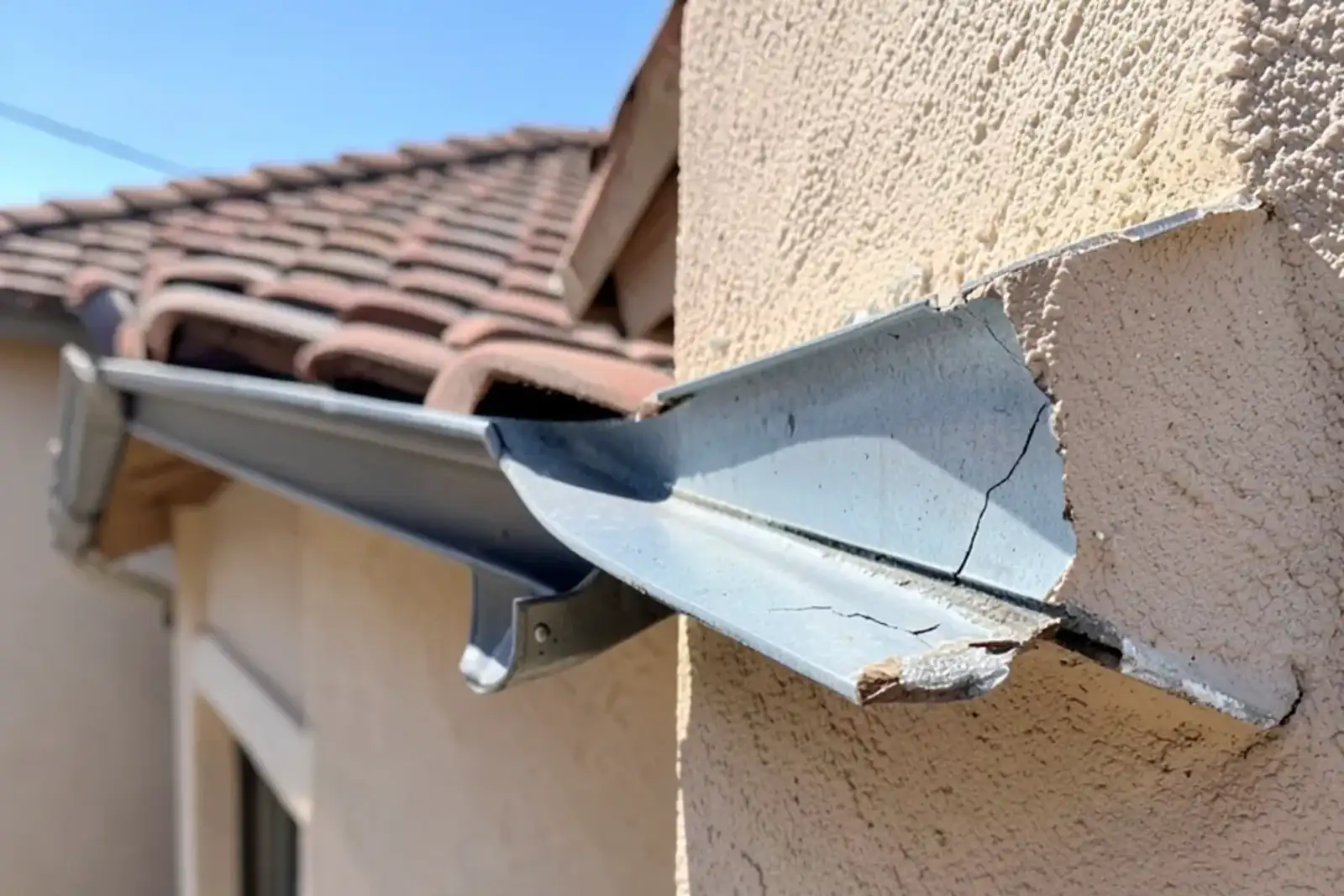
- Lifted or bent edges that catch light differently from the rest
- Thick smears of old sealant or roof cement, often a sign of past leaks
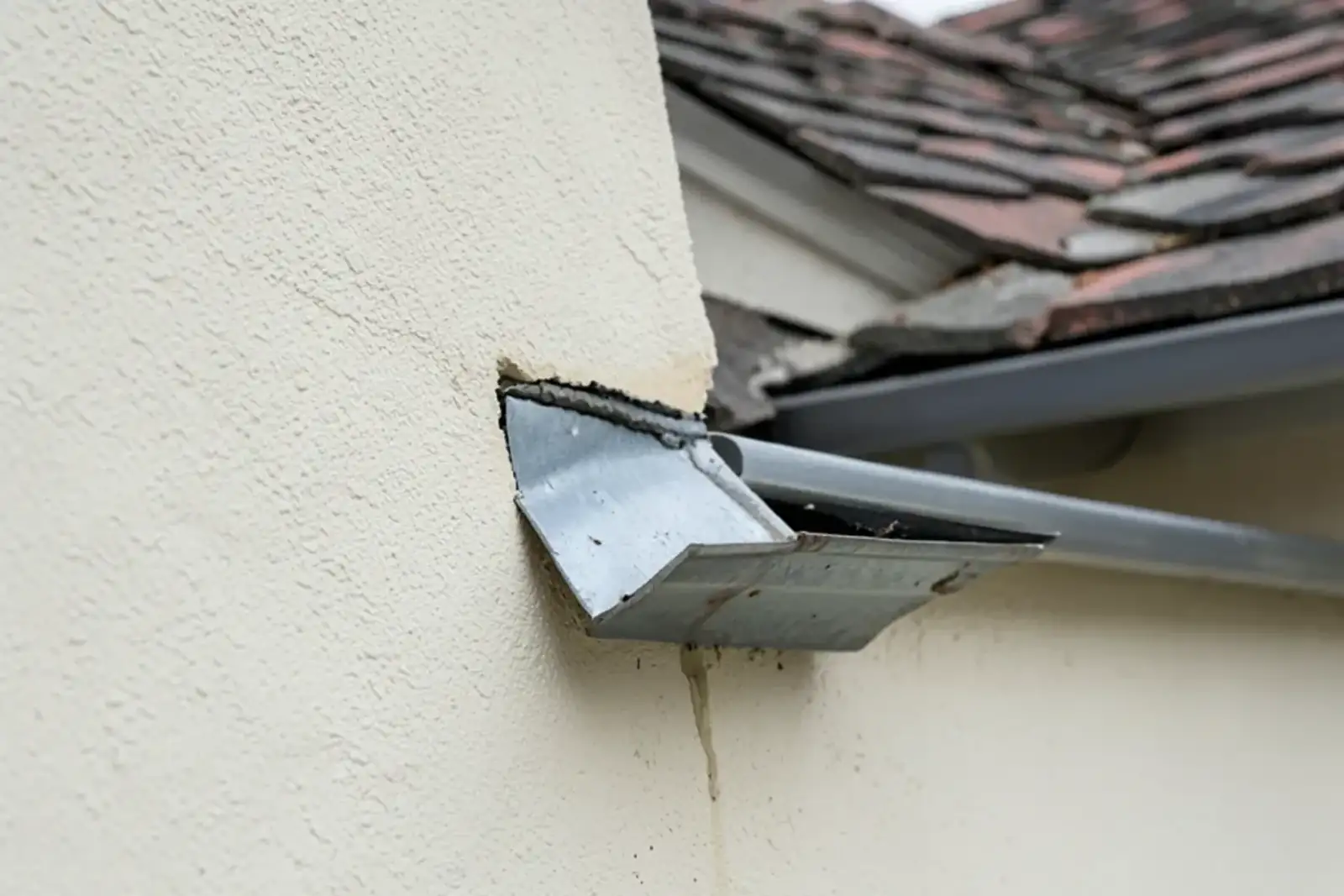
- Missing pieces, such as a kick-out at the bottom of a wall joint
- Stains on the ceiling or wall directly below a roof joint
Where flashing fails, joint by joint
Each place on the roof fails in its own way.
| Location | How it usually fails | What you may see inside |
|---|---|---|
| Chimney | Sealant dries, mortar line opens, metal lifts | Stain on the wall or ceiling near the chimney |
| Roof-to-wall | Step pieces lift, kick-out is missing | Water marks below the wall line |
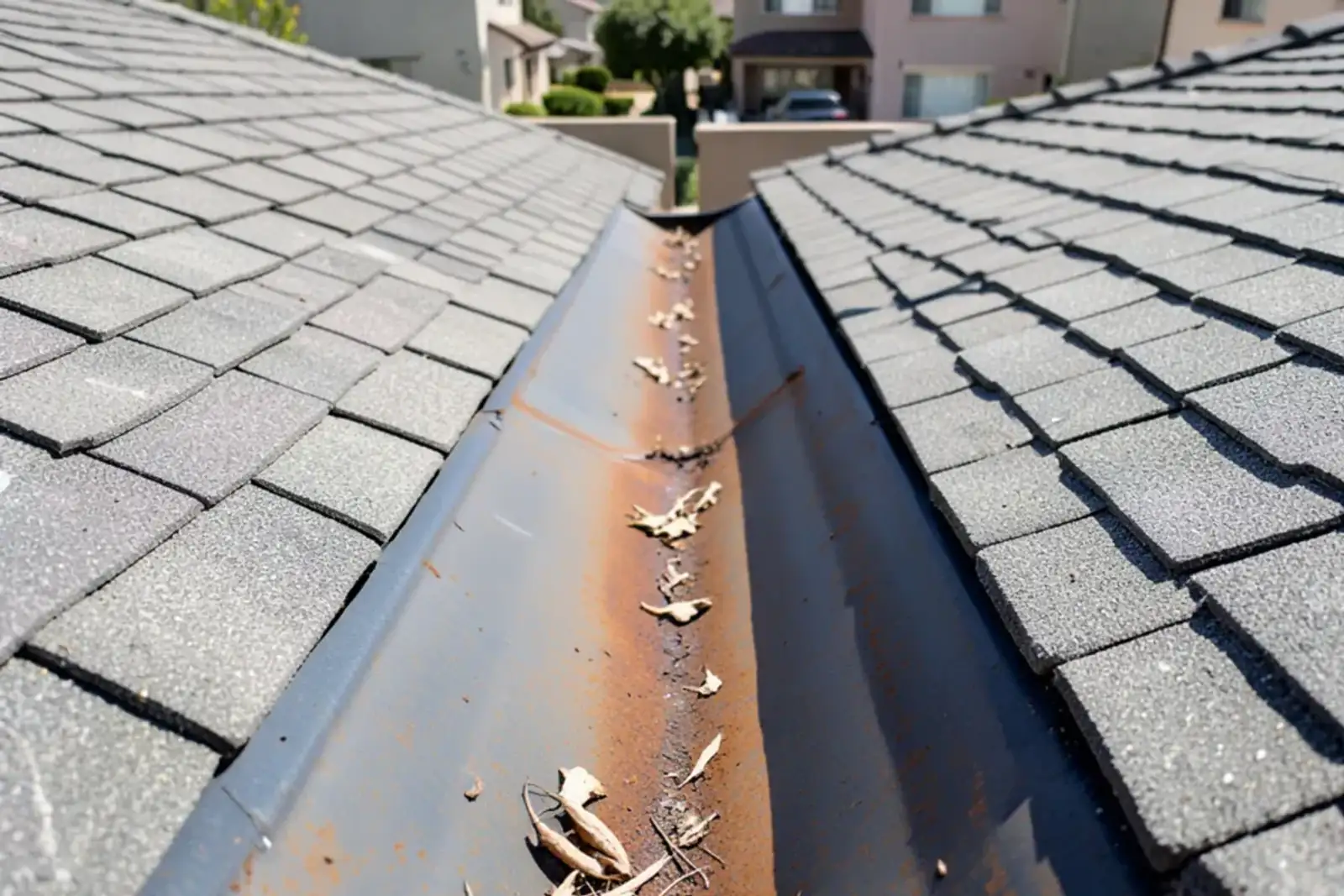
| Valley | Metal rusts through, debris dams water | Stain at an inside corner |
| Pipe and vent | Rubber collar cracks, base rusts | Drip near a bath or kitchen |
| Skylight curb | Corner seams open | Drips at the frame |
| Eave and rake edge | Drip edge rusts or sits wrong | Rotted fascia, wet soffit |
What we check up close that you cannot see from the yard
When we look at a joint from the roof, the question is how it was built, not just how it looks. We lift the roofing at an edge, check that each metal piece laps over the one below it, and make sure the top edge sits behind the wall covering. Water should have only one way down, and that way is over the metal, not under it.
We also look for the quiet clues. A long run of sealant is a flag, because it usually stands in for a missing piece of metal. Fasteners through the exposed face of the metal let water in at each hole. Metal bowed by thermal movement lets the sealant crack. Reviewers in Van Nuys describe inspections that found hidden problems, such as a poorly placed roof vent, which is the kind of detail that hides in a flashing joint.
Why heat and wind wear flashing out early
Metal expands in the afternoon sun and shrinks at night. Over years, that movement works fasteners loose and splits the sealant that holds the joints. Santa Ana winds lift edges that were already tired, and a lifted edge catches more wind the next time. Debris in valleys holds moisture against the metal and speeds up rust.
None of this shows on a calm day. The joint looks fine until rain pushes sideways and finds the gap.
Repair or replace the flashing
Not every bad joint needs new metal. Use this as a guide:
- Resealing alone works when the metal is sound, the overlaps are right and only the sealant has aged.
- Re-fastening or resetting works when the metal is sound but has pulled loose.
- Replacing a section is the answer when part of the metal is rusted, bent or lapped wrongly.
- Replacing the whole run makes sense when the same joint has been sealed more than once.
Sealant is the cheapest step and often the first one tried. If a joint has already been sealed twice, a third coat is not a fix.
A roofer's view of flashing, and the trade-offs in fixing it
Flashing is cheap metal doing an expensive job, which is why it is worth getting right. The common mistakes are in the details, not the product.
- Sealant versus metal. A bead of sealant is quick and sometimes enough on a sound joint. On a joint that already carries old sealant, it only extends the problem. We would rather replace the failed piece and set it in the right order.
- Reuse or replace during a re-roof. Reusing old flashing saves a little and leaves aged metal under new roofing. Replacing it adds to the quote and removes the weakest link. We lean toward new metal at chimneys, walls and skylights.
- Chimneys. Good chimney flashing tucks into the masonry as well as lapping over the roofing. That can mean cutting a fresh reglet into the mortar, which adds labor. Our chimney flashing repair page covers the process.
- Coastal exposure. Near the ocean, standard metal and fasteners rust sooner, so we ask for corrosion-resistant materials named on the quote.
We cannot always tell from the ground which joint is leaking, and a stain may sit well away from the failed metal. A leak that already shows inside is a case for roof leak repair, where the aim is tracing the entry point before anything is sealed.
A ten-minute flashing check after the first rain
- Walk the outside of the house and look up at each roof joint with binoculars.
- Photograph anything odd, from the same spot each time.
- Go into the attic with a flashlight and look at the wood around chimneys, vents and walls.
- Check the ceilings below those same joints.
- Note the date and the weather for any mark you find.
Stay off the roof. Wet metal and tile are slick.
If you find a suspect joint, do not seal it yourself before someone looks. A fresh bead can hide the very gap that shows us how water got in, and it makes the repair harder to judge. Photograph the joint first, note any stain below it and leave the tube in the garage.
Flashing on Pasadena's Craftsman bungalows
Pasadena has historic districts such as Bungalow Heaven, and its Craftsman homes tend to have wide eaves and exposed rafters, and valleys where several rooflines meet. More joints mean more flashing to inspect. The city sits below the San Gabriel Mountains, which adds several inches of rain compared with nearby coastal areas, so each joint gets tested harder. Census ACS (2020-24) puts the median Pasadena home at a 1961 build, so metal installed decades ago is common. If your home sits in a historic district, ask the city whether exterior work needs review before you plan changes. Pasadena is about 23 miles and 40 minutes from our Van Nuys base, so we plan a flashing visit there as a scheduled trip, not a quick stop. We cover Pasadena and will tell you honestly when a joint needs a closer look than binoculars allow.
Getting failed flashing looked at
If you see rust, a gap or a stain at a roof joint, tell us where it is and what the weather was when you noticed it. We will set the earliest visit we can, check each joint up close and explain whether a repair is enough. Call (209) 563-1278 to book.
Quick answers
Can failed roof flashing be sealed instead of replaced?
Only when the metal itself is sound and the problem is a small sealant gap. Rusted, bent or wrongly lapped flashing needs replacing, because sealant over a bad joint cracks again with the next heat cycle. We check the metal, the overlaps and the fasteners before anyone reaches for a tube of sealant.
Can I check my roof flashing from the ground?
Partly. Binoculars show rust streaks, gaps, lifted edges and thick patches of old sealant around chimneys, walls and skylights. They will not show how the pieces overlap or whether fasteners are backing out. For that, someone needs to look at the joint up close, in person, with the right safety gear.
How long does roof flashing last?
Often longer than the shingles around it when it is installed well, but it depends on the metal, the sun and how the joint was built. Rubber pipe collars usually fail sooner than metal. Manufacturer ratings and installation quality govern, so treat any number as a guide and check condition, not age alone.
What is the difference between flashing and sealant?
Flashing is metal that carries water over a joint. Sealant is a filler that closes small gaps and ages quickly in the sun. A joint should work with the sealant removed. If your roof depends on caulk to stay dry, the flashing underneath is missing or wrong, and the fix is metal, not another bead.
Which roof joints should I check first for failed flashing?
Start with the chimney and any place a roof edge meets a taller wall, because those are the longest and most exposed joints. Then check valleys, pipe collars and skylight curbs. Look for rust, gaps and thick old sealant from the ground with binoculars, and look at the ceiling below each joint for stains.