
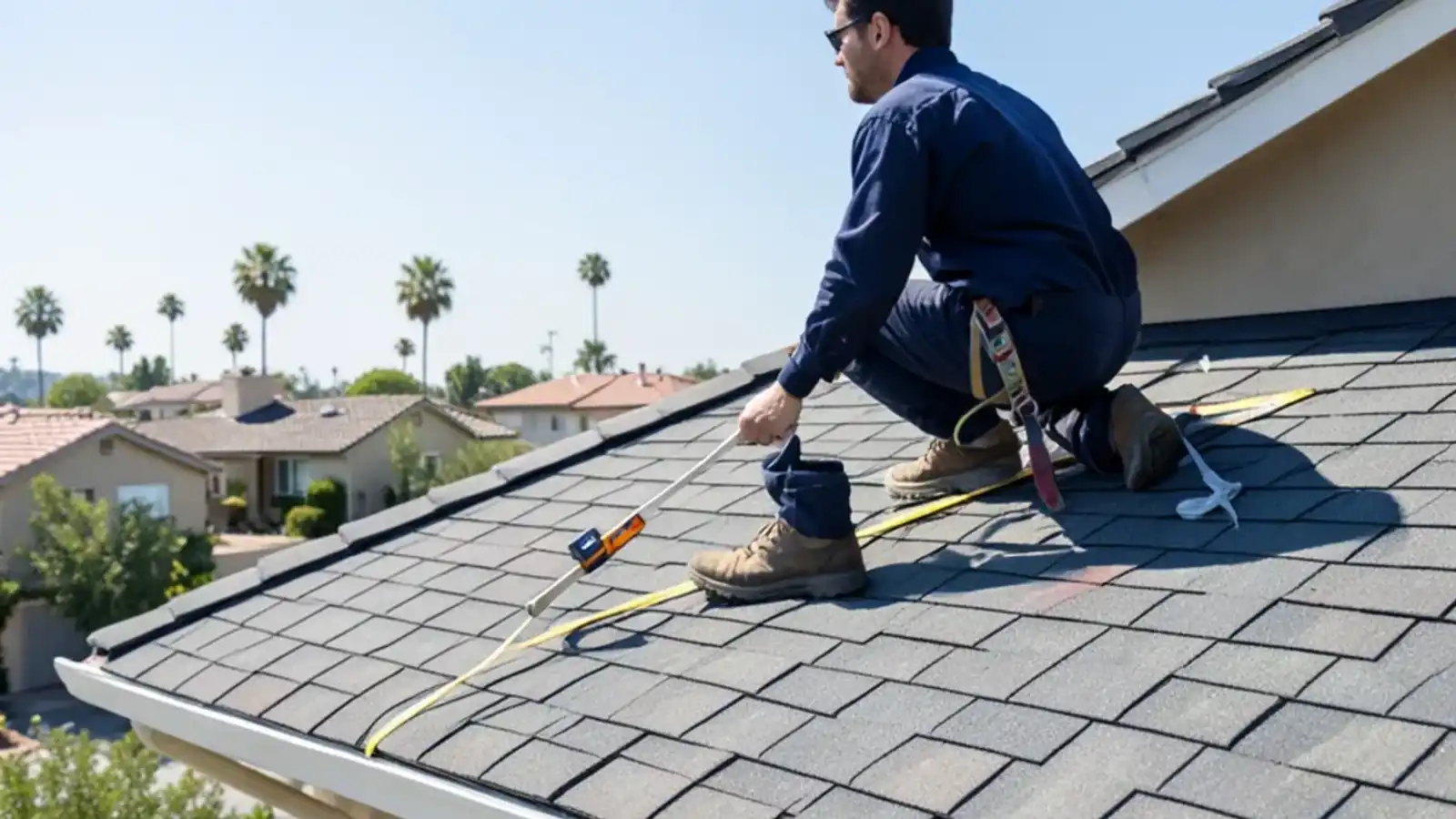
Roofing Contractor
Reading a Roofing Estimate: What Every Line Should Say
A good roofing estimate names the roof you have, the work on every part of it, the materials, the permit, the cleanup and the price, all in writing. Read it for what it leaves out as much as for what it says. Here is how to go line by line and compare two bids fairly.
- ★ 4.9 on Google · 69 reviews
- Same-day or next-day bookings
- Based in Van Nuys, CA
Published and updated November 3, 2026 · By the Clear Shield Roofers team, Van Nuys, CA
On this page
- Why two bids on the same roof never match
- What we measure and photograph before we write a number
- Contract terms that sit around the estimate
- How working roofers read a bid, and where the trade-offs are
- Product, permit and cool roof lines to look for in Los Angeles
- Red flags in the fine print
- When a change order is fair
- Getting an estimate you can read line by line
- Common questions
An estimate should read like a work order, not a number. If a line says only "re-roof, labor and materials," you cannot compare it with anything. These are the lines we expect to see on a good one:
- Roof size: the measured area, in squares (one square is 100 square feet) and how it was measured
- Tear-off: how many layers come off, what they are and where the debris goes
- Decking: how damaged boards are handled, with a price per sheet
- Underlayment: the type, and whether it covers valleys and eaves too
- Flashing and drip edge: replaced or reused, spot by spot
- Roof covering: product line, color and layer count
- Vents, pipe boots and skylights: each one listed on its own
- Permit: which agency, and who applies and pays
- Cleanup: dumpster, yard protection and a nail sweep
- Payment schedule and start window
Why two bids on the same roof never match
Roofers price what they see and guess at the rest. One bid may include new flashing while another reuses the old. One may count the garage and the other may not. The total moves, and the page hides why.
| Line | A thin bid may say | What to ask |
|---|---|---|
| Decking | "Repairs extra" | The price per sheet, in writing |
| Flashing | "Reset as needed" | Which pieces are new |
| Tear-off | "Remove old roof" | How many layers are assumed |
| Cleanup | Nothing | Who sweeps for nails and when |
Angi estimates roof replacement in Los Angeles at roughly $4 to $12 per square foot, averaging about $8.60 (accessed November 2026). Treat that as a sanity check on the total, not a target. Your own price depends on pitch, access, materials and what the deck turns out to hold.
What we measure and photograph before we write a number
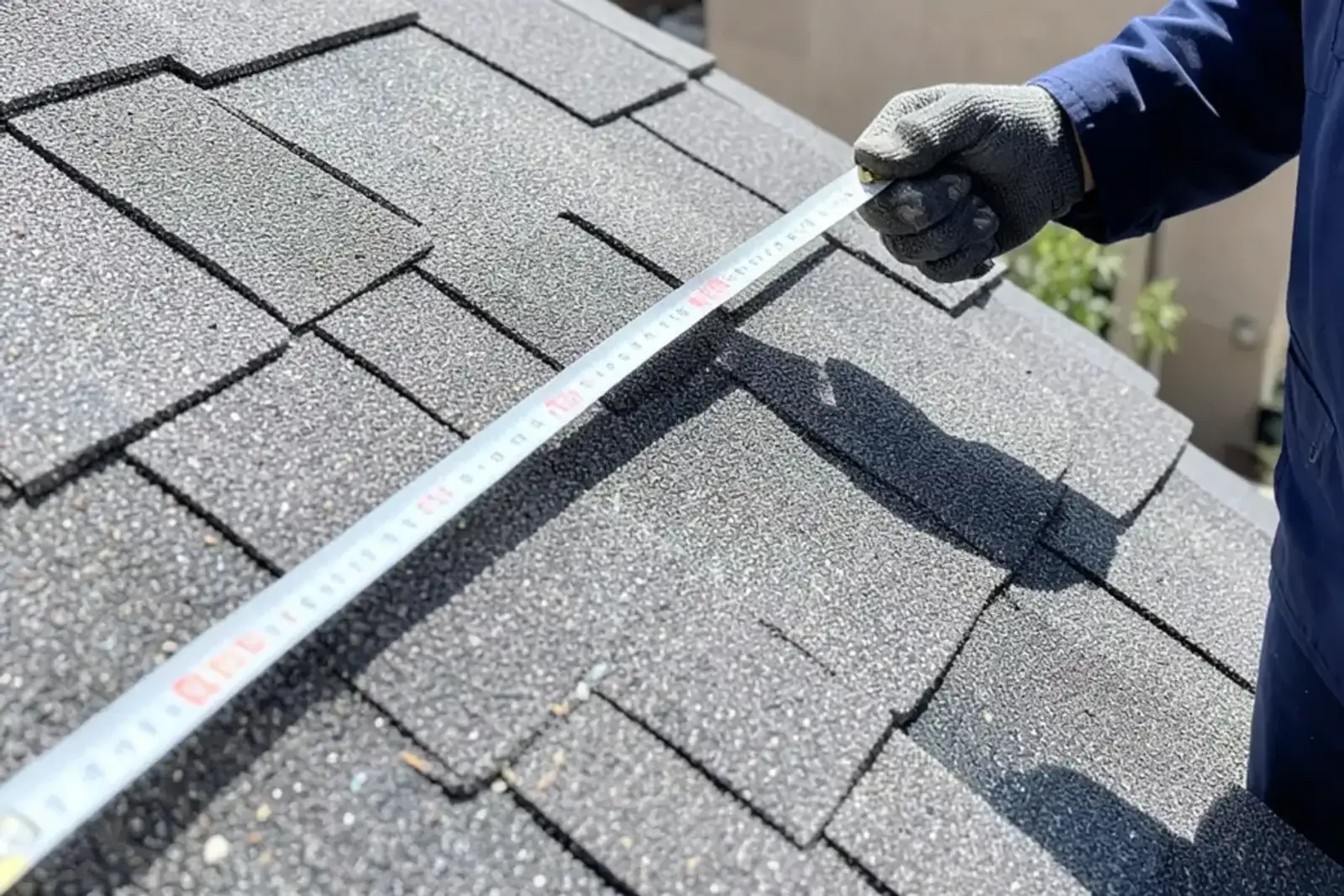
We measure the roof, check the pitch and look at the attic from underneath. The underside of the deck tells us more than the shingles do. Stains, daylight and soft spots show up there.
Then we put it on paper. A reviewer in Van Nuys describes receiving pictures and measurements before the quote, and another describes plywood being explained before it was replaced. That order matters: the evidence comes first and the number follows. A written estimate that rests on a roof inspection is easier to defend, and easier to compare.
Older homes carry more surprises. Census ACS puts Burbank's median home at 1959, and houses of that era often have thin or spaced boards that need work once the roofing is off. If your home is in Burbank or a similar neighborhood, the decking line deserves your attention.
Contract terms that sit around the estimate
The estimate is half the paper. The contract holds the rest, and California puts some of it in law:
- Down payment: limited to $1,000 or 10% of the contract price, whichever is less
- Cancellation: at least three business days in most cases, longer for seniors and for disaster repairs
- Final payment: the Department of Insurance advises holding it until the building department signs off
- Warranty: get the terms in writing, with who stands behind the labor and who stands behind the product
- Permit: the contract should name who pulls it
Skip any bid that asks for a large cash deposit up front. Skip any that cannot say who is applying for the permit.
How working roofers read a bid, and where the trade-offs are
When we look at someone else's estimate, we read it from the bottom up. We start with what is excluded, because the exclusions are where the price was held down. Then we look at tear-off, decking, flashing and the product, in that order. The total comes last.
Honest trade-offs show up in almost every bid:
- Itemized or lump sum. Itemized takes more time to write and shows more to argue about, but you can compare it. A short repair can reasonably be a single line. A full replacement should not be.
- Per-sheet decking price. It protects you from an open-ended number, and it also means the final total can move if the deck is worse than expected. That is better than a flat price that quietly assumes the deck is perfect.
- Good, better and best options. Useful when they differ in named products and scope. Less useful when they differ only in a number.
- The lowest bid. It can be fair if the scope matches. It is a problem when it matches only because lines were left off.
If a line puzzles you, call the roofer and ask. A bid that cannot be explained out loud should not be signed.
Product, permit and cool roof lines to look for in Los Angeles
Two lines are specific to this area. First, the permit. In the City of Los Angeles, replacing a roof generally calls for a building permit or, for eligible single-family homes, a Re-Roofing Certificate of Compliance (LADBS form IN.Form.12). Other cities run their own building departments. The estimate should say which agency applies and who handles it. Our roof permits page explains the paperwork.
Second, the product. Roof replacements in Los Angeles that cover more than half the roof must use a cool-roof-rated product listed with the Cool Roof Rating Council, with rules that depend on slope and the City's own add-ons. A bid that says only "30-year shingle" does not tell you if it qualifies. Ask for the product name and its CRRC Product ID, and keep both with your records.
Red flags in the fine print
Some gaps are small. Others turn into change orders halfway through the job. Watch for these:
- No tear-off line. An overlay may be proposed on a roof that cannot legally take one, since California's residential code does not allow a new roof over one that already has two applications.
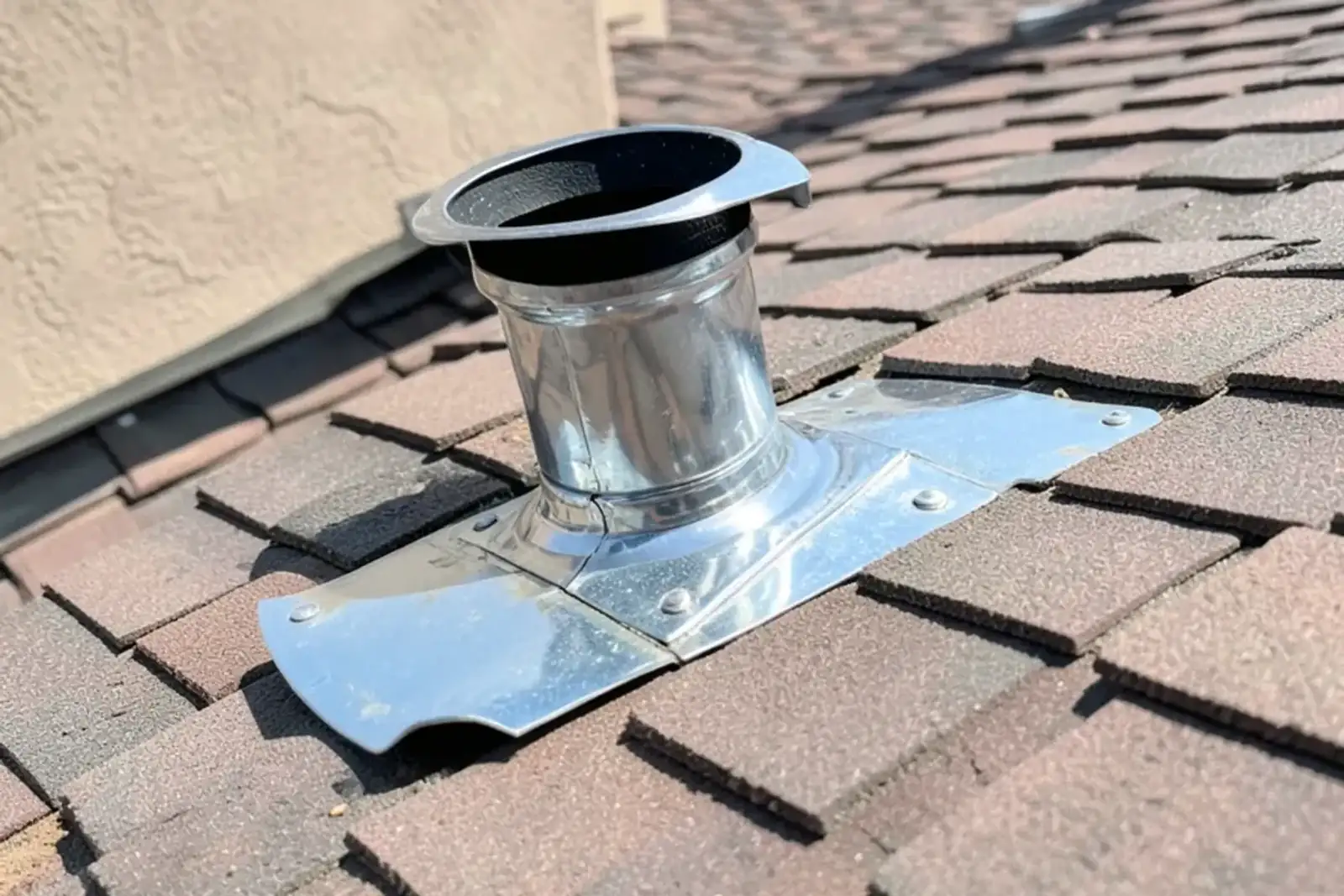
- No mention of flashing. Most leaks start at flashing, so a bid that skips it has left out the part most likely to fail.
- A color or product left blank. You are being asked to approve something that does not exist yet.
- Pressure to sign today. A fair bid will still be fair tomorrow.
Once you have two or three estimates side by side, lay them next to what a roofing contractor in Los Angeles should be able to explain without hurrying you. If the answers get vague, the paper was vague too.
When a change order is fair
A change order is a written addition to the price, signed before the extra work starts. It is fair when the roof shows something nobody could see from outside: rotted boards, a failed vent, fascia damage under the edge. A Van Nuys reviewer describes hidden problems of exactly that kind being found and explained, including a poorly placed vent.
It is not fair when the item was on the original scope. Ask to see the problem, ask for the photo and ask for the unit price you already have in writing. Then the number should not be a surprise.
Getting an estimate you can read line by line
Send us the bid you already have, or call before you collect any. We will look at the roof, take measurements and photos and put the scope, materials, permit and cleanup in writing. If you want a second pair of eyes on a new roof proposal, our new roof installation page lists what we cover. Call (209) 563-1278 and we will set the earliest visit we can.
Quick answers
Should a roofing estimate list the permit cost separately?
Yes, or it should say plainly who pays for it and who applies. In the City of Los Angeles the permit path depends on the roof and the address, so a bid that says only "permit included" tells you little. Ask which agency issues it, and ask for the final sign-off to be named as the end of the job.
What does "plywood as needed" mean on a roofing bid?
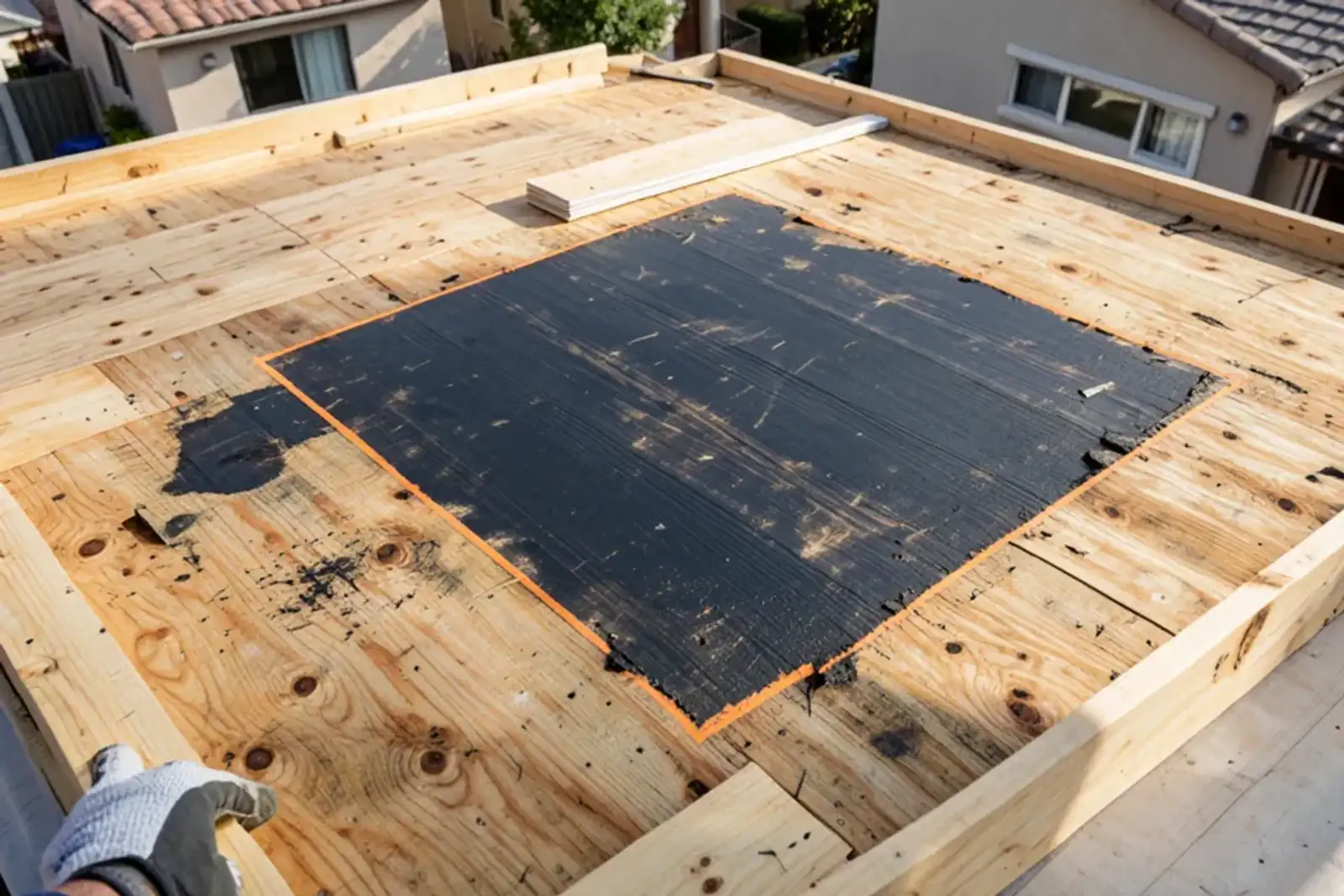
It means the contractor cannot see the deck until the old roofing is off, so damaged boards are priced per sheet or per board once found. Ask for that unit price in writing before you sign, and ask to see any bad boards before they are replaced. Otherwise the line is open-ended.
Is the cheapest roofing bid in Los Angeles a red flag?
Not by itself, but compare what it leaves out. A low number often skips deck repair, drip edge, new flashing or cleanup. Line the bids up by scope first, then by price. If the gap is large and nobody can explain it, ask both roofers to show you the difference on the roof itself.
What should a roofing estimate say about the roof covering product?
It should name the product line, the color and, in Los Angeles, whether the product is listed with the Cool Roof Rating Council, because a re-roof covering more than half the roof must use a cool-rated product. Ask for the CRRC Product ID on the invoice too. The LADWP cool roof rebate asks for it.