
Roof Replacement
Best Time of Year to Replace a Roof in Los Angeles
The best time to replace a roof in Los Angeles is usually late spring through early fall, when rain is rare and tear-off days stay dry. Winter works too if the crew covers the roof every evening. Timing matters less than a leak that is already open, so do not wait on a failing roof.
- ★ 4.9 on Google · 69 reviews
- Same-day or next-day bookings
- Based in Van Nuys, CA
Published and updated November 3, 2026 · By the Clear Shield Roofers team, Van Nuys, CA
On this page
- A season-by-season look at roof replacement timing
- How a crew protects an open roof in the rainy season
- Summer heat and early starts in the Valley
- Santa Ana season and the fall rush
- Permits, rebates and lead time matter more than the calendar
- How far ahead should you plan a Los Angeles roof replacement?
- Does winter roofing take longer in Los Angeles?
- What do working roofers say about timing a roof replacement?
- When waiting for the dry season is the wrong call
- Planning a roof replacement in Burbank and nearby
- Booking your roof replacement date
- Common questions
Los Angeles lets you roof most of the year. The best time to replace a roof in Los Angeles is the stretch between the last spring storm and the first big fall one, because dry days are the cheapest insurance an open roof has. Winter is workable and sometimes necessary. It just takes more weather watching.
Below is how each season changes the job, and when waiting costs more than it saves.
A season-by-season look at roof replacement timing
Downtown Los Angeles averages about 14 inches of rain a year by NOAA's 1991-2020 normals, and Van Nuys about 13. Most of it falls from December through March, often in a few hard storms. That pattern drives the calendar:
| Season | Rain risk | What to plan for |
|---|---|---|
| Late spring (April-June) | Low after the final storms | Strong choice, since dates are open and the deck stays dry |
| Summer (July-September) | Very low | Dry decks but hot afternoons, so the crew starts early |
| Early fall (October-November) | Low, with the first storms possible | Good if the job starts early, but Santa Ana winds are likely |
| Winter (December-March) | Highest | Doable with daily dry-in, and a firm plan for rain days |
How a crew protects an open roof in the rainy season
A winter replacement is safe when the roof is never left open overnight. Here is how we work through the wet months:
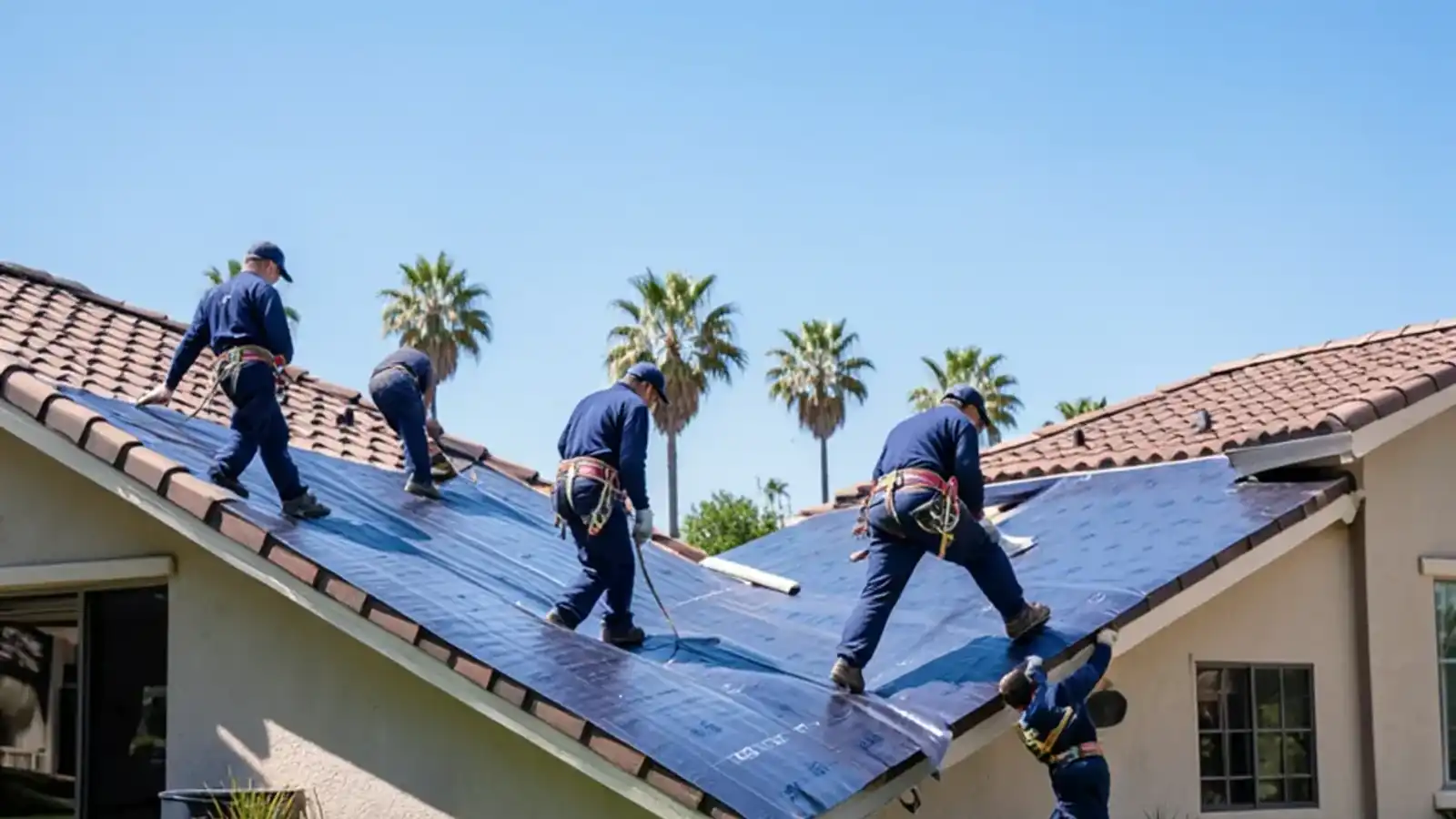
- Strip only what can be covered. We tear off one section at a time and dry it in the same day.
- Underlayment goes down right away. Synthetic underlayment sheds water well enough to bridge a short surprise shower.
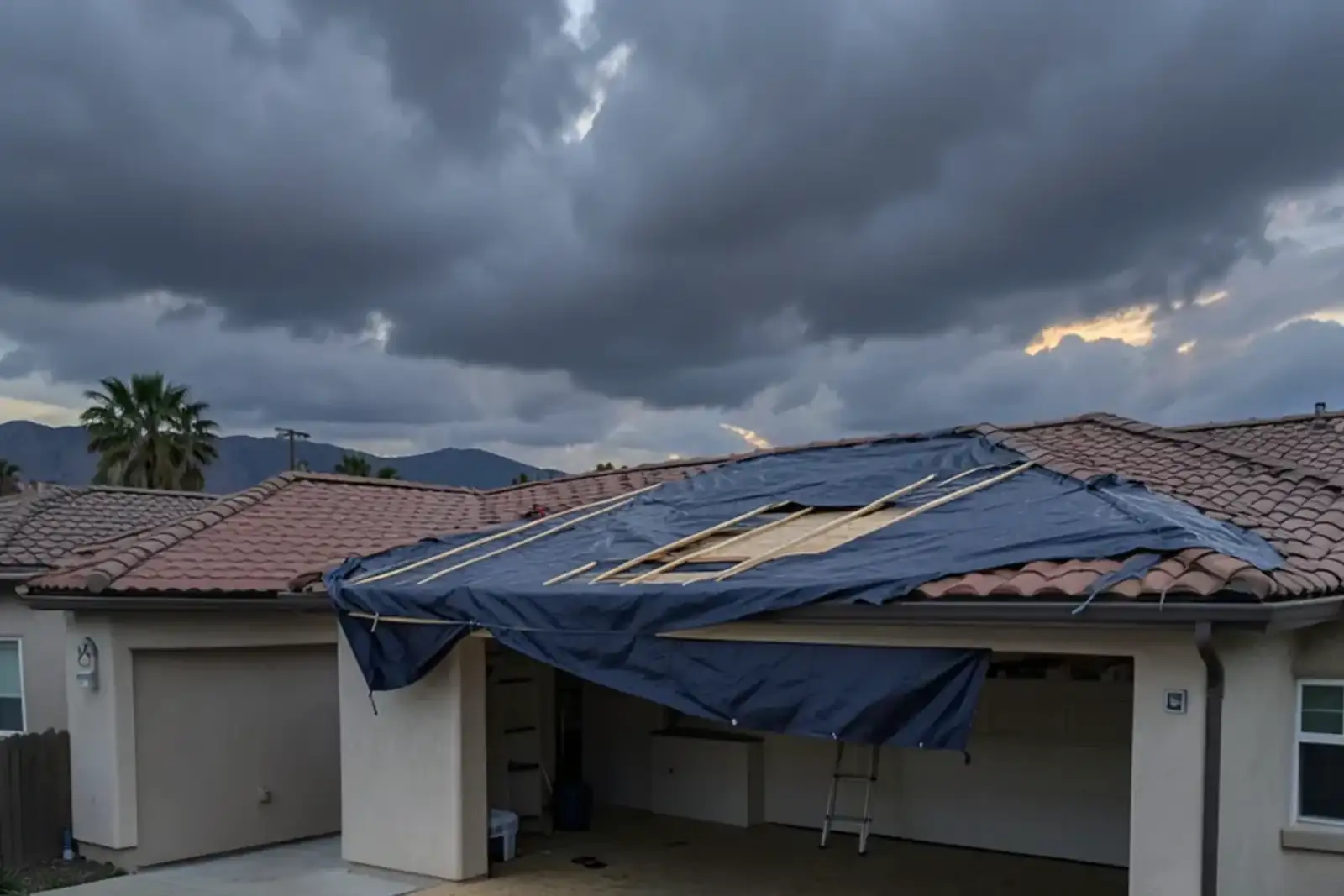
- Tarps and battens stay on the truck. If clouds build, the open deck gets covered before anything else.
- The forecast decides the morning. If heavy rain is due, the crew waits a day.
Reviewers describe this kind of readiness in Van Nuys. One customer says a small leak showed up after seasonal rain during their new roof, and the crew responded right away, even on a Sunday morning. Another says three skylights were replaced despite light showers that morning. Those are single jobs, not promises, but they show what a rain plan looks like on site.
Summer heat and early starts in the Valley
Dry weather is not the whole story. The San Fernando Valley bakes. Van Nuys averages about 77 days a year at 90°F or hotter, against roughly 26 downtown and 5 at LAX. Hot shingles scuff underfoot, and crews slow down in afternoon sun.
So summer jobs run on a split schedule. Tear-off and shingle laying start at first light. Flashing, cleanup and the walk-through take the later hours. A roof on a Valley street needs this more than a roof near the coast.
Santa Ana season and the fall rush
October and November are dry, but they bring Santa Ana winds. Wind does two things to a replacement. It makes loose shingles and ridge caps dangerous to handle, and it finds the weak spots on an older roof before you do. Crews also fill up in the weeks after a big wind or rain event, when everyone with damage calls at once.
If your roof looked tired last winter, fall is when it starts to fail. Book before the wind season, not during it.
Permits, rebates and lead time matter more than the calendar
Paperwork can move your start date more than weather does. Inside the City of Los Angeles, a re-roof generally goes through LADBS, either as a building permit or as a certificate of compliance for eligible single-family homes. Some re-roofs qualify for LADBS's Express Permit route, which skips plan check. Other cities have their own offices and turnaround times, so ask early.
Product choice has lead time too. Roof replacements covering more than half the roof must use a cool-roof-rated product. LADWP residential customers may qualify for a cool roof rebate by SRI tier, with funding limited, and the application is due within 12 months of purchase. Check ladwp.com/crp before you buy.
How far ahead should you plan a Los Angeles roof replacement?
Count backward from the month you want. This is a realistic order of work:
- Get the roof assessed a few months ahead, so you know whether it is a replacement or a repair.
- Collect at least three written estimates that name the same tear-off, underlayment, flashing and permit lines.
- Pick the covering and color, and confirm it is CRRC-listed if cool roof rules apply to your roof.
- Confirm the permit path with the contract naming who pulls the permit. Our roof permit page explains the options.
- Order materials and agree the start window, with a plan for a rain day.
- Clear the yard and driveway before tear-off, and move vehicles, patio items and plants.
Does winter roofing take longer in Los Angeles?
It can. A winter replacement runs in smaller sections, each dried in before the crew leaves, and a forecast storm can move the start by a day or more. The total labor is similar, but the calendar stretches. A roof tear-off is the stage most exposed to weather, so it is the part to schedule around the forecast.
The upside is availability. Winter dates may be easier to find than summer ones, and a storm-damaged roof does not have to wait for June. Ask any roofer how many days of dry-in work are built into the schedule.
What do working roofers say about timing a roof replacement?
Here is our view, trade-offs and all. The calendar matters, but condition matters more. A roof that leaks in November should not wait for May, and a sound roof that is simply old can pick its moment.
Summer has dry decks but hot afternoons, and crews work shorter productive days on the south slopes. Winter has more weather risk but gentler working temperatures. Early fall sits between them, with Santa Ana winds as the wild card, which generally blow from fall into winter.
The honest trade-off is risk against convenience. A dry-season start lowers rain risk but fills quickly. A winter start can be fine with a disciplined crew, but you accept more schedule uncertainty. We would rather say that plainly than promise a date a storm can move.
When waiting for the dry season is the wrong call
Do not hold out for summer if you see any of these:
- Water stains that spread or darken after each storm
- Soft spots or sagging when someone walks the roof
- Daylight visible through the roof boards from the attic
- A leak that returns after patching
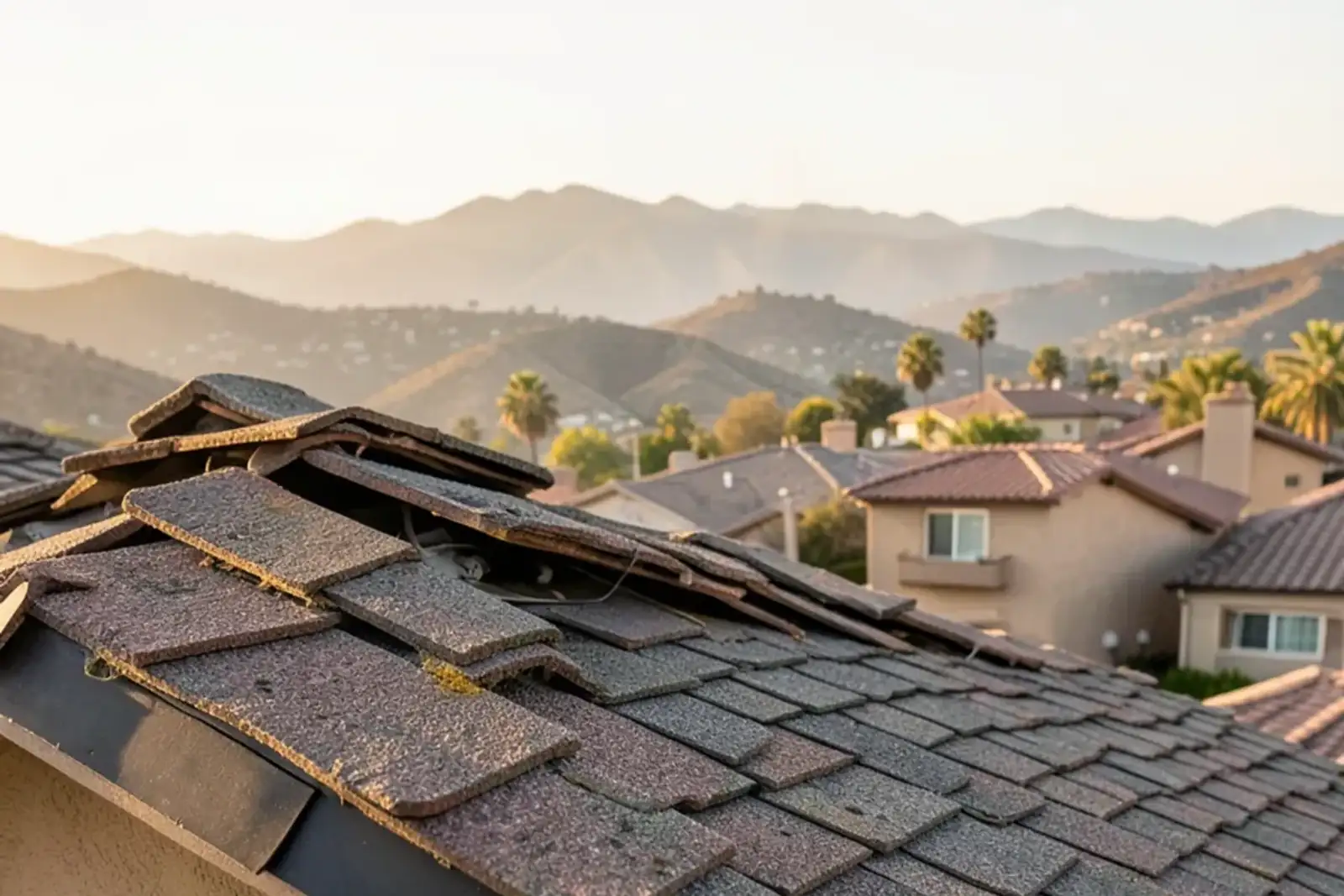
- Storm damage, such as lost tiles or lifted shingles
In those cases, tarp or repair first, then schedule the replacement. A temporary fix costs far less than rotted decking.
Planning a roof replacement in Burbank and nearby
For a Burbank roof, the same calendar applies, with a few local twists. Burbank sits about 20 minutes and 9 miles from our Van Nuys base by our estimate, and Census ACS data puts its median home built in 1959, so the older decking tends to need a look once the old roofing is off. See our roof replacement page for the full process, and get the price and schedule in writing.
Booking your roof replacement date
Tell us the roof type, its approximate age and the month you have in mind, and we will say what the schedule could look like. To get started, call (209) 563-1278 and we will set the earliest visit we can.
Quick answers
Can you replace a roof in the rain in Los Angeles?
A roof should not be torn off while it is raining or about to. Wet decking can swell and trap moisture, and an open roof invites leaks. A crew can work around a light morning shower, as one customer describes for a skylight job, but the day's open area has to be covered before the next band of rain arrives.
How far ahead should I book a roof replacement in Los Angeles?
Book earlier than you think if you want a specific month, because dry-season dates fill and permits, material choices and color samples take time. Many homeowners start planning in winter or early spring for a summer start. If water is already getting in, tell us, and we will set the earliest visit we can.
Does summer heat make a roof replacement harder in the San Fernando Valley?
It changes the schedule more than the quality. Valley afternoons are hot enough to scuff fresh shingles and wear out a crew, so work starts early and the hottest hours go to lighter tasks like flashing and cleanup. Van Nuys averages about 77 days a year at 90°F or hotter, according to NOAA normals.
Is it cheaper to replace a roof in the Los Angeles off-season?
Not reliably, and we do not publish prices. Dry-season dates book up, so some homeowners ask about winter, but a rain-delayed job can add days and daily dry-in labor. Compare written estimates that state tear-off, underlayment and permit lines, and ask how each bidder handles a rain day, since that is where winter jobs differ.
Should I replace my roof before or after the Santa Ana winds?
Before, if the roof is already tired, because gusts find lifted ridge caps and loose edges first. Santa Ana winds generally blow from fall into winter, and crews get busy after a big event. A mid-job wind day only pauses the work. Book ahead of the season, and have the decking checked during tear-off.